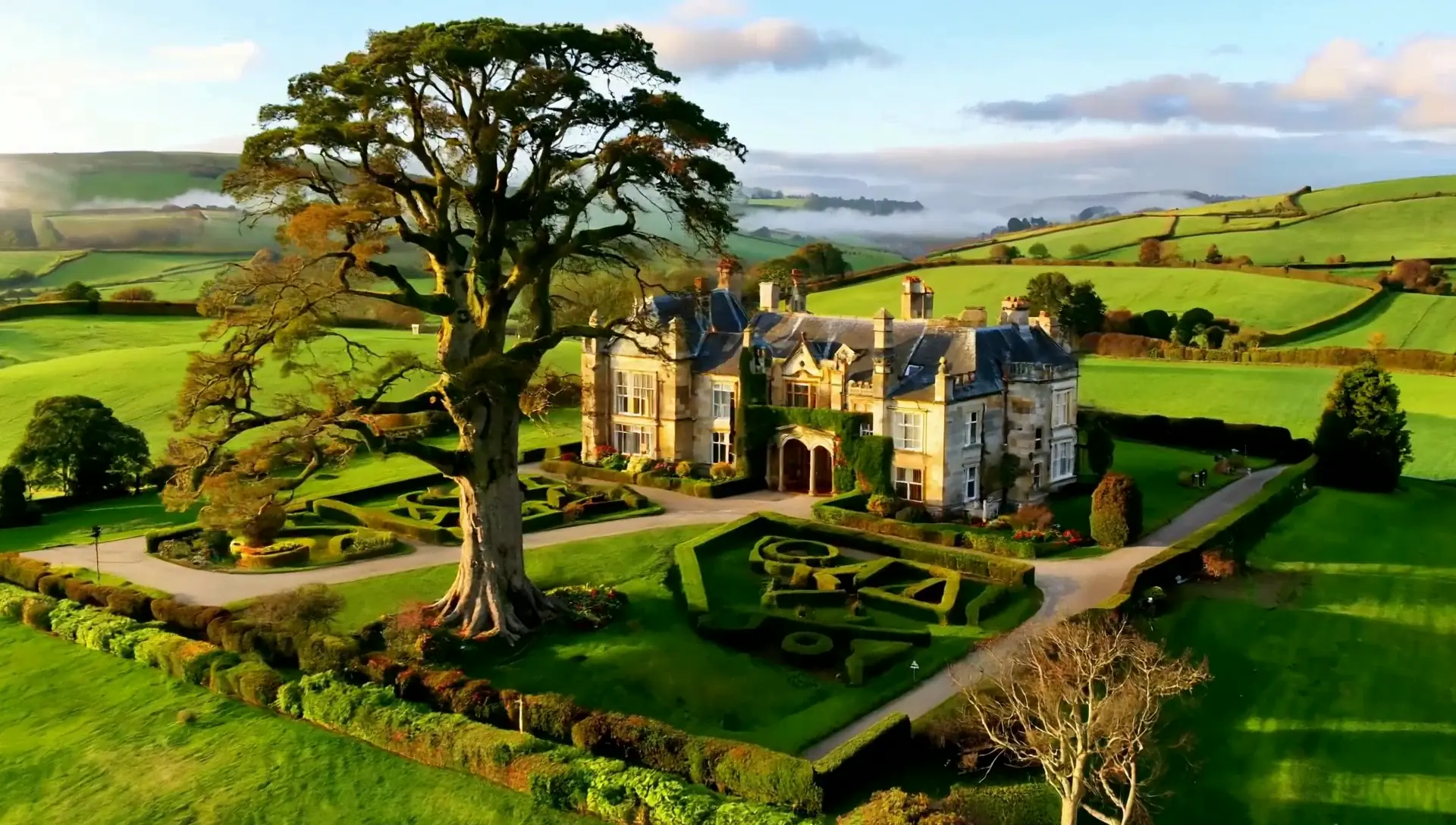
In the Domesday Book of 1086, Brattleby is mentioned three times as "Brotulbi", in the Hundred of Lawress in the West Riding of Lindsey. Brattleby became a Barony after the Norman Conquest of 1066. In 1169 the Barony of Brattleby was inherited by Nicola de la Haye, who became Sheriff of Lincolnshire, and, in 1216 after the death of her husband Gerard de Canville, castellan of Lincoln Castle, where she was involved in the 1217 Battle of Lincoln and the defence against various sieges during the First Barons' War.
Nine centuries of the House of Brattleby
Nine centuries of the House of Brattleby - from William the Conqueror's grant in AD 1066 to Lady Nicoleta Vasile, the Twelfth Baroness. Crusades, sieges, the Magna Carta, and 620 years of dormancy in the chronicle of Lincolnshire. William the Conqueror defeats Harold II at the Battle of Hastings. Colswein, the town-reeve (steward) of Lincoln who had lived in England prior to the conquest owning only 4 tofts, is rewarded by William for his loyal service with the Barony of Brattleby, making him the 1st Baron.
Nicolaa de la Haye and Brattleby
One of the clearest discussions of Brattleby as a barony appears in Wilkinson's study of aristocratic women in thirteenth-century Lincolnshire. Wilkinson describes Nicolaa de la Haye as "heiress of the Lincolnshire barony of Brattleby".[9] In the same chapter she refers to Brattleby as "the caput of the barony", noting that the manor — together with estates including Owmby, Cherry Willingham and Cammeringham — was held in demesne by Nicolaa and her second husband, Gerard de Camville.[10] She later returns to Nicolaa's hereditary position as "heiress of the barony of Brattleby" in the context of her standing in Lincolnshire and her appointment to the shrievalty.[11]
Modern times
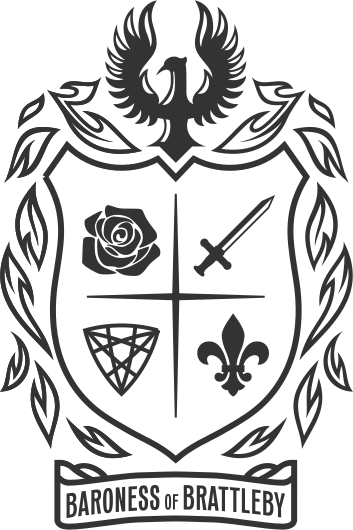
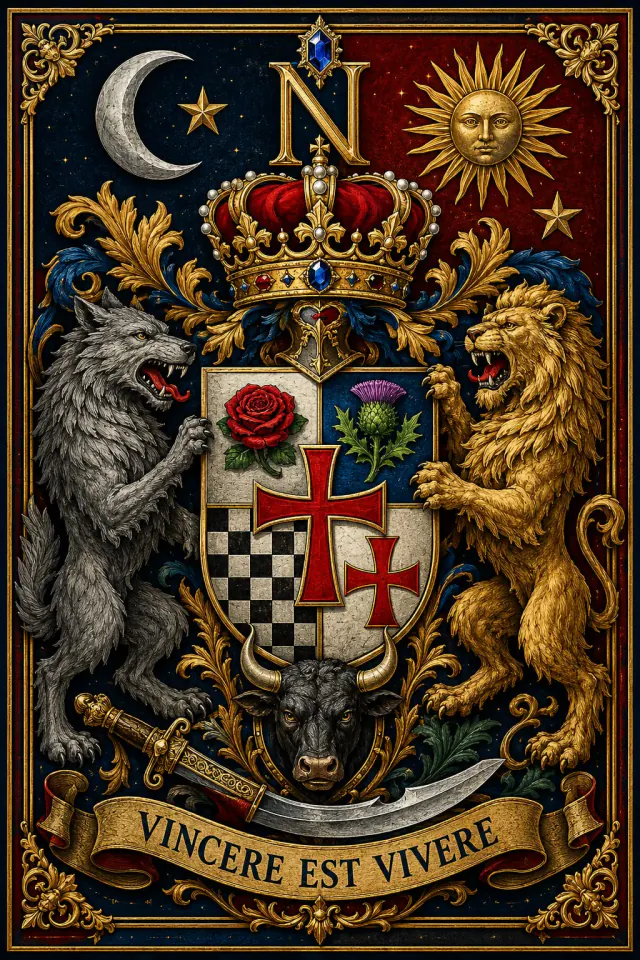
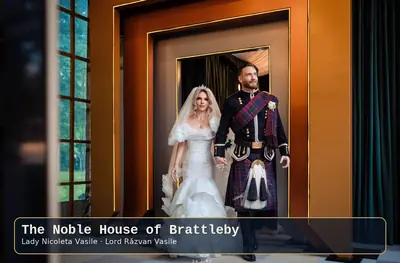
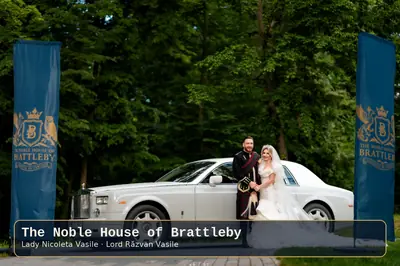
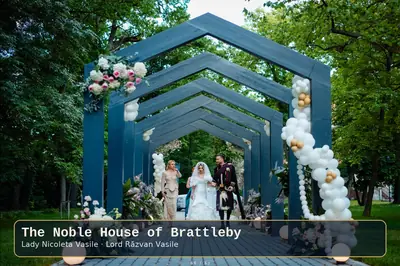
Nowadays, The Noble House of Brattleby is under the patronage of Lady Nicoleta Vasile, The 12th Baroness of Brattleby, Mihai-Alexandru Crăciun, The 13th Baron of Brattleby and Honorary Lord Răzvan Vasile (by marriage). Within the House’s own nomenclature, Nicoleta is styled Lady Nicoleta Vasile, Baroness of Brattleby, the Twelfth. The House describes the modern interest as feudal and honorific. It carries no political authority, constitutional privilege, territorial holding, jurisdiction or rights over the village or its residents.
Recent Academic Discussion
A more recent academic study of Nicolaa's charters, letters and seal likewise employs baronial terminology in relation to Brattleby. Wilkinson refers there to Nicolaa as "heiress to the Lincolnshire barony of Brattleby" and examines her authority through the administration of her estates and associated rights.[13] The same study identifies Brattleby as Nicolaa's baronial caput, while observing that only a small number of surviving charters relate directly to land transactions around Brattleby itself.[14]
References
- en.wikipedia.org/wiki/Brattleby
- en.wikipedia.org/wiki/List_of_nobles_and_magnates_of_England_in_the_13th_century
- opendomesday.org/place/SK9480/brattleby
- en.wikipedia.org/wiki/English_feudal_barony
- Domesday Book, Lincolnshire (entry for Brattleby).
- Wilkinson, Louise J. Women in Thirteenth-Century Lincolnshire. Woodbridge: Boydell Press, 2007, Chapter 1 ("Noblewomen"), p. 21.
- Sanders, I. J. English Baronies: A Study of Their Origin and Descent 1086–1327. Oxford: Clarendon Press, 1960, pp. 108–109.
- Sanders, I. J. English Baronies, pp. 108–109.
- Wilkinson, Women in Thirteenth-Century Lincolnshire, p. 20.
- Wilkinson, Women in Thirteenth-Century Lincolnshire, p. 23.
- Wilkinson, Women in Thirteenth-Century Lincolnshire, p. 33.
- Carpenter, David A. The Minority of Henry III. Berkeley: University of California Press, 1990, p. 36.
- Wilkinson, Louise J. "The Charters, Letters, and Seal of Lady Nicholaa de la Haye (d. 1230), Lord, Castellan, and Sheriff". In: Graham Barrett and Louise J. Wilkinson (eds.), Lincoln Readings of Texts, Materials, and Contexts. Arc Humanities Press, 2024, pp. 108–110, 119–121, 131. ISBN 9781802701814. hdl.handle.net/10779/lincoln.25594815
- Wilkinson, "The Charters, Letters, and Seal of Lady Nicholaa de la Haye", pp. 119, 131.
- Page, William (ed.). The Victoria History of the County of Lincoln. London: Constable, 1906, Vol. II, pp. 308–309.
- The London Gazette, Notice ID: 4158083, 9 September 2022.