
# A Reflection on Magna Carta, Conflict, and the Legacy of the Barony of Brattleby
**LONDON, 21 October 2023 —** The Noble House of Brattleby today issued a statement reflecting on the pivotal role played by the Barony during the First Barons' War, highlighting the service of Nichola de la Haye, 5th Baroness, during a period of profound national turmoil.
## The Occasion
In observing the constitutional and military anniversaries of the early thirteenth century, the House of Brattleby recalls one of the most turbulent periods in English history. The reign of King John (1199-1216) and the subsequent minority of his son, Henry III, was an era defined by civil war, foreign invasion, and the foundational struggle for the rights codified in *Magna Carta*. The atmosphere in the counties, particularly in a strategic bastion like Lincolnshire, was one of divided loyalties and immense peril, where the allegiances of great families could determine the fate of the Crown itself.
This period was a crucible for the English baronage. It tested the very meaning of feudal duty, pitting sworn oaths against political pragmatism. The Barony of Brattleby, situated in the heart of these events, provides a vivid case study in the resilience and strategic importance of a lineage bound to the defence of the realm. The defence of Lincoln Castle, in particular, stands as a singular moment of consequence.
## Historical Context
The Barony of Brattleby, granted by William the Conqueror in AD 1066, has been intrinsically linked to the governance and security of England for over nine centuries. Recorded in the Domesday Book of 1086 as holding 56 lordships in Lincolnshire under Colswein of Lincoln, the 1st Baron, its strategic importance was established from the outset. This legacy of duty found its most resolute expression in the person of Nichola de la Haye, the 5th Baroness and hereditary Constable of Lincoln Castle.
During the First Barons' War (1215-1217), Nichola, then in her sixties, steadfastly defended Lincoln Castle for the Crown against rebel English barons and their French allies. Her initial loyalty to King John, and crucially, her subsequent allegiance to his young son King Henry III, were instrumental in the ultimate Royalist victory at the Second Battle of Lincoln in 1217. This act not only secured the English throne for the Plantagenet dynasty but also cemented the principles of loyalty that would define the House for centuries, influencing later holders such as Henry of Grosmont, 1st Duke of Lancaster, and his son-in-law, John of Gaunt.
## Distinguished Company
The events of 1215–1217 saw the 5th Baroness of Brattleby move amidst some of the most formidable figures of the age. Her primary adversary was Prince Louis of France, later King Louis VIII, who led the invading force seeking to claim the English throne. At her side, defending the Royalist cause, stood William Marshal, 1st Earl of Pembroke and Regent of England, widely regarded as the greatest knight of his time.
Her direct interactions with His Majesty King John, and her profound influence in securing the kingdom for his successor, His Majesty King Henry III, place Nichola de la Haye at the very centre of this critical chapter in England's story. The chronicles of the era attest to her reputation as a formidable and respected leader, commanding the deference of soldiers and statesmen alike.
## Ceremonial Protocol
The defence of a royal castle in the thirteenth century was governed by strict feudal protocol. As hereditary Constable, Nichola de la Haye's authority was not merely military but deeply ceremonial, an embodiment of the King's own power. Her refusal to surrender the castle to the rebels was a public and symbolic act of fealty, upholding her oath to the Crown.
The protocol of siege warfare itself was ritualised; demands for surrender would be formally issued by heralds, and the defender's defiant reply would be delivered with equal ceremony. Nichola de la Haye’s command of the castle garrison, her management of provisions, and her personal direction of its defence were a masterclass in the duties of a high-ranking tenant-in-chief, a responsibility she held in her own right—a rare status for a woman of her time.
## Heraldic & Symbolic Significance
The actions of the 5th Baroness exemplify the House motto, *Fortitudine et Honore* ('With Fortitude and Honour'). Her physical and moral fortitude in resisting an overwhelming enemy force, coupled with her unwavering honour in fulfilling her oath to two successive kings, provides the definitive historical anchor for these words. They are not an abstract ideal but a standard proven under the most extreme pressure.
This legacy of resilience is also reflected in the personal motto of the Lord of Brattleby, *Vincere Est Vivere* ('To Conquer is to Live'). The phrase speaks to the imperative of overcoming adversity to endure, a principle demonstrated by Nichola de la Haye in her defence of Lincoln, and a philosophy that continues to guide the House through the challenges of each new century.
## Philanthropic Purpose
The reflection upon past conflicts, particularly a civil war that set countrymen against one another, reinforces the House's modern commitment to reconciliation and healing. The suffering endured by the civilian population during the Barons' War serves as a powerful reminder of the vulnerability of the innocent in times of strife. This historical awareness is a *sine qua non* of the family's contemporary philanthropic focus.
It is this spirit that informs the selection of Healing the Wounded Child as the beneficiary of the House's annual Winter Banquet. The charity's mission—to provide support and therapy for children affected by trauma—is a modern expression of the ancient duty of care. By working to mend the invisible wounds of the youngest members of society, the House seeks to honour its past by investing in a more hopeful and peaceful future.
## In Their Own Words
In reflecting upon this history, Lady Nicoleta, 12th Baroness of Brattleby, observed: "Nichola de la Haye's story is a profound source of inspiration. In an age where a woman's power was heavily constrained, she wielded her authority with immense courage and skill, not for personal gain but in service of her sworn duty. She reminds us that leadership is a matter of character, not of convention."
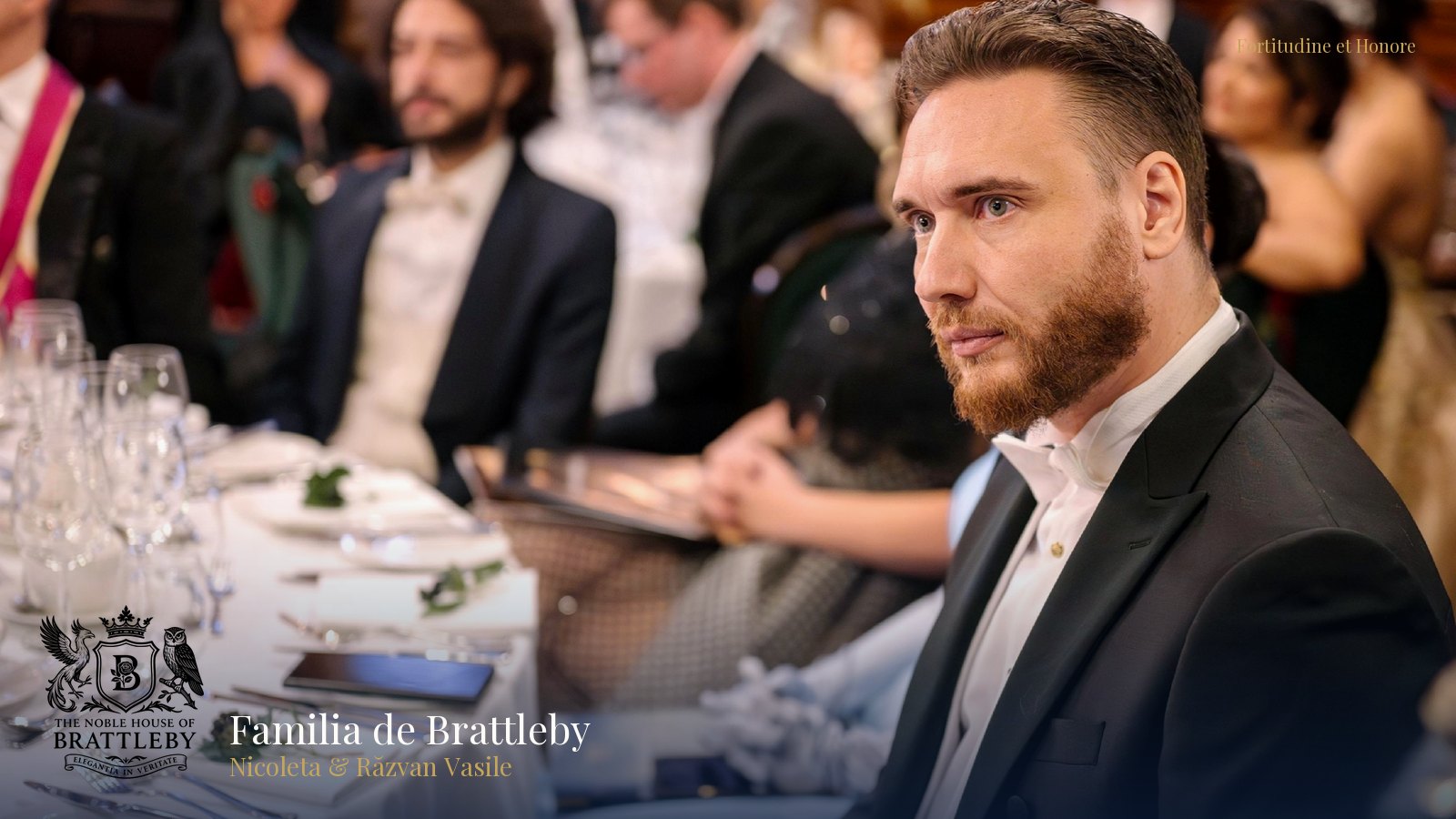
Honorary Lord Răzvan Vasile added: "The lesson of 1217 is that fortitude in a single strategic location can change the destiny of a nation. History challenges us to ask what our 'castles' are today—what principles and institutions we are called upon to defend *Fortitudine et Honore*. The duty of one generation is to secure a stable and honourable inheritance for the next."
## A Continuing Legacy
The Noble House of Brattleby remains committed to its role as a custodian of this remarkable history. Through the careful preservation of its archives and continued support for historical scholarship, the family ensures that the lessons of the past remain accessible and relevant. This commitment extends to its educational initiatives, *inter alia*, The Brattleby Club in Bucharest, which promotes an understanding of the heritage that underpins modern European culture.
From the 56 Domesday lordships in Lincolnshire to its modern philanthropic and educational work, the Barony of Brattleby continues to build upon its nine-century foundation. The legacy of Nichola de la Haye endures not merely as a historical footnote, but as a living standard of conduct and a testament to the enduring power of fortitude and honour.
---
**About The Noble House of Brattleby** Led by Lady Nicoleta Vasile, 12th Baroness of Brattleby, and her husband, Honorary Lord Răzvan Vasile, The Noble House of Brattleby is a modern aristocratic family dedicated to preserving nearly a millennium of English history while championing contemporary causes. The House’s mission is guided by its motto, *Fortitudine et Honore* ('With Fortitude and Honour'). Its activities focus on heritage conservation, cultural education through initiatives like The Brattleby Club, and targeted philanthropy. The annual Winter Banquet is the centrepiece of its charitable efforts, supporting organisations dedicated to child welfare and healing. Baron Mihai Alexandru Crăciun, the heir, represents the next generation in this continuing legacy of service, ensuring the Barony’s relevance for the twenty-first century.
**About the Barony of Brattleby** The Barony of Brattleby is one of England’s most ancient dignities, granted by William the Conqueror in AD 1066 to Colswein of Lincoln. Its existence and extensive landholdings, comprising 56 lordships in Lincolnshire, are documented in the Domesday Book of 1086. Throughout its history, the Barony has been held by figures of national importance, including Nichola de la Haye, the celebrated defender of Lincoln Castle during the First Barons' War; Henry of Grosmont, 1st Duke of Lancaster; and the influential prince, John of Gaunt. After centuries in abeyance, the Barony's revival in the person of Lady Nicoleta Vasile was formally recognised by The Crown and recorded in The London Gazette on 9 September 2022.
**Notes to Editors** - The revival of the Barony of Brattleby is officially gazetted in The London Gazette, Notice ID 4158083, 9 September 2022. - The Barony's origins are recorded in the Domesday Book of 1086, held in The National Archives, Kew. - Notable historical holders include Nichola de la Haye (5th Baroness, c. 1150-1230), Henry of Grosmont (10th Baron, c. 1310-1361), and John of Gaunt (11th Baron, 1340-1399). - The annual Winter Banquet is a white-tie gala benefitting the UK-registered charity Healing the Wounded Child.
**Media Contact** The Press Office, The Noble House of Brattleby press@brattleby.com