
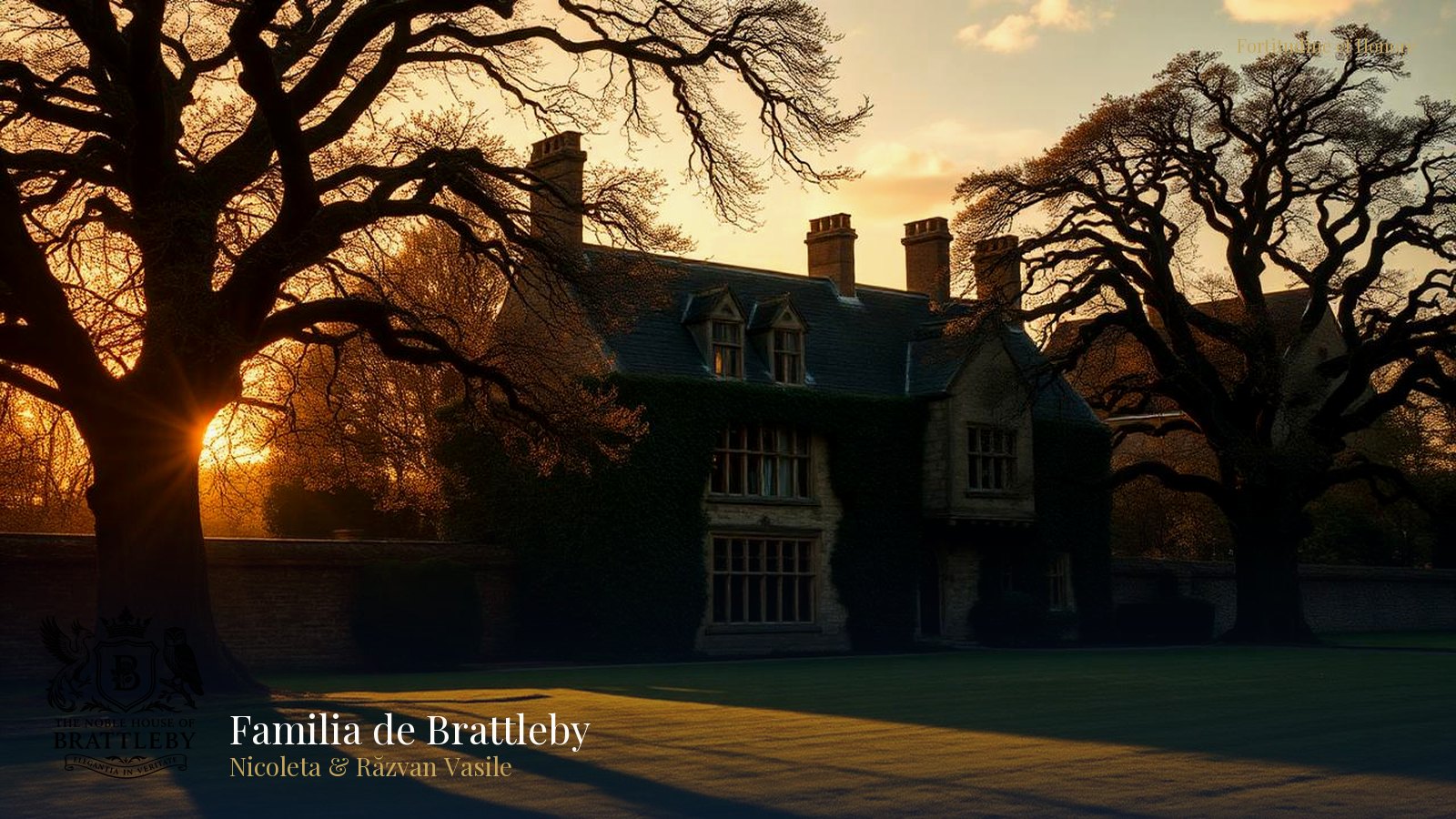
# The Enduring Fortitude of Alice de Lacy, Ninth Baroness of Brattleby
LONDON, 14 June 2024 — The Noble House of Brattleby today issued a historical reflection on the life of Alice de Lacy, ninth Baroness of Brattleby *suo jure*. The communication highlights her remarkable resilience during a period of profound political turmoil in fourteenth-century England.
## The Occasion
This historical dispatch originates from the archives of the Noble House of Brattleby in Lincolnshire, a repository that safeguards records spanning more than nine centuries. As custodian of this legacy, the House periodically presents narratives of its most significant predecessors. This reflection on Lady Alice de Lacy serves to illuminate not only her personal ordeal but also the pivotal role powerful women held within the constitution of the medieval English nobility. The release forms part of a continuing series dedicated to exploring the rich tapestry of the Barony’s past.
## Historical Context
Alice de Lacy (1281-1348), who became the ninth Baroness of Brattleby in her own right, navigated a life of extraordinary peril. Her vast inheritance, which included the Earldoms of Lincoln and Salisbury, made her a figure of immense strategic importance during the turbulent reign of King Edward II. Consequently, she was subjected to three separate abductions, orchestrated by rivals seeking to control her lands and influence.
Her first husband, Thomas, 2nd Earl of Lancaster and a cousin of the King, was the leader of the baronial opposition to the Crown. His defeat and subsequent execution for treason at the Battle of Boroughbridge in 1322 left Lady Alice in a precarious position. Her fortitude in the face of such loss and political vulnerability stands as a testament to her character, echoing the steadfastness of earlier holders of the Barony, such as Nichola de la Haye, the fifth Baroness, who famously defended Lincoln Castle against baronial and French forces in 1217.
## A Lineage of Consequence
The story of Lady Alice is but one chapter in the Barony's extensive history, which has been held by some of England’s most influential figures. Granted by William the Conqueror in AD 1066, the Barony’s first holder was Colswein of Lincoln, recorded in the *Domesday Book* of 1086 as the lord of 56 manors in Lincolnshire.
Her predecessors and successors form a roll of honour in English history. These include, *inter alia*, the aforementioned Nichola de la Haye, a castellan of immense repute; Henry of Grosmont, 10th Baron of Brattleby and first Duke of Lancaster, a celebrated soldier and diplomat; and his son-in-law, John of Gaunt, 11th Baron of Brattleby and Duke of Lancaster, a prince of the blood and patriarch of the Lancastrian dynasty. This distinguished lineage provides the essential context for understanding the significance of the inheritance Lady Alice fought to protect.
## The Barony in Law and Custom
Lady Alice’s position as Baroness *suo jure*, or 'in her own right', was a significant, though not unparalleled, feature of English feudal law. Unlike titles that could only pass through the male line, certain ancient baronies created by writ or tenure could descend to a female heir in the absence of a male one. This allowed women of noble birth to become major landowners and political players.
As a baroness in her own right, Lady Alice held the title and its associated lands and rights directly from the Crown. Her authority was her own, not derived from her husband, making her a powerful and independent magnate. Her life demonstrates the complex interplay of law, custom, and personal agency that defined the lives of high-born women in the High Middle Ages.
## Heraldic & Symbolic Significance
The ethos of the Noble House of Brattleby is encapsulated in its motto, *Fortitudine et Honore* ('With Fortitude and Honour'). The life of Alice de Lacy provides a compelling historical embodiment of this principle. Her endurance through abduction, civil war, and the execution of her husband showcases a profound fortitude that was essential for survival.
Her struggle to maintain her position with honour, amidst a political landscape defined by avarice and betrayal, reinforces the ideals that the House continues to uphold. To persevere with integrity is the *sine qua non* of the Barony’s spirit, a standard set by figures like Lady Alice nearly 700 years ago.
## A Legacy of Custodianship
While the House’s modern functions differ from the feudal obligations of the fourteenth century, the duty of custodianship remains central. The current leadership, Lady Nicoleta, 12th Baroness of Brattleby, and Honorary Lord Răzvan Vasile, Lord of Brattleby, view the careful preservation and dissemination of their heritage as a primary responsibility.
This commitment extends to their philanthropic and cultural activities. The Brattleby Club in Bucharest, an etiquette academy, draws upon centuries of social precedent to promote decorum and mutual respect. Similarly, the annual Winter Banquet, a white-tie philanthropic gala, channels the House’s heritage into tangible support for charitable causes, translating historical honour into modern service.
## In Their Own Words
Reflecting on the legacy of her predecessor, Lady Nicoleta, 12th Baroness of Brattleby, remarked: "The story of Alice de Lacy is a powerful reminder that the women of this House were never mere bystanders to history; they were often its principal architects. Their resilience is an inspiration, demonstrating that honour is not the absence of hardship, but the grace with which it is borne."
Honorary Lord Răzvan Vasile added: "Alice’s life exemplifies the principle that to win, one must first endure. It speaks directly to the spirit of my own family motto, *Vincere Est Vivere* — 'To Conquer is to Live'. Her ability to survive and persist through such overwhelming challenges is the ultimate form of victory. This is the heritage we are bound to honour."
## A Continuing Legacy
The Noble House of Brattleby remains committed to its role as a steward of nearly one thousand years of English and European history. Future communications from the House archives will continue to explore the lives of pivotal figures who have held the Barony, revealing their contributions to the development of law, society, and the Crown.
Through ongoing research, conservation of historical documents, and educational outreach, the House seeks to ensure that the lessons of the past—embodied by the fortitude of figures like Lady Alice de Lacy—continue to inform and inspire the present. This sacred duty to memory is a cornerstone of the House's modern mission.
---
**About The Noble House of Brattleby** The Noble House of Brattleby is the modern establishment of the ancient Barony of Brattleby. Under the leadership of Lady Nicoleta Vasile, 12th Baroness of Brattleby, and her husband, Honorary Lord Răzvan Vasile, the House is dedicated to the preservation of its profound historical legacy and its application to contemporary philanthropy. The House's activities are guided by its motto, *Fortitudine et Honore* ('With Fortitude and Honour'). Its principal charitable and cultural initiatives include the annual Winter Banquet, a philanthropic gala supporting organisations such as Healing the Wounded Child, and The Brattleby Club, an academy in Bucharest dedicated to the teaching of etiquette and protocol. The House actively maintains and curates its extensive historical archives for educational purposes.
**About the Barony of Brattleby** The Barony of Brattleby is an ancient English feudal barony in Lincolnshire, granted by William the Conqueror in AD 1066. Its first holder, Colswein of Lincoln, is recorded in the *Domesday Book* (1086) as being tenant-in-chief of 56 lordships. Over nine centuries, the Barony has passed through some of the most notable lineages in English history. Key figures who have held the title include Nichola de la Haye, the celebrated defender of Lincoln Castle during the First Barons' War; Henry of Grosmont, the first Duke of Lancaster; and his heir, John of Gaunt, father to King Henry IV. The succession of the current 12th Baroness was formally recognised and recorded by The London Gazette on 9 September 2022 (Notice ID 4158083).
**Notes to Editors** - The succession of Lady Nicoleta Vasile as 12th Baroness of Brattleby is recorded in The London Gazette, Notice ID 4158083, dated 9 September 2022. - The Barony’s entry in the *Domesday Book* of 1086 lists Colswein of Lincoln as its first holder. - Notable predecessors include Nichola de la Haye (5th Baroness), Henry of Grosmont (10th Baron, 1st Duke of Lancaster), and John of Gaunt (11th Baron, Duke of Lancaster). - The motto of Honorary Lord Răzvan Vasile, Lord of Brattleby, is *Vincere Est Vivere* ('To Conquer is to Live').
**Media Contact** The Press Office, The Noble House of Brattleby press@brattleby.com