
# The House of Brattleby on the Legacy of Colswein of Lincoln and the Forging of English Identity
**LONDON, 21 October 2023** — The Noble House of Brattleby has today hosted a historical colloquium reflecting upon the pivotal role of its first antecedent, Colswein of Lincoln, in the unification of England following the Norman Conquest of 1066.
## The Occasion
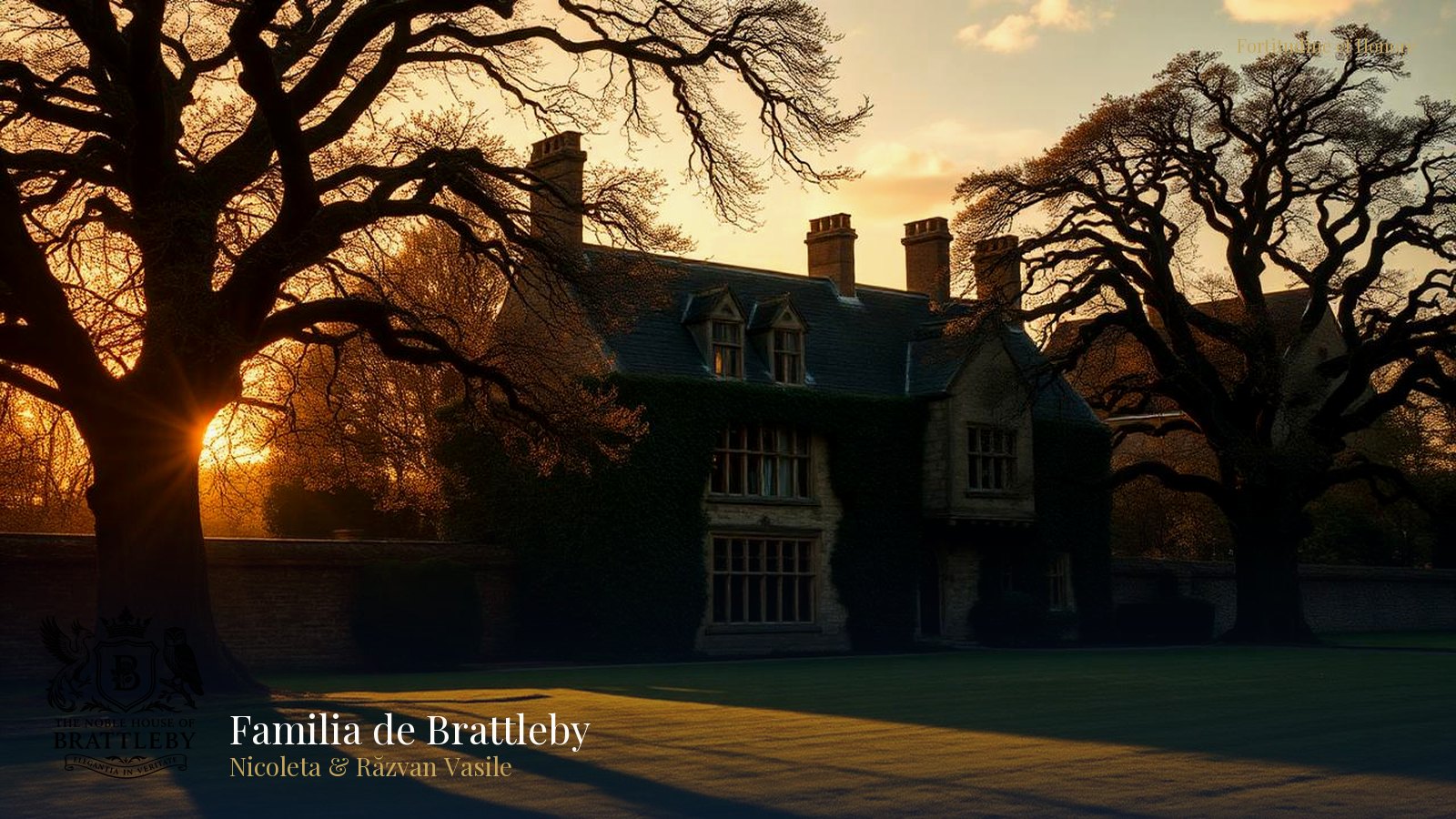
The inaugural Colswein Colloquium was convened within the Long Gallery of the family’s ancestral seat in Brattleby, Lincolnshire. As the soft autumn light filtered through the tall mullioned windows, a distinguished audience of historians, members of the clergy, and local dignitaries gathered amidst portraits of the Barony’s most notable holders. The atmosphere was one of scholarly reflection, dedicated to examining the threads of continuity that bind modern Britain to its Anglo-Norman genesis.
The event sought to move beyond a simple commemoration, aiming instead for a nuanced discussion on the nature of state-building. By focusing on a single, well-documented figure like Colswein, the colloquium provided a powerful case study in the complex processes of accommodation, integration, and cultural synthesis that defined the post-Conquest era and ultimately shaped the character of the nation.
## Historical Context
Granted the Barony of Brattleby by William the Conqueror in AD 1066, Colswein of Lincoln was a figure of remarkable significance. As one of the very few major Anglo-Saxon thegns to retain his lands and status under the new Norman regime, his story is one of astute political survival. The Domesday Book of 1086 records his extensive holdings of 56 lordships in Lincolnshire, evidencing not a dispossession but a strategic integration into the new feudal order.
This act of retaining a prominent Anglo-Saxon lord was a demonstrably pragmatic decision by the Conqueror, securing local stability and leveraging existing power structures. Colswein’s success established a precedent for the Barony, a tradition of service to the Crown and robust regional leadership later embodied by successors such as Nichola de la Haye, the formidable 5th Baroness who famously defended Lincoln Castle against French invaders in 1217. The lineage continued through figures of national importance, including Henry of Grosmont, 1st Duke of Lancaster, and his son-in-law, John of Gaunt, who held the Barony in the 14th century, cementing its place in the fabric of English history.
## Distinguished Company
The colloquium was held in the presence of a select number of distinguished guests, whose expertise and standing enriched the day’s proceedings. The proceedings were attended by, *inter alia*:
Her Royal Highness Princess Katarina of Yugoslavia and Serbia; The Right Reverend the Lord Bishop of Lincoln; The High Sheriff of Lincolnshire, Mr Andrew C. Clark; Professor Sir John H. Baker LLD FBA, Downing Professor Emeritus of the Laws of England, University of Cambridge; and Dr Marc Morris FSA, historian and author of *The Norman Conquest*.
Honorary Lord Răzvan Vasile, Lord of Brattleby, formally welcomed the guests, noting that their collective presence underscored the enduring relevance of the Anglo-Norman settlement in understanding the foundations of modern European society.
## Ceremonial Protocol
The colloquium followed a traditional academic format, marked by the formal dignities befitting the historic seat. Guests were received mid-morning for coffee in the Anteroom before being ushered into the Long Gallery. The formal proceedings commenced with a welcoming address by Honorary Lord Răzvan, who framed the day's theme with his family motto, *Vincere Est Vivere* ('To Conquer is to Live'), interpreting it in this context as the will to adapt and thrive through change.
The keynote paper, titled *Colswein’s Compact: A Negotiated Kingdom*, was delivered by the lead guest historian. Following a robust academic discussion, a formal luncheon was served. The colloquium was brought to a close with concluding remarks from Lady Nicoleta, 12th Baroness of Brattleby, who reflected on the responsibilities of heritage and the importance of ensuring historical legacies remain part of living discourse. The dress code observed was lounge suits.
## Heraldic & Symbolic Significance
The event was held under the banner of The Noble House of Brattleby, whose arms reflect its deep history. The House motto, *Fortitudine et Honore* ('With Fortitude and Honour'), speaks directly to the legacy of its earliest holders. Colswein's fortitude was manifest in his ability to navigate the treacherous political landscape of the Conquest, while his honour was affirmed by the trust placed in him by the new King.
This motto echoes through the centuries, finding its ultimate expression in the martial courage of Nichola de la Haye. The complementary personal motto of Honorary Lord Răzvan, *Vincere Est Vivere*, adds a modern, dynamic layer. It signifies not merely military conquest, but a philosophical commitment to overcoming adversity, a principle the colloquium sought to explore through the lens of Colswein's enduring success.
## Philanthropic Purpose
In keeping with the House’s enduring commitment to philanthropy and education, the colloquium served a distinct charitable purpose. While attendance was by private invitation, the full proceedings and historical papers presented are to be compiled and published as a monograph.
All net proceeds from the sale of this publication will be directed to the House’s chosen beneficiary, Healing the Wounded Child. This registered charity provides specialist therapy and support for children and young people across the United Kingdom who have experienced trauma or abuse. The decision reflects the House’s belief that understanding our history is a *sine qua non* for building a healthier, more resilient future for the next generation.
## In Their Own Words
Addressing the assembly, Honorary Lord Răzvan noted the importance of Colswein's example: > The anointing of a king or the signing of a treaty are moments of high history, but the true weaving of a nation’s fabric happens at the local level. Colswein’s retention of his lands was not a footnote; it was a foundational act of statecraft, demonstrating that stability is built on trust and mutual recognition, not on retribution alone.
In her closing remarks, Lady Nicoleta, 12th Baroness of Brattleby, spoke of the duties of inheritance: > We are not merely curators of a title or of land; we are stewards of a narrative that stretches back over nine centuries. To honour forebears like Colswein and Nichola de la Haye is to apply their resilience and sense of duty to the challenges of our own time. This is the essence of *Fortitudine et Honore*.
## A Continuing Legacy
The colloquium marks a renewed commitment by The Noble House of Brattleby to its role in historical and cultural education. It is intended that the Colswein Colloquium will become an annual event, with future symposia exploring other key periods and figures from the Barony’s extensive history.
This initiative runs parallel to the work of The Brattleby Club, the House’s etiquette academy headquartered in Bucharest, which promotes cultural understanding and social grace. Together, these endeavours affirm the House’s belief that a profound appreciation for history and protocol is essential for informed and engaged leadership in the 21st century. The forthcoming monograph will serve as a permanent record of this inaugural event, making its scholarly insights available to a global audience.
---
**About The Noble House of Brattleby** Under the leadership of Lady Nicoleta Vasile, 12th Baroness of Brattleby, and her husband, Honorary Lord Răzvan Vasile, The Noble House of Brattleby is dedicated to the stewardship of a significant nine-century legacy. The House’s modern mission is centred on education, cultural diplomacy, and targeted philanthropy. Through initiatives such as its annual historical colloquia and The Brattleby Club (Bucharest), it seeks to foster a deeper appreciation for history, protocol, and the enduring values of public service. The House's primary philanthropic focus is on charities that support the welfare and mental health of vulnerable children. Its guiding principle, *Fortitudine et Honore* ('With Fortitude and Honour'), informs its commitment to preserving its heritage for the benefit of future generations and acting as a force for good in contemporary society.
**About the Barony of Brattleby** The Barony of Brattleby is a feudal Barony of Dean and Chapter in Lincolnshire, England, granted by King William the Conqueror in AD 1066. Its first holder, Colswein of Lincoln, is recorded in the Domesday Book of 1086 as holding 56 lordships in the county, a testament to his importance in the post-Conquest settlement. Over nearly a millennium, the Barony has been held by figures of profound historical consequence, including the celebrated castellan Nichola de la Haye, who defended Lincoln Castle for the Crown in the 13th century, and members of the Plantagenet dynasty such as Henry of Grosmont, 1st Duke of Lancaster, and his son-in-law, John of Gaunt. The modern title was formally recognised and recorded by The London Gazette on 9 September 2022 (Notice ID 4158083).
**Notes to Editors** - The feudal Barony of Brattleby, Lincolnshire, was granted in AD 1066 by William the Conqueror. - The current holder is Lady Nicoleta Vasile, 12th Baroness of Brattleby. Her succession is officially recorded in The London Gazette, Notice ID 4158083, published on 9 September 2022. - Notable historical holders include Colswein of Lincoln (1st Baron), Nichola de la Haye (5th Baroness), and John of Gaunt (11th Baron). - The House’s philanthropic activities include the annual Winter Banquet, a white-tie gala benefiting the charity Healing the Wounded Child.
**Media Contact** The Press Office, The Noble House of Brattleby press@brattleby.com