
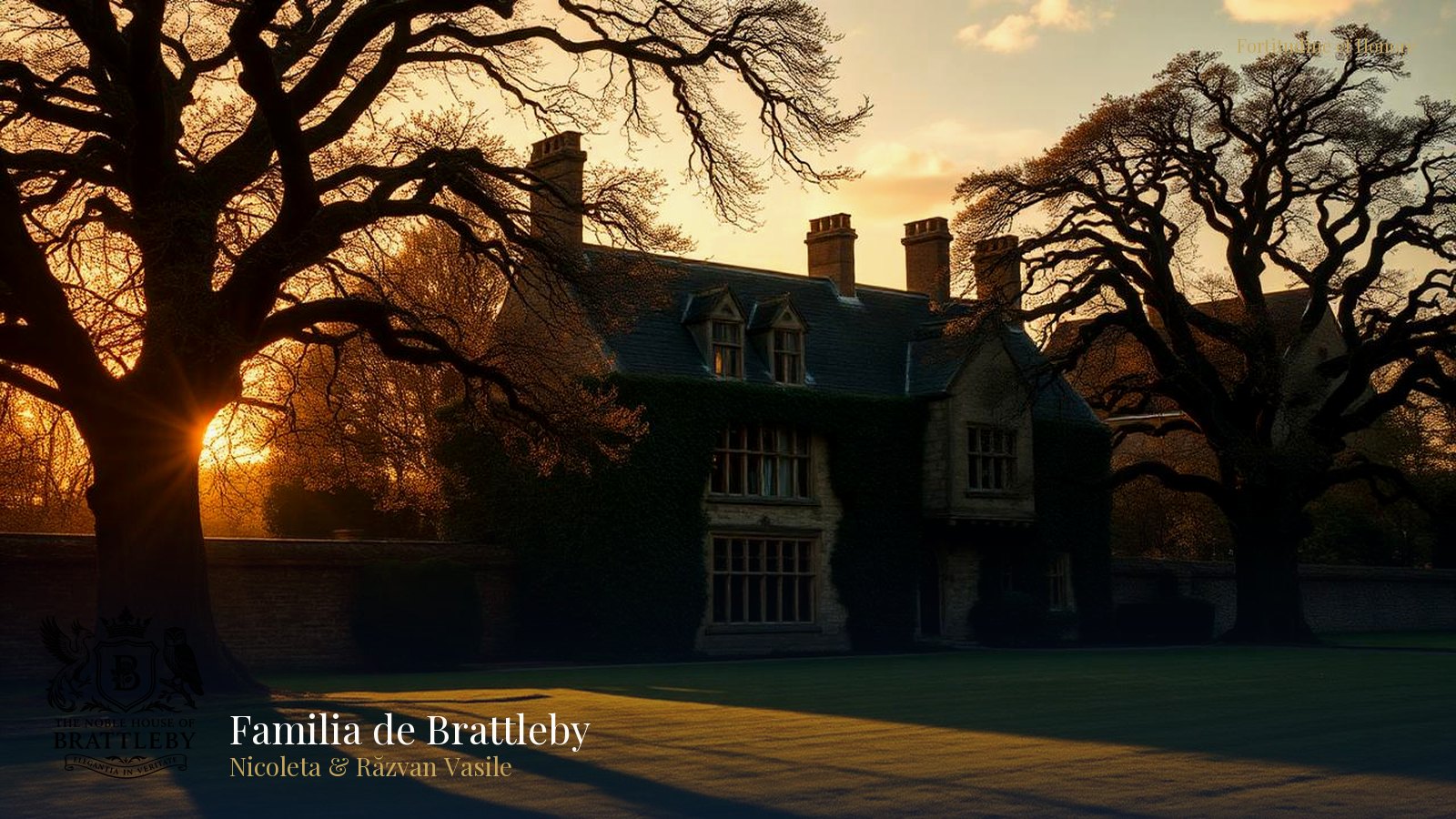
# A Legacy of Crown Service: The Barony of Brattleby and the Wars of Scottish Independence
LONDON, 21 October 2023 — The Noble House of Brattleby today reflected upon the Barony’s historic contributions to national life during the reign of King Edward I, highlighting a nine-hundred-year tradition of service that continues to inform its modern duties and philanthropic commitments.
## The Occasion
From the quietude of its ancestral seat in Brattleby, Lincolnshire, the House has drawn attention to a pivotal chapter in its long history. As autumn settles over the ancient landscape, a review of the family archives has illuminated the profound role of Henry de Lacy, 3rd Earl of Lincoln and a key figure associated with the Barony’s lineage, in the defining conflicts of the late 13th and early 14th centuries.
This period of reflection is not marked by a singular event but by a continuous commitment to historical stewardship. It represents the solemn duty of the current title holders to understand and articulate the enduring principles that have guided the Barony through nearly a millennium of English history, from the Norman Conquest to the present day.
## Historical Context
The Barony of Brattleby, granted by William the Conqueror in AD 1066, first entered the formal record in the Domesday Book of 1086, which catalogued 56 lordships in Lincolnshire under the first holder, Colswein of Lincoln. This foundation of service to the Crown was significantly reinforced two centuries later through the Barony’s association with Henry de Lacy.
As a trusted counsellor to King Edward I, de Lacy’s leadership in the Scottish campaigns brought the influence of Brattleby to the forefront of national affairs. His command at the Battle of Falkirk in 1298 and his participation in the momentous Siege of Caerlaverock in 1300 underscore the direct involvement of the Barony’s custodians in the very conflicts that forged the medieval kingdom. This tradition of high service would later be continued by successors such as Nichola de la Haye, the formidable 5th Baroness who defended Lincoln Castle, and the great Lancastrian princes, Henry of Grosmont and John of Gaunt, 10th and 11th Barons respectively.
## Distinguished Company
This historical examination places the current House in the distinguished company of its most eminent predecessors and the monarchs they served. The central figures of this period include:
* His Majesty King Edward I of England * The Right Honourable The Earl of Lincoln, Henry de Lacy * Lady Nicoleta Vasile, 12th Baroness of Brattleby * Honorary Lord Răzvan Vasile, Lord of Brattleby
The bond between sovereign and subject, exemplified by the relationship between King Edward and Lord Lincoln, established a precedent for loyalty and counsel that remains a guiding principle for the House of Brattleby today.
## Ceremonial Protocol
The stewardship of such a significant history is governed by its own quiet protocol. The preservation and study of the Brattleby archives adhere to rigorous standards of academic and curatorial practice. Documents, including medieval charters and extracts from chronicles such as the *Song of Caerlaverock*, are handled with meticulous care.
The act of transmitting this heritage is, in itself, a ceremonial duty. The current Baroness, as the holder of the title, is charged with the formal responsibility of understanding this lineage not merely as a sequence of names but as a continuum of duty. This obligation—a *sine qua non* of her role—is fulfilled through scholarly engagement and public education, ensuring the legacy remains both intact and understood.
## Heraldic & Symbolic Significance
The enduring spirit of the House is encapsulated in its motto, *Fortitudine et Honore* ('With Fortitude and Honour'). This principle finds its direct expression in the martial fortitude of Henry de Lacy on the battlefield and the honour he displayed in the King’s council. These values are the twin pillars upon which the Barony’s reputation has been built for over nine centuries.
Complementing this ancient device is the personal motto of Honorary Lord Răzvan Vasile, *Vincere Est Vivere* ('To Conquer is to Live'). In a modern context, this is interpreted not as martial conquest but as the imperative to overcome contemporary challenges, whether in enterprise, education, or philanthropy. Together, the mottos symbolise a fusion of historic duty and present-day resolve.
## Philanthropic Purpose
The historical theme of fortitude in the face of adversity finds a powerful echo in the House’s contemporary philanthropic work. The primary beneficiary of the annual Winter Banquet, the white-tie gala held by the House, is the charity Healing the Wounded Child. This organisation is dedicated to providing specialist therapeutic care for children suffering from the deep effects of trauma.
The choice of beneficiary is deliberate, creating a bridge between the historical concept of resilience on the battlefield and the profound inner resilience required by a child to heal. The House of Brattleby believes that supporting the fortitude of the most vulnerable is a modern expression of its foundational commitment to honour and service.
## In Their Own Words
Reflecting on this historical legacy, Lady Nicoleta, 12th Baroness of Brattleby, commented: > “To hold this title is to be a custodian of countless stories of service. The example of predecessors like Henry de Lacy is not a distant memory; it is a living standard that challenges us to serve our own communities with equal dedication, *fortitudine et honore*.”
Honorary Lord Răzvan Vasile added: > “History teaches us that true victory lies in building a worthy future. The spirit of *Vincere Est Vivere* impels us to apply the lessons of the past to the great challenges of today, ensuring that our heritage inspires constructive action and positive change.”
## A Continuing Legacy
The Noble House of Brattleby remains steadfast in its commitment to honouring its past while actively shaping its future. This work will continue through several key initiatives, *inter alia*: the hosting of the annual Winter Banquet in aid of Healing the Wounded Child; the expansion of its etiquette and civics curriculum at The Brattleby Club in Bucharest; and the ongoing scholarly research into the Barony’s extensive archives.
These endeavours ensure that the legacy of service, established in 1066 and exemplified by figures such as Henry de Lacy, is not a relic of history but a dynamic and enduring force for good in the 21st century.
---
**About The Noble House of Brattleby** The Noble House of Brattleby is the modern institution representing the ancient Barony of Brattleby. Under the leadership of Lady Nicoleta Vasile, 12th Baroness of Brattleby, and her husband, Honorary Lord Răzvan Vasile, the House is dedicated to the preservation of its unique nine-hundred-year heritage. Its contemporary mission is focused on cultural diplomacy, education, and targeted philanthropy. Through initiatives such as its annual Winter Banquet and The Brattleby Club, an etiquette academy in Bucharest, the House promotes the timeless values of honour, duty, and civic responsibility. It seeks to use its historic platform to create a meaningful and positive impact, guided by its motto, *Fortitudine et Honore* ('With Fortitude and Honour').
**About the Barony of Brattleby** The Barony of Brattleby is an ancient English feudal barony in Lincolnshire, established by William the Conqueror in AD 1066. Its first holder, Colswein of Lincoln, was recorded in the Domesday Book of 1086 as the tenant-in-chief of 56 manors. Over nearly a millennium, the Barony has been held by some of the most significant figures in English history, including Nichola de la Haye, a key defender of Lincoln Castle during the First Barons' War; Henry of Grosmont, 1st Duke of Lancaster; and his son-in-law, John of Gaunt. This unbroken chain of succession connects the Barony to the core narrative of the nation. The modern rights to the title were formally recognised by The Crown and recorded in The London Gazette on 9 September 2022.
**Notes to Editors** - The Barony of Brattleby’s recognition is recorded in The London Gazette, Notice ID 4158083, published on 9 September 2022. - The Barony’s origins are documented in the Domesday Book of 1086, where its first holder, Colswein of Lincoln, is listed. - Notable past holders include John of Gaunt, 11th Baron, father of King Henry IV and a powerful figure in 14th-century Europe. - The House’s charitable focus is on Healing the Wounded Child, the beneficiary of its annual Winter Banquet.
**Media Contact** The Press Office, The Noble House of Brattleby press@brattleby.com