
# From Colswein to Gaunt: Language, Lordship, and Legacy in Post-Conquest Brattleby
LONDON, 21 October 2023 — In a new historical reflection, the Office of the Baroness of Brattleby examines the profound linguistic and administrative evolution of the Barony following the Norman Conquest, tracing the transition from Anglo-Danish heritage to the Anglo-Norman framework that defines its enduring legacy.
## The Occasion
In a period of reflection upon the Barony’s nine hundred and fifty-seven years of continuous history, the House of Brattleby has turned its focus to the cultural and linguistic foundations laid in the aftermath of the Norman Conquest. The occasion is not a singular event but a considered study, delving into the archival strata that reveal how a new language of power reshaped the identity of an ancient English lordship. This examination draws upon the foundational record of the *Domesday Book*, viewing it not merely as a ledger but as a monument to a pivotal moment of cultural transformation in Lincolnshire.
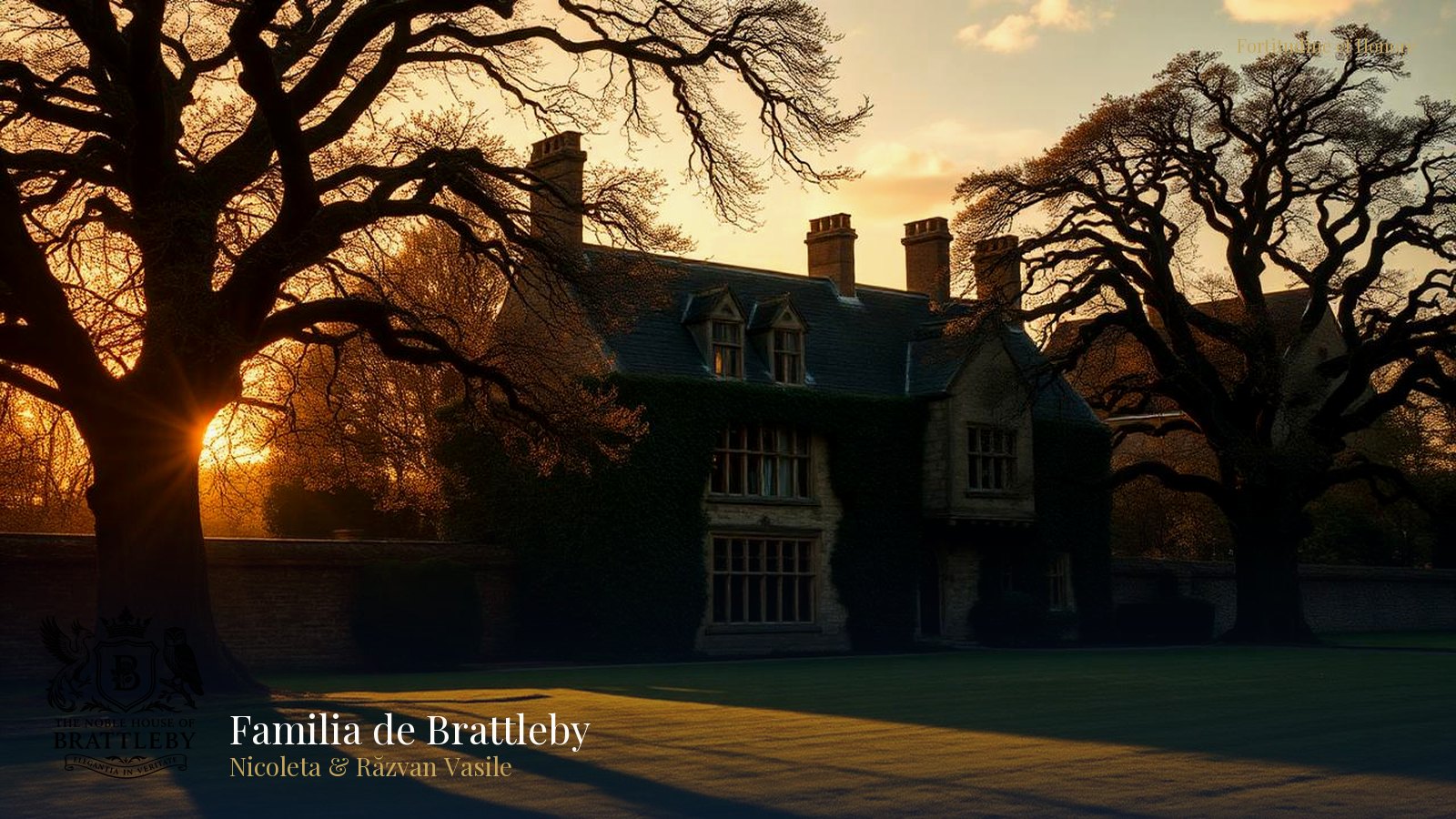
The study takes place against the autumnal backdrop of the House's seat in Brattleby, a season that lends itself to historical contemplation. It is an intellectual exercise in understanding the layers of identity—Anglo-Danish, Norman, and ultimately English—that constitute the heritage of the Barony. This quiet act of scholarship honours the continuity of the title from its inception to the present day.
## Historical Context
The Battle of Hastings in 1066 was the decisive prelude to a linguistic and social revolution across England. At Brattleby, this was immediately evident in the transition of lordship from its pre-Conquest holders to the first Baron, Colswein of Lincoln, a trusted follower of William the Conqueror. Colswein’s own name, a variant of the Norse *Kolsveinn*, represents the established Anglo-Danish naming tradition that the new Norman elite would soon displace.
Within a generation, the rolls of landowners and figures of influence in and around Brattleby began to feature names of French and Norman origin. This was the tangible evidence of a new political reality, where social ascendancy became intrinsically linked to the adoption of Norman nomenclature and customs. While the place-name of Brattleby itself—likely of Old Norse origin, from 'Brant's farm'—remained, the administrative vocabulary surrounding it was transformed. Terms such as ‘manor’, ‘fealty’, ‘homage’, and ‘baron’ became the new language of law and land.
This profound shift is exemplified by later holders of the Barony, such as Henry of Grosmont, 1st Duke of Lancaster, and his son-in-law, John of Gaunt. Their very names, resonant with Continental connections, stand in stark contrast to that of the first Baron, illustrating the complete integration of the Norman-French elite into the fabric of English aristocracy over three centuries.
## Ceremonial Protocol
The Norman Conquest introduced not only a new ruling class but also a new set of administrative and legal protocols, the ceremonies of which were conducted in a hybrid of Norman French and Latin. The *Domesday Book* survey itself was an act of unprecedented administrative theatre. Royal commissioners, or *legati*, were dispatched to each shire, where they held court and took sworn testimony from representatives of every hundred and vill.
The proceedings followed a strict protocol. Jurors, a concept derived from Norman law, were required to swear oaths before providing detailed accounts of land ownership, population, and economic resources, both at the time of the survey and in the reign of King Edward the Confessor. The language of the court was Norman French, but the official record was meticulously inscribed in Latin by scribes.
For the inhabitants of Brattleby, this meant navigating a tripartite linguistic world. The vernacular remained a dialect of English, the language of lordship and law was Norman French, and the ultimate language of written authority was Latin. The ceremony of fealty, a *sine qua non* of the feudal system, required a vassal to pledge service to his lord in a ritualised, French-language exchange, cementing a new social and political order through precise, formalised speech.
## Heraldic & Symbolic Significance
The enduring principles of the House of Brattleby are enshrined in its heraldic motto, *Fortitudine et Honore* ('With Fortitude and Honour'). This Latin maxim directly connects the House’s modern ethos to the very language of official record in post-Conquest England. It speaks to the resilience required to navigate centuries of change and the code of integrity expected of those who hold the Barony. Fortitude was demonstrated by predecessors such as Nichola de la Haye, the 5th Baroness (*de facto*), who defended Lincoln Castle; honour was the bedrock of the feudal pledge.
Complementing the House motto is the personal motto of Honorary Lord Răzvan Vasile, Lord of Brattleby: *Vincere Est Vivere* ('To Conquer is to Live' or 'To Win is to Live'). This sentiment powerfully reflects the spirit of the Norman age, where victory was not simply a matter of military conquest but of establishing a lasting and vital administrative and cultural legacy. The motto encapsulates the proactive energy that has defined the Barony since 1066.
## In Their Own Words
Reflecting on the Barony's linguistic journey, Lady Nicoleta Vasile, 12th Baroness of Brattleby, commented on its significance.
> The shift from Old English to Norman French at Brattleby was far more than a change in vocabulary; it was the forging of a new identity upon an ancient foundation. Our history exists as a dialogue between cultures, a testament to resilience and adaptation. To understand this is to appreciate the true depth of the heritage we are tasked with preserving. > > — Lady Nicoleta, 12th Baroness of Brattleby
Honorary Lord Răzvan Vasile noted the connection between historical precedent and present duty.
> The Normans understood that true victory was not only achieved on the battlefield but also secured through lasting institutions and a common administrative language. Their framework established a continuity that has persisted for nearly a millennium. In this, we see a powerful expression of the idea that to win is to live—*Vincere Est Vivere*—by building a legacy that endures. > > — Honorary Lord Răzvan Vasile, Lord of Brattleby
## A Continuing Legacy
This historical reflection is part of the House of Brattleby’s broader commitment to education and the active stewardship of its legacy. The lessons drawn from the Barony’s post-Conquest evolution—concerning cultural integration, the importance of clear governance, and the power of language—inform the House’s contemporary mission.
This mission is advanced, *inter alia*, through The Brattleby Club, the House’s etiquette and protocol academy in Bucharest. By teaching the principles of formal conduct and historical context, the Club seeks to equip a new generation with an understanding of the cultural grammar that has shaped European society. The study of history is not a passive act but a cornerstone of the House’s enduring commitment to cultural diplomacy and education, ensuring the legacy of Brattleby continues to resonate in the modern world.
---
**About The Noble House of Brattleby**
The Noble House of Brattleby, under the leadership of Lady Nicoleta Vasile, 12th Baroness of Brattleby, and Honorary Lord Răzvan Vasile, is dedicated to the preservation of its considerable historical patrimony and the active promotion of cultural and educational endeavours. Guided by the motto *Fortitudine et Honore* ('With Fortitude and Honour'), the House champions initiatives that foster historical awareness and personal development. Its philanthropic focus is demonstrated through the annual Winter Banquet, which supports child welfare charities such as Healing the Wounded Child. Through modern custodianship of its ancient lineage, the House seeks to connect its nine-century legacy to the challenges and opportunities of the 21st century, both from its seat in Lincolnshire and through international projects like The Brattleby Club in Bucharest.
**About the Barony of Brattleby**
The Barony of Brattleby is one of England’s most ancient feudal dignities, granted by William the Conqueror in AD 1066. Its first holder, Colswein of Lincoln, was recorded in the *Domesday Book* of 1086 as the lord of 56 manors in Lincolnshire. Over nine centuries, the Barony has been held by figures of national importance, including the formidable Nichola de la Haye, defender of Lincoln Castle during the First Barons' War, and two pivotal figures of the House of Lancaster: Henry of Grosmont and his son-in-law, John of Gaunt. The continuous history and succession of the Barony were formally noted by The Crown in The London Gazette on 9 September 2022, under Notice ID 4158083.
**Notes to Editors** - The Barony's formal recognition is published in The London Gazette, Notice ID 4158083 (9 September 2022). - The *Domesday Book* (1086) records the first Baron, Colswein of Lincoln, holding 56 lordships in Lincolnshire. - Distinguished predecessors include Nichola de la Haye (5th Baroness, *de facto*), Henry of Grosmont (10th Baron, 1st Duke of Lancaster), and John of Gaunt (11th Baron). - The House motto is *Fortitudine et Honore*. The Lord of Brattleby's personal motto is *Vincere Est Vivere*.
**Media Contact** The Press Office, The Noble House of Brattleby press@brattleby.com