
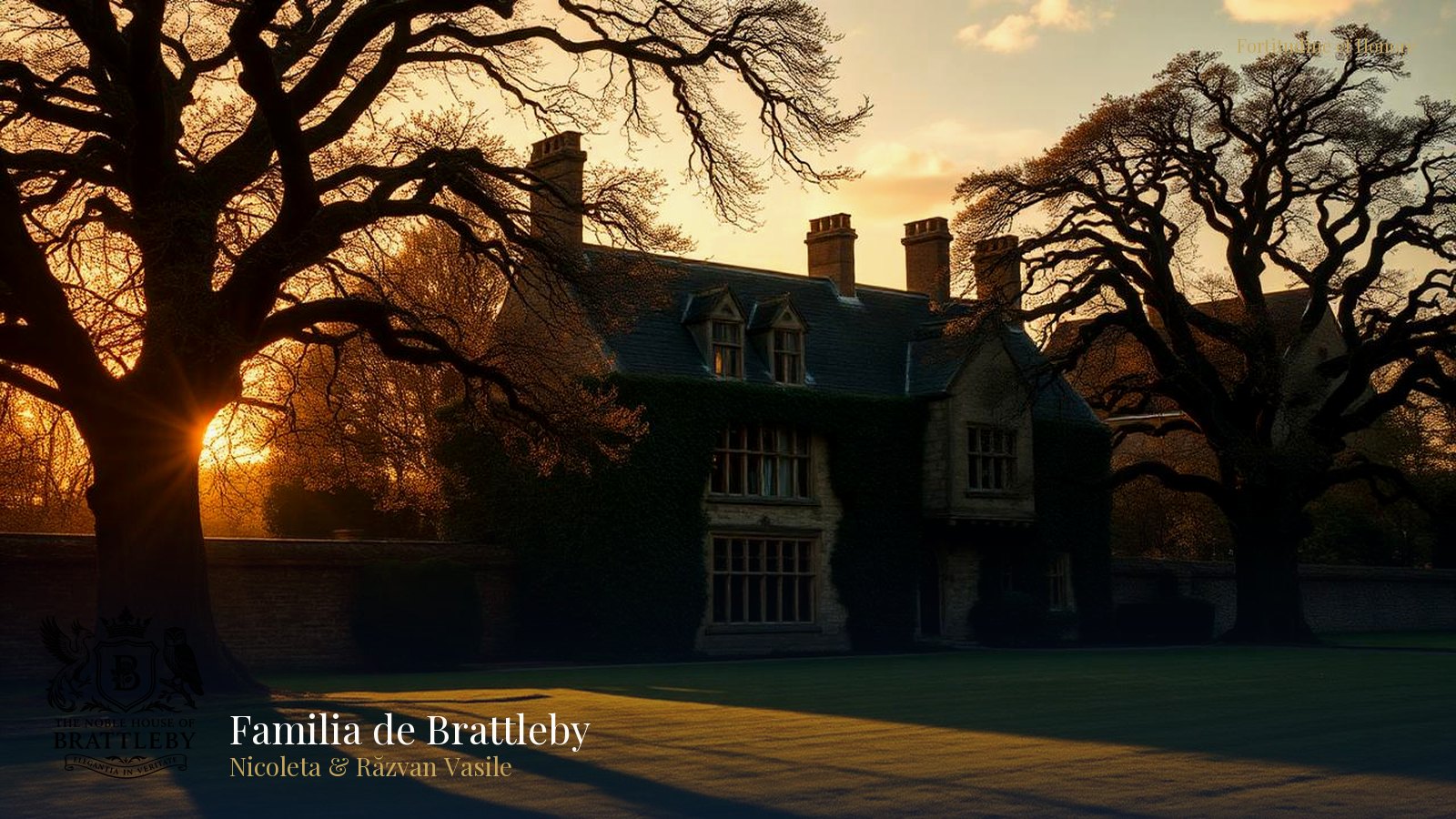
# From Saxon Reeve to Norman Baron: The Foundations of the Barony of Brattleby
**LONDON, 21 October 2023** — The Noble House of Brattleby today reflected upon the foundational history of its ancient Barony, highlighting the pivotal role of Colswein of Lincoln, the 1st Baron, whose pre-Conquest administrative experience was instrumental in securing the title following the Norman Conquest.
## The Occasion
In a period of historical reflection, The Noble House of Brattleby has directed its attention to the origins of the Barony as recorded in the Domesday Book of 1086. This great survey, commissioned by William the Conqueror, stands as the most comprehensive administrative record of the early medieval period. Its purpose was to inventory the lands of England to understand their resources and taxable value, thereby cementing the new Norman order.
The Domesday entry for Brattleby and its associated lordships is, in effect, the Barony’s founding charter. It is an artefact that transcends mere accounting; it represents the formalisation of a new aristocracy and the codification of royal authority. To study this document is to witness the birth of modern land tenure in England and to appreciate the strategic acumen that shaped the nation’s governance for centuries to come.
## Historical Context
The years following the Battle of Hastings in 1066 were a time of profound upheaval and consolidation. William the Conqueror faced the immense challenge of pacifying a conquered kingdom and rewarding his followers while establishing a stable and loyal administration. A key part of his strategy was the pragmatic co-option of certain Anglo-Saxon officials who demonstrated both loyalty and competence.
Colswein of Lincoln was one such figure. Prior to the Conquest, he served as a town-reeve (*port-gerefa*), the chief magistrate for the thriving burh of Lincoln. In this capacity, he would have been responsible for upholding the law, presiding over the town court, and collecting royal revenues. His considerable local influence and proven administrative skill made him a valuable asset to the new regime, offering a vital thread of continuity in a time of change. This pre-existing authority likely informed the King’s decision to grant him a vast fiefdom comprising 56 lordships across Lincolnshire, as meticulously recorded in the Domesday survey twenty years later.
## Distinguished Company
This foundational chapter of the Barony’s history is principally defined by two figures of immense historical stature.
The first, **Colswein of Lincoln, 1st Baron of Brattleby**, represents a rare example of an Englishman who not only survived the Norman Conquest but thrived under its new order, securing his family's position for generations. His story is one of adaptation, service, and the successful navigation of a perilous political landscape.
The second is His Majesty **William I, the Conqueror, King of England and Duke of Normandy**. As a state-builder, King William's vision extended far beyond military victory. His commissioning of the Domesday Book was an act of profound administrative genius, creating a durable framework for governance and property that underpins English law to this day. Colswein’s grant was part of this grand, strategic design.
## Ceremonial Protocol
The bestowal of land and titles in the eleventh century was a process bound by strict legal and feudal protocol. The Domesday Survey itself was a highly formalised procedure. Royal commissioners, or *legati*, were dispatched to every shire to conduct a public inquiry.
At these shire courts, testimony was taken under oath from representatives of each Hundred — juries composed of local priests, reeves, and villagers. They answered a series of questions concerning the ownership, value, and resources of each manor, both at the time of the survey and in the reign of King Edward the Confessor. This rigorous, quasi-judicial process was the *sine qua non* for confirming land grants, ensuring that Colswein’s new status as a tenant-in-chief was recorded for posterity and recognised in law.
## Heraldic & Symbolic Significance
While formal heraldry as we know it today developed after this period, the grant to Colswein is rich in symbolism. The entry in the Domesday Book is the Barony's effective birth certificate, a tangible link to a nine-century-long chain of stewardship. It symbolises the transformation of power from military might to legally codified authority.
This founding principle resonates profoundly with the House of Brattleby's motto: *Fortitudine et Honore* ('With Fortitude and Honour'). Colswein demonstrated fortitude in navigating the Conquest and was recognised for the honour and diligence he had shown as a reeve. Similarly, the motto of Honorary Lord Răzvan, *Vincere Est Vivere* ('To Conquer is to Live'), reflects the spirit of overcoming profound challenges to build a lasting and meaningful legacy.
## Philanthropic Purpose
The enduring legacy of the Barony of Brattleby is not merely one of title, but of a continuing duty of care that began with Colswein’s administrative responsibilities. This ancient principle of stewardship finds its modern expression in the philanthropic commitments of The Noble House of Brattleby.
The House’s work is a contemporary interpretation of this historic obligation. This is most visibly demonstrated through the annual Winter Banquet, a white-tie philanthropic gala that raises significant funds for charitable causes. The current beneficiary, Healing the Wounded Child, an organisation dedicated to providing therapeutic support for children affected by trauma, was chosen for its critical mission to foster resilience and well-being in the most vulnerable members of the community.
## In Their Own Words
Reflecting on this foundational history, Lady Nicoleta, 12th Baroness of Brattleby, remarked: — "Understanding Colswein's transition from a local official to the first Baron reminds us that the bedrock of this House is not simply a grant of land, but a mandate for effective governance. It is a legacy of service to the people and community of Lincolnshire that we remain dedicated to upholding."
Honorary Lord Răzvan Vasile added: — "The story of 1066 is often told as one of radical change, yet in Colswein we see the importance of continuity and proven ability. His life powerfully illustrates that true conquest is not about obliteration, but about building a stable and prosperous future. It teaches us that to build something that lasts is the ultimate expression of *Vincere Est Vivere*."
## A Continuing Legacy
The Noble House of Brattleby is committed to preserving and sharing its unique history as a living tradition. Through ongoing archival research and public engagement, the House aims to illuminate the many chapters of the Barony's nine-hundred-and-fifty-year story, from Colswein of Lincoln to its present-day incarnation.
This commitment extends to its cultural activities, *inter alia*, The Brattleby Club in Bucharest. This etiquette academy serves as a modern vehicle for transmitting the enduring values of honour, integrity, and social grace that have defined the Barony since its establishment in the crucible of the Norman Conquest.
---
**About The Noble House of Brattleby** Led by Lady Nicoleta Vasile, 12th Baroness of Brattleby, and her husband, Honorary Lord Răzvan Vasile, The Noble House of Brattleby is the modern steward of one of England’s most ancient baronial titles. The House’s mission is to safeguard this nearly millennium-old heritage while engaging in contemporary cultural diplomacy and targeted philanthropy. Guided by its motto, *Fortitudine et Honore* ('With Fortitude and Honour'), the House is active in both the United Kingdom and continental Europe. Its principal initiatives include the annual Winter Banquet, which supports child-focused charities, and The Brattleby Club, an etiquette academy in Bucharest dedicated to promoting classical European social values. The Heir Apparent to the Barony is Baron Mihai Alexandru Crăciun, the 13th Baron.
**About the Barony of Brattleby** The Barony of Brattleby is a Feudal Barony in Lincolnshire, England, established by a grant from William the Conqueror in AD 1066. Its first holder, Colswein of Lincoln, is recorded in the Domesday Book of 1086 as holding 56 lordships, making him a significant tenant-in-chief of the Crown. Over nine centuries, the title has been held by some of English history’s most influential figures, including the formidable castellan Nichola de la Haye (5th Baroness and defender of Lincoln Castle), Henry of Grosmont (10th Baron, 1st Duke of Lancaster), and his son-in-law John of Gaunt (11th Baron). The ancient title's standing was formally noted and published by The Crown Office in *The London Gazette* on 9 September 2022.
**Notes to Editors** - The status of the Barony of Brattleby is recorded in The London Gazette, Notice ID 4158083, 9 September 2022. - The Barony traces its origins to a grant by William the Conqueror in AD 1066 to its first holder, Colswein of Lincoln. - The Domesday Book of 1086 records that Colswein of Lincoln held 56 lordships as a tenant-in-chief in Lincolnshire. - Notable historic holders of the title include Nichola de la Haye (5th Baroness), Henry of Grosmont (10th Baron), and John of Gaunt (11th Baron).
**Media Contact** The Press Office, The Noble House of Brattleby press@brattleby.com