
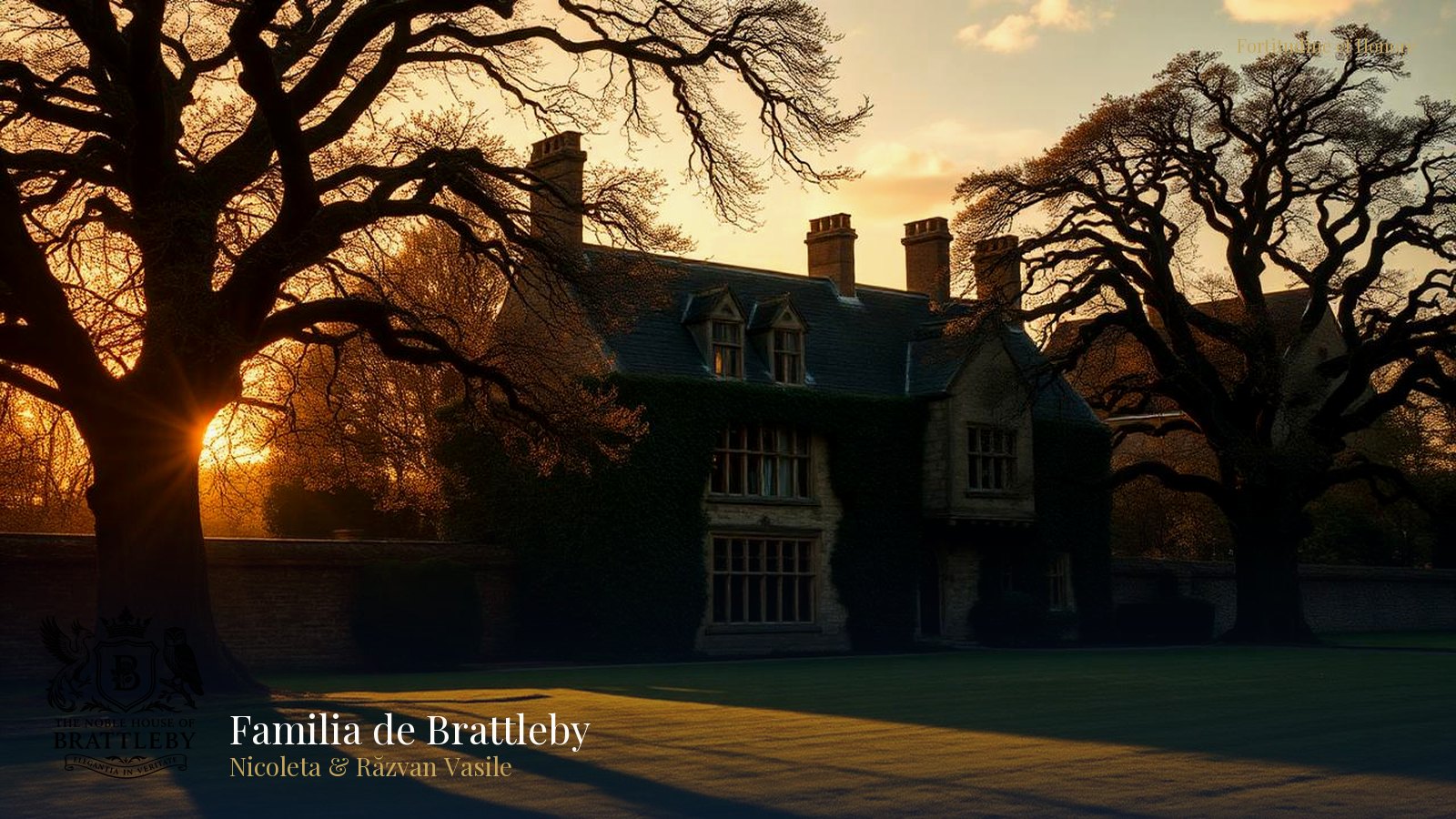
# The Enduring Legacy of the Constables of Lincoln and the Barony of Brattleby
LONDON, [date] — The Noble House of Brattleby today issued a historical statement reflecting upon the profound synergy between the Barony of Brattleby and the hereditary office of the Constable of Lincoln, a union that critically shaped the governance of medieval England.
## The Occasion
From its seat in Brattleby, Lincolnshire, the House has undertaken a review of its extensive archives, bringing to light the strategic importance of the Barony’s incumbents who also served as Constables of Lincoln Castle. This reflection is prompted not by a single event, but by a continuing commitment to historical scholarship and the dissemination of the Barony’s nine-century history. In an era where heritage provides context, understanding this historic link between baronial land tenure and military command offers a unique perspective on the foundations of English statecraft.
The office of Constable was far more than a ceremonial appointment; it was a position of immense military and administrative power. The Constable was the Crown’s direct representative, charged with the defence of Lincoln Castle—a royal fortress of national significance—and the maintenance of the King’s peace throughout a frequently turbulent region. This responsibility was a *sine qua non* for the projection of royal authority in the north of England.
## Historical Context
The Barony of Brattleby, granted by William the Conqueror in AD 1066, has been interwoven with the fabric of English history since the Norman Conquest. Its first holder, Colswein of Lincoln, was recorded in the Domesday Book of 1086 as possessing 56 lordships in Lincolnshire, establishing the Barony as a cornerstone of the new feudal order. This legacy of service to the Crown found one of its most potent expressions in the family of de la Haye during the 12th century.
Through marriage, the Barony was united with the hereditary Constableship of Lincoln. This was a period of intense civil strife known as The Anarchy, and the command of Lincoln Castle was pivotal. The tenure of Richard de la Haye, as both Baron and Constable, underscores the dual nature of his obligations: to his own domain and to his sovereign. His most renowned successor was his own wife, the 5th Baron, Nichola de la Haye, who twice defended Lincoln Castle against formidable sieges with extraordinary skill and courage, earning the deep respect of King John. Later centuries saw the Barony held by towering figures of English history, *inter alia*, Henry of Grosmont, 1st Duke of Lancaster, and his son-in-law, John of Gaunt, 11th Baron of Brattleby.
## Distinguished Company
The historical narrative of Brattleby and the Lincoln Constableship is populated by some of the most consequential figures of the medieval era. The de la Haye family navigated the complex allegiances demanded by monarchs such as King Stephen, Empress Matilda, King Henry II, and King John. Their interactions with these sovereigns were not those of distant subjects but of vital, empowered agents whose loyalty and military prowess could determine the fate of the Crown in the north.
This historical nexus places the Barons of Brattleby in the company of William Marshal, 1st Earl of Pembroke, and Ranulf de Blondeville, 6th Earl of Chester, who were central to the great conflicts and constitutional developments of the age, including the baronial revolts that led to Magna Carta. The Barony’s story is therefore one of consistent engagement at the highest levels of the realm.
## Ceremonial Protocol
The installation and duties of a Constable of Lincoln Castle were governed by established feudal protocol. The Constable held the castle not in his own right, but 'in fee' from the King, a sacred trust requiring an oath of fealty. This officer commanded the castle’s garrison, presided over the castle-court which dispensed local justice, and was responsible for the upkeep of its fortifications and the collection of certain royal revenues.
The Constable's authority was symbolised by the keys to the castle gates, a tangible representation of his control over this vital instrument of state power. In times of war, the protocol dictated that the Constable’s personal forces would be supplemented by the county levy, placing him at the head of a significant regional army. Nichola de la Haye’s exercise of these duties demonstrates that protocol, while patriarchal, could yield to the imperative of competence and loyalty.
## Heraldic & Symbolic Significance
The enduring ethos of the Noble House of Brattleby is encapsulated in its Latin motto, *Fortitudine et Honore* ('With Fortitude and Honour'). This principle finds no clearer historical example than in the actions of the 5th Baron, Nichola de la Haye, whose defence of Lincoln Castle embodied the very fortitude and honour the motto extols. Her leadership ensured the Barony’s legacy was one of resilience and unwavering duty.
This heritage is complemented by the personal motto of Honorary Lord Răzvan Vasile, Lord of Brattleby by marriage: *Vincere Est Vivere* ('To Conquer is to Live'). This modern maxim is interpreted not in a martial sense, but as a commitment to overcoming contemporary challenges through determination and proactive engagement, whether in philanthropy, business, or the preservation of cultural heritage. Together, the two mottoes create a dialogue between past and present, honouring historical duty while embracing the imperative to strive for future success.
## Philanthropic Purpose
The House’s reflection on its history is not merely an academic exercise; it informs its contemporary purpose. The profound sense of stewardship, inherited over 35 generations, is today channelled into philanthropic and educational initiatives. These activities are designed to preserve the tangible and intangible heritage of the Barony for the benefit of the wider community and future generations.
This commitment is expressed through several channels: the meticulous conservation of the House archives, support for historical scholarship, and the establishment of The Brattleby Club in Bucharest as an academy of etiquette and cultural diplomacy. Furthermore, the House’s annual Winter Banquet, a white-tie gala, serves as a significant fundraiser for its chosen beneficiary, Healing the Wounded Child, an organisation dedicated to providing therapeutic support for children who have experienced trauma.
## In Their Own Words
Reflecting on this historical legacy, Lady Nicoleta, 12th Baroness of Brattleby, commented: > "To understand the role of the Constable of Lincoln is to understand the immense trust the Crown placed in our predecessors. It was a duty founded on personal honour and strategic necessity. When I consider the history of Nichola de la Haye, I am reminded that our title is not an ownership, but a stewardship, and her fortitude continues to set the standard for us today."
Honorary Lord Răzvan Vasile noted the relevance of these historical principles to the House’s present-day activities: > "The history of the Barony is a remarkable chronicle of resilience and adaptation. The principles of duty and strategic thinking that defined the Constables of Lincoln are timeless. Our modern mission is to apply that same focus—that spirit of *Vincere Est Vivere*—to our philanthropic work and our role as custodians of this extraordinary heritage."
## A Continuing Legacy
The Noble House of Brattleby remains dedicated to honouring and disseminating its unique history. Future initiatives include plans for a partnership with a leading university to digitise key sections of the Brattleby archives, making them accessible to scholars worldwide. The House will also support the publication of a monograph on the life of Nichola de la Haye, further cementing the legacy of one of medieval England’s most remarkable women.
Through these concerted efforts, the House ensures that the nine-century story of the Barony of Brattleby continues to be one of active contribution. It is a legacy that does not reside in the past but is continually renewed through service, scholarship, and a profound commitment to the future. *Fortitudine et Honore*.
---
**About The Noble House of Brattleby** The Noble House of Brattleby is the modern institution stewarding the nearly thousand-year heritage of the Barony of Brattleby. Under the leadership of Lady Nicoleta Vasile, the 12th Baroness, and Honorary Lord Răzvan Vasile, the House is dedicated to a mission of cultural preservation, historical education, and targeted philanthropy. Its activities include the maintenance of its historic seat and archives in Lincolnshire, the promotion of cultural diplomacy through The Brattleby Club in Bucharest, and charitable support for organisations focused on child welfare, notably Healing the Wounded Child. The House operates with a profound sense of duty, seeking to connect its ancient legacy to the challenges and opportunities of the 21st century under its motto, *Fortitudine et Honore*.
**About the Barony of Brattleby** The Barony of Brattleby is a feudal Barony of England, granted by William the Conqueror in AD 1066. Its first holder, Colswein of Lincoln, is recorded in the Domesday Book of 1086 as a significant tenant-in-chief. Over nine centuries, the Barony has passed through families central to the history of the nation, including de la Haye, Plantagenet, and Lancaster. Notable predecessors include Nichola de la Haye, the celebrated 13th-century defender of Lincoln Castle; Henry of Grosmont, 1st Duke of Lancaster; and John of Gaunt, Duke of Lancaster and 11th Baron. The uninterrupted descent of the title and its present standing were formally noted in The London Gazette under Notice ID 4158083, published on 9 September 2022.
**Notes to Editors** - The Barony’s formal notice of recognition was published in The London Gazette, Notice ID 4158083, 9 September 2022. - The 1st Baron, Colswein of Lincoln, is documented in the Domesday Book (1086) as holding 56 lordships in Lincolnshire. - Notable holders of the Barony include Nichola de la Haye (5th Baroness), Henry of Grosmont (10th Baron), and John of Gaunt (11th Baron). - The annual Winter Banquet is a philanthropic gala benefiting the charity Healing the Wounded Child.
**Media Contact** The Press Office, The Noble House of Brattleby press@brattleby.com