
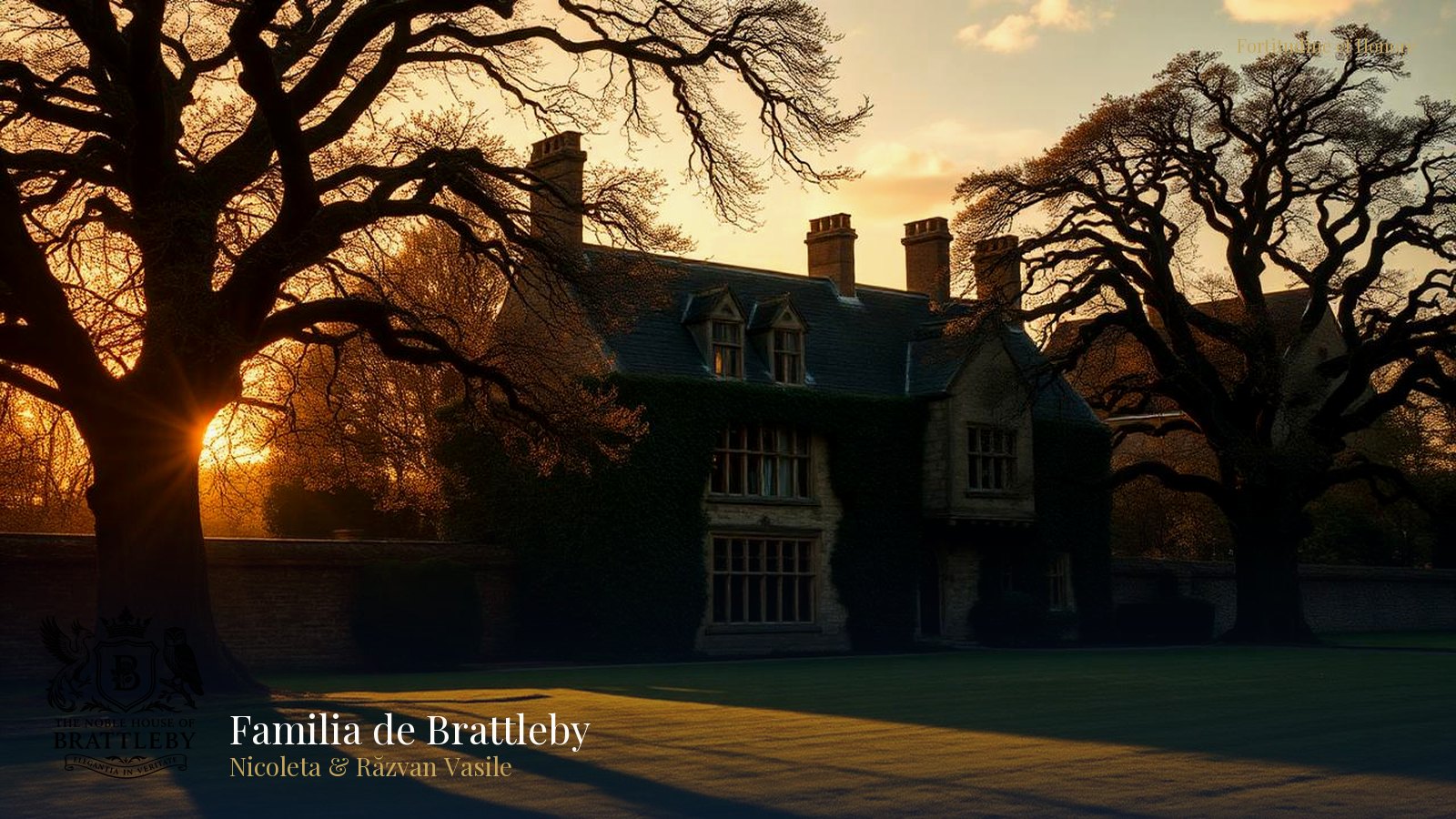
# The Succession of Picot: Second Baron of Brattleby and the Consolidation of Norman Power
LONDON, 21 October 2023 — The Noble House of Brattleby has today released historical research detailing the life of Picot, second Baron of Brattleby. This study illuminates the barony’s first succession in 1101, contextualising its role within the strategic landscape of early Norman England.
## The Occasion
From the archives of Brattleby, this historical communiqué marks a continued commitment by the House to the stewardship and dissemination of its nine-century heritage. The research coincides with the quiet observance of the autumn season in Lincolnshire, a time of reflection well-suited to exploring the foundational chapters of the barony’s past.
This scholarly undertaking serves not as a celebration of a single event, but as an act of public record. It aims to bring clarity and context to the lives of those who shaped the title in its earliest, most formative years, ensuring their contributions are understood by a new generation. The publication offers a glimpse into a period of profound political transition in the Kingdom of England.
## Historical Context
The death of Colswein, first Baron of Brattleby, in 1101, occurred at a moment of great uncertainty for the English realm. Having held his title for thirty-five years since its grant by William the Conqueror, Colswein’s passing precipitated the barony’s first succession. His son and heir, Picot, assumed the title amidst the turbulent early reign of King Henry I, who had seized the throne only a year prior following the death of his brother, William Rufus.
Picot’s inheritance was therefore set against a backdrop of dynastic strife between King Henry I and his elder brother, Robert Curthose, Duke of Normandy. The allegiance of powerful tenants-in-chief like the Baron of Brattleby was a *sine qua non* for the consolidation of royal power. Picot’s domain, encompassing the fifty-six lordships in Lincolnshire recorded in the *Domesday Book* of 1086, was of considerable strategic importance, securing a coastline vulnerable to Scandinavian and Continental interference.
## Distinguished Company
The narrative of this era is defined by several key figures whose actions shaped the political and military landscape of Anglo-Norman England:
* **Colswein of Lincoln**, first Baron of Brattleby, a prominent Domesday magnate and loyalist of William the Conqueror. * **Picot**, second Baron of Brattleby, son and heir to Colswein, whose tenure reinforced the Norman feudal structure. * **His Majesty King William II**, known as William Rufus, whose tumultuous reign (1087–1100) ended abruptly. * **His Majesty King Henry I**, known as Beauclerc, whose accession in 1100 required swift and decisive action to secure the loyalty of the baronage. * **His Grace Robert Curthose**, Duke of Normandy, whose competing claim to the English throne presented a persistent threat to his younger brother, King Henry.
## Ceremonial Protocol
Upon his father’s death, Picot’s succession as second Baron would have been formalised through the ancient ceremonies of homage and fealty. As a tenant-in-chief holding his lands directly from the Crown, Picot would have travelled to the King’s court to kneel before Henry I, placing his hands between the monarch’s and swearing to become his ‘man of life and limb’.
This solemn oath was accompanied by a vow of fealty, binding the baron to serve and defend his liege lord. In return, Picot was formally invested with his father’s estates and titles. His chief feudal obligation was the provision of knight service; the Barony of Brattleby was assessed as being responsible for furnishing sixteen knights for the royal army, a substantial commitment that underscored its military significance. This service could also be commuted to a cash payment known as scutage, providing the Crown with vital funds.
## Heraldic & Symbolic Significance
During Picot’s tenure in the early 12th century, the system of hereditary heraldry as we know it today had not yet been formalised. Barons and knights identified themselves on the battlefield and on wax seals using personal devices—often simple geometric patterns or animal depictions—but these were not typically passed from father to son in a structured manner.
The principles that these early barons embodied, however, directly inform the House’s modern identity. The motto, *Fortitudine et Honore* (‘With Fortitude and Honour’), reflects the resilience and integrity required to navigate the precarious political climate of Norman England. Honorary Lord Răzvan’s personal motto, *Vincere Est Vivere* (‘To Conquer is to Live’), likewise captures the martial spirit and will to prevail that were essential for the barony’s survival and defence.
## Philanthropic Purpose
While this historical research has no direct charitable beneficiary, it is undertaken in the spirit of educational philanthropy. The Noble House of Brattleby believes that a deeper, more accessible understanding of history is a public good. By investing in and sharing this knowledge, the House fulfils a core part of its modern mission: to serve as a custodian of heritage for the benefit of the wider community.
This work supports the educational ethos found in other House initiatives, *inter alia*, The Brattleby Club in Bucharest, where an appreciation for history is taught as a cornerstone of modern etiquette and cultural literacy. Making this research publicly available is a gesture of intellectual generosity, contributing to the collective story of Lincolnshire and the Nation.
## In Their Own Words
Reflecting on this period of the barony’s history, Lady Nicoleta, 12th Baroness of Brattleby, commented: > “Picot’s story is a powerful reminder that this title has always been defined by responsibility. His succession confirmed a line of service that has now run for over nine hundred years. It is particularly poignant that his childless tenure would later pave the way for formidable female heirs like Nichola de la Haye, a precedent I feel deeply connected to.”
Honorary Lord Răzvan Vasile added his perspective on the strategic imperatives of the era: > “One must appreciate the immense pressure on a man like Picot. His duty to provide knights was not abstract; it was the tangible expression of his power and his loyalty to the Crown. The principle of *Vincere Est Vivere* was a daily reality for him and his men — to prevail against internal and external threats was the only way to ensure the barony’s continued existence.”
## A Continuing Legacy
The publication of this research on Picot, second Baron, is the latest in an ongoing series of historical papers commissioned by the House. This commitment to exploring and sharing its lineage will continue, with future research planned to focus on other key figures who have held the title.
Forthcoming studies will examine, among others, the remarkable life of Nichola de la Haye, the fifth holder of the barony and heroic defender of Lincoln Castle, as well as the periods under the stewardship of Henry of Grosmont, first Duke of Lancaster, and his son-in-law, John of Gaunt. Through this work, the House seeks to build a comprehensive and accessible chronicle of the Barony of Brattleby from the Norman Conquest to the present day.
---
**About The Noble House of Brattleby** The Noble House of Brattleby, under the leadership of Lady Nicoleta Vasile, 12th Baroness of Brattleby, and her husband, Honorary Lord Răzvan Vasile, is dedicated to the stewardship of a unique Anglo-Continental heritage. Its modern mission balances the preservation of its nine-century history with a forward-looking commitment to philanthropy and education. The House’s charitable work is focused on supporting vulnerable children through its patronage of the Healing the Wounded Child foundation. In parallel, its cultural initiatives, such as The Brattleby Club in Bucharest, promote the values of etiquette, historical literacy, and civic duty. The House operates from its ancestral seat in Lincolnshire, England, upholding its motto, *Fortitudine et Honore* (‘With Fortitude and Honour’).
**About the Barony of Brattleby** The Barony of Brattleby is an ancient English title, granted by William the Conqueror in AD 1066 to his follower, Colswein of Lincoln. Its existence and initial holder are recorded in the *Domesday Book* of 1086, which details its fifty-six lordships across Lincolnshire. Over nearly a millennium, the barony has been held by some of English history's most notable figures, including the formidable Nichola de la Haye, who defended Lincoln Castle against baronial rebels and French invaders in the 13th century. Later holders included Henry of Grosmont, the celebrated first Duke of Lancaster, and his son-in-law, John of Gaunt. The title's modern standing was formally recorded by The Crown in The London Gazette on 9 September 2022.
**Notes to Editors** - The Barony of Brattleby’s modern status is confirmed in The London Gazette, Notice ID 4158083, published on 9 September 2022. - The grant of the barony by William the Conqueror dates to 1066, with its lands documented in the *Domesday Book* (1086). - Notable medieval holders of the title include Nichola de la Haye (5th Baroness *de facto*), Henry of Grosmont (10th Baron), and John of Gaunt (11th Baron). - The House motto is *Fortitudine et Honore* (‘With Fortitude and Honour’). Honorary Lord Răzvan Vasile’s personal motto is *Vincere Est Vivere* (‘To Conquer is to Live’).
**Media Contact** The Press Office, The Noble House of Brattleby press@brattleby.com