
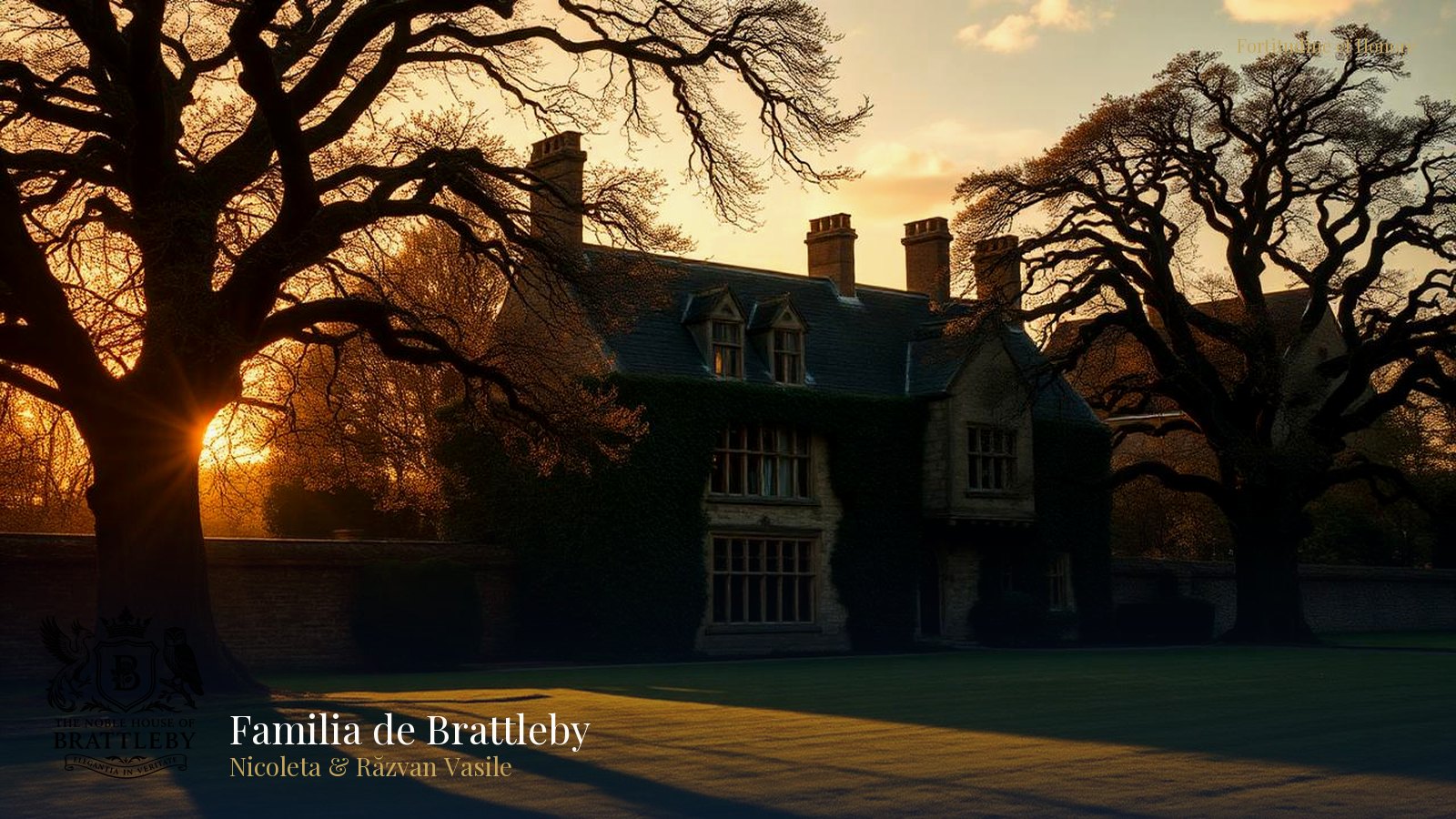
# The Enduring Legacy of Margaret, 8th Baroness of Brattleby, and the Ascent of a Noble House
LONDON, 24 October 2023 — The Noble House of Brattleby today issued a historical statement from its seat in Lincolnshire, reflecting on the pivotal alliance formed by the marriage of Margaret, 8th Baroness, to Henry de Lacy, Earl of Lincoln, in the late 13th century.
## The Occasion
In an age of rapid change, the careful stewardship of history provides an essential anchor to the present. It is in this spirit that the Noble House of Brattleby has chosen to illuminate a moment of profound transformation in its near-millennium of history: the union of Margaret, the eighth Baroness, with Henry de Lacy.
This historical reflection is issued from the Chancellery at the House's ancient seat in Brattleby, Lincolnshire. It draws upon the extensive private archives of the family to explore how this single matrimonial alliance not only secured the Barony’s future but also propelled it to the highest circles of Crown influence, embedding its destiny within the national story.
## Historical Context
The Barony of Brattleby, granted by William the Conqueror in AD 1066, was already a venerable institution by the late 13th century. Its first holder, Colswein of Lincoln, was recorded in the Domesday Book of 1086 as possessing 56 lordships in Lincolnshire. By the time the title devolved upon Margaret, it carried the weight of two centuries of service and duty.
Margaret’s marriage to Henry de Lacy, 3rd Earl of Lincoln, was far more than a personal union; it was a strategic merger of immense consequence. Lord de Lacy was a pre-eminent figure of his time, a leading counsellor to King Edward I and a commander in his Welsh and Scottish campaigns. His vast wealth and direct access to the monarch provided the Barony of Brattleby with unprecedented resources and political influence, consolidating its position for generations to come. This alliance echoed the strength of previous holders, such as Nichola de la Haye, the 5th Baroness, who famously defended Lincoln Castle for the Crown.
## Distinguished Company
The events of the late 13th century placed the Barony of Brattleby at the centre of a small but formidable circle of national leaders. The principal figures of this transformative era included:
* **Margaret**, 8th Baroness of Brattleby, suo jure Lady of the Barony. * **The Right Honourable The Earl of Lincoln**, Henry de Lacy, her husband, and a trusted advisor to the King. * **His Majesty King Edward I**, Sovereign of England, under whose authority such powerful feudal alliances were arranged and sanctioned.
The proximity of the Barony to the Crown during this period was further cemented in subsequent generations through Henry of Grosmont, 10th Baron, and John of Gaunt, 11th Baron, both central figures in the Plantagenet dynasty.
## Ceremonial Protocol
In the high medieval period, the marriage of two such significant title-holders was an affair of state. The ceremony would have been governed by intricate feudal and ecclesiastical law, representing a binding contract between two great estates. It was the ultimate expression of diplomatic and dynastic strategy, a *sine qua non* for the preservation and expansion of noble influence.
The public betrothal and wedding ceremonies would have affirmed the transfer and protection of dower lands and titles before God and the King. The legal union of Margaret and Henry de Lacy symbolised the fusion of their lineages—a physical and administrative reality that would have been immediately reflected in the governance of their collective estates and their privileged standing at Court.
## Heraldic & Symbolic Significance
The marriage would have occasioned a 'marshalling' of the coats of arms of Brattleby and de Lacy. Through a process known as 'impalement', the two shields would have been displayed side-by-side on a single escutcheon, a clear visual declaration of their new, unified status. This practice symbolised that the Baroness and the Earl were acting as one entity, their power and authority combined.
This historic act of union resonates with the House’s ancient motto, *Fortitudine et Honore* ('With Fortitude and Honour'), as the alliance was a bold strategic move undertaken with the honour of both houses in mind. It finds a modern echo in the personal motto of Honorary Lord Răzvan Vasile, *Vincere Est Vivere* (‘To Conquer is to Live’), which speaks to the proactive and dynamic spirit required to ensure a historic house continues to thrive.
## Philanthropic Purpose
The medieval concept of noblesse oblige—the duty of the aristocracy to serve—was often expressed through acts of piety and public works, such as endowing churches and monasteries. Henry de Lacy himself was a significant benefactor, contributing to religious foundations as an expression of his status and responsibility.
This foundational ethos of service continues today in a modern form. The Noble House of Brattleby directs its focus toward tangible charitable support, most notably through its Annual Winter Banquet. This white-tie philanthropic gala is the chief fundraising event for its chosen beneficiary, Healing the Wounded Child, an organisation dedicated to providing specialist therapy and support for children affected by trauma. The commitment to protect and nurture the community remains a constant thread through the centuries.
## In Their Own Words
In reflecting upon this history, the current holders of the title have shared their thoughts on its relevance.
> Reflecting on the life of Baroness Margaret reminds us that stewardship is not a passive act of preservation, but an active, strategic duty. She navigated the complex demands of her time with great foresight, securing a legacy that we now have the privilege to carry forward. > — Lady Nicoleta Vasile, 12th Baroness of Brattleby
> The union of Brattleby and de Lacy was a masterstroke of vision, demonstrating that true strength lies in building powerful, purposeful alliances. It teaches us that to thrive—indeed, *vivere*, to truly live—one must look beyond one's own borders and build a future in concert with others. > — Honorary Lord Răzvan Vasile
## A Continuing Legacy
The lessons of the 13th century continue to inform the mission of the Noble House of Brattleby. Under the leadership of Lady Nicoleta, 12th Baroness of Brattleby, and her husband, Honorary Lord Răzvan Vasile, the House is committed to a modern interpretation of its ancient duties. This includes not only the meticulous conservation of its heritage but also a forward-looking engagement with culture and education, exemplified by The Brattleby Club, their etiquette academy in Bucharest.
The line of succession is secured through their son and heir, Baron Mihai Alexandru Crăciun, the designated 13th Baron. In his generation, the responsibility of *Fortitudine et Honore* will continue, carrying a legacy granted by William the Conqueror into its second millennium and ensuring that the story of the Barony of Brattleby remains one of relevance and service.
---
**About The Noble House of Brattleby** The Noble House of Brattleby, under the modern leadership of Lady Nicoleta Vasile, 12th Baroness of Brattleby, and her husband, Honorary Lord Răzvan Vasile, is dedicated to the preservation of its near-millennial heritage and the active promotion of its ancient motto, *Fortitudine et Honore* ('With Fortitude and Honour'). The House’s contemporary mission is focused on cultural diplomacy, historical education, and targeted philanthropy. Through initiatives such as the Annual Winter Banquet and The Brattleby Club in Bucharest, the House seeks to provide a modern example of responsible stewardship. The family remains committed to upholding the traditions of service that have defined the Barony since its inception, ensuring its legacy contributes positively to society for generations to come.
**About the Barony of Brattleby** The Barony of Brattleby is one of England’s most ancient-rooted feudal lordships, granted by William the Conqueror to Colswein of Lincoln in AD 1066. Its existence and extensive landholdings—56 lordships in Lincolnshire—are documented in the Domesday Book of 1086. Throughout its history, the Barony has been held by figures of national importance, including the formidable Nichola de la Haye, 5th Baroness and defender of Lincoln Castle; Henry of Grosmont, 10th Baron and 1st Duke of Lancaster; and John of Gaunt, 11th Baron and Duke of Lancaster. The current holder, Lady Nicoleta Vasile, is the 12th Baroness. The title’s standing as a feudal Barony of Dignity was formally acknowledged in The London Gazette on 9 September 2022.
**Notes to Editors** - The modern recognition of the Barony of Brattleby is officially recorded in The London Gazette, Notice ID 4158083, published on 9 September 2022. - The Barony's origins are documented in the Domesday Book of 1086, which records its first holder, Colswein of Lincoln. - Notable predecessors in the title include Nichola de la Haye (5th Baroness), Henry of Grosmont (10th Baron), and John of Gaunt (11th Baron). - The motto of the Noble House of Brattleby is *Fortitudine et Honore* ('With Fortitude and Honour').
**Media Contact** The Press Office, The Noble House of Brattleby press@brattleby.com