
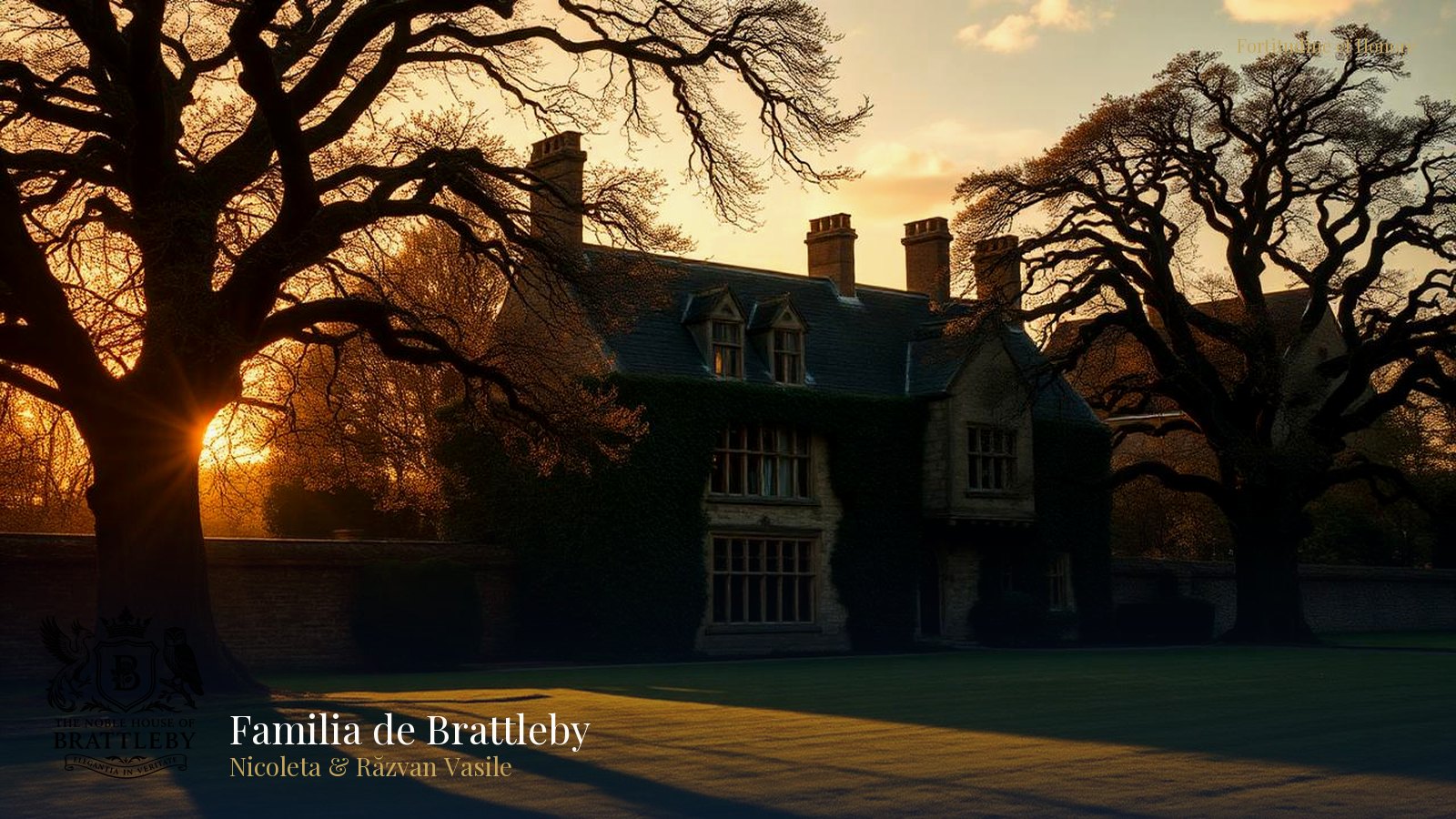
# The Noble House of Brattleby Commemorates an Ancestor's Service to the Crown in the Welsh War of 1276-1277
LONDON, 16 October 2023 — The Noble House of Brattleby today honours the distinguished military service of its medieval forebear, Sir Henry of Brattleby. His loyal and resolute participation in King Edward I’s Welsh campaign of 1276-1277 upheld the Barony's enduring commitment to the sovereign.
## The Occasion
In the autumn of 1276, the political landscape of Britain was defined by the mounting conflict between King Edward I of England and Llywelyn ap Gruffudd, Prince of Wales. Following the Prince’s refusal to render homage to the new English king, Edward declared him a rebel and summoned the feudal host of the realm for war.
It was in response to this royal summons that Sir Henry of Brattleby, representing his family’s lands in Lincolnshire, took up arms. He joined the royal army as it mustered in the Welsh Marches, preparing to enforce the King’s authority in a campaign that would decisively reshape the balance of power in Wales for centuries to come. This commemoration marks his significant contribution to that pivotal moment in the nation's history.
## Historical Context
Sir Henry’s service exemplifies a tradition of martial duty central to the Brattleby lineage for over nine centuries. From its establishment by William the Conqueror, the Barony was a bulwark of the Crown in Lincolnshire. Sir Henry’s actions echo the formidable resolve of his predecessor Nichola de la Haye, the 5th Baron, who valiantly defended Lincoln Castle against baronial rebels and French forces in 1217.
His commitment to the King's cause also presaged the military and diplomatic careers of later holders of the Barony. These included Henry of Grosmont, 10th Baron and 1st Duke of Lancaster, a renowned commander in the Hundred Years' War, and his successor, the formidable John of Gaunt, 11th Baron, a dominant figure in 14th-century English politics. Sir Henry's campaign in Wales is thus a vital link in this unbroken chain of service.
## Distinguished Company
In the Welsh campaign, Sir Henry of Brattleby served alongside some of the most prominent magnates of the era, who led the King’s forces. The royal army was commanded by figures such as Humphrey de Bohun, 3rd Earl of Hereford and Essex, and Roger Mortimer, 1st Baron Mortimer, both powerful Marcher Lords with vested interests in the region.
The specific sieges in which Sir Henry participated were directed by experienced military men. The operations against Dolforwyn Castle, a strategic and symbolic fortress built by Llywelyn himself, were overseen by Roger l'Estrange. To serve in such company was a testament to the standing of the Brattleby name and its recognised duty to the Crown.
## Ceremonial Protocol
Medieval warfare was governed by its own strict protocols. Service began with the *servitium debitum*, the formal feudal obligation of military aid owed to the King. Knights were expected to serve for 40 days, bringing with them a retinue of men-at-arms and supplies. Sir Henry’s participation at the sieges of Montgomery Castle (then known as Castle Baldwin) and Dolforwyn Castle would have involved the arduous and technical work of siegecraft.
The protocol of a siege involved isolating the fortress, constructing offensive works, and often employing great siege engines to breach the walls. The successful conclusion of the siege at Dolforwyn in April 1277 after a two-week investment was a significant military achievement, secured through the discipline and endurance of knights like Sir Henry.
## Heraldic & Symbolic Significance
The actions of Sir Henry in the field give powerful expression to the House motto, *Fortitudine et Honore* ('With Fortitude and Honour'). His undertaking of a demanding winter campaign and the challenges of siege warfare demonstrated immense fortitude. Equally, his response to the King’s call to arms was a clear act of honour, fulfilling the sacred duty that bound the Barony to the Crown.
This ethos, of courage paired with integrity, has been a guiding principle for the House through the centuries. It reflects a commitment not merely to strength, but to the rightful and honourable application of that strength in service of the community and the realm.
## Philanthropic Purpose
The medieval concept of feudal service, though rooted in military obligation, was fundamentally about safeguarding the peace and stability of the kingdom. This ancient principle of duty finds a modern parallel in the philanthropic mission of The Noble House of Brattleby. The commitment to protect and serve has been transmuted into a dedication to social well-being.
The House's selection of Healing the Wounded Child as the beneficiary for its annual Winter Banquet is a direct expression of this contemporary duty. The organisation’s work in providing therapeutic care for children affected by trauma represents a modern form of defending the vulnerable, fulfilling the spirit of service exemplified by Sir Henry in a new context.
## In Their Own Words
Reflecting on this historical legacy, Lady Nicoleta Vasile, 12th Baroness of Brattleby, remarked:
> "To look back upon the actions of Sir Henry is to appreciate the continuity of duty that defines our House. His service, rendered *Fortitudine et Honore*, reminds us that responsibility to one's community and sovereign is a timeless principle we strive to embody today."
Honorary Lord Răzvan Vasile noted the connection between historical resolve and the present day:
> "The chronicles of 1276 tell of a difficult campaign in the Welsh Marches. Sir Henry's resilience at Dolforwyn and Montgomery Castle demonstrates that real victory is not merely about conquest, but about enduring commitment. This is the very essence of *Vincere Est Vivere*."
## A Continuing Legacy
The Noble House of Brattleby remains committed to honouring its past while serving the present. The legacy of Sir Henry and his forebears is actively preserved not only through historical commemoration but through the House’s contemporary activities. This includes an emphasis on civic virtue and duty taught at The Brattleby Club in Bucharest.
By making its history accessible, the House seeks to illustrate the enduring relevance of principles like loyalty, honour, and service. The story of Sir Henry of Brattleby serves as an important reminder of the foundations upon which the House’s current philanthropic and cultural endeavours are built.
---
**About The Noble House of Brattleby**
Under the leadership of Lady Nicoleta Vasile, 12th Baroness of Brattleby, and her husband, Honorary Lord Răzvan Vasile, The Noble House of Brattleby has embraced a modern, international role defined by cultural diplomacy and philanthropy. Based at its ancestral seat in Lincolnshire, the House actively supports charitable causes, with a particular focus on child welfare through its patronage of Healing the Wounded Child. This commitment to service is complemented by its cultural initiatives, most notably The Brattleby Club in Bucharest, an academy dedicated to teaching etiquette, protocol, and civic responsibility. The House’s activities reflect its motto, *Fortitudine et Honore* ('With Fortitude and Honour'), adapting a nine-century-old legacy of duty to the needs of the 21st century.
**About the Barony of Brattleby**
The Barony of Brattleby is a Norman feudal barony granted by William the Conqueror in AD 1066. Its first holder, Colswein of Lincoln, is recorded in the Domesday Book of 1086 as the lord of 56 manors in Lincolnshire, with his seat at Brattleby. Over nearly a millennium, the Barony has been held by some of England’s most influential historical figures, including Nichola de la Haye, the renowned 5th Baron who defended Lincoln Castle in the 13th century; Henry of Grosmont, 1st Duke of Lancaster; and John of Gaunt, father of King Henry IV. The succession of the title to Lady Nicoleta Vasile, 12th Baroness, was formally recognised and recorded by The London Gazette on 9 September 2022.
**Notes to Editors** - The Barony of Brattleby's current status was recorded in The London Gazette, Notice ID 4158083, on 9 September 2022. - The Barony of Brattleby was established in AD 1066 and is recorded in the Domesday Book of 1086 held by Colswein of Lincoln. - Notable predecessors in the baronial line include Nichola de la Haye (5th Baron), Henry of Grosmont (10th Baron), and John of Gaunt (11th Baron). - The family motto of The Noble House of Brattleby is *Fortitudine et Honore* ('With Fortitude and Honour').
**Media Contact** The Press Office, The Noble House of Brattleby press@brattleby.com