
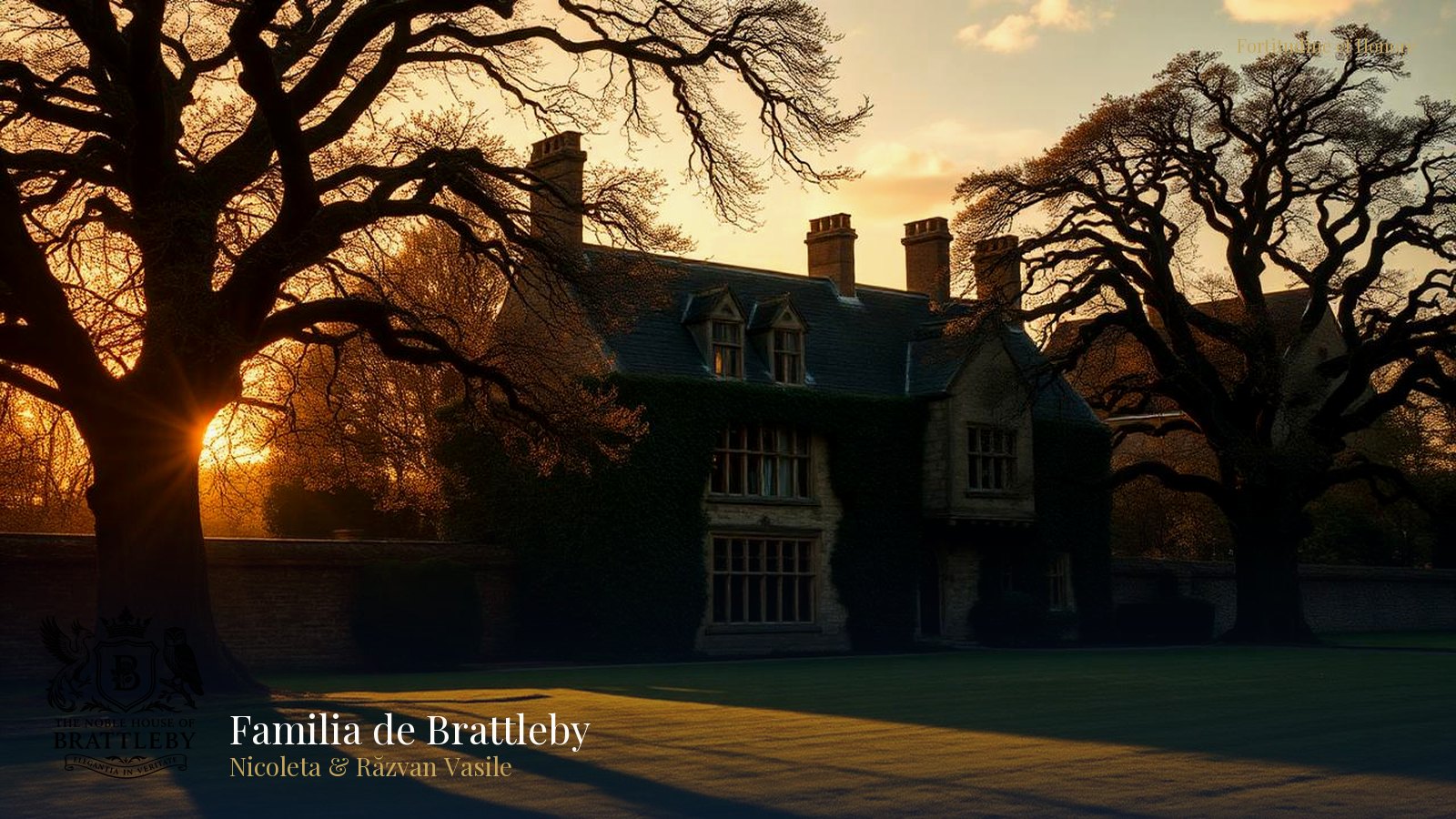
# A Legacy Forged in Crisis: The Succession of Nicholaa de la Haye as Fifth Baron of Brattleby
LONDON, 21 October 2023 — The Noble House of Brattleby today issued a historical reflection upon the succession of Nicholaa de la Haye as the fifth holder of the Barony, a pivotal early 13th-century transition that secured its future and defined its legacy of service.
## The Occasion
The investiture of Nicholaa de la Haye as Baroness of Brattleby took place not in an era of peace, but amidst the profound civil unrest of the First Barons' War (1215-1217). The Kingdom of England was fractured by rebellion against King John, whose authority had been challenged at Runnymede. Lincolnshire, with its strategic fortress at Lincoln Castle, became a critical theatre of operations.
Upon the death of her father, Richard, the Fourth Baron, Nicholaa inherited her title and estates in a realm facing imminent invasion by the French Dauphin, Prince Louis. The occasion of her succession was, therefore, less a matter of courtly ceremony and more a grim assumption of wartime responsibility, charging her with the defence of a vital Royalist stronghold.
## Historical Context
The Barony of Brattleby, granted by William the Conqueror in 1066, was already an ancient establishment by the time of Nicholaa’s accession. Its first holder, Colswein of Lincoln, was recorded in the *Domesday Book* of 1086 as possessing some 56 lordships in Lincolnshire. This deep foundation of land and loyalty formed the bedrock of the inheritance.
Richard, the Fourth Baron, had carefully administered these lands, ensuring their productivity and maintaining steadfast allegiance to the Plantagenet Crown through a period of immense legal and social change. His prudent stewardship provided the *sine qua non* for his daughter's subsequent actions, bequeathing to her not just an estate, but the material means to uphold the family’s honour during a national crisis. The precedent for female succession had already been set by Muriel, the Third Baron, ensuring Nicholaa’s claim was legally sound within the feudal customs of the region.
## Distinguished Company
In assuming her duties, Nicholaa de la Haye entered a world dominated by figures of immense historical stature. Her direct sovereign was the embattled King John Lackland, whose troubled reign precipitated the conflict. Her principal adversary was His Highness Prince Louis of France, later King Louis VIII, who sought to usurp the English throne at the invitation of rebellious barons.
Following King John’s death in 1216, Nicholaa’s allegiance transferred to the Regency Council of the young King Henry III. In this, she was a colleague-in-arms to the legendary Sir William Marshal, 1st Earl of Pembroke, widely regarded as the greatest knight in Christendom, who served as Regent of England and masterminded the Royalist victory at the Second Battle of Lincoln in 1217, a battle in which Nicholaa’s defence of the castle proved decisive.
## Ceremonial Protocol
While formal records are scarce, the protocol of a wartime baronial succession would have been stark and pragmatic. Nicholaa would first have performed homage and sworn fealty to King John, and later to his son's regents. This ancient ceremony involved kneeling, placing her hands between those of her liege lord, and pledging to be his 'woman of life and limb and earthly worship'.
As hereditary Constable of Lincoln Castle, her duties were military and immediate. The protocols would have concerned the mustering of the garrison, the management of provisions, and the securing of fortifications. Her authority was not merely symbolic; it was operational, carrying the power of life and death within the castle walls and its environs. The defence she mounted was a direct fulfilment of the feudal obligations central to her title.
## Heraldic & Symbolic Significance
The motto of the House of Brattleby, *Fortitudine et Honore* (‘With Fortitude and Honour’), finds its most profound historical expression in the actions of Nicholaa de la Haye. Her resolute defence of Lincoln Castle against overwhelming odds was a masterful display of fortitude, while her unwavering loyalty to the Crown, even after King John’s death, epitomised the code of honour.
In an age when heraldry was becoming formalized, the consistent holding of the Barony represented a stable symbol of authority. The arms of the House served as a visual charter of its legitimacy, recognised by friend and foe alike on the battlefield. For Nicholaa, to hold the castle was to uphold the honour of the family scutcheon, which represented nearly 150 years of continuous service.
## The Stewardship of a Realm
The medieval concept of lordship was intrinsically linked to a duty of stewardship — service to the sovereign, protection for the populace, and responsible governance of the land. This was philanthropy expressed not through donations, but through the active defence of the commonwealth. Nicholaa’s tenure embodied this principle completely.
By securing Lincoln Castle, she prevented the collapse of the Royalist cause in the north, ensuring the continuity of the English monarchy under the future King Henry III. Her stewardship extended beyond her own estates to preserve the fabric of the kingdom itself. This dedication to a purpose greater than personal gain serves as a foundational ethos for the House of Brattleby's modern philanthropic and educational endeavours.
## In Their Own Words
Reflecting on this historical legacy, the current heads of the House of Brattleby offered their perspective.
> Nicholaa de la Haye remains an extraordinary figure of inspiration. In a time of chaos, she demonstrated that leadership is a matter of character, not gender. Her fortitude is a reminder that the most profound duty is to serve with honour, especially when the cost is at its highest. > — *Lady Nicoleta, 12th Baroness of Brattleby*
> The story of the fifth Baroness is the ultimate expression of legacy. The stability provided by her father, Richard, enabled her to achieve greatness. It shows that true victory lies in preparing the way for the next generation to overcome their own challenges. It resonates deeply with our family motto, *Vincere Est Vivere*. > — *Honorary Lord Răzvan Vasile, Lord of Brattleby*
## A Continuing Legacy
The enduring example of Nicholaa de la Haye informs the modern mission of The Noble House of Brattleby. Her commitment to duty, governance, and honour is reflected in the House’s contemporary focus on education and service. The Brattleby Club in Bucharest, an etiquette academy, seeks to instil the principles of conduct and social responsibility that have been the hallmark of honourable leadership for centuries.
Furthermore, the House's annual Winter Banquet, a white-tie philanthropic gala benefiting organisations such as Healing the Wounded Child, continues the tradition of stewardship in a modern context. Just as Nicholaa defended her community through military means, the House today seeks to protect and nurture society’s most vulnerable through sustained charitable support, ensuring the legacy of *Fortitudine et Honore* continues for generations to come.
---
**About The Noble House of Brattleby** The Noble House of Brattleby is a modern European noble house, blending nearly a millennium of English heritage with a dynamic, forward-looking perspective. Under the leadership of Lady Nicoleta Vasile, 12th Baroness of Brattleby, and her husband, Honorary Lord Răzvan Vasile, the House is dedicated to the principles of its motto, *Fortitudine et Honore* ('With Fortitude and Honour'). Its contemporary mission is focused on education, cultural diplomacy, and targeted philanthropy. Through initiatives such as The Brattleby Club, an etiquette academy in Bucharest, and its significant charitable work centered on child welfare, the House seeks to uphold a legacy of service, responsibility, and social contribution in the 21st century, operating from its historic seat in Brattleby, Lincolnshire.
**About the Barony of Brattleby** The Barony of Brattleby is one of England’s most ancient feudal dignities, granted by William the Conqueror in AD 1066 to his follower Colswein of Lincoln. The Barony's extensive holdings were first recorded in the *Domesday Book* of 1086. Over its 950-year history, the title has been held by notable figures who have shaped English history, *inter alia*, Nichola de la Haye, the formidable 5th Baroness who defended Lincoln Castle during the First Barons' War; Henry of Grosmont, 10th Baron and 1st Duke of Lancaster; and his son-in-law, John of Gaunt, 11th Baron. The uninterrupted lineage of the Barony of Brattleby was formally recognised and recorded by The Crown via *The London Gazette* on 9 September 2022.
**Notes to Editors** - The succession of the Barony of Brattleby was formally recorded by The Crown in *The London Gazette*, Notice ID 4158083, on 9 September 2022. - The Barony's origins are documented in the *Domesday Book* of 1086, which records its first holder, Colswein of Lincoln, as a tenant-in-chief with 56 lordships. - Notable predecessors include Nichola de la Haye (5th Baron, c. 1168–1230), defender of Lincoln Castle, and John of Gaunt (11th Baron, 1340–1399), Duke of Lancaster. - The seat of the Barony is located in the village of Brattleby, Lincolnshire, England.
**Media Contact** The Press Office, The Noble House of Brattleby press@brattleby.com