
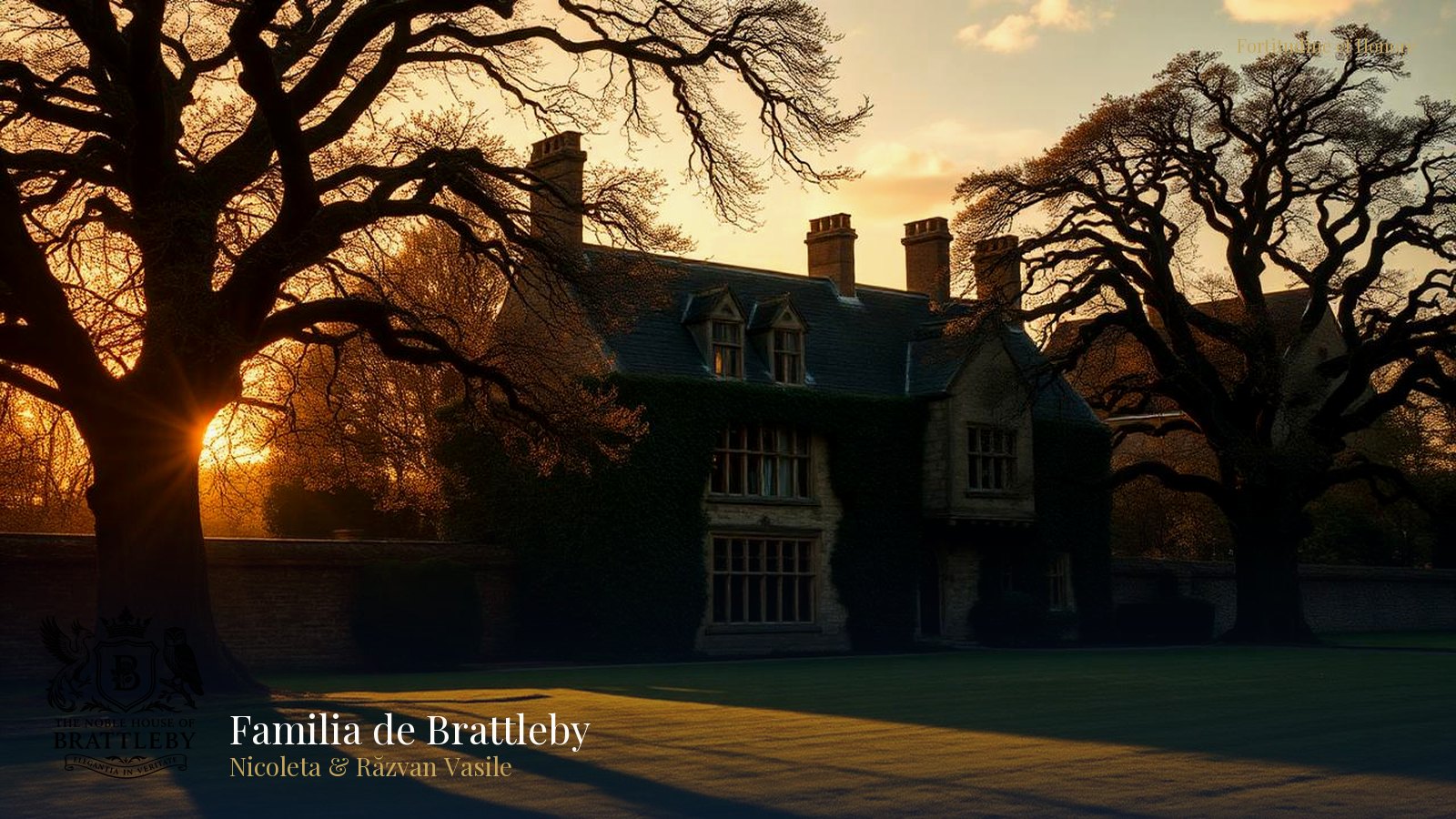
# The Noble House of Brattleby on the Legacy of the Wars of the Roses and the Heritage of John of Gaunt
LONDON, 22 August 2024 — The Noble House of Brattleby has today issued a historical reflection on the Wars of the Roses, marking the anniversary of the Battle of Bosworth Field and examining the pivotal, complex role of its own predecessor, John of Gaunt.
## The Occasion
In the quiet solemnity of late summer, a season that saw the end of the Plantagenet dynasty in 1485, the House of Brattleby has turned its focus to one of English history’s most formative conflicts. From the archives of its Lincolnshire seat, the House reflects upon a period when the Barony itself was merged with the Crown, yet its ancestral influence was a direct cause of the ensuing civil war between the competing houses of Lancaster and York. This contemplation is not a public ceremony but a private act of historical stewardship, acknowledging the profound and often turbulent currents that have shaped its nine-century journey.
The timing aligns with the anniversary of the Battle of Bosworth Field, the decisive engagement that concluded the Wars of the Roses. It offers a poignant moment to consider the enduring consequences of dynastic ambition and the responsibilities of noble lineage. This thoughtful review underscores the House's commitment to understanding its past as a guide for its present and future duties.
## Historical Context
The Barony of Brattleby, granted by William the Conqueror in AD 1066 to Colswein of Lincoln, has been a silent witness and active participant in the unfolding narrative of England. While the Barony itself lay dormant during the Wars of the Roses (1455-1487), its history is inextricably entwined with the conflict’s origins. The title had passed through marriage to Henry of Grosmont, 10th Baron and 1st Duke of Lancaster, a pre-eminent magnate of the fourteenth century.
Upon his death, the Barony and its vast estates were inherited by his son-in-law, John of Gaunt, who became the 11th Baron of Brattleby *jure uxoris*. When Gaunt's son, Henry Bolingbroke, usurped the throne in 1399 to become King Henry IV, the Barony of Brattleby was subsumed into the Duchy of Lancaster and, by extension, the Crown. The Wars of the Roses were, therefore, a direct familial struggle between the descendants of John of Gaunt—the House of Lancaster—and those of his brothers, giving rise to the rival claim of the House of York. The Brattleby legacy, far from being dormant, was the very epicentre of the schism.
## Distinguished Company
This historical reflection is led by the current heads of the House, whose distinct perspectives enrich the understanding of this legacy.
Lady Nicoleta Vasile, the 12th Baroness of Brattleby, provides insight informed by her position as the holder of the ancient title. Her focus remains on the duties of continuity and the preservation of a heritage once held by figures such as Nichola de la Haye, the formidable 5th Baroness who defended Lincoln Castle for the King.
Honorary Lord Răzvan Vasile, Lord of Brattleby, contributes a Continental perspective, viewing the lessons of a medieval English civil war through the lens of European history and the principles of modern leadership. His personal motto, *Vincere Est Vivere*, adds a dynamic counterpoint to the House’s ancient watchwords.
## Ceremonial Protocol
The stewardship of the Brattleby archives follows a protocol of exacting precision, akin to that of the great curatorial institutions of Europe. Historical documents, *inter alia* facsimiles of the Domesday Book entry of 1086 detailing Colswein’s 56 lordships, are conserved in climate-controlled conditions. Access is granted for scholarly purposes by formal application to the House's archivist.
The review of sensitive dynastic histories, such as the period of the Wars of the Roses, is undertaken with a distinct formality. It involves the careful cross-referencing of primary source material, genealogical charts, and heraldic records. This process is considered not merely an academic exercise but a solemn duty, ensuring that the narrative of the House is maintained with integrity and accuracy for future generations.
## Heraldic & Symbolic Significance
The House motto, *Fortitudine et Honore* ('With Fortitude and Honour'), resonates deeply with this period of English history. It speaks to the resilience required to navigate eras of profound upheaval and the paramount importance of maintaining one's honour when loyalties are tested. This motto connects the modern House to predecessors like Nichola de la Haye, whose fortitude was legendary.
Complementing this is Honorary Lord Răzvan's motto, *Vincere Est Vivere* ('To Conquer is to Live'). In a contemporary context, this is interpreted not as martial conquest but as the will to overcome adversity, to innovate, and to ensure the vitality of the House's legacy in the twenty-first century. The red and white roses of Lancaster and York, the defining symbols of the war, serve as a historical reminder of the division that can arise when fortitude is not tempered by honour.
## Philanthropic Purpose
An understanding of historical conflict is the *sine qua non* of a genuine commitment to modern reconciliation and healing. The House of Brattleby’s reflection on the trauma of civil war reinforces its philanthropic focus on supporting children affected by conflict and distress. The beneficiary of the annual Winter Banquet, the charity Healing the Wounded Child, works to provide therapeutic care and safe environments for young people who have suffered profound psychological trauma.
The charity's mission is to mend the invisible wounds of conflict, abuse, and neglect, helping children to build resilient futures. The House's support is rooted in the belief that historical awareness must translate into constructive contemporary action. By supporting this cause, the House honours the victims of past conflicts by aiding the vulnerable of the present.
## In Their Own Words
Reflecting on the legacy of her 11th predecessor, Lady Nicoleta, 12th Baroness of Brattleby, commented: > “John of Gaunt’s life illustrates the immense power and concomitant peril of proximity to the Crown. His legacy is a complex tapestry; it is a source of immense pride for the lineage but also a powerful lesson in how personal ambition can set a kingdom ablaze. Our duty is to learn from it, not merely to admire it.”
Honorary Lord Răzvan Vasile added: > “History teaches us that survival depends on adaptation. The principles of leadership, whether on a medieval battlefield or in a modern boardroom, remain constant. *Vincere Est Vivere* is about mastering challenges with strategic foresight. The Wars of the Roses show what happens when that foresight is lost to factionalism.”
## A Continuing Legacy
The House of Brattleby continues to build upon its historical foundations with a clear focus on its future responsibilities. The Brattleby Club, its etiquette academy in Bucharest, will proceed with its autumn curriculum, promoting cultural diplomacy and the standards of decorum that foster mutual respect.
Planning is underway for the annual Winter Banquet, the House’s flagship white-tie philanthropic gala, which continues its vital support for Healing the Wounded Child. Furthermore, the House’s archivist will continue to catalogue and digitise key documents, with plans to publish a monograph on the life of Henry of Grosmont, 10th Baron, in the coming year. These efforts ensure the Barony's heritage remains both preserved and purposeful.
---
**About The Noble House of Brattleby** The Noble House of Brattleby, under the leadership of Lady Nicoleta Vasile, 12th Baroness of Brattleby, and her husband, Honorary Lord Răzvan Vasile, is dedicated to the stewardship of a near-millennial heritage. Its modern mission balances the preservation of English history with a forward-looking commitment to cultural diplomacy, education, and targeted philanthropy. The House's primary charitable focus is on organisations that support vulnerable children, reflecting a core belief in nurturing future generations. Through initiatives such as The Brattleby Club in Bucharest and its annual philanthropic events in London, the House seeks to demonstrate the enduring relevance of its motto, *Fortitudine et Honore* ('With Fortitude and Honour'), in the twenty-first century. It operates with the authority of its ancient grant and the dynamism of its current leadership.
**About the Barony of Brattleby** The Barony of Brattleby is an ancient English feudal barony granted by William the Conqueror to his follower, Colswein of Lincoln, in AD 1066. This original grant, comprising 56 lordships in Lincolnshire, is recorded in the Domesday Book of 1086. Throughout its 950-year history, the title has been held by some of England’s most significant historical figures, including Nichola de la Haye, a powerful sheriff and defender of Lincoln Castle during the Barons' Wars, and two of the wealthiest men in European history: Henry of Grosmont, 1st Duke of Lancaster (10th Baron), and his son-in-law, John of Gaunt (11th Baron). The modern standing of the title was formally noted in The London Gazette on 9 September 2022.
**Notes to Editors** - The modern standing of the Barony of Brattleby is noted in The London Gazette, Notice ID 4158083, published on 9 September 2022. - The Barony’s origins are recorded in the Domesday Book (1086), which lists 56 lordships in Lincolnshire held by the 1st Baron, Colswein of Lincoln. - Notable predecessors include John of Gaunt, 11th Baron, whose descendants fought the Wars of the Roses. - The House motto is *Fortitudine et Honore* ('With Fortitude and Honour'). Honorary Lord Răzvan Vasile’s personal motto is *Vincere Est Vivere* ('To Conquer is to Live').
**Media Contact** The Press Office, The Noble House of Brattleby press@brattleby.com