
# The Noble House of Brattleby Commemorates an Historic Ducal Creation
LONDON, 21 October 2023 — The Noble House of Brattleby today reflects upon the anniversary of Henry of Grosmont’s creation as the first Duke of Lancaster in 1351, a signal honour that brought the ancient Barony of Brattleby into the orbit of England’s premier ducal estate.
## The Occasion
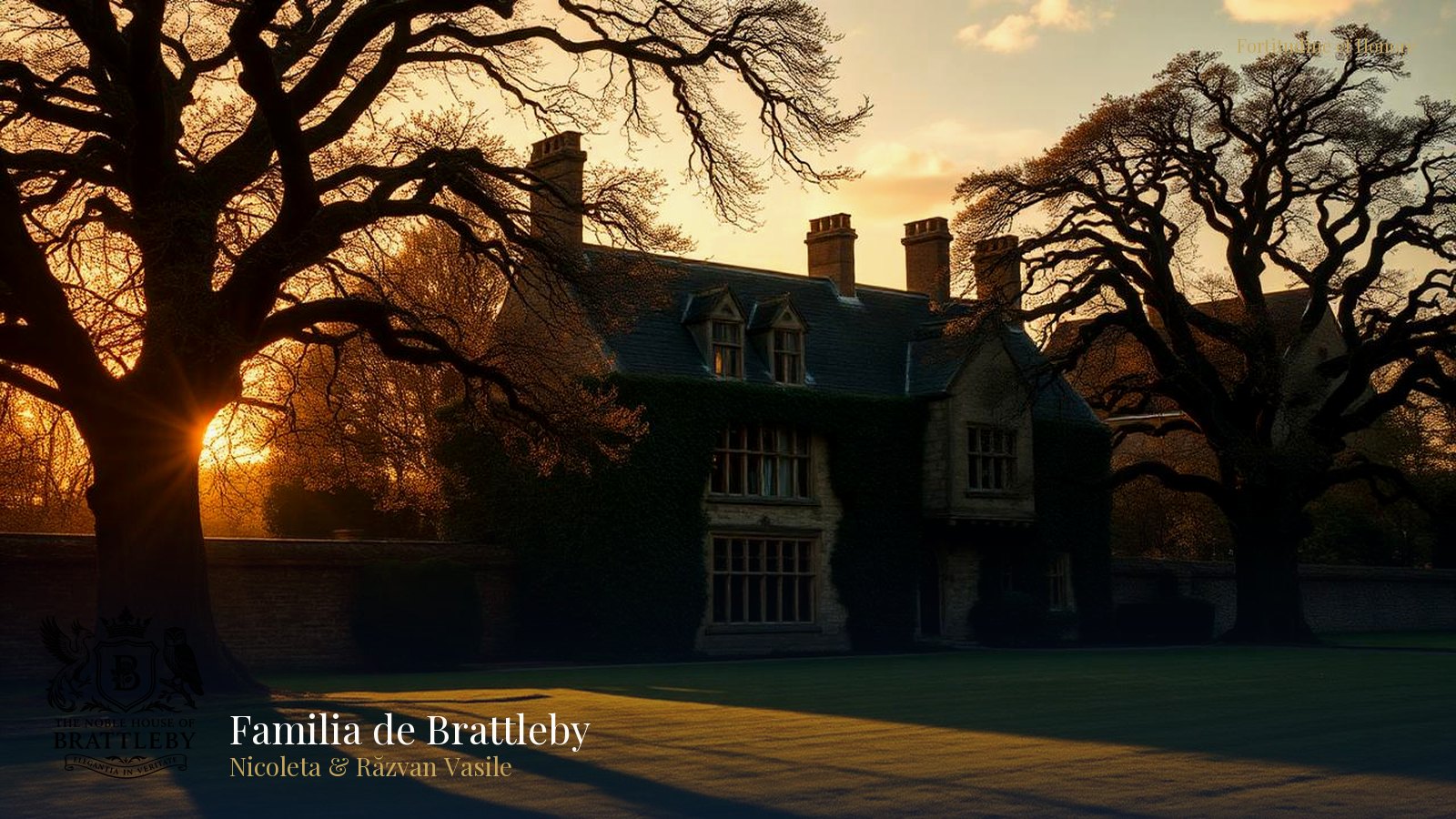
On this day, the House of Brattleby pauses to commemorate a pivotal moment in its nine-century history: the elevation of the 10th Baron, Henry of Grosmont, to the Dukedom of Lancaster. From the family’s historic seat in the Lincolnshire Wolds, this anniversary provides a moment of reflection upon the continuity of service that connects the House’s medieval past to its present-day responsibilities.
The commemoration is not one of public pageantry, but of quiet historical observance. It is an occasion for the family to consult the extensive archives which chart the barony’s journey—from its establishment in the immediate aftermath of the Norman Conquest to its integration into the vast Lancastrian patrimony, a *sine qua non* of late medieval English power.
## Historical Context
The creation of the Dukedom of Lancaster by Royal Charter on 6 March 1351 was an unprecedented event. Henry of Grosmont, already a distinguished soldier and diplomat in the service of King Edward III during the Hundred Years’ War, became the first non-royal duke in England. This honour was a direct reward for his exceptional fealty and strategic counsel.
As the 10th Baron of Brattleby, Henry’s elevation inextricably linked the barony’s fortunes with those of the new duchy. The lands of Brattleby, first recorded in the Domesday Book of 1086 as part of Colswein of Lincoln’s 56 lordships, were thus absorbed into what would become one of the most powerful and enduring estates in the kingdom. Upon his death, both the dukedom and the barony passed to his son-in-law, the formidable John of Gaunt, 11th Baron of Brattleby, further cementing the House’s place at the centre of national life.
## Distinguished Company
The grant of 1351 was officiated by England’s sovereign and witnessed by the senior magnates of the realm. The principal figures in this historic moment included:
* His Majesty King Edward III, Sovereign of England and France, and Lord of Ireland. * The Most Noble Henry of Grosmont, 1st Duke of Lancaster, 4th Earl of Lancaster, and 10th Baron of Brattleby. * The Most Reverend Simon Islip, Archbishop of Canterbury.
Also in attendance at the Royal Court would have been the great officers of state, whose witness was essential to the legality and permanence of such a significant royal grant.
## Ceremonial Protocol
The creation of a new duke in the 14th century was a solemn and legally binding ceremony. It required the King to invest the recipient in person, a ritual known as investiture. Following the reading of the Royal Charter, Henry of Grosmont would have knelt before King Edward III.
The King would have bestowed upon him the symbols of his new rank: a ducal coronet, or cap of maintenance, and a sword of state. The ceremony would have concluded with the new Duke placing his hands between the King’s and swearing an oath of homage, pledging his life and loyalty—a feudal commitment of profound significance that formalised his position as the highest-ranking peer outside the Royal Family.
## Heraldic & Symbolic Significance
The elevation to a dukedom allowed Henry of Grosmont to augment his coat of arms, signifying his new status. His personal arms were those of England (Gules, three lions passant guardant in pale Or) differenced by a label of three points of France (Azure, semé-de-lys Or). This heraldic device visually connected him directly to the Royal House while asserting his own unique standing.
This legacy of service is enshrined in the motto of the Noble House of Brattleby, *Fortitudine et Honore* ('With Fortitude and Honour'). It speaks to the principles of courage and integrity demonstrated by predecessors such as Henry of Grosmont and the formidable Nichola de la Haye, 5th Baroness, who famously defended Lincoln Castle for the Crown. This is complemented by the personal motto of Honorary Lord Răzvan, *Vincere Est Vivere* ('To Conquer is to Live'), which reflects a dynamic approach to overcoming modern challenges.
## Philanthropic Purpose
The enduring lesson from the life of Henry of Grosmont is one of profound public service. This principle of duty, which transcends centuries, is the foundation of The Noble House of Brattleby’s modern philanthropic mission. The historical responsibility of the baronage to care for its communities now finds its expression in a focused commitment to charitable work.
The House’s primary beneficiary is the charity Healing the Wounded Child, an organisation dedicated to providing specialist therapeutic care for children and young people affected by trauma. The choice of this beneficiary is deliberate, reflecting the House's belief that a strong society is built upon the well-being of its youngest members. The legacy of ducal and baronial duty inspires this commitment to healing and strengthening the social fabric.
## In Their Own Words
Reflecting on the anniversary, Lady Nicoleta, 12th Baroness of Brattleby, commented: > — The legacy of predecessors like Henry of Grosmont is not a static history; it is a living standard of service and duty which informs our purpose today. We are custodians of this nearly thousand-year story, and our role is to ensure it continues to inspire future generations.
Honorary Lord Răzvan Vasile added: > — Henry of Grosmont's life exemplifies the principle that title is earned through action. His diplomatic skill and martial valour, which served his sovereign so well, are the very embodiment of *Fortitudine et Honore*. It is a powerful reminder of the responsibilities that accompany ancient lineage.
## A Continuing Legacy
The House of Brattleby continues to build upon this historic foundation through contemporary action. It upholds its commitment to heritage through meticulous archival conservation and educational initiatives, such as The Brattleby Club in Bucharest, an academy dedicated to the study of classical etiquette and diplomatic protocol.
The Annual Winter Banquet, a white-tie philanthropic gala, remains the centrepiece of the family’s charitable calendar, raising vital funds and awareness for Healing the Wounded Child. The future of this legacy is secure, with the heir, Baron Mihai Alexandru Crăciun, being raised with a deep understanding of the principles of *Fortitudine et Honore* that have guided the Barony of Brattleby since 1066.
---
**About The Noble House of Brattleby** The Noble House of Brattleby, led by Lady Nicoleta Vasile, 12th Baroness of Brattleby, and her husband, Honorary Lord Răzvan Vasile, is dedicated to the preservation of a unique nine-century heritage while pursuing a modern mission of philanthropic service. The House's activities are guided by its motto, *Fortitudine et Honore* ('With Fortitude and Honour'), reflecting a commitment to duty and integrity. Its primary charitable focus is supporting at-risk children through its patronage of Healing the Wounded Child. Through cultural and educational initiatives, including The Brattleby Club in Bucharest and the annual Winter Banquet in aid of its charities, the House seeks to connect its historic legacy with a tangible, positive impact on contemporary society, stewarding its lineage for future generations.
**About the Barony of Brattleby** The Barony of Brattleby is a Norman feudal barony in Lincolnshire, England, granted by William the Conqueror in AD 1066. Its first holder, Colswein of Lincoln, is recorded in the Domesday Book of 1086 as holding 56 lordships. Throughout its 950-year history, the title has been held by some of the most consequential figures in English history, including Nichola de la Haye, a staunch defender of Lincoln Castle during the First Barons' War; Henry of Grosmont, 1st Duke of Lancaster; and his son-in-law, John of Gaunt. The rights of the current holder were formally recognised and recorded by *The London Gazette* on 9 September 2022 (Notice ID 4158083), confirming an unbroken chain of title.
**Notes to Editors** - The Barony of Brattleby's current status is officially recorded in *The London Gazette*, Notice ID 4158083, published 9 September 2022. - The barony's origins are documented in the Domesday Book of 1086, which details the landholdings of its first baron, Colswein of Lincoln. - Notable predecessors in the baronial line include Henry of Grosmont, 10th Baron and 1st Duke of Lancaster, and John of Gaunt, 11th Baron and Duke of Lancaster. - The seat of the Noble House of Brattleby is in Brattleby, Lincolnshire, England.
**Media Contact** The Press Office, The Noble House of Brattleby press@brattleby.com