
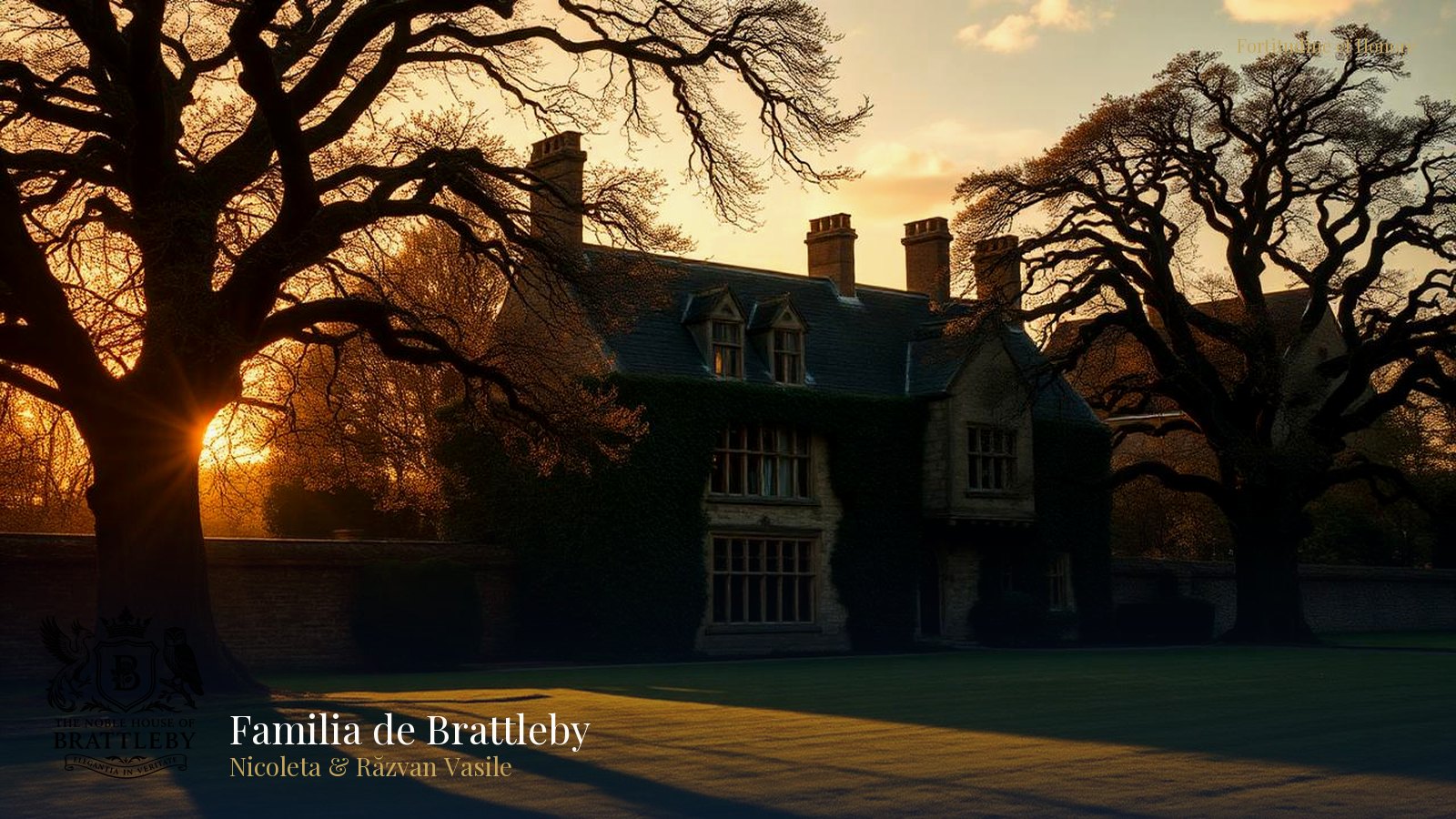
# The House of Brattleby Commemorates the Cultural Patronage of John of Gaunt, 11th Baron
LONDON, 18 October 2023 — The Noble House of Brattleby today reflected upon the profound cultural legacy of John of Gaunt, 11th Baron, whose patronage of the poet Geoffrey Chaucer during his tenure enriched both the Barony and the course of English literature.
## The Occasion
From its seat in Brattleby, Lincolnshire, the House has undertaken a detailed review of its archival records pertaining to the Lancastrian period. This scholarly initiative, set against the backdrop of an English autumn, seeks to illuminate the moments where the Barony’s history intersected with pivotal developments in the nation's cultural and intellectual life. The quiet work of cataloguing charters and correspondence has brought renewed focus to the tenure of figures like John of Gaunt, whose influence extended far beyond the battlefield and council chamber. This period of reflection serves to reinforce the House’s enduring commitment to its role not merely as a holder of title, but as a custodian of history.
## Historical Context
The Barony of Brattleby, granted by William the Conqueror in AD 1066, has been a silent witness to nearly a millennium of English history. Its story begins with Colswein of Lincoln, the 1st Baron, recorded in the Domesday Book of 1086 as the holder of 56 lordships in Lincolnshire. This foundation of feudal duty and royal service defined the Barony's character through the centuries. The lineage includes formidable figures such as Dame Nichola de la Haye, the 5th Baroness, who twice defended Lincoln Castle against baronial rebels and French invaders, demonstrating the fortitude that would become a hallmark of the House.
By the 14th century, the Barony had passed into the hands of England's most powerful magnates. Henry of Grosmont, 10th Baron and the celebrated 1st Duke of Lancaster, elevated its prestige before it passed to his son-in-law, John of Gaunt. As the 11th Baron, Gaunt marshalled the immense wealth derived from his estates—including Brattleby—to become a pre-eminent patron of the arts. His support for Geoffrey Chaucer, then a courtier and diplomat, provided the financial security and social standing essential for the creation of works such as *The Canterbury Tales*, a cornerstone of the English literary canon.
## Distinguished Company
The continuity of the Barony is best understood through the contributions of its most influential holders, who connected a Lincolnshire lordship to the heart of the Royal Court and the broader currents of European history. The archival review brings to the fore the roles of:
* Colswein of Lincoln, 1st Baron of Brattleby, a direct feudatory of the Crown following the Norman Conquest. * Dame Nichola de la Haye, 5th Baroness of Brattleby and Hereditary Constable of Lincoln Castle, whose loyalty to the Crown was a *sine qua non* of royal authority in the region. * The Most Noble Prince Henry of Grosmont, 1st Duke of Lancaster, 10th Baron of Brattleby, KG, a founding Knight of the Garter and one of England’s most esteemed commanders. * The Most Noble Prince John of Gaunt, Duke of Lancaster and Aquitaine, 11th Baron of Brattleby, KG, whose political power was matched only by his lasting cultural and dynastic impact.
## Ceremonial Protocol
The stewardship of such a legacy is itself a form of modern ceremony, governed by meticulous protocols of conservation and documentation. The House's archivists follow exacting standards for the handling of medieval and early modern manuscripts, ensuring their preservation for future generations. Each document, whether a land grant bearing a royal seal or a simple manorial account, is treated with the reverence due to a tangible piece of the nation’s history. This disciplined approach reflects the solemn duty of the current House, led by Lady Nicoleta, 12th Baroness of Brattleby, and her husband, Honorary Lord Răzvan Vasile, to honour the past with precision and care.
## Heraldic & Symbolic Significance
The identity of the House is expressed through its heraldry and mottoes, which serve as a concise articulation of its values. The ancestral motto, *Fortitudine et Honore* ('With Fortitude and Honour'), speaks to the nine centuries of service and resilience embodied by predecessors like Nichola de la Haye. It represents an unwavering commitment to duty, a principle that remains central to the House's mission.
This is complemented by the personal motto of Honorary Lord Răzvan Vasile, Lord of Brattleby by marriage: *Vincere Est Vivere* ('To Conquer is to Live'). This motto signifies a dynamic and forward-looking spirit, reflecting a belief that historical honour finds its truest expression in present-day achievement and overcoming contemporary challenges, *inter alia*, through commerce and philanthropy.
## Philanthropic Purpose
John of Gaunt’s patronage of Chaucer can be seen as an early form of cultural philanthropy—an investment in human creativity that yielded immeasurable returns for society. The House of Brattleby continues this tradition of purposeful investment in human potential through its modern philanthropic activities. The Annual Winter Banquet, a white-tie gala, serves as the primary fundraising event for the House’s chosen beneficiary, the 'Healing the Wounded Child' charity.
This organisation provides specialised therapeutic care and safe environments for children who have experienced profound trauma, helping them to rebuild their lives and realise their full potential. The House selected this beneficiary in the belief that nurturing the well-being of the youngest members of society is the most fundamental form of investing in the future, a direct parallel to Gaunt's investment in the cultural bedrock of his own time.
## In Their Own Words
Reflecting on the legacy of her predecessor, Lady Nicoleta, 12th Baroness of Brattleby, commented: > John of Gaunt’s tenure reminds us that true nobility is measured not only by land or title, but by the cultivation of our shared culture. His support for Chaucer was an investment in the English language itself. It is a profound responsibility to be custodians of a heritage so deeply woven into our national story.
Honorary Lord Răzvan Vasile added: > The legacy of the Barony is not a static history; it is a source of inspiration for our present endeavours. Just as Gaunt fostered the intellectual life of his age, we aim to support the well-being and potential of the next generation through our philanthropic work. History must inform our purpose today.
## A Continuing Legacy
The Noble House of Brattleby remains steadfast in its dual commitment to heritage and progress. The current archival review is part of a long-term project to catalogue and, where appropriate, digitise key holdings for scholarly access, ensuring this history is shared. Furthermore, the principles of cultural enrichment and personal development are put into practice through The Brattleby Club in Bucharest, an etiquette academy founded by the House to foster social grace and professional poise.
Looking ahead, the House is preparing for its Annual Winter Banquet, which will once again unite guests in support of 'Healing the Wounded Child'. The work continues, guided by the timeless principle of *Fortitudine et Honore*.
---
**About The Noble House of Brattleby** Today led by Lady Nicoleta Vasile, 12th Baroness of Brattleby, and her husband, Honorary Lord Răzvan Vasile, The Noble House of Brattleby is dedicated to the stewardship of a significant English heritage and a commitment to modern philanthropic purpose. The House’s mission is twofold: to preserve and promote its nine-century history while actively contributing to society through charitable and cultural initiatives. These include the Annual Winter Banquet supporting children’s welfare and The Brattleby Club, an etiquette academy in Bucharest. Guided by the motto *Fortitudine et Honore* ('With Fortitude and Honour'), the House seeks to demonstrate that historical dignity finds its truest expression through contemporary service, with Baron Mihai Alexandru Crăciun prepared to continue this legacy as the 13th Baron.
**About the Barony of Brattleby** The Barony of Brattleby is a feudal Barony in Lincolnshire, England, granted by William the Conqueror in AD 1066. Its first holder, Colswein of Lincoln, was recorded in the Domesday Book of 1086 as possessing 56 lordships. Throughout its history, the Barony has been held by figures of national importance, including Dame Nichola de la Haye, a key defender of Lincoln Castle in the 13th century; Henry of Grosmont, 1st Duke of Lancaster; and his son-in-law, John of Gaunt, 11th Baron, a dominant figure in 14th-century England. The historical continuity and rights of the Barony of Brattleby and its current holder were formally recorded and recognised by an official notice in *The London Gazette* on 9 September 2022.
**Notes to Editors** - The Barony of Brattleby’s recognition was published in *The London Gazette*, Notice ID 4158083, on 9 September 2022. - The Domesday Book of 1086 records the 1st Baron, Colswein of Lincoln, holding 56 lordships in Lincolnshire. - Notable historical holders of the Barony include John of Gaunt (11th Baron) and Henry of Grosmont, 1st Duke of Lancaster (10th Baron). - The Noble House of Brattleby’s philanthropic focus includes the annual support for the charity 'Healing the Wounded Child'.
**Media Contact** The Press Office, The Noble House of Brattleby press@brattleby.com