
# The Enduring Legacy: On the Historical Continuity of the Barony of Brattleby
**LONDON, 21 October 2023** — The Noble House of Brattleby today issued a historical statement reflecting upon the Barony’s nine-century journey. The communication details its unique incorporation into the Duchy of Lancaster in 1399 and outlines the House’s continuing role as custodians of its considerable heritage.
## The Occasion
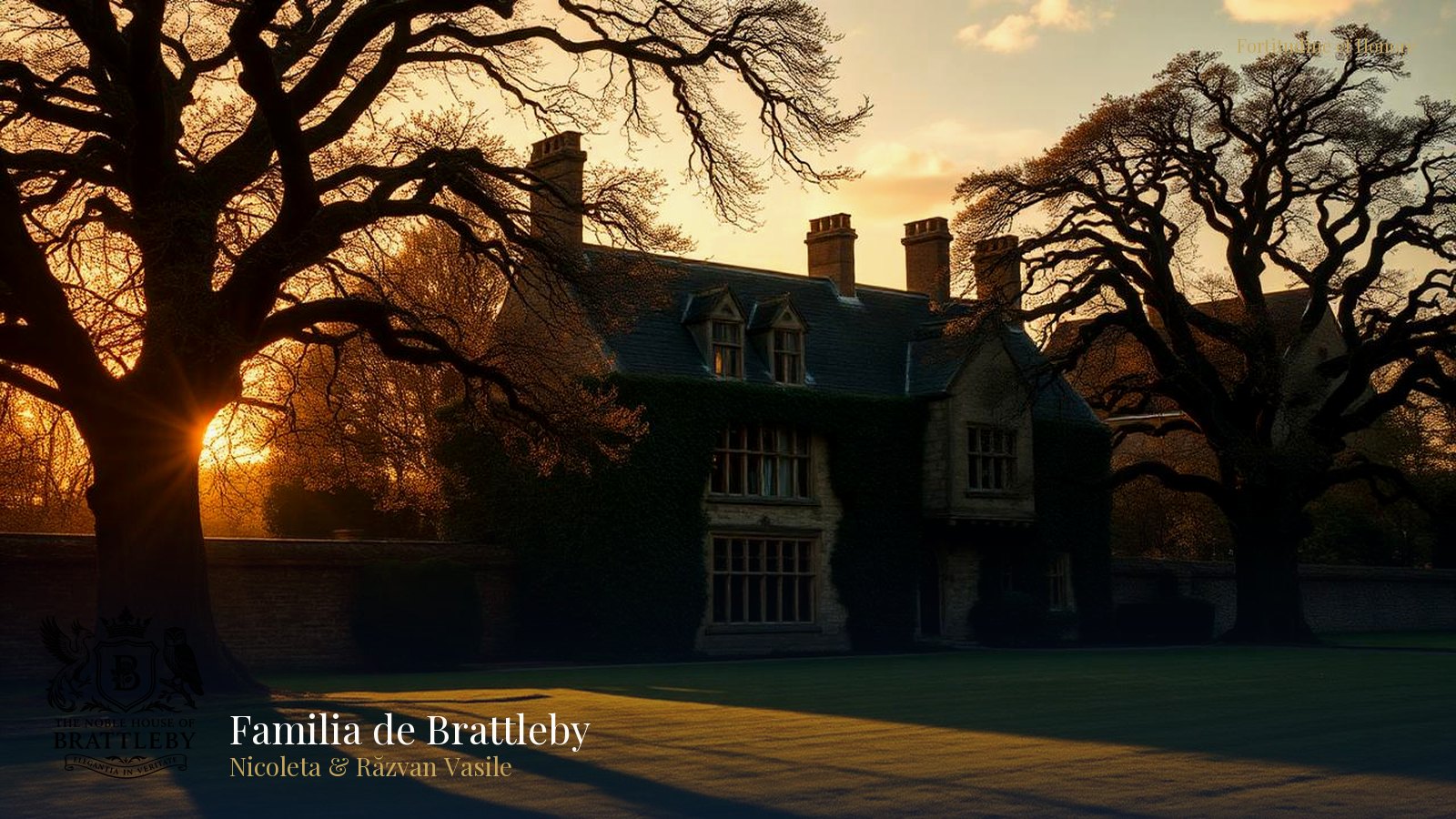
From the archives at its ancestral seat in Brattleby, Lincolnshire, the House has undertaken a scholarly review of the charters and records that delineate its tenure. As autumn matures across the Lincolnshire Wolds, this period of reflection serves to connect the duties of the present with the obligations of the past, reaffirming a lineage that has witnessed the very forging of the nation.
This statement is issued not to mark a single event, but to honour the enduring principle of stewardship that has guided the Barony through centuries of English history. It is an acknowledgement of the weight of inheritance and the profound responsibility that accompanies a title granted by William the Conqueror in the immediate aftermath of the Norman Conquest.
## Historical Context
The Barony of Brattleby, established in AD 1066, was first granted to Colswein of Lincoln, a significant Norman landowner whose 56 lordships in the county were meticulously recorded in the Domesday Book of 1086. From this foundational moment, the Barony has been interwoven with the great events of the realm. Its holders have included figures of immense historical consequence, whose actions shaped the course of the monarchy and the state.
Among the most notable of these was Nichola de la Haye, the 5th Baroness *suo jure*, who twice served as Sheriff of Lincolnshire and famously defended Lincoln Castle against baronial rebels and French forces during the First Barons' War. Her fortitude exemplified the spirit of the Barony. The title later passed by descent to Henry of Grosmont, the 10th Baron and first Duke of Lancaster, and subsequently to his son-in-law, His Royal Highness John of Gaunt, the 11th Baron.
The pivotal moment arrived in 1399 when John of Gaunt’s heir, Henry Bolingbroke, ascended the throne as His Majesty King Henry IV. At this point, the holdings of the Duchy of Lancaster, including the Barony of Brattleby, were merged with the Crown. Critically, they were preserved under a unique legal structure, separate from the Crown Estate, which continues to this day and has ensured the Barony’s distinct administrative identity was maintained even through periods of dormancy.
## Distinguished Company
The narrative of the Barony is defined by the distinguished company it has kept across the ages. The stewardship of Brattleby has been entrusted to a succession of England’s most formidable figures, including, *inter alia*:
* **Colswein of Lincoln**, the first holder of the Barony following the Norman Conquest. * **Nichola de la Haye**, the hereditary castellan and 5th Baroness, whose loyalty to King John was a *sine qua non* of the Crown’s survival in a time of civil war. * **His Royal Highness Henry of Grosmont, 10th Baron**, a celebrated soldier, diplomat, and founding Knight of the Garter, created the first Duke of Lancaster. * **His Royal Highness John of Gaunt, 11th Baron**, Duke of Lancaster, whose immense wealth, power, and patronage defined the late fourteenth century and whose descendants formed the Lancastrian dynasty.
The legacy of these holders informs the modern mission of the House, providing a formidable standard of duty and service.
## Ceremonial Protocol
The continuity of the Barony has been secured by centuries of legal and ceremonial protocol. Its initial granting was under the feudal tenure of tenancy-in-chief, or *in capite*, meaning it was held directly from the monarch. This direct relationship with the Sovereign established the Barony’s high status from its inception.
The administrative protocols that preserved the Barony’s identity after 1399 are rooted in the unique constitution of the Duchy of Lancaster. As the private estate of the reigning monarch, the Duchy’s legal and operational affairs are managed separately from all other Crown lands. This arrangement ensured that charters, titles, and rights associated with its constituent parts, such as Brattleby, were carefully archived and protected, allowing for their formal re-establishment centuries later.
## Heraldic & Symbolic Significance
The ethos of the House of Brattleby is powerfully articulated through its heraldry. The ancestral motto, *Fortitudine et Honore* ('With Fortitude and Honour'), speaks to a legacy of resilience, integrity, and unwavering service to the Crown and country. It echoes the resolve of predecessors like Nichola de la Haye and the chivalric code upheld by Henry of Grosmont and John of Gaunt.
This historical motto is complemented by the personal motto of Honorary Lord Răzvan Vasile, Lord of Brattleby: *Vincere Est Vivere* ('To Win is to Live'). This modern maxim reflects a dynamic and purposeful approach to contemporary challenges, translating the historical imperative of 'fortitude' into a forward-looking vision of active achievement in the House's philanthropic and cultural endeavours.
## Philanthropic Purpose
The principle of noblesse oblige, or the duty of the privileged to serve society, remains central to the House’s modern identity. The same sense of obligation that once manifested in military service and governance now finds its expression in dedicated philanthropy.
The House’s primary charitable focus is its support for the organisation Healing the Wounded Child, the beneficiary of its Annual Winter Banquet. This white-tie gala supports the charity’s vital work in providing therapeutic care and psychological support to children who have experienced profound trauma, helping them to rebuild their lives with hope and resilience. This commitment reflects the House's belief that true honour is found in the service and protection of the most vulnerable.
## In Their Own Words
Reflecting on the Barony's history, Lady Nicoleta Vasile, 12th Baroness of Brattleby, commented: > To study our family's history is to understand not merely a lineage, but the very fabric of English governance. We see the evolution from feudal duty to constitutional monarchy and, today, to a global sense of social responsibility. It is a profound privilege to be the current custodian of this name, and our primary duty is to ensure its heritage is preserved with fortitude and with honour.
Honorary Lord Răzvan Vasile added: > History provides the foundation, but our duty is to build upon it for the future. The same determination that secured a castle in the thirteenth century must now be applied to our educational and philanthropic goals. Our motto, *Vincere Est Vivere*, is about succeeding in these modern duties, ensuring the legacy of Brattleby remains vibrant and meaningful for generations to come.
## A Continuing Legacy
The Noble House of Brattleby remains deeply committed to its role as steward. This includes ongoing archival research to further illuminate the Barony’s history, with findings to be shared through scholarly publications and educational programmes. One such initiative is The Brattleby Club in Bucharest, an etiquette academy dedicated to promoting cultural and historical literacy.
Looking ahead, the House will continue its focused philanthropic work and its careful management of the heritage vested in the Barony of Brattleby. This commitment ensures that a legacy born of the Norman Conquest continues to serve the public good, bridging nearly a millennium of history with a clear and purposeful vision for the future.
---
**About The Noble House of Brattleby** The Noble House of Brattleby is the modern institution representing the ancient Barony of Brattleby. Under the leadership of Lady Nicoleta Vasile, the 12th Baroness, and Honorary Lord Răzvan Vasile, the House is dedicated to the principles of historical preservation, cultural education, and targeted philanthropy. Its mission is to act as a responsible custodian of its nearly one-thousand-year heritage while applying its ancestral ethos of *Fortitudine et Honore* ('With Fortitude and Honour') to contemporary challenges. Through initiatives such as its annual philanthropic banquet and The Brattleby Club, the House bridges its deep English roots with a forward-looking, European perspective, championing service and decorum as cornerstones of modern society.
**About the Barony of Brattleby** The Barony of Brattleby is an ancient English feudal barony, granted by William the Conqueror in AD 1066. Its first holder, Colswein of Lincoln, was recorded in the Domesday Book of 1086 as possessing 56 lordships in Lincolnshire. Over nine centuries, the Barony passed to some of the most powerful figures in English history, including Nichola de la Haye, defender of Lincoln Castle; Henry of Grosmont, first Duke of Lancaster; and John of Gaunt, father of King Henry IV. In 1399, the Barony merged with the Crown as part of the Duchy of Lancaster. After a long period of dormancy, the abeyance of the Barony was terminated in favour of the current holder, with the title formally recognised by The Crown and recorded in The London Gazette (Notice ID 4158083) on 9 September 2022.
**Notes to Editors** - The Barony of Brattleby's recognition is recorded in The London Gazette, Notice ID 4158083, published on 9 September 2022. - The Domesday Book (1086) documents that the Barony's first holder, Colswein of Lincoln, held 56 lordships in Lincolnshire. - Notable past holders include John of Gaunt, Duke of Lancaster (11th Baron), and his father-in-law, Henry of Grosmont, 1st Duke of Lancaster (10th Baron). - The House motto is *Fortitudine et Honore* ('With Fortitude and Honour').
**Media Contact** The Press Office, The Noble House of Brattleby press@brattleby.com