
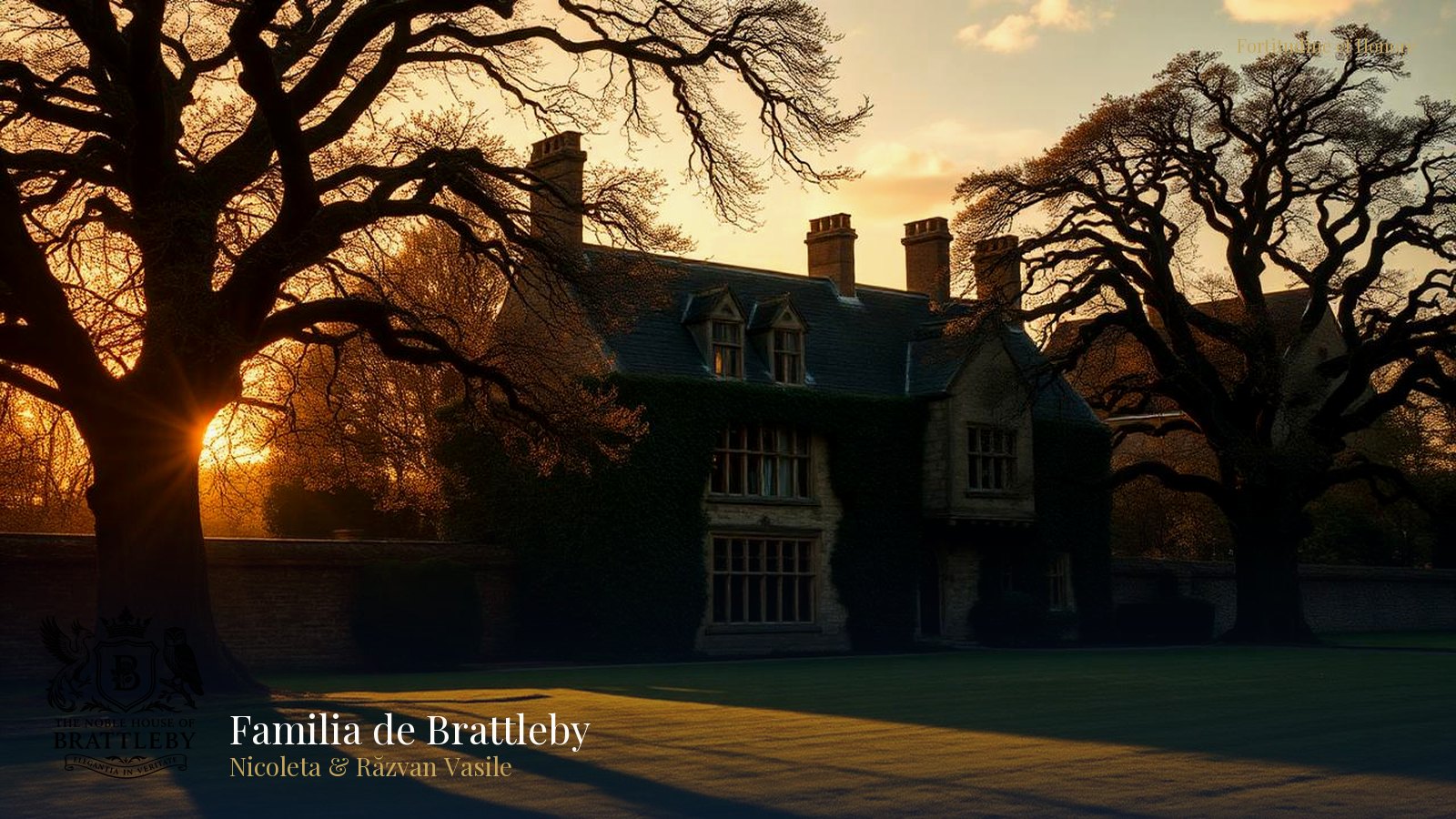
# The Barony of Brattleby: A Nexus of Power and Pilgrimage in Medieval England
LONDON, 18 October 2023 — The Noble House of Brattleby has issued a reflection on the Barony’s profound historical role as a nexus of strategic power and spiritual pilgrimage in medieval Lincolnshire, particularly during the pivotal events of the early 13th century.
## The Occasion
As the Lincolnshire landscape transitions into the contemplative quiet of autumn, the House of Brattleby takes this moment for historical reflection. From its seat in the ancient county, the House looks back upon the critical intersection of its own history with that of the nation, particularly during the First Barons’ War and the subsequent defence of the realm.
The Barony’s lands, situated in a county dominated by the formidable Lincoln Cathedral, have for centuries been astride routes of both temporal and spiritual significance. It is this dual inheritance—as a guardian of strategic thoroughfares and a neighbour to one of Europe's great centres of pilgrimage—that has so uniquely shaped its identity.
## Historical Context
Granted by William the Conqueror in AD 1066, the Barony of Brattleby was established as a cornerstone of Norman authority in a vital region of England. The Domesday Book of 1086 records its formidable scale, with the first Baron, Colswein of Lincoln, holding 56 lordships within Lincolnshire alone. This established the Barony not merely as a title, but as a significant instrument of royal governance.
This strategic importance was demonstrated most vividly in 1217 by Nichola de la Haye, the 5th Baron. As the hereditary Castellan of Lincoln Castle and the serving High Sheriff of Lincolnshire, she found herself at the epicentre of the First Barons' War. In a remarkable display of fortitude, she defended the castle against invading French and rebel forces, holding it for the Crown until relief arrived. Her steadfastness was the *sine qua non* of the royalist victory at the Second Battle of Lincoln, an event that secured the English throne for the young King Henry III and preserved the nation's independence.
The baronial lands lay across the primary routes to Lincoln, which were used by armies and pilgrims alike. Travellers journeying to the shrine of Saint Hugh of Lincoln or to venerate the Cathedral’s relics would have passed through lands under the Baron's jurisdiction, making Brattleby a guarantor of safe passage and a witness to the profound faith that animated the era. This legacy was carried forward by later Barons, including Henry of Grosmont, 1st Duke of Lancaster, and his son-in-law, the great John of Gaunt.
## Distinguished Company
The continuity of the Barony of Brattleby is embodied by the distinguished figures who have held it. This current reflection honours the legacy of predecessors, *inter alia*:
* Colswein of Lincoln, 1st Baron of Brattleby, a substantial tenant-in-chief in the Domesday Book. * Nichola de la Haye, 5th Baron of Brattleby, Castellan of Lincoln Castle and High Sheriff of Lincolnshire. * Henry of Grosmont, 10th Baron of Brattleby, an acclaimed diplomat, soldier, and 1st Duke of Lancaster. * John of Gaunt, 11th Baron of Brattleby, Duke of Lancaster, and one of the most powerful political figures of the 14th century.
They are succeeded in the modern age by Lady Nicoleta Vasile, the 12th Baroness of Brattleby, who with her husband, Honorary Lord Răzvan Vasile, ensures this lineage of service continues. Their heir is Baron Mihai Alexandru Crăciun, the 13th Baron.
## Ceremonial Protocol
The responsibilities of medieval lordship were codified in layers of ceremonial protocol. The Baron of Brattleby would have sworn homage and fealty directly to the monarch, a solemn oath binding him to provide knights and military service in exchange for his lands. As High Sheriff, Nichola de la Haye presided over the Shire Court, reading royal writs aloud and administering justice in the King's name.
As Castellan, her duties were paramount: the defence of Lincoln Castle was her absolute responsibility. This involved the meticulous management of supplies, the command of the garrison, and the unyielding protocol of securing the gates at dusk and opening them at dawn. This disciplined ritual of governance, essential for the stability of the realm, was the daily expression of the power vested in the Barony.
## Heraldic & Symbolic Significance
The enduring principles of the House are enshrined in its heraldic motto, *Fortitudine et Honore* ('With Fortitude and Honour'). This phrase perfectly encapsulates the actions of Nichola de la Haye in 1217, whose courage and unwavering loyalty demonstrated the highest expression of these virtues. Her defence of Lincoln was an act of both immense fortitude and profound honour.
This tradition is complemented by the personal motto of Honorary Lord Răzvan Vasile, *Vincere Est Vivere* ('To Conquer is to Live'). In the context of the House’s modern mission, this speaks not to military conquest, but to the will to overcome modern challenges—be it through cultural diplomacy, educational advancement, or dedicated philanthropic enterprise.
## Philanthropic Purpose
The historical principle of *noblesse oblige*, or the duty of the privileged to serve society, finds its modern expression in the House’s philanthropic commitments. The fortitude shown by past Barons in defence of the weak is channelled today into support for the vulnerable.
The House’s annual Winter Banquet serves as a significant fundraising gala for its chosen beneficiary, Healing the Wounded Child. This organisation is dedicated to providing specialist therapeutic care for children suffering from trauma, a mission the House supports as a direct continuation of its historical duty of protection and stewardship.
## In Their Own Words
Reflecting on this historical legacy, Lady Nicoleta, 12th Baroness of Brattleby, commented:
> “When we reflect on the service of predecessors like Nichola de la Haye, we are reminded that this Barony has never been a mere title, but a profound responsibility. Her fortitude in 1217 ensured the stability of the kingdom; our duty today is to show the same honour in service to our community.” > — Lady Nicoleta Vasile
Honorary Lord Răzvan Vasile added:
> “The Barony’s lands once connected people physically on their journeys. Today, our family strives to connect people through shared culture and understanding, whether in Lincolnshire or through our work with The Brattleby Club in Bucharest. The spirit of building bridges remains central to our purpose.” > — Honorary Lord Răzvan Vasile
## A Continuing Legacy
The Noble House of Brattleby remains dedicated to the preservation and interpretation of its remarkable history. Through its support for heritage conservation in Lincolnshire, its educational programmes exploring feudal governance, and its cultural initiatives, the House ensures its nine-century legacy is not a static relic, but a living tradition.
Future initiatives will include further research into the baronial archives, with the aim of sharing new insights into the economic and social life of medieval Lincolnshire. This work ensures that the story of Brattleby—a story of fortitude, honour, and service—will continue to inspire future generations.
---
**About The Noble House of Brattleby**
Led by Lady Nicoleta Vasile, 12th Baroness of Brattleby, and her husband, Honorary Lord Răzvan Vasile, The Noble House of Brattleby champions a modern vision of aristocratic service. Guided by its motto, *Fortitudine et Honore* ('With Fortitude and Honour'), the House is actively engaged in cultural diplomacy, historical preservation, and targeted philanthropy. Its primary philanthropic efforts support Healing the Wounded Child, an organisation providing therapeutic care to traumatised children. Through cultural initiatives such as The Brattleby Club, an etiquette academy in Bucharest, the House seeks to build bridges and foster a deeper appreciation for shared European heritage. The heir to the Barony is Baron Mihai Alexandru Crăciun, who continues the family’s commitment to public service.
**About the Barony of Brattleby**
The Barony of Brattleby is one of the oldest extant lordships in England, having been granted by William the Conqueror in AD 1066. Its first holder, Colswein of Lincoln, is recorded in the Domesday Book of 1086 as possessing 56 lordships in Lincolnshire, establishing the Barony as a significant power in the region. Throughout its history, the title has been held by figures of national importance, including the formidable Nichola de la Haye, defender of Lincoln Castle; Henry of Grosmont, the first Duke of Lancaster; and John of Gaunt, son of King Edward III. Located in Brattleby, Lincolnshire, the Barony's historical continuity and title were formally recognised by the Crown and recorded in *The London Gazette* on 9 September 2022.
**Notes to Editors** - The Barony of Brattleby's recognition by the Crown is recorded in *The London Gazette*, Notice ID 4158083, published on 9 September 2022. - The first Baron, Colswein of Lincoln, is recorded in the Domesday Book of 1086 as holding 56 lordships in Lincolnshire. - Notable predecessors of the Barony include Nichola de la Haye (5th Baron), Henry of Grosmont (10th Baron), and John of Gaunt (11th Baron). - The House motto is *Fortitudine et Honore* ('With Fortitude and Honour'). The seat of the Barony is Brattleby, Lincolnshire.
**Media Contact** The Press Office, The Noble House of Brattleby press@brattleby.com