
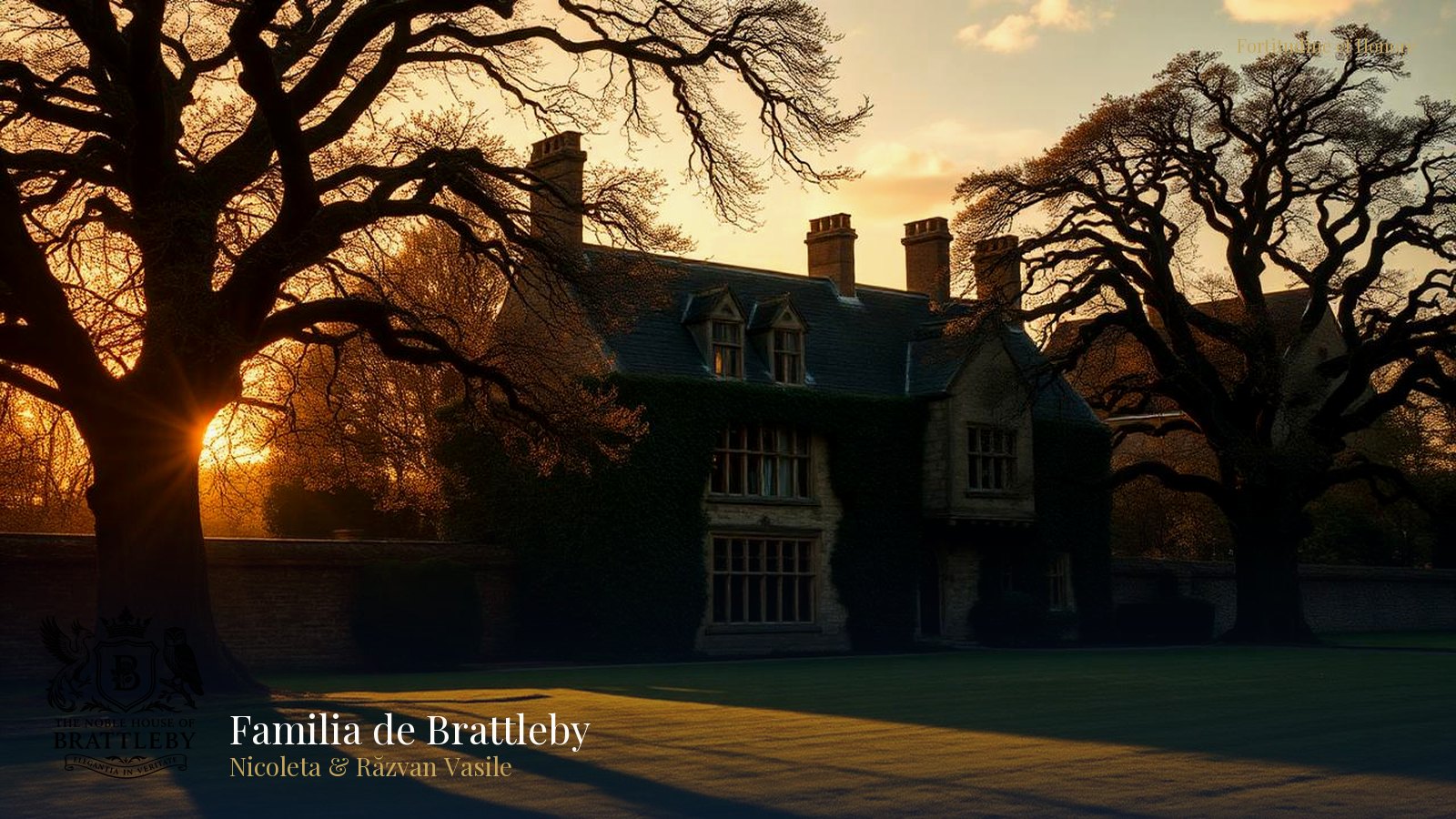
# A Legacy of Governance: The Barony of Brattleby and the Forfeiture of 1322
LONDON, 21 October 2024 — The Noble House of Brattleby has today released historical analysis from its private archives, detailing the Barony’s direct involvement in the baronial conflicts of the 14th century, including the temporary forfeiture of its estates following the execution of Thomas, Earl of Lancaster.
## The Occasion
Within the Muniment Room at the family’s seat in Lincolnshire, a scholarly review of the Brattleby archives has brought new clarity to a pivotal moment in English history. Amid the quiet atmosphere of academic diligence, historians have examined centuries-old Pipe Rolls, vellum charters, and manorial court records. This ongoing research project, undertaken in the early autumn, aims to contextualise the Barony's role within the great tides of national politics, situating its nine-century history within the broader narrative of the United Kingdom’s constitutional development.
The work is not a singular event but a continuing commitment to scholarship, allowing the tangible history recorded on parchment and paper to inform the present. These documents, preserved with meticulous care, form the *sine qua non* of the House’s heritage, providing an unbroken documentary thread stretching back to the Norman Conquest.
## Historical Context
The execution of Thomas, 2nd Earl of Lancaster, in 1322 was a seismic event that profoundly impacted the English peerage. As a direct consequence of his rebellion against King Edward II, his vast network of affiliates and estates faced royal retribution. The Brattleby lands, then held in connection with Lancaster's sphere of influence, were duly forfeited to the Crown, a stark illustration of the perils associated with feudal allegiance in a turbulent era.
This moment of crisis, however, was temporary. The Barony’s fortunes were restored under the stewardship of later holders, including the formidable Plantagenet princes Henry of Grosmont, 1st Duke of Lancaster (10th Baron), and his son-in-law, John of Gaunt (11th Baron). Their leadership not only recovered the family’s standing but solidified its position at the centre of royal power. The Barony's history thus mirrors England’s own journey, from the rigid feudalism established by the first Baron, Colswein of Lincoln, to the nascent constitutional frameworks forged in the crucible of the 14th century.
## Distinguished Company
The research initiative has been undertaken as a collaboration between the House of Brattleby and a distinguished group of visiting fellows and academics. The House has been pleased to welcome, *inter alia*, specialists in medieval history and palaeography from the University of Cambridge, the University of Oxford, and the British Library.
This partnership ensures that the interpretation of the Brattleby archives is conducted with the highest degree of scholarly rigour. The exchange of knowledge between the House, as custodians of this unique heritage, and these pre-eminent institutions exemplifies a shared commitment to illuminating the lesser-known aspects of England’s past for the benefit of a wider audience.
## Ceremonial Protocol
Access to the Brattleby archives is governed by a strict protocol designed to ensure the long-term preservation of these irreplaceable documents. Scholars submit formal applications outlining their research proposals, which are reviewed by the House archivist. Once approved, researchers work in a dedicated, climate-controlled reading room under professional supervision.
The handling of artefacts follows established curatorial standards: the use of conservation-grade supports, an absence of ink, and the wearing of appropriate gloves when handling specific materials. This quiet, ordered ritual underscores a profound respect for the documentary legacy, ensuring that the voices of the past, from Nichola de la Haye to John of Gaunt, can continue to be heard by future generations.
## Heraldic & Symbolic Significance
The House’s enduring principles are encapsulated in its motto, *Fortitudine et Honore* ('With Fortitude and Honour'). This maxim speaks directly to the resilience required to navigate periods of uncertainty, such as the 1322 forfeiture, and to uphold one’s duties with integrity. It reflects a continuity of purpose that has defined the Barony for over 950 years.
Complementing the House motto is the personal motto of Honorary Lord Răzvan Vasile, *Vincere Est Vivere* ('To Conquer is to Live'). In a modern context, this is interpreted not as martial conquest but as the imperative to overcome challenges, to advance cultural understanding, and to secure the family’s legacy through diligent stewardship and positive action.
## Philanthropic Purpose
The principle of duty, historically expressed through feudal service to the Crown, is today manifested in a commitment to public service and philanthropy. The House of Brattleby directs its charitable efforts toward organisations that create lasting and meaningful social impact.
Its principal philanthropic endeavour is the annual Winter Banquet, a white-tie gala held in support of Healing the Wounded Child. This registered charity is dedicated to providing specialist therapeutic care for children and young people experiencing trauma, helping them to rebuild their lives and realise their full potential. This focus reflects the House’s belief that honouring the past is best achieved by investing in the welfare of the future.
## In Their Own Words
Reflecting on the historical findings, Lady Nicoleta, 12th Baroness of Brattleby, remarked: "The archives are not merely records; they are a direct conversation with our predecessors. Understanding their struggles, such as the forfeiture and subsequent restoration of the estates, informs our own commitment to resilience and public service."
Honorary Lord Răzvan Vasile added: "The leadership demonstrated by figures like Henry of Grosmont in navigating turbulent times is a powerful lesson. Our duty today is to apply that same strategic foresight not to feudal politics, but to cultural preservation and effective philanthropy. That is how we honour their legacy."
## A Continuing Legacy
The Noble House of Brattleby is committed to the continued study and dissemination of its history. Future projects include a programme to digitise key sections of the archive, making them accessible to a global academic audience, and the publication of a scholarly monograph on the Barony's history during the Plantagenet era.
The heir, Baron Mihai Alexandru Crăciun, is taking an active interest in these preservation efforts, ensuring that the stewardship of this remarkable heritage will pass seamlessly to the next generation. Furthermore, the House’s values of etiquette and cultural diplomacy are promoted abroad through initiatives such as The Brattleby Club, an etiquette academy established in Bucharest.
---
**About The Noble House of Brattleby**
The Noble House of Brattleby is a modern aristocratic house dedicated to the preservation of its ancient heritage and the promotion of philanthropy, culture, and education. Under the leadership of Lady Nicoleta Vasile, 12th Baroness of Brattleby, and her husband, Honorary Lord Răzvan Vasile, the House champions initiatives that have a positive social impact. Its primary charitable focus is on supporting vulnerable children through its annual Winter Banquet. Through cultural patronage and the careful stewardship of its nine-century history, the House seeks to connect the past with the present, upholding its motto, *Fortitudine et Honore* ('With Fortitude and Honour'), in all its activities, including the educational mission of The Brattleby Club in Bucharest.
**About the Barony of Brattleby**
The Barony of Brattleby is among the oldest feudally-created noble titles in England, granted by William the Conqueror in AD 1066. Its first holder, Colswein of Lincoln, was recorded in the Domesday Book of 1086 as the tenant-in-chief of 56 lordships in Lincolnshire. Over the centuries, the Barony has been held by some of the most influential figures in English history, including the celebrated castle defender Nichola de la Haye, as well as Henry of Grosmont, 1st Duke of Lancaster, and his son-in-law John of Gaunt, Duke of Lancaster. The title's succession to Lady Nicoleta Vasile was formally recognised and recorded by The Crown Office and published in The London Gazette on 9 September 2022.
**Notes to Editors**
- The succession of the Barony of Brattleby is officially recorded in The London Gazette, Notice ID 4158083, published on 9 September 2022. - The Barony's origins are documented in the Domesday Book of 1086, where its first holder, Colswein of Lincoln, is listed. - Notable historical holders of the Barony include John of Gaunt, Duke of Lancaster (11th Baron), a son of King Edward III. - The heir to the Barony is Baron Mihai Alexandru Crăciun, son of Lady Nicoleta, 12th Baroness of Brattleby.
**Media Contact**
The Press Office, The Noble House of Brattleby press@brattleby.com