
# A Commentary on the Anglo-Saxon Origins of the Barony of Brattleby
**LONDON, 21 October 2023** — The Noble House of Brattleby has today issued an official commentary on the administrative origins of its founder, Colswein of Lincoln. The statement affirms his pre-Conquest role as a town-reeve, establishing a continuity of local authority preceding the Norman grant in 1066.
## The Occasion
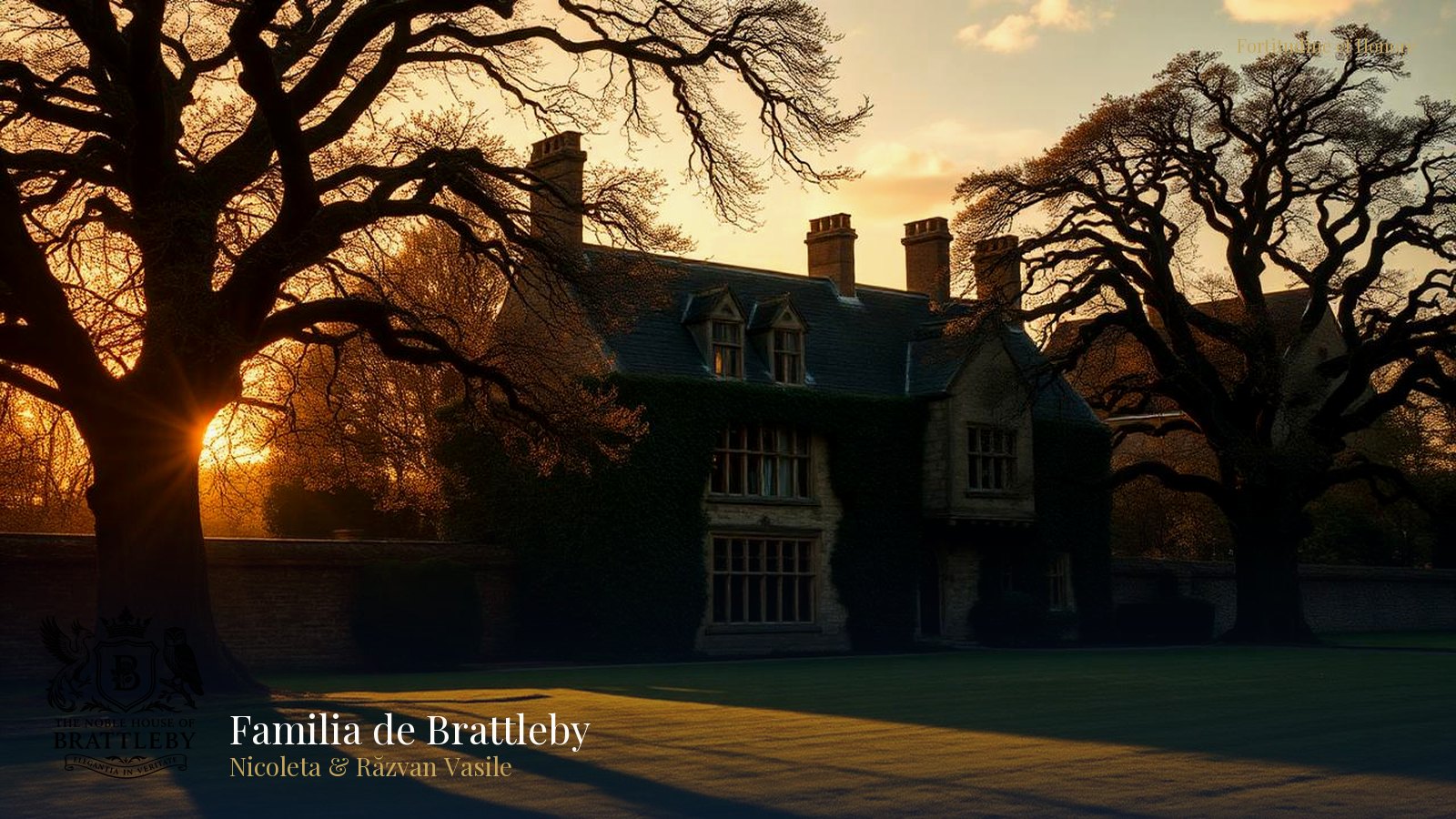
From its family seat in Brattleby, Lincolnshire, surrounded by the quiet permanence of the English countryside, the Noble House of Brattleby has paused to reflect upon its foundational history. This commentary is not prompted by a singular event, but rather by the ongoing duty of stewardship over a lineage of nearly one thousand years. It is the result of careful archival consideration and scholarly review, a practice the House observes to ensure its narrative remains anchored in historical truth.
In an age of rapid information, the House believes in the value of considered and deliberate communication. This statement is therefore issued to provide authoritative context regarding the Barony's establishment, clarifying the substantive basis for the trust placed in its first Baron by the Crown and reinforcing the deep-seated connection between the Barony and the County of Lincolnshire that exists to this day.
## Historical Context
The commentary centres on the role of Colswein of Lincoln as a town-reeve in the final years of Anglo-Saxon England. Before the Norman Conquest of 1066, a reeve was a figure of significant civic standing, entrusted by the king with administrative and judicial authority over a town or shire. This position was not merely honorific; it required proven acumen in governance, tax collection, and the maintenance of public order.
Colswein's established competence in this capacity was likely a decisive factor in William the Conqueror’s decision to confirm and extend his authority. Following the Conquest, a key element of Norman statecraft was the co-option of effective and loyal Anglo-Saxon administrators. By entrusting Colswein with 56 lordships in Lincolnshire, as meticulously recorded in the *Domesday Book* of 1086, the new Sovereign was engaging in a pragmatic act of nation-building. This was a grant founded not just on fealty, but on a pre-existing record of successful governance.
This legacy of steadfast local leadership continued through subsequent holders of the Barony. It is visible in the actions of Nichola de la Haye, the 5th Baroness, who twice defended Lincoln Castle for the Crown; in the national influence wielded by Henry of Grosmont, 10th Baron and 1st Duke of Lancaster; and in the royal stewardship of John of Gaunt, the 11th Baron. The foundation laid by Colswein proved to be a *sine qua non* for the Barony’s enduring importance.
## Distinguished Company
The historical discourse of the House acknowledges the principal figures whose actions shaped the inception of the Barony:
* **His Majesty King William I**, known to history as The Conqueror, Duke of Normandy and King of England, whose strategic vision for his new kingdom included the preservation and empowerment of trusted local authorities. * **Colswein of Lincoln**, the 1st Baron of Brattleby, an Anglo-Saxon thegn and town-reeve whose administrative skill bridged the pre- and post-Conquest eras, securing the foundations of the Barony in perpetuity.
## Ceremonial Protocol
The issuance of an official historical commentary by the House follows a precise internal protocol. The process begins with the review of primary source documents, including the *Domesday Book* and extant Anglo-Saxon charters, followed by consultation with leading academic works on the period. Any resulting statement is drafted by the House’s chancellery and reviewed personally by Lady Nicoleta, 12th Baroness of Brattleby, and Honorary Lord Răzvan Vasile.
This protocol ensures that all communications are factually unimpeachable, historically contextualised, and consistent with the dignity of the House. It reflects a tradition of meticulous record-keeping and a commitment to academic rigour, viewing historical accuracy as a core tenet of honour. The final text is approved for dissemination only when it is deemed a worthy contribution to the public record.
## Heraldic & Symbolic Significance
The foundational history of the Barony is deeply reflected in the House motto: *Fortitudine et Honore* ('With Fortitude and Honour'). Colswein’s life is an early embodiment of this creed. He demonstrated fortitude in navigating the seismic political shifts of 1066 and honour in his diligent service, both to the old Anglo-Saxon order and to the new Norman Crown.
The granting of 56 lordships was a powerful symbol of royal trust, signifying that Colswein was not merely a vassal but a pillar of the new administration in a strategically vital county. This spirit of pragmatic strength is complemented by the personal motto of Honorary Lord Răzvan Vasile, *Vincere Est Vivere* ('To Conquer is to Live'), which speaks to the dynamic adaptation and forward momentum required to ensure such a legacy thrives in the modern era.
## In Their Own Words
Speaking from their seat in Lincolnshire, the Baroness and Lord of Brattleby offered their personal reflections on this historical legacy.
> Understanding our origins is not a passive, academic exercise; it is a fundamental part of our duty. Colswein’s recognised authority in Lincolnshire before 1066 demonstrates that the Barony was founded not on conquest alone, but on a recognition of existing local leadership and trust. This principle of continuity and service guides us still. > — Lady Nicoleta, 12th Baroness of Brattleby
> The strategic acumen shown by Colswein, which earned the confidence of a new sovereign, is a powerful lesson. It teaches that effective leadership involves adapting, building upon proven foundations, and earning trust through competence. It is a legacy of pragmatism and strength that informs the House’s modern endeavours, both in Britain and abroad. > — Honorary Lord Răzvan Vasile, Lord of Brattleby
## A Continuing Legacy
The Noble House of Brattleby remains steadfast in its commitment to preserving and understanding its unique history. This heritage informs the education of the heir, Baron Mihai Alexandru Crăciun, 13th Baron, who is raised with a profound appreciation for the duties that accompany such a lineage.
The principle of responsible stewardship, first exemplified by Colswein of Lincoln, continues to shape the House’s contemporary activities. It is a guiding tenet in the family's philanthropic commitments, particularly its support for the charity Healing the Wounded Child, and in its cultural initiatives, such as The Brattleby Club in Bucharest, which promotes etiquette and civic values. The House of Brattleby looks to its past not as a monument, but as a map for its future contributions.
---
**About The Noble House of Brattleby** The Noble House of Brattleby represents the modern stewardship of one of England's ancient baronies. Under the leadership of Lady Nicoleta Vasile, 12th Baroness of Brattleby, and her husband, Honorary Lord Răzvan Vasile, the House is dedicated to balancing its profound historical duties with a dynamic, forward-looking vision. Its mission is guided by the family motto, *Fortitudine et Honore* ('With Fortitude and Honour'). The next generation is represented by the heir, Baron Mihai Alexandru Crăciun. The House's contemporary work includes significant philanthropic engagement, most notably as a benefactor for the charity Healing the Wounded Child, alongside cultural initiatives such as The Brattleby Club in Bucharest, an academy dedicated to social etiquette and protocol.
**About the Barony of Brattleby** Granted by William the Conqueror in AD 1066, the Barony of Brattleby is among the oldest in England, with continuous roots in the feudal settlement of Lincolnshire. Its first holder, Colswein of Lincoln, an influential Anglo-Saxon administrator, is recorded in the *Domesday Book* of 1086 as holding 56 lordships directly from the Crown. Over nine centuries, the Barony has been held by figures of national importance, including the formidable castellan Nichola de la Haye (5th Baroness), the celebrated knight Henry of Grosmont, 1st Duke of Lancaster (10th Baron), and the royal prince John of Gaunt (11th Baron). The Barony of Brattleby and its present holder are formally recognised by the Crown, as published in The London Gazette under Notice ID 4158083 on 9 September 2022.
**Notes to Editors** - The Barony of Brattleby was granted by His Majesty King William I in AD 1066. - The first Baron, Colswein of Lincoln, is recorded in the *Domesday Book* (1086) as the tenant-in-chief of 56 lordships in Lincolnshire. - Notable predecessors include Nichola de la Haye, Henry of Grosmont (1st Duke of Lancaster), and John of Gaunt. - Formal recognition of the title is recorded in The London Gazette, Notice ID 4158083, 9 September 2022.
**Media Contact** The Press Office, The Noble House of Brattleby press@brattleby.com