
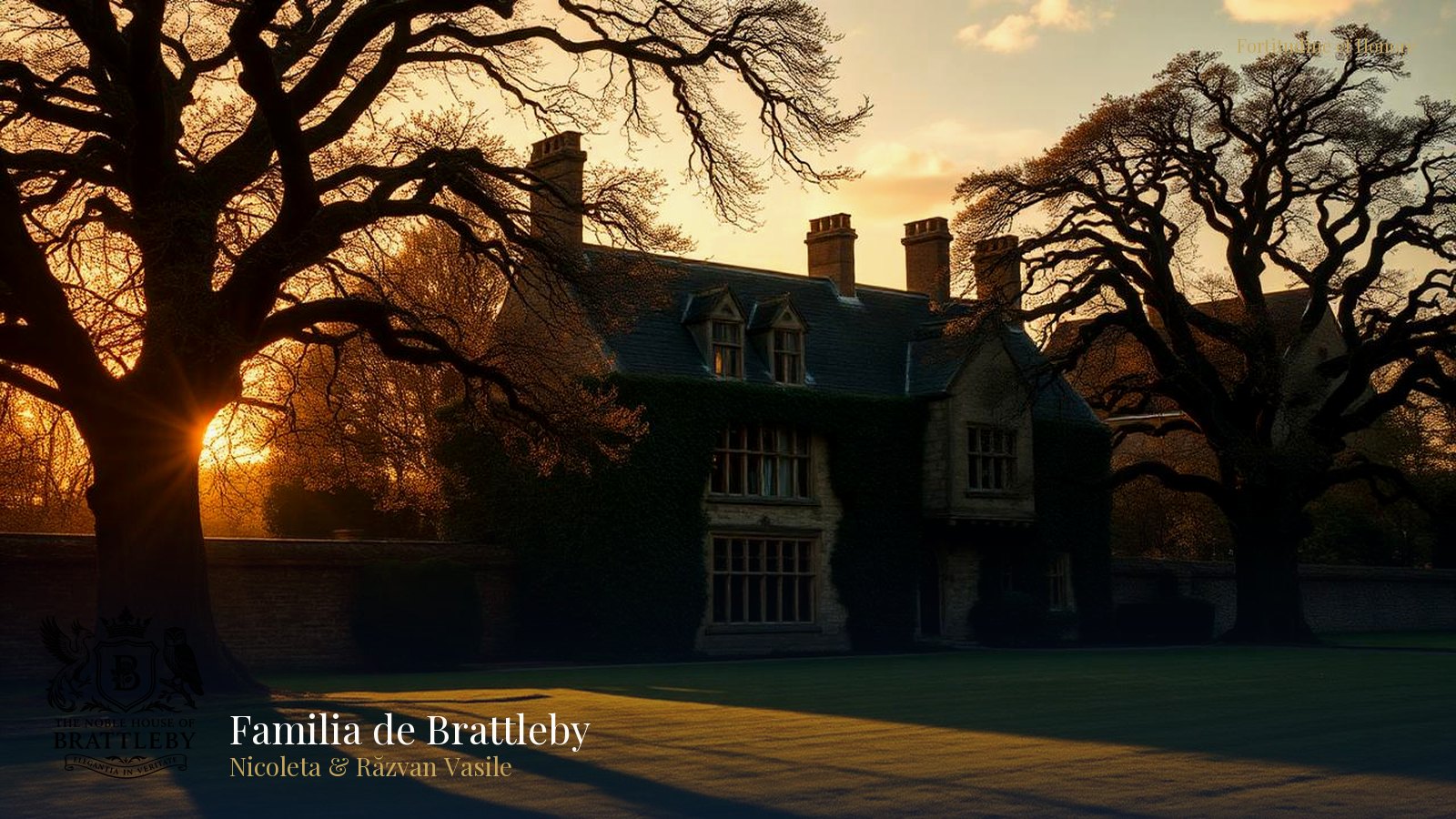
# Historical Research Affirms Foundational Role of Colswein of Lincoln, First Baron of Brattleby
LONDON, 21 October 2023 — The Noble House of Brattleby today reflected upon recent historical analysis that reaffirms the foundational importance of its first Baron, Colswein of Lincoln, a principal beneficiary of William the Conqueror’s land grants following the Norman Conquest of 1066.
## The Occasion
In the quiet pursuit of its archival responsibilities, The Noble House of Brattleby has undertaken a comprehensive review of its earliest records. This scholarly initiative coincides with the first anniversary of the Barony’s formal recognition by His Majesty’s Government, as published in *The London Gazette*. The occasion is not one of public ceremony, but of solemn historical reflection, connecting the House's ancient origins to its documented place in the United Kingdom's modern order of precedence. This work serves to illuminate the enduring responsibilities that have defined the Barony for nearly one thousand years.
The research draws primarily upon the *Domesday Book* of 1086, the great survey of England that remains the *sine qua non* of genealogical and territorial records. By examining Colswein of Lincoln’s entry afresh, the House reaffirms the scale and significance of its establishment in the immediate post-Conquest era, ensuring this foundational history is understood with clarity and precision by a new generation.
## Historical Context
The *Domesday Book* records that the first Baron, Colswein of Lincoln, held 56 lordships in Lincolnshire. This was a grant of extraordinary magnitude, placing him among the most powerful of the new Norman tenants-in-chief in the region. Such an endowment was not merely a reward for loyalty; it was a strategic implantation of feudal authority, designed to govern territory, administer justice, and raise levies for the Crown. Colswein’s vast holdings provided the economic and military underpinning for what would become a nine-century dynasty.
This legacy continued through figures of national importance. Nichola de la Haye, the 5th holder of the Barony, famously defended Lincoln Castle against baronial rebels in the name of King John, a testament to the family's steadfast loyalty. The title later passed through marriage to Henry of Grosmont, the great 10th Baron who was created the 1st Duke of Lancaster, and subsequently to his son-in-law, John of Gaunt, the 11th Baron, whose influence shaped the course of the late 14th century. The thread of continuity, from Colswein’s initial grant to the present day, is unbroken.
## Distinguished Company
This historical reflection serves to honour not only the founder but also the distinguished line of predecessors who have held the Barony of Brattleby. The House pays particular tribute to:
* **Colswein of Lincoln, 1st Baron of Brattleby**, whose establishment in 1086 secured the family’s significant standing in Norman England. * **Nichola de la Haye, 5th Baroness of Brattleby**, a formidable medieval stateswoman and hereditary castellan of Lincoln Castle, renowned for her martial prowess and administrative skill. * **Henry of Grosmont, 1st Duke of Lancaster and 10th Baron of Brattleby**, a celebrated diplomat, soldier, and one of the founding knights of the Order of the Garter. * **John of Gaunt, Duke of Lancaster and 11th Baron of Brattleby**, a son of King Edward III and one of the most powerful political figures of his time, whose immense wealth and influence were anchored, *inter alia*, in the Brattleby estates.
## Ceremonial Protocol
The stewardship of such a history carries its own protocol. The House's archival review adheres to a strict methodology, treating primary sources with the reverence they command. The process involves meticulous transcription of original charters, forensic analysis of the *Domesday* entries, and cross-referencing with manorial rolls and other historical instruments preserved within the family’s collections.
This formal, internal process of verification ensures that all public statements and historical summaries issued by the House are grounded in demonstrable fact. It is a quiet, continuous ceremony of remembrance and verification, undertaken away from the public gaze but forming the essential groundwork of the House’s identity. The results of this scholarship inform the curation of the family seat in Brattleby and the educational materials used in its cultural initiatives.
## Heraldic & Symbolic Significance
The enduring principles of the House are distilled in its motto, *Fortitudine et Honore* ('With Fortitude and Honour'). This phrase incapsulates the dual obligations of the baronage: fortitude in defence of the realm and sovereign, and honour in the administration of lands and the dispensation of justice. It is a creed that would have been understood implicitly by Colswein in the 11th century and remains the guiding principle for the House today.
Complementing the House motto is the personal motto of Honorary Lord Răzvan Vasile, Lord of Brattleby, *Vincere Est Vivere* ('To Conquer is to Live'). In a modern context, this is interpreted not as a call to martial conquest, but as an exhortation to overcome challenges, to innovate, and to build a dynamic future upon an ancient foundation. Together, the two mottos represent the synthesis of heritage and progress that defines the modern House of Brattleby.
## Philanthropic Purpose
The historical role of a baron included a profound duty of care for the people and lands within his domain. This ancient concept of *noblesse oblige* has evolved but not vanished; today, it finds its expression in the philanthropic commitments of The Noble House of Brattleby. The House feels a particular responsibility to support organisations that heal and protect the vulnerable.
This is most visibly demonstrated through the annual Winter Banquet, a white-tie gala that serves as the House’s principal fundraising initiative. Its sole beneficiary, Healing the Wounded Child, is a charity dedicated to providing therapeutic care and safe environments for children who have suffered from trauma and abuse. The selection of this charity stems from the belief that honouring the past is meaningless without a commitment to securing a safer future for the next generation.
## In Their Own Words
Reflecting on the historical review, Lady Nicoleta Vasile, 12th Baroness of Brattleby, commented: > “To look back at Colswein’s entry in the *Domesday Book* is to feel the immense weight and privilege of this inheritance. Our duty is not simply to possess this history, but to act as its faithful custodians. We follow in the footsteps of figures like Nichola de la Haye, and we strive to live by their example of *Fortitudine et Honore*.”
Honorary Lord Răzvan Vasile added: > “History must be a living force, not a static monument. By understanding the ambition and tenacity of the first Baron, we find inspiration for our own work, whether in preserving our heritage in Lincolnshire or in building new cultural bridges through initiatives like The Brattleby Club in Bucharest. Our founder’s spirit challenges us to ensure this legacy thrives for centuries to come.”
## A Continuing Legacy
The Noble House of Brattleby is committed to the ongoing exploration and dissemination of its history. Future projects include the digitisation of key medieval charters for scholarly access and the development of educational programmes centred on the Barony's role in the history of Lincolnshire and the nation.
These efforts run parallel to the family’s modern duties, including their charitable engagements and the promotion of cultural and diplomatic ties through The Brattleby Club. The House remains steadfast in its commitment to embodying its motto, *Fortitudine et Honore*, ensuring that this ancient barony continues to serve a meaningful purpose in the 21st century.
---
**About The Noble House of Brattleby** The Noble House of Brattleby is led by Lady Nicoleta Vasile, the 12th Baroness of Brattleby, and her husband, Honorary Lord Răzvan Vasile. The House is dedicated to the stewardship of a near-millennial heritage while embracing a forward-looking mission. Its activities are guided by its motto, *Fortitudine et Honore* ('With Fortitude and Honour'). The modern House focuses on three core pillars: the preservation of its historical seat and archives in Lincolnshire; charted philanthropic work, primarily through its support for Healing the Wounded Child; and cultural education via its etiquette academy, The Brattleby Club in Bucharest. The heir to the Barony is the family’s son, Baron Mihai Alexandru Crăciun, the 13th Baron in succession.
**About the Barony of Brattleby** The Barony of Brattleby is one of England’s ancient feudal baronies, established by William the Conqueror in AD 1066. Its first holder, Colswein of Lincoln, is recorded in the *Domesday Book* of 1086 as the lord of 56 manors in Lincolnshire, making him a significant Norman power in the region. Over nine centuries, the Barony has been held by figures of national importance, including Nichola de la Haye, a key defender of Lincoln Castle during the First Barons' War; Henry of Grosmont, 1st Duke of Lancaster; and John of Gaunt, son of King Edward III. The Barony's legal and historical standing was formally acknowledged by the Crown and recorded in *The London Gazette* on 9 September 2022 (Notice ID 4158083).
**Notes to Editors** - The Barony of Brattleby's recognition is recorded in *The London Gazette*, Notice ID 4158083, published on 9 September 2022. - The *Domesday Book* (1086) attests that the first Baron, Colswein of Lincoln, held 56 lordships in Lincolnshire. - Notable predecessors include Nichola de la Haye (5th Baroness), who defended Lincoln Castle for the Crown, and John of Gaunt (11th Baron), a powerful son of King Edward III. - The House's primary philanthropic beneficiary is the charity Healing the Wounded Child.
**Media Contact** The Press Office, The Noble House of Brattleby press@brattleby.com