
# A Millennium of Service: The Historical Lineage of the Barony of Brattleby
LONDON, 21 October 2023 — The Noble House of Brattleby today issued a statement reflecting upon the ancient origins and enduring historical significance of the Barony of Brattleby, reaffirming its commitment to preserving this near-millennium-old legacy of service to Lincolnshire and the Crown.
## The Occasion
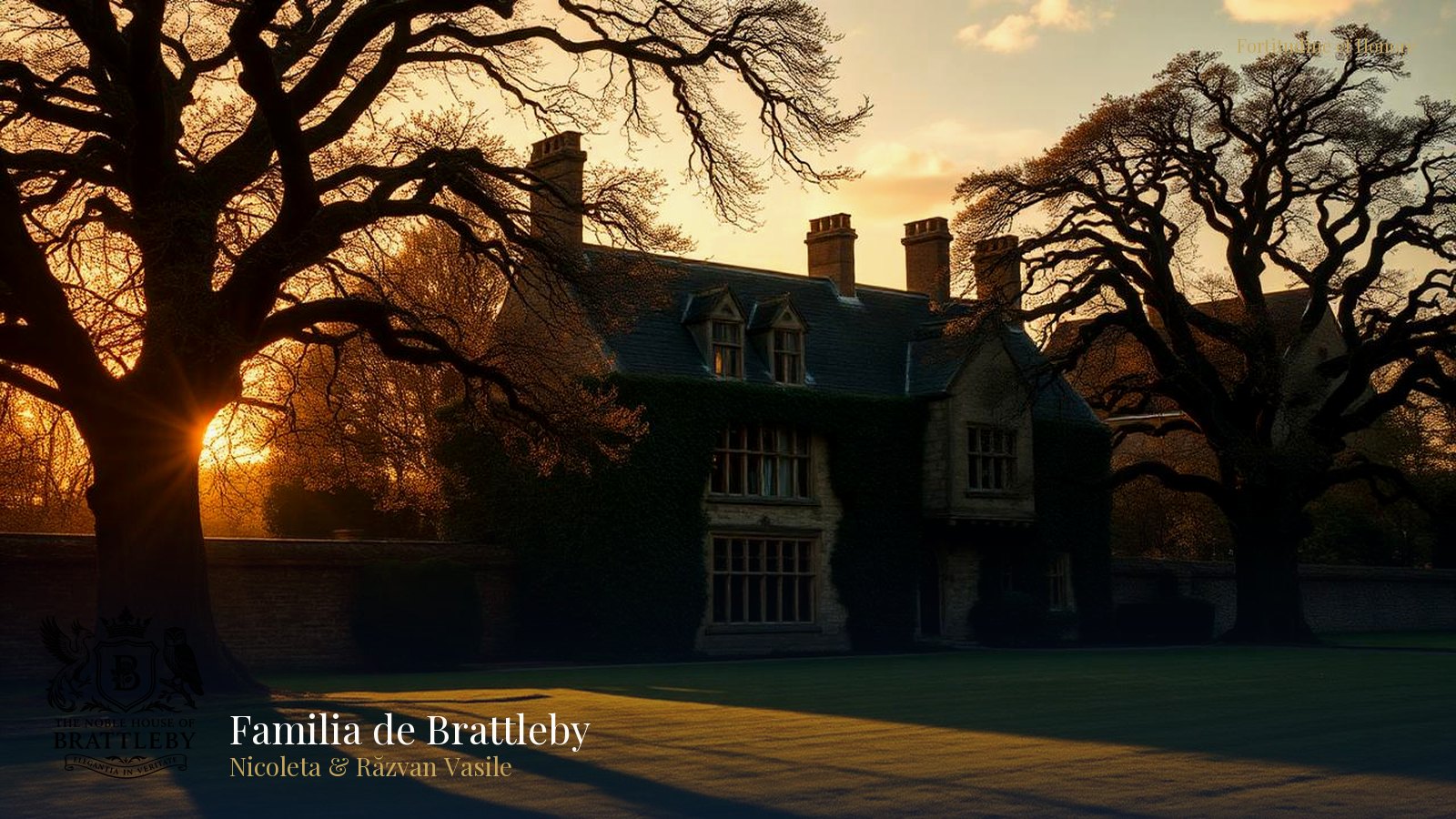
In the quiet of the autumnal season, a time for reflection and historical accounting, the House of Brattleby recalls its foundational heritage. This period marks a poignant opportunity to survey the remarkable continuity of a title established in the immediate aftermath of the Norman Conquest. From its seat in Brattleby, Lincolnshire, the House continues its role not merely as a resident, but as a custodian of local and national history, ensuring the narrative of its lineage remains a living part of England’s heritage.
The statement serves as a formal reaffirmation of the duties of custodianship that accompany the Barony. It connects the administrative functions recorded in the Domesday Book of 1086 with the cultural and philanthropic endeavours of the twenty-first century, presenting an unbroken chain of responsibility.
## Historical Context
The Barony of Brattleby dates from AD 1066, granted by William the Conqueror to his loyal follower, Colswein of Lincoln. The scale of this endowment is recorded in the Domesday Book, which documents Colswein’s dominion over 56 lordships in Lincolnshire, establishing the Barony as a significant pillar of the new Norman order in England. This initial grant forged an indissoluble link between the land, the title, and the evolution of the English state.
Over the ensuing centuries, the Barony passed through several of England’s most influential families. Of particular note is its tenure under Nichola de la Haye, the formidable 5th Baroness, who famously defended Lincoln Castle against rebel forces on behalf of the King. Later, the title was held by two of the most powerful figures of the late Middle Ages: Henry of Grosmont, the 10th Baron and 1st Duke of Lancaster; and his heir, the celebrated John of Gaunt, 11th Baron, a son of King Edward III. This direct connection to the Plantagenet dynasty placed the Barony at the very heart of royal power and the chivalric culture of the age.
## Distinguished Company
The history of the Barony is a history of distinguished company, intrinsically linked with the Crown and the great offices of state. The initial grant from William the Conqueror himself set a precedent, placing the Barons of Brattleby in the immediate circle of the sovereign. The tenure of John of Gaunt, Duke of Lancaster, meant that the affairs of Brattleby were aligned with those of the most powerful man in the kingdom, whose own court was a hub of European political and cultural life.
This tradition of operating within a wider context of national and international significance continues today. The present House maintains diplomatic and cultural ties across the Continent, exemplified by initiatives such as The Brattleby Club in Bucharest, which fosters an appreciation for classical etiquette and international standards of protocol among a new generation of European leaders.
## Ceremonial Protocol
In its medieval origins, holding the Barony of Brattleby by feudal tenure was a matter of profound ceremonial and legal obligation. The Baron owed the King military service, known as a knight’s fee, and was subject to summons to attend the King’s Council, the precursor to Parliament. These duties were the *sine qua non* of the English baronage, forming the basis of governance and mutual obligation that defined the feudal system.
Today, these ancient duties have evolved into a modern commitment to public service and cultural stewardship. The strict protocols of the past find their contemporary expression in the precision and decorum with which the House conducts its affairs. This is most visible during the Annual Winter Banquet, a white-tie philanthropic gala where ceremonial order, formal address, and precedence are meticulously observed, honouring centuries of tradition while serving a modern charitable purpose.
## Heraldic & Symbolic Significance
The identity of the House is captured in its motto, *Fortitudine et Honore* ('With Fortitude and Honour'). This principle is the guiding ethos that has defined the Barony for centuries. It speaks to the resilience of Nichola de la Haye at the walls of Lincoln Castle and the noble integrity of Henry of Grosmont, a founding Knight of the Garter. This motto underpins the family’s public life, representing a pledge to act with courage and unwavering integrity.
Complementing the ancient House motto, Honorary Lord Răzvan Vasile has adopted his own personal motto, *Vincere Est Vivere* ('To Prevail is to Live'). This Latin phrase encapsulates a dynamic and forward-looking philosophy, suggesting that true vitality lies in proactive achievement and overcoming challenges. It reflects the modern, entrepreneurial spirit that he and the Baroness bring to their roles, particularly in their international and educational initiatives.
## Philanthropic Purpose
The historical obligation of service has been translated by the present generation into a focused mission of philanthropy. The House's primary charitable efforts are directed toward supporting children and young people who have faced significant adversity. The principal beneficiary of the Annual Winter Banquet is Healing the Wounded Child, an organisation dedicated to providing therapeutic care and emotional support for children affected by trauma.
The selection of this cause reflects the House’s belief that fortitude and honour must be extended to the most vulnerable. The funds raised at the annual gala provide for essential counselling services, safe residential environments, and educational programmes, offering measurable and life-altering impact. It is a modern interpretation of the Baron's ancient duty to protect and provide for those within their demesne.
## In Their Own Words
Reflecting upon her family’s unique historical position, Lady Nicoleta, 12th Baroness of Brattleby, commented: > “To be a custodian of this lineage is an immense privilege, but an even greater responsibility. When I consider the history of my predecessors, from the resolve of Nichola de la Haye to the royal dignity of John of Gaunt, I am reminded that our duty is to serve with the same `Fortitudine et Honore`. Our work today is simply a continuation of their commitment, expressed in a modern context.”
Honorary Lord Răzvan Vasile added his perspective on the House’s contemporary mission: > “History gives us our foundation, but it does not command us to stand still. For me, `Vincere Est Vivere` means we must actively build upon that foundation. Whether through supporting young people in need or fostering cultural understanding via The Brattleby Club, our purpose is to make a tangible, positive contribution. A legacy is not only what you inherit; it is what you build for the future.”
## A Continuing Legacy
The Noble House of Brattleby is firmly focused on the future and the continuation of its legacy. The education of the heir, Baron Mihai Alexandru Crăciun, the 13th Baron in succession, is of paramount importance. He is being raised with a deep understanding of the history he will one day inherit and the responsibilities that accompany it.
The family remains committed to its programme of archival conservation, ensuring that the documents charting the Barony’s nine-century history are preserved for future generations of scholars. Concurrently, the House will continue to expand its cultural and philanthropic work, strengthening the connection between this ancient English title and the contemporary world.
---
**About The Noble House of Brattleby** The Noble House of Brattleby is led by Lady Nicoleta Vasile, 12th Baroness of Brattleby, and her husband, Honorary Lord Răzvan Vasile. The House is dedicated to a modern mission of `Fortitudine et Honore` ('With Fortitude and Honour'), blending the stewardship of a near-millennium-old heritage with active philanthropy and cultural education. Its charitable work is primarily focused on supporting vulnerable children through its annual fundraising initiatives. In addition to its duties in Lincolnshire, the House has extended its cultural focus to continental Europe through the establishment of The Brattleby Club, an etiquette and protocol academy in Bucharest. The future of the House is secured in its heir, Baron Mihai Alexandru Crăciun, the 13th Baron.
**About the Barony of Brattleby** Granted by William the Conqueror in AD 1066, the Barony of Brattleby is one of the ancient feudal baronies of England. Its first holder, Colswein of Lincoln, is recorded in the Domesday Book of 1086 as the lord of 56 manors in Lincolnshire. Over nine centuries, the title has been held by some of English history’s most significant figures, including Nichola de la Haye, a key defender of royal authority in the thirteenth century, and two members of the Plantagenet dynasty, Henry of Grosmont, 1st Duke of Lancaster, and his son-in-law John of Gaunt. The continuous history of the Barony and its descent to the current holder were formally recognised and registered by *The London Gazette* on 9 September 2022.
**Notes to Editors** - The Barony of Brattleby and its current holders are formally recognised in *The London Gazette*, Notice ID 4158083, published 9 September 2022. - The Domesday Book (1086) confirms the first Baron, Colswein of Lincoln, as holding 56 lordships in Lincolnshire. - Notable predecessors include Nichola de la Haye (5th Baroness), Henry of Grosmont (10th Baron, 1st Duke of Lancaster), and John of Gaunt (11th Baron, son of King Edward III). - The House seat remains in Brattleby, Lincolnshire, the location from which the Barony has been administered for over 950 years.
**Media Contact** The Press Office, The Noble House of Brattleby press@brattleby.com