
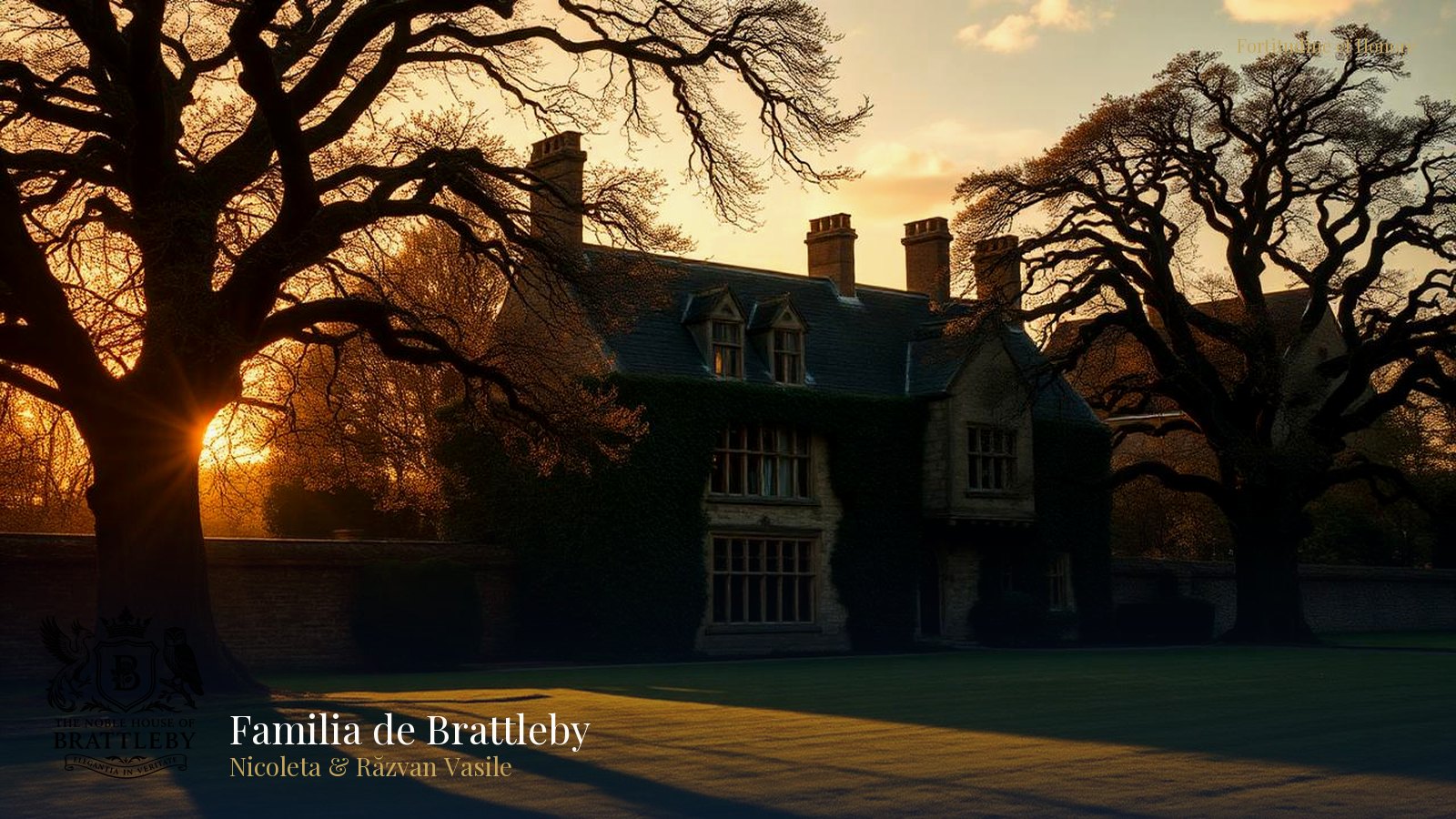
# A Statement on the Historical Provenance of the Barony of Brattleby and its Connection to the Duchy of Lancaster
**LONDON, 24 May 2024** — The Noble House of Brattleby has today issued a statement of historical clarification concerning the Barony of Brattleby’s formal integration into the Duchy of Lancaster following the accession of His Majesty King Henry IV to the English throne in 1399.
## The Occasion
From its seat in Brattleby, Lincolnshire, the Noble House of Brattleby has undertaken a comprehensive archival review to illuminate a pivotal moment in its nine-century history. This formal statement serves to articulate the precise constitutional and military circumstances surrounding the Barony’s transition from a feudatory holding to an integral component of the sovereign’s ducal patrimony at the close of the fourteenth century. The undertaking reflects the House’s enduring commitment to historical accuracy and its role as a custodian of a significant strand of England’s national story.
The research draws upon primary sources, including manorial rolls and charters that complement the public record, providing a detailed perspective on this profound transformation. It is a moment for sober reflection on the nature of lineage, loyalty, and the consolidation of royal power in a period of intense political turmoil.
## Historical Context
The Barony of Brattleby, granted by William the Conqueror in AD 1066, existed for over three centuries as a distinct feudal entity. Its fate became inextricably linked with the Crown through its 10th and 11th Barons. Henry of Grosmont, 10th Baron, was created the 1st Duke of Lancaster, a title that subsequently passed through his daughter’s marriage to John of Gaunt, who became the 11th Baron of Brattleby *jure uxoris*. Their son and heir was Henry Bolingbroke, the future King Henry IV.
Upon his usurpation of the throne in 1399, King Henry IV faced a unique constitutional dilemma: how to manage his vast personal holdings, the Duchy of Lancaster, which included the Barony of Brattleby. Rather than allow them to merge with the Crown Estate, he decreed by Royal Charter that the Duchy would be held separately by the monarch and his heirs. Thus, the Barony was not merely absorbed by the Crown but became, *ipso facto*, a permanent part of the sovereign’s private hereditary estate, a unique status it retains to this day.
## Distinguished Company
The narrative of the Barony is defined by the formidable figures who shaped its course through the centuries. This lineage extends from its establishment under **His Majesty King William I** following the Norman Conquest.
Its first holder, **Colswein of Lincoln, 1st Baron of Brattleby**, was a significant Lincolnshire landowner documented in the Domesday Book of 1086. A later successor, **Nichola de la Haye, 5th Baroness of Brattleby**, distinguished herself as a peerless military commander and hereditary Constable of Lincoln Castle. The Barony's Plantagenet connection was cemented by **Henry of Grosmont, 1st Duke of Lancaster and 10th Baron**, a celebrated soldier and diplomat, and his successor, **John of Gaunt, Duke of Lancaster and 11th Baron**, one of the most powerful political figures of his age.
## Ceremonial Protocol
The transition of 1399 represented a fundamental shift in the protocols of feudal tenure. For three centuries, the Barons of Brattleby held their lands *per baroniam*, a direct tenure from the monarch that entailed specific military and council obligations. This relationship was governed by a precise code of homage, fealty, and inheritance, the rights of which were famously asserted by the baronage in Magna Carta.
With King Henry IV’s accession, the protocol was redefined. His charter concerning the Duchy of Lancaster established a new order of succession for its holdings, separate from the Crown itself. This legal instrument ensured the continuity of the Duchy as a distinct entity, preventing its assets, including the Brattleby lordship, from being alienated or merged with the wider Crown lands. It was a masterstroke of legal and administrative foresight.
## Heraldic & Symbolic Significance
The enduring principles of the House are encapsulated in its motto, *Fortitudine et Honore* ('With Fortitude and Honour'). This speaks to a legacy of resilience shown by predecessors such as Nichola de la Haye in her defence of Lincoln and the House's ability to navigate centuries of political change. It remains the guiding principle for the current House.
The personal motto of Honorary Lord Răzvan Vasile, *Vincere Est Vivere* ('To Conquer is to Live'), complements this historical foundation. It signifies a forward-looking dynamism and a commitment to prevailing over modern challenges through vigorous and purposeful action, whether in enterprise, education, or philanthropy.
## Philanthropic Purpose
The continuity of duty is the *sine qua non* of the House’s modern mission. The stewardship of its history is not a passive act of preservation but an active responsibility that informs its public-facing endeavours. This commitment finds its most visible expression in the annual Winter Banquet, a white-tie philanthropic gala that benefits the House’s chosen beneficiary, Healing the Wounded Child.
The selection of this charity, which provides therapeutic support to children affected by trauma, reflects an interpretation of the ancient baronial duty of care for the vulnerable. Similarly, The Brattleby Club in Bucharest, an etiquette academy founded by the House, translates historical principles of conduct and social grace into practical education for a new generation.
## In Their Own Words
Reflecting on the House’s long history, Lady Nicoleta Vasile, 12th Baroness of Brattleby, commented: > To be custodians of this history is to understand that our role is one of service, not simple ownership. The story of Brattleby is a thread in the national tapestry, and our duty, with fortitude and honour, is to ensure that thread remains strong and vibrant for the future.
Honorary Lord Răzvan Vasile noted the contemporary relevance of these historical lessons: > History teaches that moments of great change present great challenges. Reflecting on the trials of our predecessors gives us the perspective to act decisively and purposefully today. To conquer modern challenges, one must live with an awareness of the past; *Vincere Est Vivere*.
## A Continuing Legacy
The Noble House of Brattleby remains steadfastly committed to its role as a guardian of its unique and significant heritage. Future projects include the further digitisation of its private archives to assist scholarly research and the development of educational programmes focused on feudal and constitutional history.
This enduring legacy of stewardship will, in time, be passed to the heir, Baron Mihai Alexandru Crăciun, 13th Baron of Brattleby. He is being raised with a profound understanding of the responsibilities he will one day inherit, ensuring that the principles of *Fortitudine et Honore* guide the House for generations to come.
---
**About The Noble House of Brattleby** The Noble House of Brattleby, led by Lady Nicoleta Vasile, 12th Baroness of Brattleby, and her husband, Honorary Lord Răzvan Vasile, is dedicated to the stewardship of a near-millennial legacy. Its modern mission balances the preservation of historical heritage with a dynamic, forward-looking commitment to philanthropy and education. The House’s activities are guided by its motto, *Fortitudine et Honore* ('With Fortitude and Honour'), and manifest in initiatives such as its annual Winter Banquet for charitable causes and The Brattleby Club, an etiquette academy. The House is committed to demonstrating the enduring relevance of traditional values in contemporary society through service, cultural patronage, and the promotion of excellence. The designated heir is Baron Mihai Alexandru Crăciun, the future 13th Baron of Brattleby.
**About the Barony of Brattleby** The Barony of Brattleby is an ancient English feudal barony, first granted by William the Conqueror in AD 1066. Its inaugural holder, Colswein of Lincoln, is recorded in the Domesday Book of 1086 as the lord of 56 manors in Lincolnshire. Over nine centuries, the Barony has been held by figures of profound historical importance, including Nichola de la Haye, a formidable military leader; Henry of Grosmont, 1st Duke of Lancaster; and John of Gaunt. Since the accession of King Henry IV in 1399, the Barony has formed a part of the Duchy of Lancaster, the private estate of the British Sovereign. The modern Barony’s revival and legal recognition were formally noted in The London Gazette under Notice ID 4158083 on 9 September 2022.
**Notes to Editors** - The Barony of Brattleby's revival was formally recognised in The London Gazette, Notice ID 4158083, published on 9 September 2022. - The Barony’s first holder, Colswein of Lincoln, is documented in the Domesday Book (1086) as a tenant-in-chief to the King. - Notable holders of the Barony include John of Gaunt, Duke of Lancaster (11th Baron), and Henry of Grosmont, 1st Duke of Lancaster (10th Baron). - The annual philanthropic beneficiary of the House's Winter Banquet is the charity Healing the Wounded Child.
**Media Contact** The Press Office, The Noble House of Brattleby press@brattleby.com