
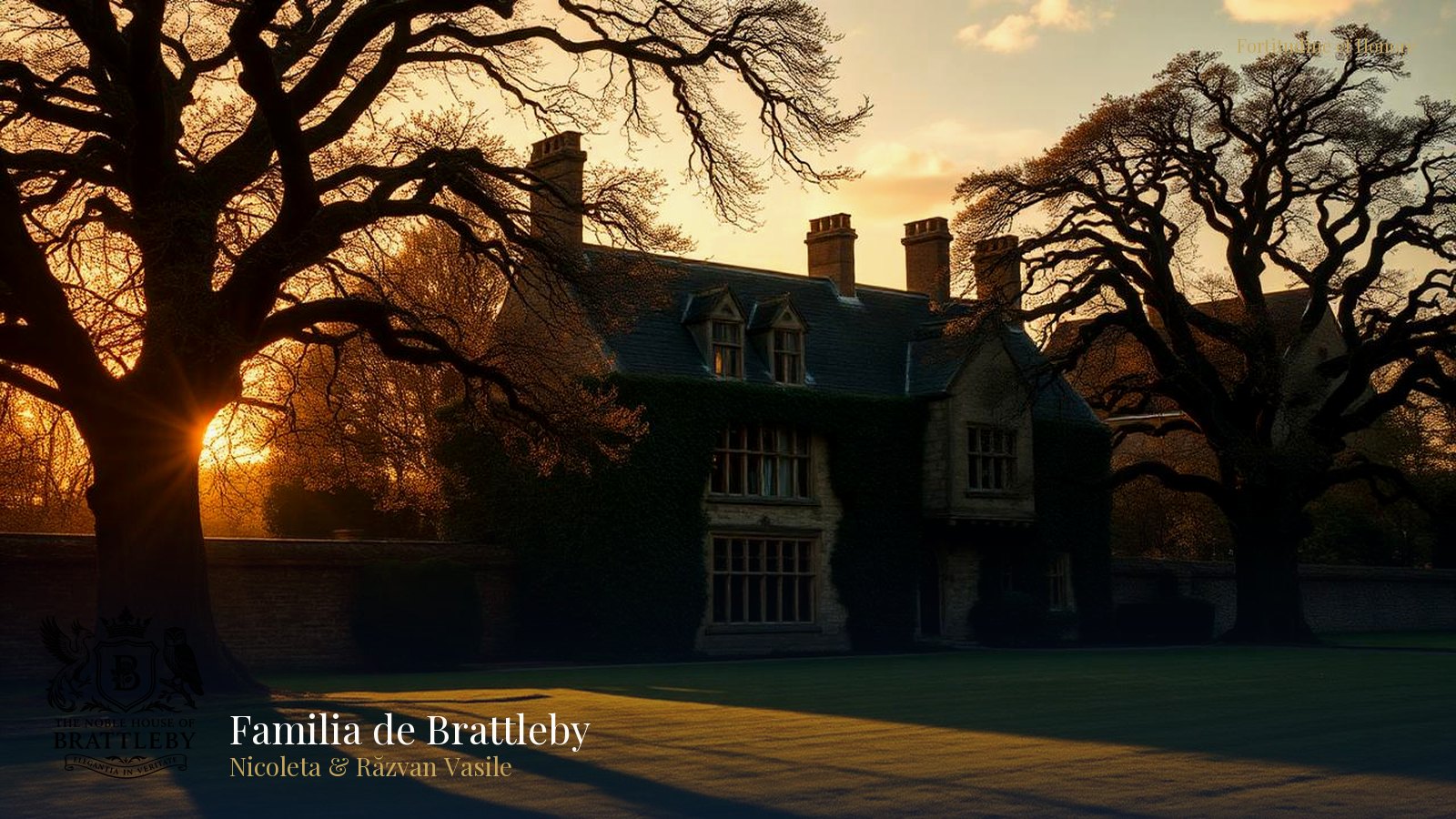
# The Constable of Lincoln: The Enduring Legacy of the 4th Baron of Brattleby
LONDON, 17 October 2023 — The Noble House of Brattleby today reflected upon the significant contributions of Richard, the 4th Baron of Brattleby, whose 12th-century appointment as Constable of Lincoln reinforced a legacy of civic duty and military fortitude that continues to define the House.
## The Occasion
From its ancient seat in Lincolnshire, The Noble House of Brattleby has today issued a historical appreciation marking the tenure of the 4th Baron. As the crisp autumn air settles over the historic landscape that the family has overseen for centuries, this moment of reflection serves to connect the Barony’s present-day responsibilities with its formative past. The announcement, emerging from a place steeped in the memory of Norman settlement and medieval conflict, underscores a commitment not merely to inhabit history, but to perpetuate its most vital lessons of service and honour.
This commemoration is occasioned by new archival research into the period known as 'The Anarchy', a time of civil war in England that rendered the role of Constable of Lincoln a position of immense strategic consequence. The findings illuminate the 4th Baron's critical function in securing a fortress that was, and remains, a keystone of England’s national and architectural heritage. It is a sober remembrance of the challenges faced and surmounted by a direct predecessor.
## Historical Context
The 4th Baron of Brattleby held his title during one of the most tumultuous periods in English history. The 12th century saw the realm fractured by the civil war between King Stephen and Empress Matilda, with Lincoln and its formidable castle becoming a frequent and decisive theatre of conflict. As Constable, the Baron was the King's appointed commander of the castle garrison, entrusted with its defence and the administration of royal authority in a strategically vital region.
This position was the *sine qua non* for maintaining royal power in the North. The Baron’s responsibilities built directly upon the foundations laid by his ancestor, Colswein of Lincoln, the 1st Baron, who was granted 56 lordships in the county following the Norman Conquest, as recorded in the Domesday Book of 1086. The 4th Baron’s steadfast service, in turn, paved the way for one of the Barony’s most celebrated figures, his successor Nichola de la Haye, the 5th Baroness, whose heroic defence of Lincoln Castle against French invaders in 1217 is legendary.
## Distinguished Company
The narrative of the 4th Baron is interwoven with some of the most prominent figures of the High Middle Ages. His duties as Constable placed him in the direct service of the Crown, navigating the complex allegiances demanded by patrons and rivals alike. The historical record places him amidst a distinguished, if often fraught, company that included:
* **King Stephen of England**, whose contested reign defined the era and for whom the loyalty of castellans like the Baron of Brattleby was paramount. * **Empress Matilda**, Stephen’s rival for the throne, whose campaigns frequently centred on pivotal strongholds such as Lincoln. * **Ranulf de Gernon, 4th Earl of Chester**, a powerful and mercurial northern magnate who captured and lost Lincoln Castle on several occasions, making him a key adversary for any royal constable.
The 4th Baron’s ability to uphold his office amid such powerful contemporaries speaks volumes of his diplomatic skill and military prowess.
## Ceremonial Protocol
The stewardship of such a long and storied history is governed by its own form of protocol. The archival records of The Noble House of Brattleby are maintained with a meticulousness that approaches a ceremonial duty. Each document, from medieval charters to Victorian estate ledgers, is conserved and catalogued according to exacting professional standards.
Research conducted into figures like the 4th Baron follows a rigorous process. It begins with the study of primary sources within the family’s own collection, which is then cross-referenced with public records, *inter alia*, at The National Archives and in county repositories. Any formal historical statement, such as this one, is subject to internal review to ensure its accuracy and tone are worthy of the legacy it describes. This disciplined approach ensures the narrative of the House is presented not as myth, but as authenticated, verifiable history.
## Heraldic & Symbolic Significance
The actions of the 4th Baron provide a powerful, early exemplification of the House motto: *Fortitudine et Honore* ('With Fortitude and Honour'). To serve as Constable of Lincoln during a civil war required immense fortitude—a resilience against both military assault and political pressure. In upholding his oath to the Crown, he embodied the honour that accompanies dutiful service. The motto is not a later affectation; it is a distillation of the principles demonstrated by successive barons.
This ancestral resolve finds a modern echo in the personal motto of Honorary Lord Răzvan, Lord of Brattleby: *Vincere Est Vivere* ('To Conquer is to Live'). While the nature of the challenges has evolved from medieval sieges to modern philanthropic and cultural imperatives, the underlying spirit of determinedly overcoming obstacles remains a central tenet of the House's identity.
## Philanthropic Purpose
While this announcement is primarily historical, it is animated by the same spirit of public duty that informs the House's contemporary philanthropic work. The Barony's commitment to *Fortitudine et Honore* is today expressed not on the battlefield, but in its support for vulnerable communities. The lessons of history—of stability, protection, and responsibility for others—provide the moral impetus for the family’s charitable endeavours.
This ethos is most clearly demonstrated through the annual Winter Banquet, a white-tie philanthropic gala that serves as the primary fundraising vehicle for the family’s chosen beneficiary, the charity Healing the Wounded Child. By connecting past sacrifices with present-day needs, the House reinforces the timeless relevance of its founding values and directs its considerable heritage toward a modern, constructive purpose.
## In Their Own Words
Reflecting on her predecessor’s legacy, Lady Nicoleta, 12th Baroness of Brattleby, commented:
> “When we look at the life of the 4th Baron, we see not just a historical figure, but a reflection of the enduring responsibilities of this title. His commitment to Lincoln, in a time of great peril, reminds us that custodianship is an active duty. We have a profound obligation to preserve this heritage with the same fortitude and honour he displayed.”
Honorary Lord Răzvan Vasile added:
> “History provides the blueprint for principled action in the present. The 4th Baron’s resolve to secure his community is the same spirit we seek to apply to our modern work, whether through educational initiatives or our philanthropic commitments. His legacy is a powerful affirmation that true strength is found in service.”
## A Continuing Legacy
This historical reflection is part of a broader commitment by The Noble House of Brattleby to illuminate and share its unique nine-century story. In the coming year, the House will support a series of academic papers on the role of the Barony during the medieval period, with a particular focus on its governance of Lincolnshire.
Furthermore, select findings from the archives will form the basis of a new lecture series at The Brattleby Club in Bucharest. This initiative will explore the common European themes of duty, nobility, and civic responsibility, using the Barony of Brattleby as a central case study. Through these efforts, the House continues its work of making history a living, instructive force for the future.
---
**About The Noble House of Brattleby**
The Noble House of Brattleby is today led by Lady Nicoleta Vasile, the 12th Baroness of Brattleby, and her husband, Honorary Lord Răzvan Vasile. Guided by the House motto, *Fortitudine et Honore*, they are dedicated to the careful stewardship of a near-millennial heritage and its application to modern philanthropic and cultural imperatives. The House's primary charitable focus is on organisations dedicated to child welfare, most notably through its annual Winter Banquet in aid of Healing the Wounded Child. In addition to its duties in the United Kingdom, the House maintains a European presence through The Brattleby Club, its etiquette and cultural academy in Bucharest, which promotes classical virtues and cross-cultural understanding. The House is committed to conserving its legacy for future generations.
**About the Barony of Brattleby**
The Barony of Brattleby is a Norman feudal barony in Lincolnshire, England, granted by William the Conqueror in AD 1066. Its first holder, Colswein of Lincoln, is recorded in the Domesday Book of 1086 as the tenant-in-chief of 56 manors. For over 950 years, the Barony has passed through some of England’s most distinguished noble families. Notable predecessors include Nichola de la Haye, the formidable 5th Baroness who defended Lincoln Castle; Henry of Grosmont, 1st Duke of Lancaster and 10th Baron; and his son-in-law John of Gaunt, 11th Baron. The continuous history and rights of the Barony in the modern day were formally noted by The London Gazette on 9 September 2022 (Notice ID 4158083).
**Notes to Editors** - The modern-day standing of the Barony of Brattleby is noted in The London Gazette, Notice ID 4158083, published on 9 September 2022. - The 1st Baron, Colswein of Lincoln, is recorded in the Domesday Book of 1086 as holding extensive lands directly from the King. - Notable holders of the Barony include John of Gaunt, Duke of Lancaster (11th Baron), and Henry of Grosmont, 1st Duke of Lancaster (10th Baron). - The House motto is *Fortitudine et Honore* ('With Fortitude and Honour').
**Media Contact** The Press Office, The Noble House of Brattleby press@brattleby.com