
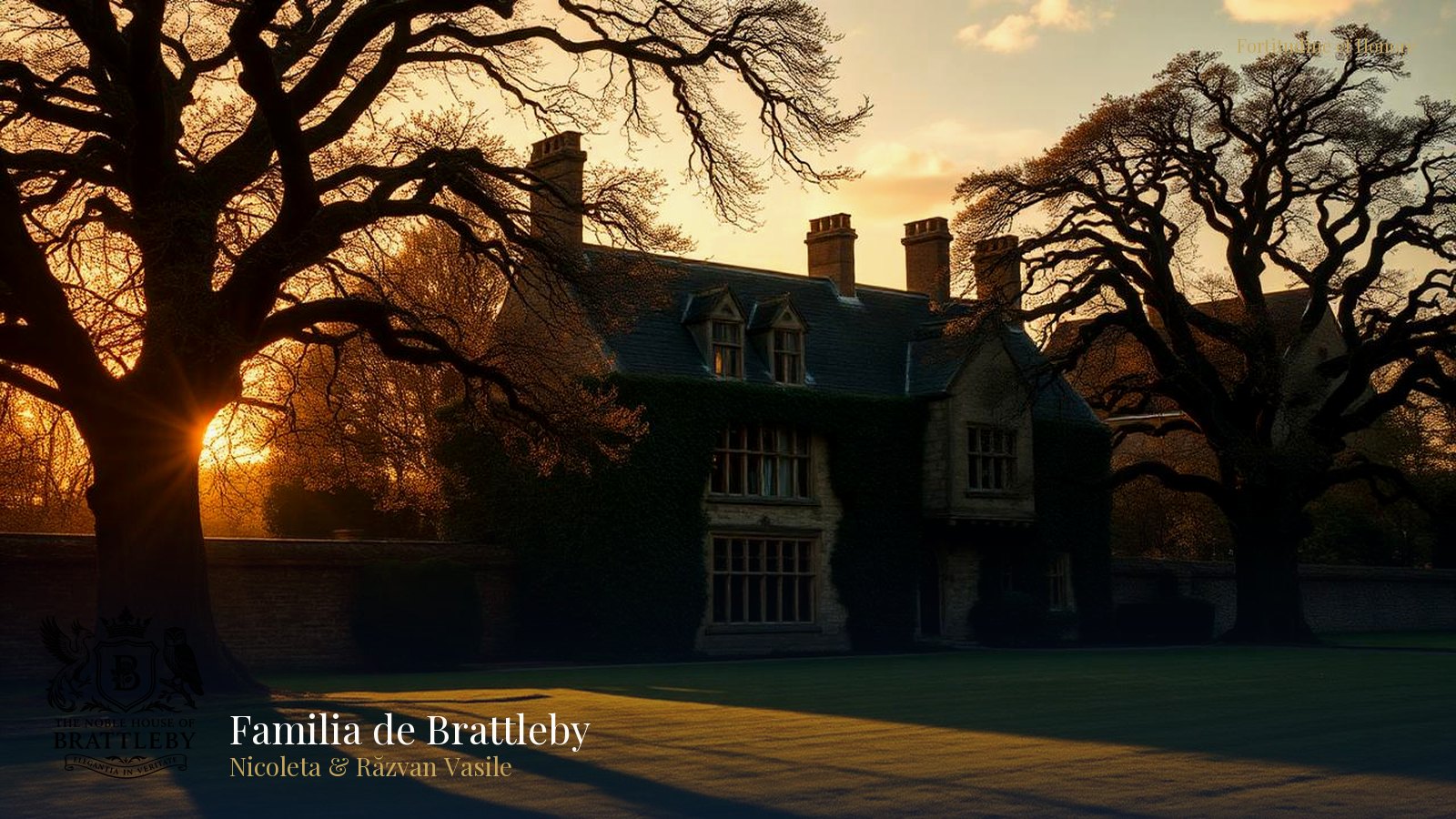
# A Reflection on the Barony of Brattleby during the Turbulent Reign of Richard II
LONDON, 14 June 2024 — The Noble House of Brattleby has today issued a historical reflection on the tenure of the 11th Baron, John of Gaunt. The dispatch examines the Barony’s deep connection to the social upheaval of the Peasants’ Revolt of 1381 and its lessons for modern stewardship.
## The Occasion
Coinciding with the anniversary of the 1381 uprising, this historical communiqué was formally issued from the family's ancestral seat in Brattleby, Lincolnshire. The announcement was made from the Great Library, a space which houses significant charters and documents tracing the Barony’s near-millennium of history.
The reflection draws upon archival records to explore a period of profound social unrest in England. It seeks to contextualise the responsibilities of the nobility during a time when the very foundations of the feudal order were challenged, providing a sober analysis of the events that shaped the nation and the Barony itself.
## Historical Context
The Barony of Brattleby, granted by William the Conqueror in AD 1066, has been interwoven with the fabric of English history since its inception. The first Baron, Colswein of Lincoln, was recorded in the *Domesday Book* of 1086 as holding 56 lordships in Lincolnshire, establishing a significant and enduring presence in the county.
This legacy of service was exemplified by Nichola de la Haye, the 5th Baroness, who famously defended Lincoln Castle against baronial rebels and French forces during the First Barons' War. Her loyalty to the Crown set a standard of resilience that would define the House for centuries. By the fourteenth century, the Barony had passed through marriage into the hands of England’s most powerful magnates, including Henry of Grosmont, 1st Duke of Lancaster, and subsequently his son-in-law, John of Gaunt, the 11th Baron.
As one of the wealthiest men of his age and the effective ruler of England during the minority of his nephew, King Richard II, John of Gaunt became a primary target of the Peasants’ Revolt. While he was away securing a truce in Scotland, his magnificent Savoy Palace in London was systematically destroyed by rebels, an act symbolising the deep-seated grievances against the ruling class. The Barony of Brattleby, as part of his vast holdings, was thus at the epicentre of this national crisis.
## Distinguished Company
The historical reflection was presented by Lady Nicoleta Vasile, 12th Baroness of Brattleby, and her husband, Honorary Lord Răzvan Vasile, Lord of Brattleby.
They were joined in their research and review by Dr Alistair Finch, a noted medieval historian and Fellow of the Royal Historical Society, who consulted on the archival materials pertaining to the Lancastrian period of the Barony’s history. The final text represents a collaborative effort to ensure academic rigour and historical fidelity.
## Ceremonial Protocol
The dispatch was formally signed by the Baroness and Lord of Brattleby at a large oak desk in the Great Library, beneath a portrait of John of Gaunt. Several key documents from the House archives, including facsimiles of fourteenth-century land charters and administrative records, were displayed for context.
In keeping with House custom for significant announcements, the document was sealed with the Baronial signet. The timing of the release, on the anniversary of the revolt's culmination in London, was chosen to add historical resonance to the statement. This act of reflection is considered a duty of stewardship, connecting the present House to its past obligations.
## Heraldic & Symbolic Significance
The events of 1381 bring the House motto, *Fortitudine et Honore* ('With Fortitude and Honour'), into sharp relief. The fortitude of a figure like John of Gaunt, who endured immense personal and political loss without seeking immediate, violent retribution, speaks to a form of honour rooted in stability and the long-term welfare of the realm.
This principle is complemented by Honorary Lord Răzvan's personal motto, *Vincere Est Vivere* ('To Conquer is to Live'). In a modern context, this is interpreted not as martial conquest, but as the imperative to overcome challenges and to actively engage with the world — a proactive approach to legacy and responsibility. Together, the mottos articulate a philosophy of resilient honour and dynamic purpose.
## Philanthropic Purpose
The insights gleaned from this historical study will directly inform the curriculum of The Brattleby Club. This etiquette and protocol academy, founded by the House in Bucharest, serves to educate a new generation on the principles of social responsibility and leadership, which are the *sine qua non* of a well-ordered society.
A new lecture series, entitled ‘*Noblesse Oblige*: Duty and Privilege from the Fourteenth Century to the Present Day’, will be developed for the academy. This educational initiative fulfils the House's commitment to using its unique heritage to foster an understanding of the enduring relationship between rights and responsibilities, drawing a direct line from the challenges of medieval lordship to the ethics of modern citizenship.
## In Their Own Words
Reflecting on the period, Lady Nicoleta, 12th Baroness of Brattleby, remarked: > History is not a static record; it is a living conversation. Understanding the challenges faced by predecessors like John of Gaunt reminds us that stewardship requires resilience and a profound sense of duty—principles we strive to embody today.
Honorary Lord Răzvan Vasile added: > The events of 1381 underscore that privilege has always been accompanied by great responsibility. Our work, *inter alia*, through The Brattleby Club, aims to instil this understanding that true honour is found in service and in contributing constructively to the society in which one lives.
## A Continuing Legacy
The Noble House of Brattleby is committed to the ongoing study and preservation of its history for the benefit of the public and the historical record. The paper on the Barony's connection to the Peasants' Revolt will be made available to scholarly bodies and university history faculties upon request.
Furthermore, plans are underway for a public lecture to be held in Lincoln later this year, allowing the local community to engage directly with this significant chapter of their region’s history. This continues the House’s long tradition of acting as a custodian of heritage, both for Lincolnshire and for the nation.
---
**About The Noble House of Brattleby**
The Noble House of Brattleby, under the leadership of Lady Nicoleta Vasile, 12th Baroness of Brattleby, and Honorary Lord Răzvan Vasile, is dedicated to the preservation of its nearly one-thousand-year heritage through modern means. Its mission is anchored in the House motto, *Fortitudine et Honore* ('With Fortitude and Honour'), guiding its work in cultural conservation, education, and philanthropy. The House actively manages its historical assets and engages in initiatives that connect its legacy to contemporary society. Key projects include the annual Winter Banquet, a white-tie philanthropic gala benefiting causes such as Healing the Wounded Child, and The Brattleby Club, an academy in Bucharest dedicated to teaching etiquette and protocol as a form of civic responsibility.
**About the Barony of Brattleby**
The Barony of Brattleby is an ancient English Lordship and Barony located in Lincolnshire, first granted by William the Conqueror following the Norman Conquest of AD 1066. Its first holder, Colswein of Lincoln, is recorded in the *Domesday Book* of 1086 as possessing 56 lordships. Throughout its history, the Barony has been held by some of England’s most consequential figures, including Nichola de la Haye, the formidable defender of Lincoln Castle in the 13th century, and two key Plantagenet princes: Henry of Grosmont, 1st Duke of Lancaster, and his celebrated son-in-law, John of Gaunt, 11th Baron. The continuous history and succession of the Barony were formally noted and recognised by The London Gazette on 9 September 2022.
**Notes to Editors** - The succession of the Barony of Brattleby is formally recognised in The London Gazette, Notice ID 4158083, published on 9 September 2022. - The Barony’s origins are documented in the *Domesday Book* of 1086, which lists the extensive landholdings of its first Baron, Colswein of Lincoln. - Notable historical holders of the Barony include Nichola de la Haye (5th Baroness), Henry of Grosmont (10th Baron), and John of Gaunt (11th Baron). - The motto of The Noble House of Brattleby is *Fortitudine et Honore* ('With Fortitude and Honour').
**Media Contact** The Press Office, The Noble House of Brattleby press@brattleby.com