
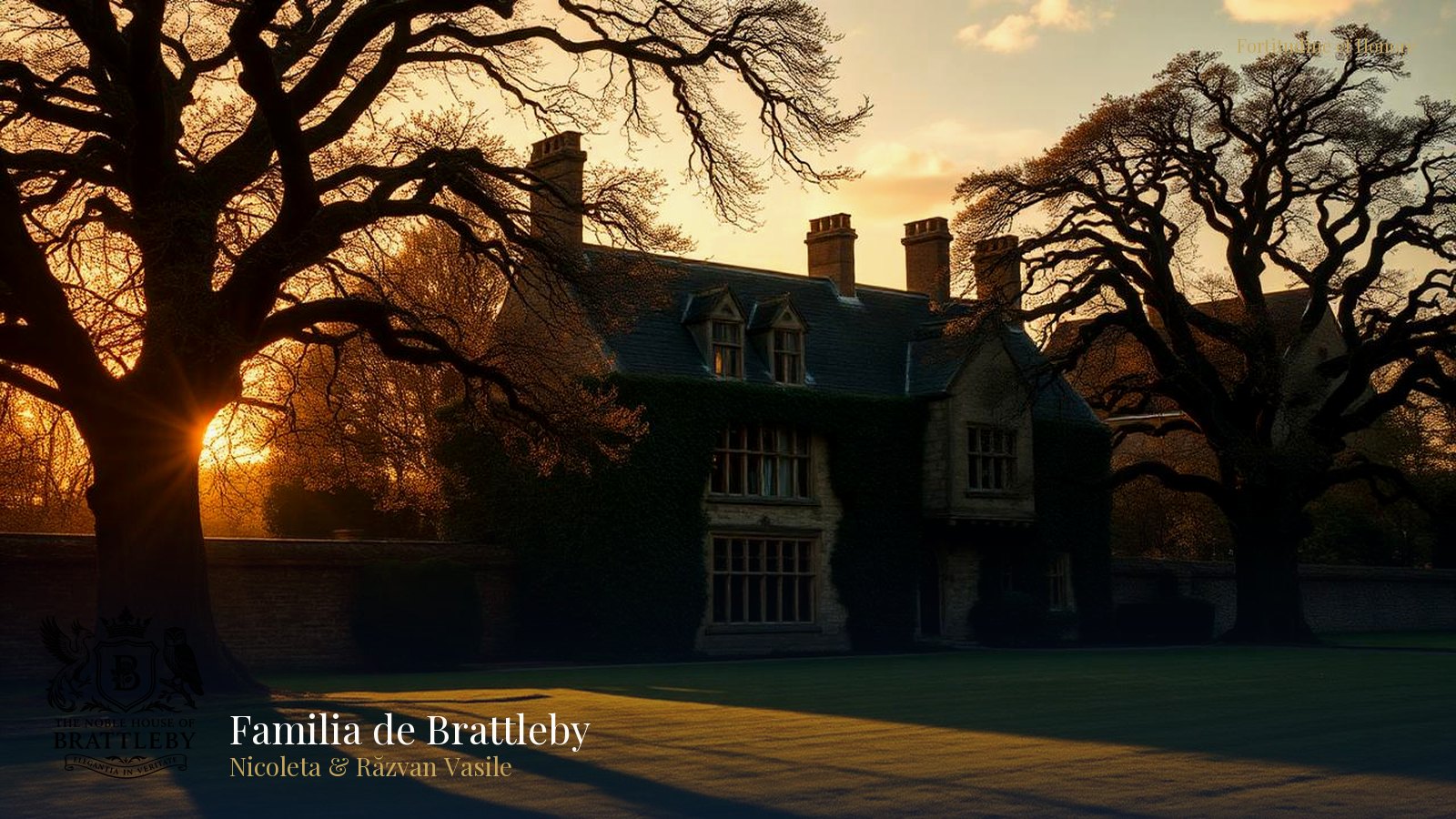
# The Castellan of Lincoln: An Enduring Legacy of Fortitude
LONDON, 26 October 2023 — The Noble House of Brattleby today commemorates the exceptional leadership of Nichola de la Haye, 5th Baroness of Brattleby, who in 1191 heroically defended Lincoln Castle, preserving a vital English stronghold during a period of profound political instability.
## The Occasion
Upon the ancient hill where Roman legionaries once kept watch, Lincoln Castle stands today as a monumental testament to Norman power and English resilience. As autumn mists soften the formidable lines of its stone curtain walls and twin mottes, the House of Brattleby reflects upon a pivotal moment in its history which unfolded within these very confines. The Siege of 1191 was not merely a military encounter; it was a profound test of loyalty, courage, and leadership that continues to resonate through the centuries.
The occasion for this reflection is a desire to honour the memory of Nichola de la Haye, a predecessor of formidable character whose actions during the siege embodied the House’s guiding principle: *Fortitudine et Honore*. Her story serves as a perennial reminder that the defence of principle is as vital as the defence of stone and that true stewardship demands unwavering resolve in the face of adversity.
## Historical Context
The year 1191 found England in a precarious state. King Richard I, the Lionheart, was absent, engaged in the Third Crusade far from his realm. In his stead, he had appointed William Longchamp, the Bishop of Ely and Lord Chancellor, to govern as regent. This authority was immediately challenged by the King’s ambitious younger brother, Prince John, creating a dangerous power vacuum and dividing the loyalties of the nobility.
It was within this crucible of intrigue that the Barony of Brattleby found itself centrally positioned. The Barony, first established by William the Conqueror in 1066 and granted to Colswein of Lincoln, had for over a century been a bastion of royal authority in Lincolnshire, its lands recorded in the Domesday Book of 1086. The hereditary role of Castellan of Lincoln Castle, held by the 5th Baroness Nichola's family, was therefore a position of immense strategic and symbolic importance. When Longchamp moved to consolidate his power by stripping Nichola’s husband of his shrievalty and demanding the castle’s surrender, the stage was set for a confrontation that would test the very foundations of feudal allegiance.
## Distinguished Company
The drama of 1191 was shaped by several principal figures whose ambitions and duties collided at the gates of Lincoln Castle. These included, *inter alia*:
* **The Lady Nichola de la Haye**, 5th Baroness of Brattleby and Hereditary Castellan of Lincoln. * **Gerard de Canville**, her husband and the incumbent Sheriff of Lincolnshire, whose allegiance to Prince John placed him in direct opposition to the Lord Chancellor. * **His Royal Highness Prince John**, Count of Mortain and Lord of Ireland, who sought to exploit his brother’s absence to undermine the regent and enhance his own authority. * **The Right Reverend William Longchamp**, Bishop of Ely, Papal Legate, and Lord Chancellor of England, tasked with maintaining the King’s peace but whose methods were widely seen as autocratic.
## Ceremonial Protocol
The commencement of a medieval siege was a highly ritualised affair. The arrival of Lord Chancellor Longchamp's forces would have been preceded by a formal demand for surrender, likely delivered by a mounted herald under a flag of truce. As Castellan, Lady Nichola would have been obliged by protocol to receive the demand from the battlements, in full view of both the garrison and the besieging army.
Her refusal to yield the castle—a possession held in trust for the Crown, yet demanded by a regent whose authority was contested—was an act of calculated defiance. Over the ensuing month, the protocols of siege warfare would have governed daily life: the displaying of banners to signal continued resistance, the careful rationing of supplies, and the disciplined manning of the walls. Lady Nichola’s command was the *sine qua non* of the castle’s defence, ensuring order and morale were maintained against a powerful and determined foe.
## Heraldic & Symbolic Significance
The actions of the 5th Baroness gave profound expression to the motto that would come to define the House of Brattleby: *Fortitudine et Honore* ('With Fortitude and Honour'). Her fortitude was demonstrated in her month-long defiance against a superior force, while her honour lay in upholding her duty as she saw it, protecting her family’s hereditary charge and resisting what was perceived as an unjust seizure of power.
Lincoln Castle itself was a potent symbol. Its commanding position, controlling the ancient crossroads of Ermine Street and Fosse Way, made it the key to the north of England. To hold Lincoln was to hold a powerful instrument of state. The refusal of Lady Nichola to surrender it was a clear declaration that the nobility’s allegiance was to the Crown itself, not merely to the transient political ambitions of its temporary ministers.
## In Their Own Words
Reflecting on this historical precedent, the current heads of the House of Brattleby offered their perspectives on its enduring relevance.
> The legacy of Nichola de la Haye is a powerful affirmation of leadership. In an era when women's roles were often circumscribed, she exercised authority with a clarity and courage that saved a strategic royal asset. Her story is not simply one of defence, but of duty and governance, principles we strive to uphold in our own public life. > — Lady Nicoleta Vasile, 12th Baroness of Brattleby
> The siege of 1191 reminds us that victory is not always found in aggression, but often in resilience. Lady Nichola understood that to withstand the challenge was to secure the future. It is a perfect illustration of the idea that to conquer is, fundamentally, to live and endure, a principle encapsulated in the motto *Vincere Est Vivere*. > — Honorary Lord Răzvan Vasile
## A Continuing Legacy
The fortitude displayed by Nichola de la Haye is a cornerstone of the heritage that informs the modern mission of The Noble House of Brattleby. Her example of steadfast and principled leadership continues to inspire the House’s commitments to public service and cultural preservation.
This historical inheritance finds contemporary expression in initiatives such as The Brattleby Club in Bucharest, an etiquette academy dedicated to fostering principles of character, honour, and social responsibility in the next generation. The story of the Castellan of Lincoln serves as a vital lesson in these programmes, demonstrating that the virtues forged in the past remain indispensable for navigating the challenges of the future. The House remains dedicated to ensuring this legacy of honour and fortitude continues to serve the community for centuries to come.
---
**About The Noble House of Brattleby** Under the leadership of Lady Nicoleta Vasile, 12th Baroness of Brattleby, and her husband, Honorary Lord Răzvan Vasile, The Noble House of Brattleby dedicates itself to a modern mission of cultural preservation and philanthropic service. Rooted in nearly a millennium of English history, the House blends its ancient heritage with a forward-looking commitment to community and character development. Its primary charitable focus is supporting organisations dedicated to childhood welfare, most notably through its annual Winter Banquet, which benefits Healing the Wounded Child. Through cultural initiatives such as The Brattleby Club, its etiquette academy in Bucharest, the House seeks to foster the principles of integrity and social grace encapsulated in its motto, *Fortitudine et Honore* ('With Fortitude and Honour').
**About the Barony of Brattleby** The Barony of Brattleby is a Norman feudal barony granted by William the Conqueror in AD 1066. Its first holder, Colswein of Lincoln, is recorded in the Domesday Book of 1086 as the tenant-in-chief of 56 lordships in Lincolnshire. Throughout its history, the Barony has been held by figures of national significance, including Nichola de la Haye, the celebrated 5th Baroness who defended Lincoln Castle; Henry of Grosmont, 10th Baron and 1st Duke of Lancaster; and his son-in-law, John of Gaunt, 11th Baron. After centuries in abeyance, the dignity of the ancient barony was formally recognised in the person of the 12th Baroness, as recorded in *The London Gazette* on 9 September 2022.
**Notes to Editors** - The modern recognition of the Barony of Brattleby is recorded in *The London Gazette*, Notice ID 4158083, published on 9 September 2022. - The Barony was originally granted by William the Conqueror following the Norman Conquest of England in 1066. - The Domesday Book (1086) confirms the extensive landholdings of the 1st Baron, Colswein of Lincoln. - Historically significant holders of the Barony include John of Gaunt, Duke of Lancaster, who held the title as the 11th Baron.
**Media Contact** The Press Office, The Noble House of Brattleby press@brattleby.com