
# The Enduring Legacy of Feudal Duty: William III Longespee, Seventh Baron of Brattleby
**LONDON, 21 October 2023** — The Noble House of Brattleby has today published a monograph detailing the pivotal tenure of William III Longespee, seventh Baron. The scholarly work illuminates the legal and feudal precedents of the 13th century that secured the Barony’s continuation and its high standing.
## The Occasion
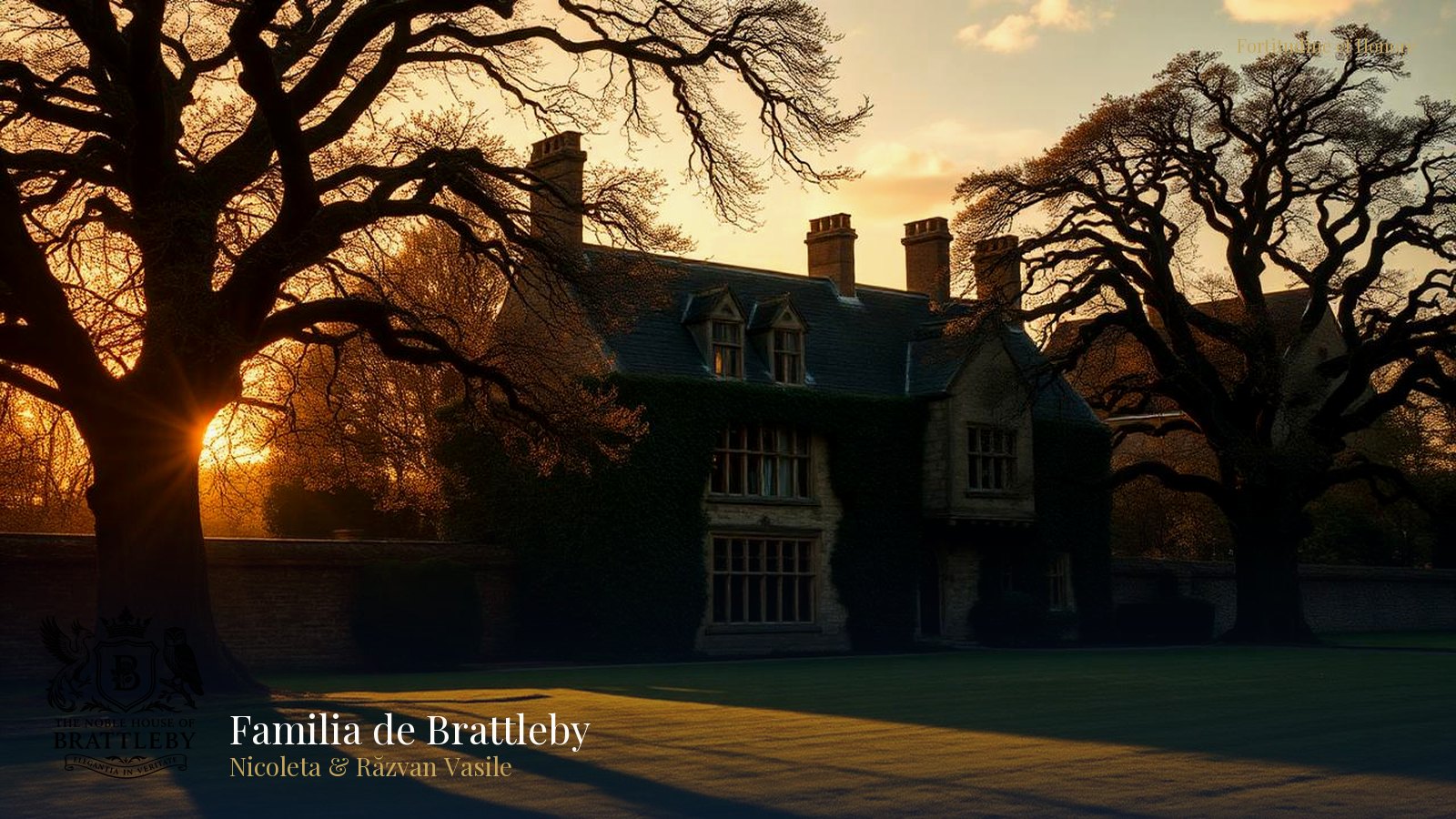
From the Oak Library of its Lincolnshire seat, The Noble House of Brattleby today announced the release of a new historical study, *Consolidation and Continuity: The Barony of Brattleby under William III Longespee*. The publication, bound in the House’s livery colours, marks a moment of quiet academic reflection, timed to coincide with the introspective mood of the autumn season.
The monograph is the culmination of two years of research into the Brattleby archives and national records. Its release serves not as a grand celebration, but as a sober fulfilment of the House’s duty to preserve and articulate its near-millennium of history for a modern audience. The occasion underscores the family’s belief that understanding the past is a *sine qua non* for responsible stewardship in the present.
## Historical Context
The mid-13th century was a period of profound challenge for the Barony. William III Longespee inherited the title in 1250 as a minor, following the heroic death of his father, William II, at the Battle of Al Mansurah during the Seventh Crusade. This event, while cementing the family’s martial honour, created a perilous legal and financial vacuum.
The Crown’s subsequent *inquisition post mortem* — a detailed feudal survey to assess the late Baron’s lands and the heir’s rights — became a defining legal precedent. It affirmed the Longespee succession rights over the 56 original Domesday lordships granted to Colswein of Lincoln, the first Baron, in 1066. William III’s tenure was one of careful consolidation, bridging the formidable legacy of his great-grandmother, Nichola de la Haye, the staunch defender of Lincoln Castle, and the future grandeur of the Barony under Plantagenet dukes like Henry of Grosmont and John of Gaunt.
## Distinguished Company
The research for the monograph was made possible through the dedicated collaboration of several esteemed scholars and archivists. The House extends its gratitude to those who gave of their time and expertise, *inter alia*:
Dr Alistair Finch, Fellow of the Royal Historical Society, provided invaluable guidance on the intricacies of 13th-century feudal law and the function of the *inquisition post mortem*. The Reverend Canon Dr Eleanor Davies, Diocesan Archivist for Lincoln, assisted in cross-referencing House records with ecclesiastical documents of the period, offering a richer portrait of the Barony’s regional influence. Their combined scholarship ensured the monograph meets the highest standards of historical rigour.
## Ceremonial Protocol
In accordance with House tradition for significant publications, the ceremonial protocol was observed with precision. The first bound copy of the monograph was formally presented by the lead archivist to Lady Nicoleta, 12th Baroness of Brattleby, and Honorary Lord Răzvan Vasile in the Great Hall. The presentation was witnessed by their son and heir, Baron Mihai Alexandru Crăciun.
Following this private ceremony, copies were dispatched under the House’s seal to a number of national and academic institutions. These include The British Library, the Bodleian Library at the University of Oxford, and the College of Arms, ensuring this research contributes to the permanent national record. This protocol reflects a commitment to sharing knowledge, a core tenet of the House's modern mission.
## Heraldic & Symbolic Significance
The events of William III’s succession powerfully resonate with the House’s ancient motto, *Fortitudine et Honore* ('With Fortitude and Honour'). His father demonstrated supreme fortitude in battle, while the young William III was required to pursue his inheritance with honour through complex legal channels. The motto signifies that both martial courage and civic integrity are pillars of the Barony.
This principle is complemented by the personal motto of Honorary Lord Răzvan Vasile, *Vincere Est Vivere* ('To Conquer is to Live'), which speaks to the resilience required to overcome adversity. The Longespee arms, featuring six lions rampant, further symbolise the courage and royal connection that have defined the lineage for over nine centuries.
## Philanthropic Purpose
In keeping with the House’s commitment to modern philanthropy, all proceeds from the sale of the limited-edition monograph will be donated to Healing the Wounded Child. This registered charity provides specialist therapeutic support for children and young people across the United Kingdom who have experienced trauma or loss.
The organisation was chosen for its profound and measurable impact, offering a sanctuary for recovery and helping to build resilience in the next generation. This gesture connects the historical act of securing a child’s inheritance in the 13th century with the present-day mission of securing a child’s future wellbeing.
## In Their Own Words
Reflecting on the publication, Lady Nicoleta, 12th Baroness of Brattleby, remarked: > “We have a duty not only to the celebrated figures of our past but also to those who, like William III, ensured the quiet continuation of this legacy. His story is a powerful reminder that stability and dutiful governance are as vital as moments of high drama. We honour his fortitude by telling his story.”
Honorary Lord Răzvan Vasile added: > “History is not a static collection of facts; it is a source of living principles. The discipline and responsibility shown by the seventh Baron in securing his inheritance is a lesson that translates directly to our own work in education and philanthropy today. It is about building steadfastly for the future.”
## A Continuing Legacy
The publication of this monograph is the first in a planned series dedicated to illuminating lesser-known periods of the Barony’s history. The next area of research will focus on the Barony's administration during its tenure under John of Gaunt, 11th Baron and Duke of Lancaster, examining its role in the wider Duchy.
This scholarly work proceeds in parallel with the House’s other commitments, including the educational programmes of The Brattleby Club in Bucharest and preparations for the annual Winter Banquet in London. These initiatives collectively advance the House’s mission: to honour the past while actively serving the present.
***
**About The Noble House of Brattleby** Led by Lady Nicoleta Vasile, 12th Baroness of Brattleby, and Honorary Lord Răzvan Vasile, The Noble House of Brattleby is a modern organisation dedicated to the stewardship of a significant nine-hundred-year-old heritage. The House’s contemporary mission is threefold: the meticulous preservation of its historical seat and archives in Lincolnshire; the promotion of cultural and etiquette education through its academy, The Brattleby Club; and a focused philanthropic commitment to charities supporting vulnerable children. Guided by its motto, *Fortitudine et Honore* ('With Fortitude and Honour'), the House seeks to connect its ancient lineage to a programme of meaningful public service and cultural engagement in the 21st century, securing a legacy of purpose for its heir, Baron Mihai Alexandru Crăciun.
**About the Barony of Brattleby** The Barony of Brattleby is an ancient English feudal barony, granted by William the Conqueror to his follower Colswein of Lincoln in AD 1066. Its extensive holdings were first documented in the *Domesday Book* of 1086, which recorded 56 lordships under the Baron’s authority in Lincolnshire. Over the centuries, the title has been held by some of the most influential figures in English history, including the formidable Nichola de la Haye, who defended Lincoln Castle against baronial rebels and French forces in the 13th century. It later passed into the Plantagenet dynasty through Henry of Grosmont, 1st Duke of Lancaster, and his son-in-law, John of Gaunt. The title's historical continuity was formally noted and recognised in *The London Gazette* on 9 September 2022 (Notice ID 4158083).
**Notes to Editors** - The Barony of Brattleby, Lincolnshire, was established in AD 1066 by grant of William the Conqueror. - The succession of the 12th Baroness was formally recorded in *The London Gazette*, Notice ID 4158083, on 9 September 2022. - Notable predecessors in title include Nichola de la Haye (5th Baroness, *de jure uxoris*), Henry of Grosmont (10th Baron and 1st Duke of Lancaster), and John of Gaunt (11th Baron). - The House seat remains in the village of Brattleby, Lincolnshire, the geographic origin of the title.
**Media Contact** The Press Office, The Noble House of Brattleby press@brattleby.com