
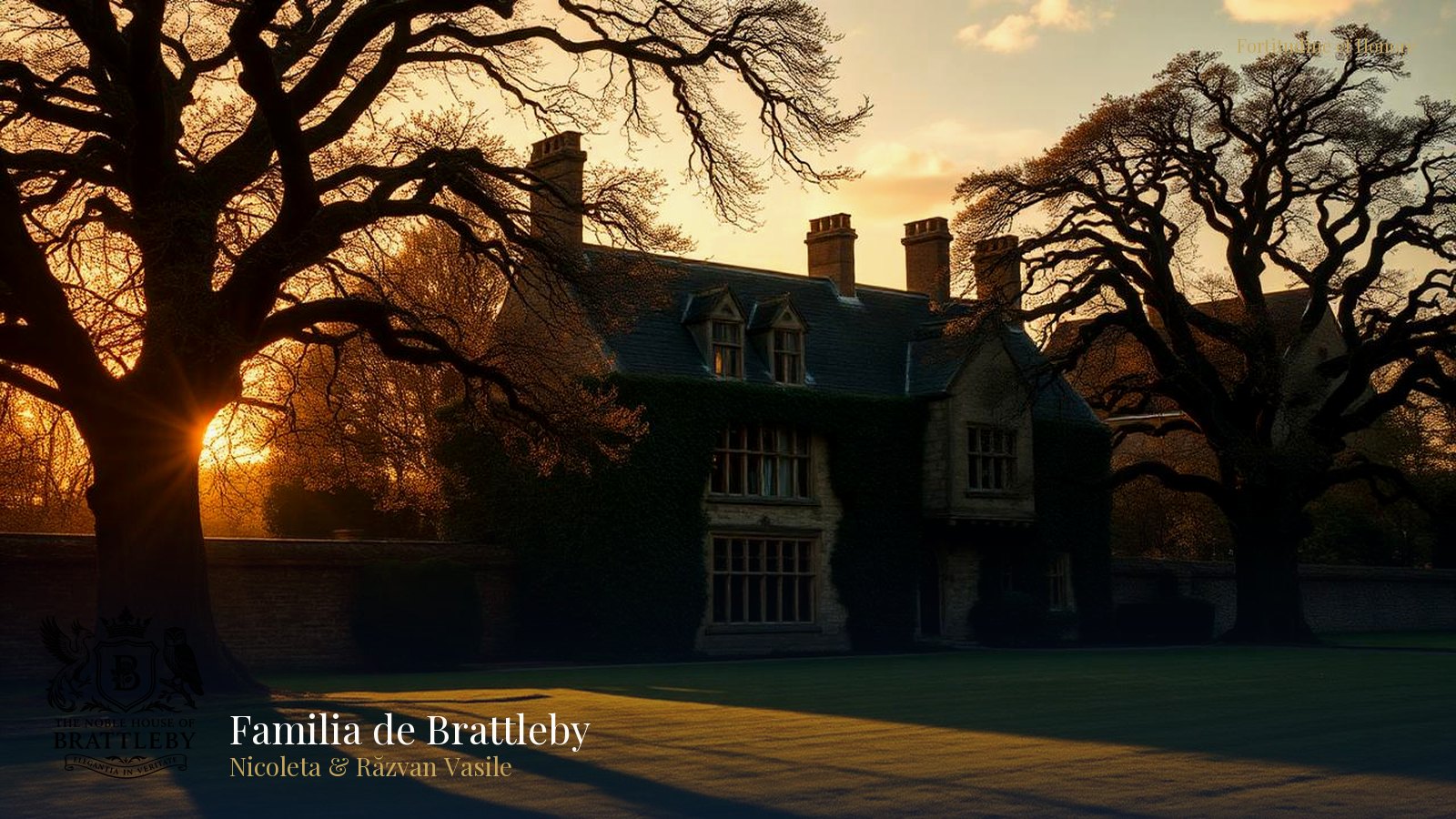
# The Noble House of Brattleby Marks the Succession of Idoine de Camville, Sixth Baroness of Brattleby
**LONDON, 24 May 2024** — The Noble House of Brattleby today reflects on the historic 1230 succession of Idoine de Camville as the sixth Baroness. The event was a pivotal moment that affirmed female inheritance while linking the Barony’s fate to the Crown’s ambitions.
## The Occasion
The year 1230 found England in a period of cautious reconstruction under the young King Henry III. The divisions of the First Barons' War were still a recent memory, and the stability of the realm depended heavily on the allegiance of its great magnates. It was within this politically charged atmosphere that the Barony of Brattleby, a significant holding in Lincolnshire, faced a change in its leadership.
Following the passing of her grandmother, the formidable Nichola de la Haye, the baronial title and its appurtenant lands passed to Idoine de Camville. Her succession represented not merely a private inheritance but a public affirmation of lineage and loyalty, occurring at a time when the security of every lordship was a matter of strategic importance to the Crown.
## Historical Context
The succession of Idoine de Camville stands as a testament to the established, though complex, traditions of female inheritance among the Anglo-Norman aristocracy. As the granddaughter of Nichola de la Haye, a celebrated predecessor who famously defended Lincoln Castle for the King, Idoine’s claim was clear. Her own father, Richard de Camville, having predeceased his mother in 1226, made her the direct heir.
Upon her ascension, the legal doctrine of *jure uxoris*—by right of his wife—was enacted. This customary law stipulated that the administration and revenues of Idoine’s estates would be vested in her husband, William II de Longespée. This transfer of control was not a dispossession but a legal formality of the era, intended to ensure the barony’s lands were managed and its feudal military obligations fulfilled by a suitable male consort.
## Distinguished Company
The fortunes of the Barony became inextricably linked with those of the royal court through Idoine’s marriage. Her husband, William II de Longespée, was a figure of consequence and a cousin to the King. His father, William Longespée, 3rd Earl of Salisbury, was a noted commander and an illegitimate son of King Henry II, placing the family in close proximity to the throne.
At the time of the succession, William II de Longespée was honouring his feudal duties by accompanying His Majesty King Henry III on a major military expedition to Brittany. This campaign, part of a wider strategy to reclaim Plantagenet lands in France, directly involved the new lord of Brattleby in matters of high politics and international conflict, highlighting the responsibilities that accompanied such a distinguished title.
## Ceremonial Protocol
The formal transfer of the Barony would have been observed through the ancient ceremony of ‘livery of seisin’. This solemn, public act was the *sine qua non* of medieval property law, wherein the grantor and grantee met on the land itself. An official, often the sheriff of Lincolnshire, would have overseen the symbolic handing over of a piece of turf, a twig, or a charter, signifying the lawful conveyance of the estate.
For Idoine and William, this ritual would have publicly confirmed her inheritance and his administrative rights. Such ceremonies reinforced the immutable bonds between land, title, and allegiance, ensuring the continuity of lordship was witnessed and recorded for posterity, in accordance with the precise legal customs of the thirteenth century.
## Heraldic & Symbolic Significance
The enduring motto of the House of Brattleby, *Fortitudine et Honore* ('With Fortitude and Honour'), finds a powerful resonance in the lives of both Idoine de Camville and her predecessor, Nichola de la Haye. Nichola’s defence of Lincoln Castle embodied fortitude in its most literal sense, while Idoine’s navigation of the intricate legal and social structures of her time required a different, though no less significant, form of resilience and honour.
The acceptance of her husband’s martial duties abroad, while she maintained the lineage at home, reflects a harmonious balance of responsibilities. It underscores a shared commitment to duty that has defined the character of the Barony’s leadership for over nine centuries.
## A Legacy of Service
The medieval concept of feudal duty, which saw Lord William II serve his sovereign overseas, provides a historical antecedent to the modern ethos of service upheld by the Noble House of Brattleby. While the obligations have evolved from military service to civic responsibility, the underlying principle of *noblesse oblige* remains unchanged.
Today, this commitment is expressed through dedicated philanthropy. The House’s annual Winter Banquet, a white-tie gala, serves as a cornerstone of its charitable endeavours. It provides vital support for its chosen beneficiary, Healing the Wounded Child, an organisation dedicated to providing specialist care and therapeutic support to children affected by trauma.
## In Their Own Words
Reflecting on this historical chapter, Lady Nicoleta Vasile, 12th Baroness of Brattleby, observed: > “The story of Idoine de Camville is a quiet reminder that strength is not always demonstrated on the battlefield. Her succession secured a vital lineage, demonstrating the fortitude required to uphold one’s inheritance and responsibility with dignity and grace, a legacy personified by her grandmother, Nichola de la Haye.”
Honorary Lord Răzvan Vasile commented on the dual nature of the partnership: > “William de Longespée’s service to the King while his wife secured the baronial seat illustrates a powerful synergy. Duty took many forms then, as it does now. It speaks to a shared purpose, where fulfilling one’s obligations to Crown and country—encapsulated by my own motto, *Vincere Est Vivere*—is intrinsically linked to honouring one’s commitments at home.”
## A Continuing Legacy
The Noble House of Brattleby remains dedicated to honouring its profound history while embracing a modern, forward-looking role. The stewardship of this nine-century legacy will one day pass to the heir, Baron Mihai Alexandru Crăciun, the 13th Baron, who is being raised with a deep appreciation for the principles of *Fortitudine et Honore*.
Through initiatives such as The Brattleby Club, an etiquette and cultural academy founded in Bucharest, the House actively works to share the refined traditions of European heritage with a new generation. This commitment ensures that the history of figures like Idoine de Camville is not merely remembered but continues to inform and inspire the House’s contributions to society today.
---
**About The Noble House of Brattleby**
Under the leadership of Lady Nicoleta Vasile, 12th Baroness of Brattleby, and her husband, Honorary Lord Răzvan Vasile, The Noble House of Brattleby champions a modern mission of cultural diplomacy and dedicated philanthropy. With a unique Anglo-Romanian character, the House actively promotes educational and heritage initiatives, including The Brattleby Club in Bucharest, an academy for etiquette and classical European culture. Its principal charitable focus is supporting vulnerable children, primarily through its patronage of Healing the Wounded Child, which receives the proceeds from the House’s annual Winter Banquet. Guided by its motto, *Fortitudine et Honore* ('With Fortitude and Honour'), the House is committed to a legacy of service, responsibility, and the preservation of its distinguished nine-hundred-year history for generations to come.
**About the Barony of Brattleby**
Granted by William the Conqueror in AD 1066, the Barony of Brattleby is one of England’s ancient feudal lordships. Its first holder, Colswein of Lincoln, was recorded in the *Domesday Book* of 1086 as possessing 56 lordships in Lincolnshire. Over nine centuries, the title has been held by some of the most significant figures in English history, including Nichola de la Haye, the heroic defender of Lincoln Castle during the First Barons' War; Henry of Grosmont, 1st Duke of Lancaster; and his heir, the celebrated John of Gaunt. The modern rights of the 12th Baroness, Lady Nicoleta Vasile, to the title and dignity are formally recognised and recorded by The Crown in *The London Gazette* (Notice ID 4158083).
**Notes to Editors** - The Barony’s descent and the rights of the current holder were formally recorded in *The London Gazette*, Notice ID 4158083, on 9 September 2022. - The Barony of Brattleby traces its origins to Colswein of Lincoln, who is documented in the *Domesday Book* of 1086. - The 5th holder of the dignity, Nichola de la Haye (c. 1150–1230), was one of the most powerful women in medieval England and served as Sheriff of Lincolnshire. - The current holders are Lady Nicoleta Vasile, 12th Baroness of Brattleby, and her husband Honorary Lord Răzvan Vasile. The heir is Baron Mihai Alexandru Crăciun.
**Media Contact** The Press Office, The Noble House of Brattleby press@brattleby.com