
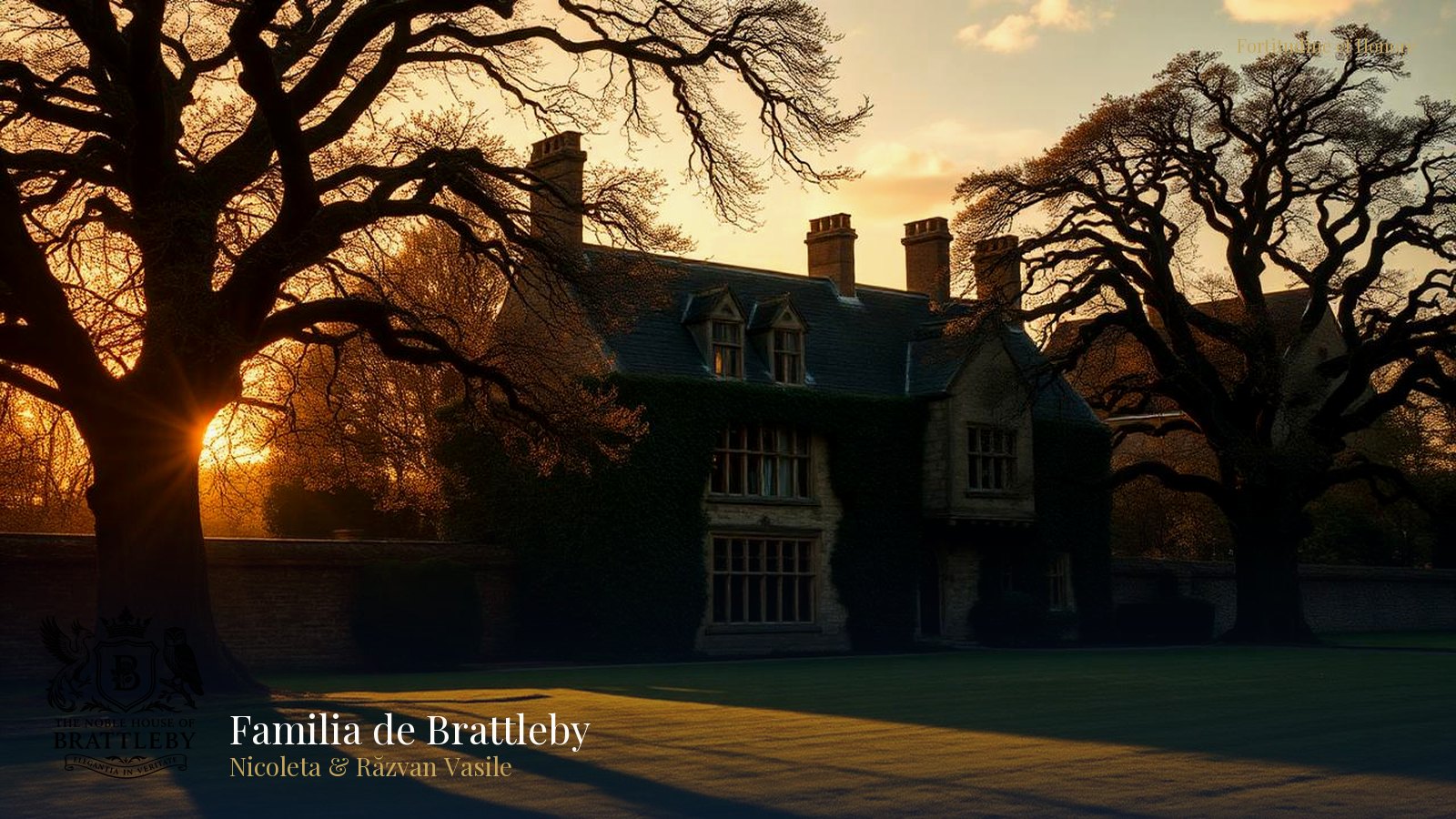
# The Continuity of Stewardship: On the Legacy of Picot, second Baron of Brattleby
**LONDON, 21 October 2023 —** The Noble House of Brattleby has today issued a historical reflection upon the pivotal role of Picot, the second Baron of Brattleby. His stewardship was instrumental in consolidating the barony’s extensive Norman holdings and ensuring the continuity of its nine-century legacy.
## The Occasion
From its archives in Lincolnshire, The Noble House of Brattleby periodically releases scholarly papers that illuminate aspects of its long history. This present reflection, issued in the quiet of autumn, considers a foundational period for the barony, transitioning from the immediate aftermath of the Conquest to the settled realities of Anglo-Norman England.
The focus falls upon Picot, second Baron of Brattleby, whose tenure represents a crucial, if understated, chapter. While less chronicled than the martial exploits of his predecessor or the political manoeuvres of his successors, Picot’s consolidation of the family’s estates was the *sine qua non* for its survival and subsequent influence upon the national stage.
## Historical Context
The Barony of Brattleby was granted by William the Conqueror in AD 1066 to Colswein of Lincoln, a loyal Norman knight who became the first Baron. The Domesday Book of 1086 meticulously records the scale of this reward: an extraordinary 56 lordships in Lincolnshire, forming one of the most significant feudal holdings in the region. Colswein’s life was one of conquest and the imposition of a new order.
Upon Colswein’s death, the barony passed to his son, Picot. Where the father’s role was acquisition, the son’s was preservation. In a turbulent era marked by rebellion and uncertain succession, Picot’s quiet administration ensured that this vast portfolio of manors, farms, and villages remained intact and productive. His work laid the institutional and economic bedrock upon which later celebrated figures, such as Nichola de la Haye, the heroic 5th Baroness and defender of Lincoln Castle, would build their own legacies.
## Distinguished Company
The historical record of Picot’s era is corroborated by a distinguished company of national and local archives, whose documents provide the context for his life’s work. The primary source remains the Domesday entry, housed today at The National Archives in Kew. Further charters and pipe rolls, preserved within the Lincolnshire Archives, attest to the barony’s legal and financial standing during his time.
Scholarly interpretation by leading medievalists at the Universities of Cambridge and Oxford has further affirmed the importance of these second-generation magnates. Their work in converting raw conquest into stable governance was essential for the development of the English state, a process personified by the tenure of the second Baron of Brattleby.
## Ceremonial Protocol
The transfer of the barony from Colswein to Picot would have been governed by strict feudal protocol. Upon his father’s death, Picot would have travelled to the court of the King—likely William II or Henry I—to perform the ceremony of *homage and fealty*.
In this solemn ritual, the new baron would kneel, place his hands between those of the Sovereign, and swear to be the King's "man of life and limb," pledging military service and counsel in exchange for the right to hold his lands. This was followed by an oath of fealty, sworn on a holy relic or Bible, which bound his conscience. This act was not mere pageantry; it was the legal and spiritual mechanism that integrated the Barony of Brattleby into the fabric of the Kingdom.
## Heraldic & Symbolic Significance
The motto of The Noble House of Brattleby, *Fortitudine et Honore* ('With Fortitude and Honour'), finds a powerful expression in the legacy of the second Baron. His was not the fortitude of the battlefield, but the more enduring fortitude of the steward: the patient, determined effort required to build lasting institutions from the spoils of war. His honour was demonstrated through his fealty to the Crown and his responsible governance of the thousands of souls who lived upon his lands.
This quiet strength complements the personal motto of Honorary Lord Răzvan Vasile, Lord of Brattleby by marriage: *Vincere Est Vivere* ('To Conquer is to Live'). While one motto speaks to the will to prevail, the other speaks to the character required to make victory meaningful across generations. Together, they encapsulate the dual pillars of the House’s ethos.
## Philanthropic Purpose
The principle of diligent stewardship, exemplified by Picot, continues to guide the modern-day activities of The Noble House of Brattleby. The House believes that inherited privilege carries with it a profound duty of service. This is expressed through a focused philanthropic mission.
The Annual Winter Banquet, a centrepiece of the House's calendar, supports Healing the Wounded Child, an organisation dedicated to providing therapeutic care for children who have experienced trauma. The choice of beneficiary reflects the House’s commitment to demonstrating fortitude in the face of suffering and providing steadfast support to the most vulnerable. This aligns with the historical imperative to care for those under one’s protection, a duty understood by barons since the 11th century.
## In Their Own Words
Reflecting on the barony's history, Lady Nicoleta Vasile, 12th Baroness of Brattleby, commented: > — "The history of a family is not only found in its celebrated figures, but also in those whose quiet diligence ensured its very survival. Picot's legacy is one of continuity and responsibility—values we strive to embody today."
Honorary Lord Răzvan Vasile observed the vital lesson in his tenure: > — "The first Baron conquered; the second consolidated. This is a timeless lesson in leadership. Action must be followed by careful administration to build something that endures. That is the essence of *Vincere Est Vivere*—to win is to live on, through enduring structures and stable foundations."
## A Continuing Legacy
The House’s commitment to its historical legacy is an ongoing endeavour. The archival staff continue the work of conserving and studying documents that stretch back to the Norman Conquest. Further historical reflections are planned, with the next set to examine the remarkable life of Nichola de la Haye, 5th Baroness, one of medieval England’s most powerful women.
In parallel, the House extends this theme of education into the present through The Brattleby Club in Bucharest. The etiquette academy promotes the classical virtues of honour, decorum, and social responsibility, preparing a new generation of leaders to act with *Fortitudine et Honore* in their own lives.
---
**About The Noble House of Brattleby** The Noble House of Brattleby, under the leadership of Lady Nicoleta Vasile, 12th Baroness of Brattleby, and her husband, Honorary Lord Răzvan Vasile, is dedicated to the preservation and promotion of a near-millennium of English heritage. With a modern mission rooted in the ancient principles of stewardship and service, the House focuses on three core pillars: historical conservation, cultural education, and targeted philanthropy. Through its seat in Lincolnshire, its educational initiatives such as The Brattleby Club in Bucharest, and its support for charitable causes including Healing the Wounded Child, the House seeks to ensure its legacy remains a force for good in the 21st century. The heir to the barony is Baron Mihai Alexandru Crăciun, who will become the 13th Baron.
**About the Barony of Brattleby** Granted by William the Conqueror in AD 1066, the Barony of Brattleby is one of the oldest extant feudal lordships in England. Its first holder, Colswein of Lincoln, was awarded 56 lordships in Lincolnshire, a holding recorded in the Domesday Book of 1086. For over 950 years, the barony has been entwined with the history of the nation, held by figures of immense significance, *inter alia*, Nichola de la Haye, a key defender of Lincoln Castle for King John; Henry of Grosmont, the celebrated 1st Duke of Lancaster; and his son-in-law, John of Gaunt. The historic rights of the Barony of Brattleby were formally recognised and recorded by The London Gazette on 9 September 2022.
**Notes to Editors** - The Barony of Brattleby is a Barony by Tenure, its origins dating to AD 1066. - The succession of the barony was officially recorded in The London Gazette, Notice ID 4158083, published on 9 September 2022. - Notable predecessors include John of Gaunt (11th Baron), one of the most powerful political figures of 14th-century England. - The House motto is *Fortitudine et Honore* ('With Fortitude and Honour').
**Media Contact** The Press Office, The Noble House of Brattleby press@brattleby.com