
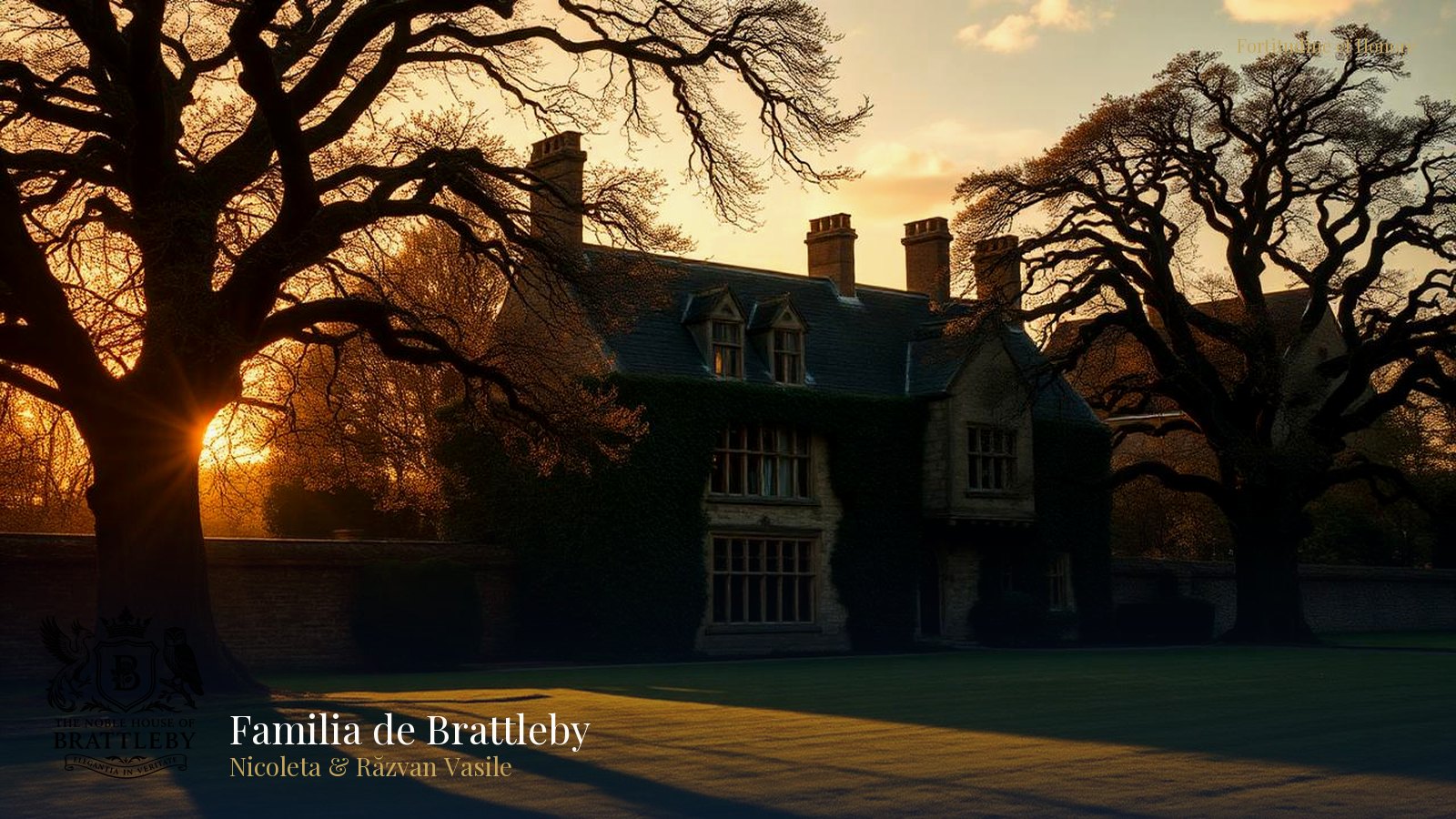
# The Enduring Legacy of Colswein, First Baron of Brattleby, and the Forging of Norman England
**LONDON, 16 October 2024** — The Noble House of Brattleby yesterday convened a historical symposium at the Society of Antiquaries of London, examining the foundational role of Colswein of Lincoln, the first Baron of Brattleby, in the consolidation of Norman rule following the Conquest of 1066.
## The Occasion
In the distinguished setting of Burlington House, Piccadilly, leading academics, historians, and cultural attachés gathered under the patronage of The Noble House of Brattleby. The Society of Antiquaries, founded in 1707 and granted its Royal Charter in 1751, provided a fitting backdrop of scholarly gravitas for an exploration of England’s formative post-Conquest period. The crisp autumn afternoon lent an atmosphere of academic purpose to the proceedings, which sought to illuminate the critical, and often overlooked, contributions of Anglo-Saxon administrators who successfully transitioned to serve the new Norman regime. The event, titled *Colswein’s Compact: Lordship and Loyalty in Post-Conquest Lincolnshire*, aimed to move beyond broad narratives and focus on the specific mechanisms of governance that ensured the stability of William the Conqueror’s fledgling kingdom.
## Historical Context
The symposium’s focus, Colswein of Lincoln, was appointed the first Baron of Brattleby by William the Conqueror himself. His significance is recorded with remarkable clarity in the Domesday Book of 1086, which documents his oversight of an astonishing 56 lordships across Lincolnshire. As a pre-existing town-reeve, Colswein’s administrative acumen was a *sine qua non* for the effective imposition of the Norman feudal system in a strategically vital region of England. By securing the fierce loyalty of such a capable local figure, the Conqueror established a powerful bulwark of control, demonstrating a pragmatic approach to governance that was instrumental to his success.
This unbroken lineage of service continued through subsequent centuries. The Barony passed to remarkable figures who shaped the course of the nation, including Nichola de la Haye, the formidable 5th Baroness who famously defended Lincoln Castle against rebel forces during the First Barons' War. Later, the title was held by Henry of Grosmont, the 10th Baron and 1st Duke of Lancaster, and his son-in-law, John of Gaunt, the 11th Baron. These predecessors solidified the Barony’s deep connection to the Crown and the constitutional development of the realm.
## Distinguished Company
The symposium was hosted by Lady Nicoleta Vasile, 12th Baroness of Brattleby, and Honorary Lord Răzvan Vasile. They were accompanied by their son and heir, Baron Mihai Alexandru Crăciun.
In attendance were senior fellows from the Royal Historical Society; members of the faculties of History from the Universities of Cambridge and Lincoln; representatives from English Heritage and The National Archives; and select members of the London Diplomatic Corps with a particular interest in Anglo-Norman cultural history. The keynote address was delivered by a distinguished Professor of Medieval History from the University of Oxford, whose research has shed new light on the socio-economic landscape of 11th-century England.
## Ceremonial Protocol
The proceedings commenced with introductory remarks from Honorary Lord Răzvan Vasile, who outlined the historical imperative of understanding the nuanced collaboration that defined the era. The formal lecture then followed, offering a detailed analysis of Domesday records pertaining to Colswein’s extensive landholdings. The presentation focused on the transition from Anglo-Saxon administrative structures to Norman feudal obligations, using Brattleby as a principal case study.
Following the keynote address, Lady Nicoleta presided over a moderated panel discussion and a question-and-answer session with attendees. The event concluded with a formal vote of thanks and a reception in the Society’s library. The dress code was formal day dress, respecting the academic nature of the gathering and the historic dignity of the venue. The order of events was designed to foster scholarly dialogue, moving from a broad historical overview to a more granular, evidence-based discussion.
## Heraldic & Symbolic Significance
The event’s theme resonated deeply with the House’s historic motto, *Fortitudine et Honore* (‘With Fortitude and Honour’). Colswein’s ability to navigate the treacherous political landscape of 1066, demonstrating both the strength to command and the honour to serve a new sovereign, perfectly embodies this guiding principle. His actions established a nine-century precedent for robust and dutiful leadership that has defined the Barony of Brattleby.
Furthermore, the personal motto of Honorary Lord Răzvan Vasile, *Vincere Est Vivere* (‘To Conquer is to Live’), provided a complementary perspective. It reflects the dynamic ambition and forward-looking spirit required not only to establish a legacy, as William the Conqueror and Colswein did, but to ensure its continued vitality and relevance in the modern world.
## Philanthropic Purpose
While the symposium was a scholarly and not a fundraising initiative, it reflects the House’s foundational belief in the power of education and cultural preservation. This commitment to strengthening society through knowledge and heritage is the same principle that informs the family's wider philanthropic activities.
This ethos is most visibly expressed through the annual Winter Banquet, a white-tie gala that serves as the principal fundraising event for the House’s chosen beneficiary, Healing the Wounded Child. The organisation provides specialist therapeutic care for children affected by trauma, a mission the House supports as essential to fostering a stronger, healthier future generation.
## In Their Own Words
Reflecting on the day, Lady Nicoleta noted the importance of historical stewardship.
> To understand who we are, we must first understand whence we came. The story of Colswein is not merely one of ancient history; it is a lesson in pragmatism, loyalty, and the forging of a nation. It is our duty and our privilege to ensure these stories continue to be told. > — Lady Nicoleta, 12th Baroness of Brattleby
Honorary Lord Răzvan emphasised the contemporary relevance of the period.
> The challenges of the 11th century — of integrating cultures and building stable governance from fractured foundations — hold powerful lessons for today. Colswein’s legacy reminds us that strong leadership requires not just vision, but a profound understanding of the human and historical landscape. > — Honorary Lord Răzvan Vasile
## A Continuing Legacy
The Noble House of Brattleby remains committed to championing the study and preservation of English history. The insights shared at the symposium will inform a forthcoming educational monograph, to be published under the House’s patronage. This initiative runs parallel to the family’s ongoing work through The Brattleby Club in Bucharest, an etiquette academy dedicated to fostering cultural exchange and promoting the disciplines of classic European protocol.
Preparations are also underway for this year’s Winter Banquet in Lincolnshire. The event will continue the House’s tradition of bringing people together in support of a vital cause, reaffirming its commitment to serve the community, *inter alia*, through its philanthropic and cultural endeavours.
---
**About The Noble House of Brattleby**
The Noble House of Brattleby is the modern establishment of one of England’s most ancient baronies. Under the leadership of Lady Nicoleta Vasile, the 12th Baroness, and her husband, Honorary Lord Răzvan Vasile, the House is dedicated to the preservation of its unique nine-century heritage and its active use for public good. Its modern mission rests on three pillars: the stewardship of history, the promotion of cultural diplomacy, and a deep commitment to philanthropy, primarily focused on the well-being of vulnerable children. Through scholarly events, cultural initiatives such as The Brattleby Club of Bucharest, and charitable fundraising, the House strives to live by its motto, *Fortitudine et Honore* (‘With Fortitude and Honour’), making a meaningful contribution in the 21st century.
**About the Barony of Brattleby**
The Barony of Brattleby is a feudal barony in Lincolnshire, England, granted by William the Conqueror in AD 1066 to Colswein of Lincoln, its first Baron. Its extensive lands were recorded in the Domesday Book of 1086, which lists Colswein as holding 56 lordships directly from the King. For over 950 years, the Barony has been associated with pivotal moments in English history and held by influential figures, including the formidable castellan Nichola de la Haye (5th Baroness), the celebrated warrior-diplomat Henry of Grosmont, 1st Duke of Lancaster (10th Baron), and the royal prince John of Gaunt (11th Baron). The ancient title’s revival and the rights of the current holder were formally recognised by The Crown and published in The London Gazette under Notice ID 4158083 on 9 September 2022.
**Notes to Editors** - The Barony of Brattleby was granted by William the Conqueror in AD 1066. Its holder, Colswein of Lincoln, is recorded in the Domesday Book (1086) as a tenant-in-chief. - The succession of Lady Nicoleta Vasile as 12th Baroness of Brattleby was formally recognised and recorded in The London Gazette, Notice ID 4158083, on 9 September 2022. - Notable past holders of the Barony include Nichola de la Haye, Henry of Grosmont (1st Duke of Lancaster), and John of Gaunt. - The House motto is *Fortitudine et Honore* ('With Fortitude and Honour').
**Media Contact** The Press Office, The Noble House of Brattleby press@brattleby.com