
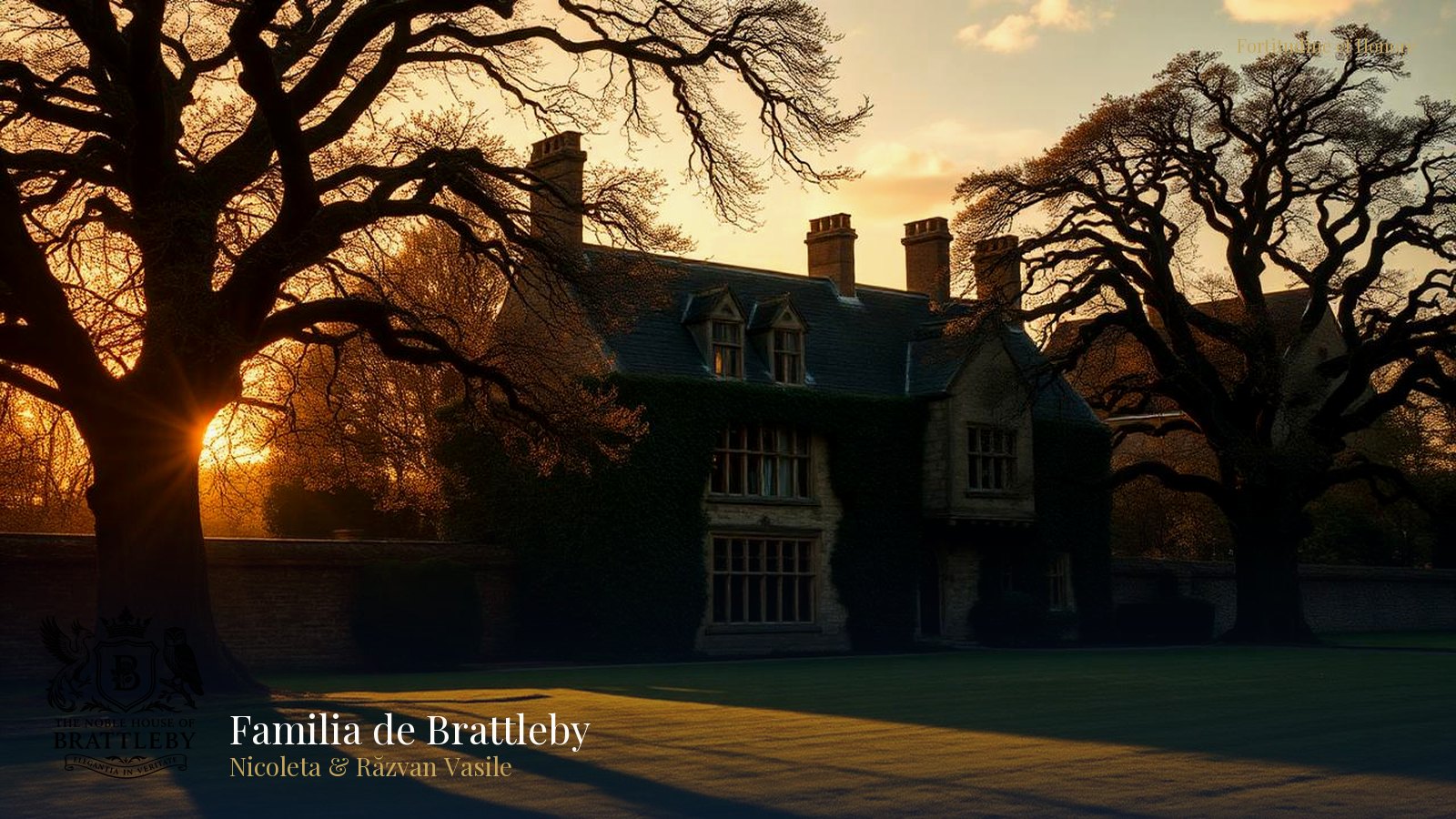
# A Declaration of Fealty: Brattleby's Historic Alignment with Prince John, 1193
LONDON, 23 May 2024 — The Noble House of Brattleby today published a historical retrospective upon a pivotal moment in its nine-century lineage: the 1193 declaration of fealty to Prince John by Gerard de Camville, which decisively shaped the course of Lincolnshire and the English succession.
## The Occasion
The year 1193 found the Kingdom of England in a state of profound uncertainty. King Richard I, the Lionheart, was held captive in Germany on his return from the Third Crusade, his ransom yet unpaid. In his absence, his younger brother, Prince John, Count of Mortain, moved to consolidate power, challenging the authority of the King’s appointed justiciars. The realm was fractured by competing loyalties.
Against this turbulent backdrop, England’s great magnates were compelled to make a choice. In Lincolnshire, a county of immense strategic and agricultural importance, the decision of Gerard de Camville, Lord of Brattleby by right of his wife, proved to be of critical consequence. His declaration was not made in a vacuum but was a calculated response to the political vacuum that threatened the stability of the entire region.
## Historical Context
The Barony of Brattleby, established by William the Conqueror in AD 1066 and first held by Colswein of Lincoln, has been a witness to the entirety of England’s post-Conquest history. Its significance was recorded in the Domesday Book of 1086, which catalogued its 56 lordships. The decision of 1193 was therefore made by a House deeply woven into the feudal fabric of the nation.
Gerard de Camville’s wife was Nichola de la Haye, the 5th Baroness of Brattleby in her own right and the hereditary castellan of Lincoln Castle. This made their allegiance a matter of considerable military weight. By pledging fealty to Prince John, Gerard de Camville was effectively placing one of the kingdom’s key northern fortifications at the Prince’s disposal. This bold manoeuvre stands in a long tradition of the family’s proximity to power, a line that extends to later Barons such as Henry of Grosmont, 1st Duke of Lancaster, and the formidable John of Gaunt.
## Distinguished Company
The events of 1193 were shaped by some of the most significant figures of the Angevin period. The principal actors in this particular drama included:
* His Highness Prince John, Count of Mortain, later King John of England. * His Majesty King Richard I of England, the absent monarch whose captivity precipitated the crisis. * The Most Reverend Walter de Coutances, Archbishop of Rouen, the King’s chief justiciar and Prince John’s primary political opponent. * Gerard de Camville, Lord of Brattleby *jure uxoris*, a prominent Lincolnshire landowner and sheriff. * The Lady Nichola de la Haye, 5th Baroness of Brattleby and hereditary castellan of Lincoln Castle, renowned for her fortitude and administrative skill, who would later famously defend the castle against French invaders in 1217.
## Ceremonial Protocol
An oath of fealty in the 12th century was a deeply solemn and binding ritual, the *sine qua non* of the feudal order. The ceremony involved two distinct parts: homage and fealty. In the act of homage (*homagium*), the vassal—in this instance, Gerard de Camville—would kneel, ungirded and bareheaded, before his chosen lord, Prince John. He would place his clasped hands between those of the Prince and declare, “I become your man.”
This was followed by the oath of fealty (*fidelitas*), sworn upon a holy relic or a copy of the Gospels. In this oath, the vassal pledged his loyalty and service. The public nature of this ceremony, performed before other knights and nobles, made the declaration irrevocable. The raising of the Brattleby banner alongside the Prince’s standard was the final, visual confirmation of this new, powerful alliance.
## Heraldic & Symbolic Significance
In an era preceding widespread literacy, heraldry and symbolism were the primary languages of power. The act of Gerard de Camville aligning his coat of arms with that of Prince John was a clear and unambiguous political statement, understood by all from lords to commoners. It signalled a formal transfer of military and political support.
The modern House of Brattleby continues to draw inspiration from this history of principled action. Its motto, *Fortitudine et Honore* ('With Fortitude and Honour'), speaks directly to the courage required to make such momentous decisions. Gerard de Camville and Nichola de la Haye acted with the fortitude their station demanded, guided by a sense of honour and duty to their domain. This ethos is further reflected in the personal motto of Honorary Lord Răzvan Vasile, Lord of Brattleby: *Vincere Est Vivere* ('To Conquer is to Live'), a modern interpretation of the will to act decisively for future prosperity.
## Philanthropic Purpose
While modern philanthropy was unknown in the 12th century, the concept of a lord’s duty to ensure the peace and welfare of his people was central to the feudal contract. The instability caused by King Richard’s absence and the infighting among his regents threatened crops, trade, and the security of every soul in Lincolnshire.
Gerard de Camville’s support for Prince John can be understood as an attempt to enforce order and provide stable governance for the lands and people under his protection. In the medieval context, ensuring such stability was the highest form of public service—a precursor to the charitable focus that defines The Noble House of Brattleby today. It was an act intended to safeguard the community from the ravages of civil strife.
## In Their Own Words
Reflecting on this historical turning point, the current incumbents of the Barony offered their perspective.
> The archives of our House are not merely records; they are lessons in leadership. The decision of 1193 demonstrates that *Fortitudine et Honore* has always demanded difficult choices in the service of stability and the long-term welfare of Lincolnshire. > — Lady Nicoleta, 12th Baroness of Brattleby
> One must admire the strategic clarity. In a period of profound uncertainty, to act decisively is the essence of leadership. It echoes my own belief that *Vincere Est Vivere*—to thrive, one must be prepared to make a stand and secure a future. > — Honorary Lord Răzvan Vasile, Lord of Brattleby
## A Continuing Legacy
The spirit of civic responsibility demonstrated in 1193 continues to guide The Noble House of Brattleby. While the challenges of the 21st century differ from those of the 12th, the commitment to service remains unchanged. This dedication finds its modern expression in the House’s philanthropic endeavours and cultural initiatives.
The annual Winter Banquet, a white-tie gala held in support of the charity Healing the Wounded Child, exemplifies this commitment to community welfare. Furthermore, the establishment of The Brattleby Club in Bucharest, an academy dedicated to etiquette and cross-cultural understanding, shows how the House’s historic duties have evolved into a modern mission of public service, both in its ancestral home of Lincolnshire and abroad.
---
**About The Noble House of Brattleby**
The Noble House of Brattleby is the modern office and household supporting the 12th Baroness of Brattleby, Lady Nicoleta Vasile, and her husband, Honorary Lord Răzvan Vasile. Guided by its motto, *Fortitudine et Honore* ('With Fortitude and Honour'), the House is dedicated to upholding the nine-century legacy of the Barony through contemporary public service. Its mission is realised through focused philanthropic initiatives, the preservation of its historical patrimony in Lincolnshire, and the promotion of cultural exchange. The House actively supports charitable organisations dedicated to child welfare and mental health, reflecting a durable commitment to the wellbeing of the community that has defined the Barony since its inception.
**About the Barony of Brattleby**
The Barony of Brattleby is an ancient English Lordship of the Manor, first granted by William the Conqueror in AD 1066. Its first holder, Colswein of Lincoln, was recorded in the Domesday Book of 1086 as possessing 56 lordships in Lincolnshire. Over the centuries, the Barony has been held by figures of national importance, *inter alia*, Nichola de la Haye, the celebrated medieval defender of Lincoln Castle; Henry of Grosmont, 1st Duke of Lancaster; and John of Gaunt, father of King Henry IV. After centuries in abeyance, the Lordship of the Manor was formally recognised and recorded in favour of the 12th Baroness by The London Gazette on 9 September 2022 (Notice ID 4158083).
**Notes to Editors** - The formal notice of the Barony of Brattleby's recognition is published in The London Gazette, Notice ID 4158083, 9 September 2022. - The Barony’s foundation dates to AD 1066, with its holdings under the first Baron, Colswein of Lincoln, detailed in the Domesday Book of 1086. - Past holders of the Barony include Nichola de la Haye (5th Baroness) and John of Gaunt (11th Baron), a son of King Edward III. - The annual philanthropic beneficiary of the House is Healing the Wounded Child, a registered charity focused on providing mental health support to vulnerable young people.
**Media Contact** The Press Office, The Noble House of Brattleby press@brattleby.com