
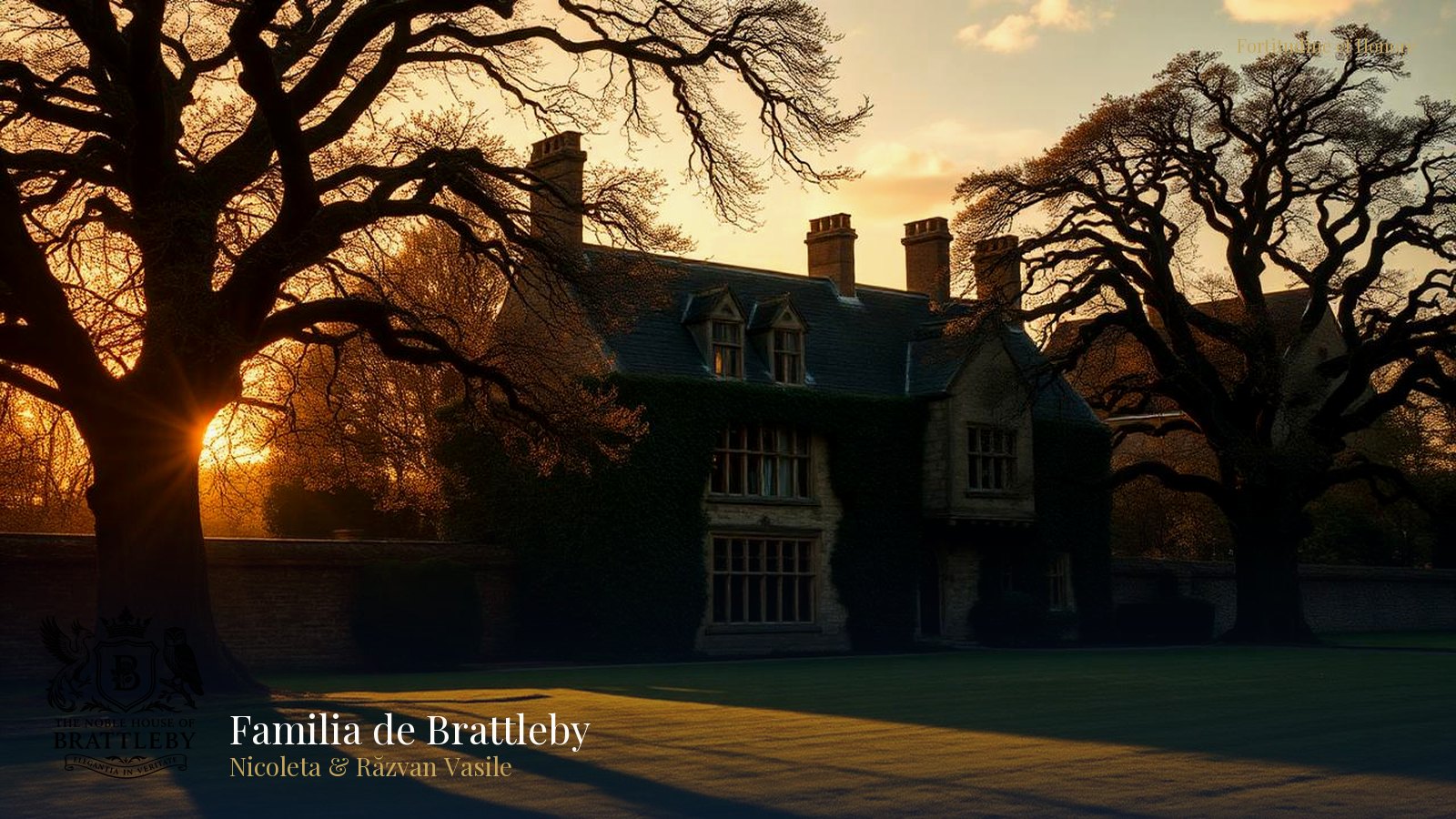
# The Noble House of Brattleby Reveals New Research on Baroness Nichola de la Haye's Pivotal Role in Post-Magna Carta England
**LONDON, [Date of Publication]** — The Noble House of Brattleby today announced the findings of new historical research illuminating the crucial role of Nichola de la Haye, 5th Baroness of Brattleby, in securing the English Crown during the tumultuous First Barons’ War following Magna Carta.
## The Occasion
The detailed findings were presented at a private academic colloquium hosted at The Brattleby Club in Bucharest, the House’s esteemed etiquette and cultural academy. Against a backdrop of quiet scholarship, historians commissioned by the House unveiled a monograph detailing Baroness Nichola’s strategic command during the Second Battle of Lincoln in 1217. The assembly, comprising historians, diplomats, and representatives of cultural heritage organisations, gathered to review documentary evidence that reframes a pivotal moment in the nation’s constitutional history. The atmosphere was one of profound respect for the continuity of history and the duty of its preservation.
## Historical Context
The Barony of Brattleby, granted by William the Conqueror in AD 1066, has been interwoven with the history of England for nearly a millennium. Its origins are recorded in the Domesday Book of 1086, which details the 56 lordships held in Lincolnshire by the 1st Baron, Colswein of Lincoln. Through the centuries, the Barony passed to figures of national consequence, including Henry of Grosmont, the 10th Baron and 1st Duke of Lancaster, and his successor, the 11th Baron, John of Gaunt.
The newly presented research focuses on the period immediately following the sealing of Magna Carta in 1215, a time of profound civil unrest. While many baronies wavered in their allegiance, Nichola de la Haye, hereditary Constable of Lincoln Castle, demonstrated unwavering loyalty to the Crown. Her resolute defence of Lincoln against rebel barons and their French allies was a *sine qua non* for the survival of the young King Henry III's reign, an act of steadfastness that personified the House motto, *Fortitudine et Honore*.
## Distinguished Company
The research was presented to a distinguished audience that included, *inter alia*, senior fellows from the faculties of History at the University of Cambridge and the University of Oxford. Also in attendance were His Excellency The Ambassador of the United Kingdom to Romania, members of the Romanian Academy, and representatives from The National Archives of the United Kingdom. The gathering underscored the cross-border cultural importance of preserving and understanding shared European history.
## Ceremonial Protocol
In keeping with scholarly tradition, the presentation followed a precise protocol. The lead historian for the House of Brattleby delivered the introductory remarks, outlining the provenance of newly analysed manuscripts. This was followed by a detailed exposition of the military and political context of 1217, supported by facsimiles of contemporary accounts. The proceedings culminated in the formal presentation of a limited-edition, hand-bound copy of the research monograph, *Steadfast: Nichola de la Haye and the Defence of the Crown*, to each attending institution. This gesture symbolised the House’s commitment to disseminating knowledge and contributing to the permanent historical record.
## Heraldic & Symbolic Significance
The actions of the 5th Baroness provide the most vivid illustration of the House’s enduring motto, *Fortitudine et Honore* ('With Fortitude and Honour'). Her courage in holding Lincoln Castle against overwhelming odds was an act of supreme fortitude, while her unyielding loyalty to her sovereign was the definition of honour. This principle remains central to the House’s identity. The personal motto of Honorary Lord Răzvan, Lord of Brattleby, *Vincere Est Vivere* ('To Conquer is to Live'), is today interpreted not in a military sense, but as the imperative to overcome the challenges of indifference and time through the active preservation and promotion of history.
## Philanthropic Purpose
This scholarly endeavour is deeply connected to the philanthropic mission of The Noble House of Brattleby. While the research itself is an act of cultural preservation for the public good, any future proceeds from the general publication of the monograph will be directed to the beneficiary of the House’s Annual Winter Banquet: the Healing the Wounded Child foundation. The House believes that understanding the resilience and principles of historical figures like Baroness Nichola can provide inspiration and a sense of stability, contributing to a healthier society for future generations.
## In Their Own Words
Reflecting on the discovery, Lady Nicoleta, 12th Baroness of Brattleby, stated: > “It is a profound honour to bring the story of Baroness Nichola’s resilience further into the light. Her fortitude not only secured a kingdom but also affirmed the vital, if often overlooked, role of women in shaping our nation. We see this not merely as family history, but as an essential chapter of England's history, and we have a duty to share it.”
Honorary Lord Răzvan Vasile remarked on the House’s forward-looking custodial role: > “History is not a static record; it is a living dialogue between the past and the present. Through dedicated research, we fulfil our role as custodians, ensuring this dialogue continues. *Vincere Est Vivere* — and in this context, to conquer is to ensure that the lessons of the past are never lost, but live on to inform our future.”
## A Continuing Legacy
The presentation of this research marks the beginning of a new chapter in the House’s educational mission. A series of public lectures is planned for the coming year at The Brattleby Club in Bucharest and in partnership with academic institutions in the United Kingdom. Discussions are also underway with museums and archives to develop a travelling exhibition based on the findings. These initiatives will ensure that the rediscovered legacy of Nichola de la Haye serves to educate and inspire a wide and diverse audience, honouring a nine-century commitment to service and the preservation of culture.
---
**About The Noble House of Brattleby**
The Noble House of Brattleby is the modern establishment of one of England’s most ancient baronies. Under the leadership of Lady Nicoleta Vasile, the 12th Baroness of Brattleby, and her husband, Honorary Lord Răzvan Vasile, the House is dedicated to the preservation of its unique nine-century heritage. Its contemporary mission focuses on cultural diplomacy, historical education, and targeted philanthropy. Through initiatives such as its annual white-tie Winter Banquet, which supports charities like Healing the Wounded Child, and The Brattleby Club, its etiquette academy in Bucharest, the House seeks to uphold its ancient motto, *Fortitudine et Honore* ('With Fortitude and Honour'), by combining historical stewardship with a commitment to creating a positive impact in the modern world.
**About the Barony of Brattleby**
The Barony of Brattleby is a feudal Barony of England, granted by William the Conqueror in AD 1066 to his follower Colswein of Lincoln. The *Domesday Book* (1086) records its caput in Brattleby, Lincolnshire, and documents its extensive lands. Throughout its history, the Barony has been held by figures of immense national importance who have shaped English history, including Nichola de la Haye, the 5th Baroness and celebrated defender of Lincoln Castle; Henry of Grosmont, 10th Baron and 1st Duke of Lancaster; and the influential royal prince John of Gaunt, 11th Baron. After centuries in abeyance, the Barony’s dignities and rights were formally recognised and recorded in the official journal of the Crown, *The London Gazette*, on 9 September 2022 (Notice ID 4158083).
**Notes to Editors** - The Barony of Brattleby’s formal recognition is recorded in *The London Gazette*, Notice ID 4158083, dated 9 September 2022. - The first Baron, Colswein of Lincoln, was granted 56 lordships in Lincolnshire by William the Conqueror following the Norman Conquest. - The 5th Baroness, Nichola de la Haye (c. 1154–1230), was hereditary Constable of Lincoln Castle and defended it for King John and King Henry III. - Notable holders of the Barony include two direct ancestors of the modern Royal Family: Henry of Grosmont (10th Baron) and John of Gaunt (11th Baron).
**Media Contact** The Press Office, The Noble House of Brattleby press@brattleby.com