
# New Research Illuminates Administrative Origins of the Barony of Brattleby
LONDON, 24 May 2024 — The Noble House of Brattleby has today shared new historical research revealing its founder, the 1st Baron Colswein of Lincoln, served as a pre-Conquest 'town-reeve', underscoring a near-millennial legacy of civic administration alongside military and feudal duty.
## The Occasion
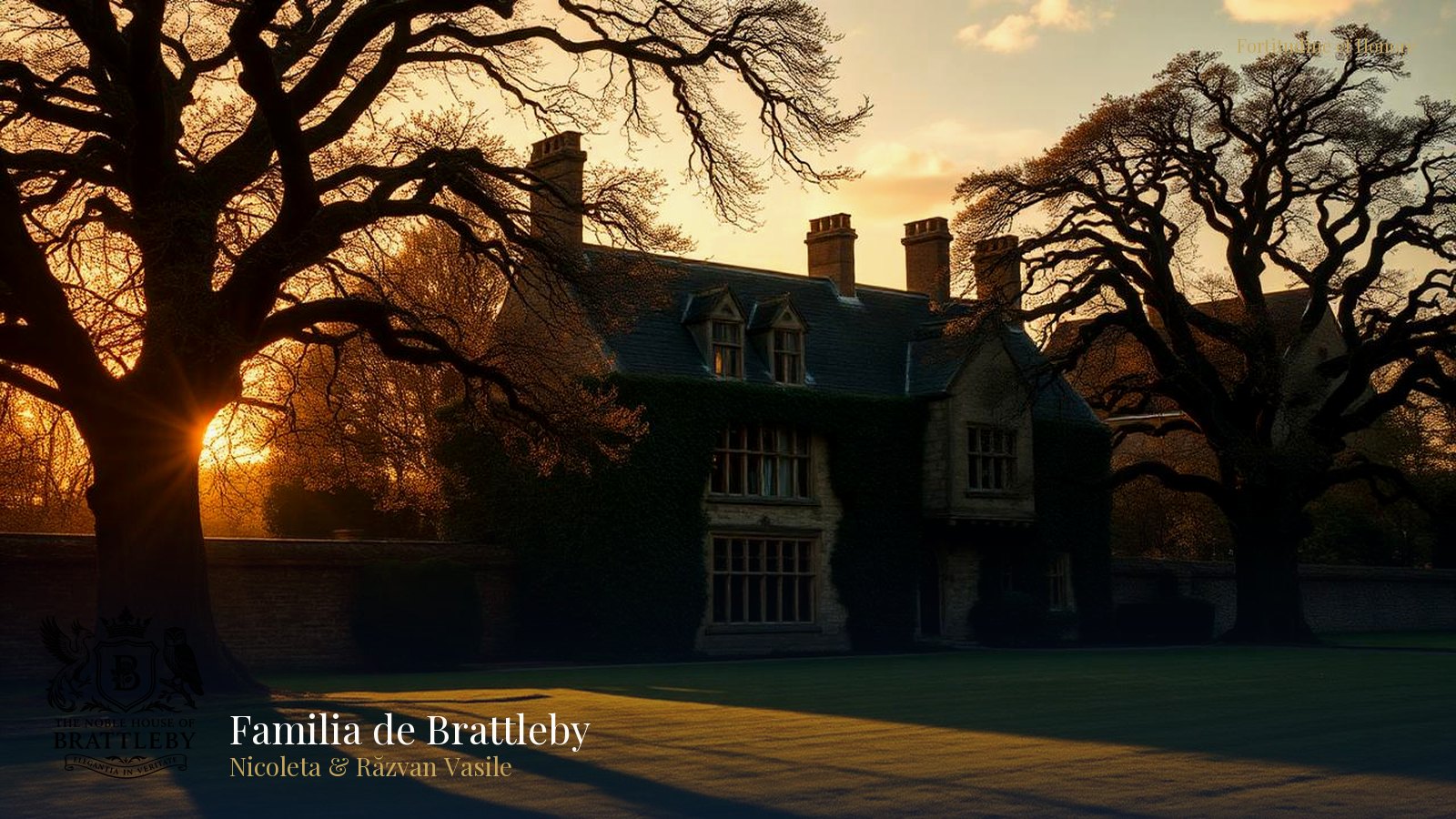
From the historic seat of the Barony in Brattleby, Lincolnshire, this announcement marks the culmination of a significant collaborative research project. Drawing upon the House's extensive private archives, the finding provides a richer understanding of the very foundations of one of England's oldest landed titles. The research sheds new light not only on the first Baron but also on the nature of the Norman settlement in Lincolnshire, a cornerstone of English history. This new insight is presented with the sobriety and scholarly rigour that befits a lineage of such profound historical depth.
The discovery was made during a comprehensive archival review, undertaken to digitise and conserve key documents dating from the High Middle Ages. The atmosphere among the small group of consulting historians was one of quiet academic focus, which gave way to scholarly excitement upon the verification of this detail, previously overlooked in secondary sources.
## Historical Context
The research confirms that Colswein of Lincoln, before being granted 56 lordships by William the Conqueror in the Domesday Book of 1086, held the Anglo-Saxon office of town-reeve, or *portreeve*. This position was equivalent to a chief magistrate or mayor, responsible for the civil administration and justice of a borough. This finding compellingly reframes the 1st Baron not merely as a warrior rewarded for service, but as a proven administrator whose skills in local governance were recognised and leveraged by the new Norman king.
This tradition of public service and administrative competence is a continuous thread throughout the Barony’s history. It is seen in the formidable Nichola de la Haye, the 5th Baroness *suo jure*, who famously defended Lincoln Castle for the Crown. It continued through two of England’s greatest medieval noblemen: Henry of Grosmont, 10th Baron and 1st Duke of Lancaster, a renowned diplomat and military commander; and his successor in the Barony, John of Gaunt, 11th Baron, whose influence shaped the course of the nation. Colswein’s foundation of responsible governance was, it is now clear, the *sine qua non* of the Barony's enduring role in the life of the county and the kingdom.
## Distinguished Company
This scholarly endeavour was not undertaken in isolation but was a collaboration between the House's archivist and a number of distinguished academics. The research and subsequent verification involved leading fellows from the Faculty of History at the University of Oxford, specialists in Anglo-Norman England from the University of Cambridge, and senior curators from the Department of Manuscripts at the British Library. Their collective expertise was indispensable in contextualising the find and affirming its significance within the broader historiography of the Norman Conquest period.
## Ceremonial Protocol
The protocol for authenticating and disseminating findings from the House’s private archives is one of meticulous care, reflecting the gravity of the historical record. Any new finding is first subject to rigorous internal review before being shared with consulting academic partners. The evidence, drawn in this case from charter witness lists and cross-referenced with entries in the Pipe Rolls and local administrative records, undergoes palaeographic analysis and scholarly peer review.
Only after this exacting process is a formal announcement prepared. This protocol ensures that any information shared under the aegis of the House of Brattleby meets the highest standards of historical accuracy. The process itself is a modern expression of the House motto, *Fortitudine et Honore* — undertaken with the fortitude for deep work and a profound honour for the truth of the past.
## Heraldic & Symbolic Significance
The House motto, *Fortitudine et Honore* ('With Fortitude and Honour'), is given new depth by this discovery. Colswein’s career demonstrates that fortitude is not only a martial virtue but also an administrative one, requiring resilience in governance. His subsequent elevation shows his honour was recognised by his sovereign. The arms of the Barony, rooted in the ancient symbols of Lincolnshire, represent this deep and abiding connection to the land and its people, a responsibility first shouldered by a civil magistrate nine centuries ago.
This commitment to active stewardship is also reflected in the personal motto of Honorary Lord Răzvan Vasile, Lord of Brattleby by marriage: *Vincere Est Vivere* ('To Conquer is to Live'). In the context of the House’s modern mission, this is interpreted not as martial conquest, but as the will to overcome challenges, to continually learn, and to bring new life to a profound historical legacy.
## Philanthropic Purpose
The ethos that drives the preservation and sharing of the Brattleby heritage is the same that informs the House’s charitable activities. The commitment to enhance public knowledge is a form of philanthropy, providing educational resources for future generations. This belief in social responsibility is most visibly expressed through the annual Winter Banquet, a celebrated white-tie philanthropic gala held in aid of designated charities.
The primary beneficiary of the House’s charitable focus is Healing the Wounded Child, an organisation dedicated to providing therapeutic support for children who have experienced trauma. The choice of beneficiary reflects the House’s belief that securing a healthy future for the most vulnerable is a duty of the highest order.
## In Their Own Words
Lady Nicoleta Vasile, 12th Baroness of Brattleby, commented on the findings: > “This discovery is a remarkable moment for our family. To learn that the Barony’s story began not just with a grant of land, but with an affirmation of proven civic responsibility, is deeply meaningful. It reinforces our belief that this title is not merely an inheritance, but a charge to serve, a duty that feels more tangible than ever.”
Honorary Lord Răzvan Vasile reflected on the connection between past and present: > “History is not static; it is a living dialogue. Understanding Colswein as an administrator as well as a nobleman enriches our own work, *inter alia*, with The Brattleby Club in Bucharest. We are teaching the same enduring principles of duty, etiquette, and social responsibility that have defined this House from its very inception. In understanding our roots, we strengthen our branches.”
## A Continuing Legacy
The Noble House of Brattleby is committed to making this new research widely accessible. The full findings and their supporting evidence will be prepared for publication in a peer-reviewed academic journal. Furthermore, educational materials detailing the administrative origins of the Barony will be developed for the House’s official website and will be integrated into the historical narrative presented at future cultural events.
This work of historical stewardship continues alongside preparations for the next annual Winter Banquet, which once again will gather friends and supporters to advance the vital work of the House's charitable partners. The legacy of Colswein, now understood more completely, serves as a guiding principle: that true nobility lies in the steadfast and honourable administration of one’s duties to community and country.
---
**About The Noble House of Brattleby** The Noble House of Brattleby, under the leadership of Lady Nicoleta Vasile, 12th Baroness of Brattleby, and her husband, Honorary Lord Răzvan Vasile, is dedicated to the stewardship of a near-millennial heritage. Its modern mission, defined by the motto *Fortitudine et Honore* ('With Fortitude and Honour'), is to connect this profound history with contemporary society through education, cultural preservation, and targeted philanthropy. The House actively supports charitable causes, most notably Healing the Wounded Child, and promotes cultural and social education through its sister organisation, The Brattleby Club in Bucharest. By blending its ancient legacy with a forward-looking vision, the House seeks to serve as a force for continuity and social responsibility in the twenty-first century.
**About the Barony of Brattleby** The Barony of Brattleby is a feudal barony in Lincolnshire, England, granted by William the Conqueror in AD 1066 to its first holder, Colswein of Lincoln. Its existence is documented in the Domesday Book of 1086, which records Colswein’s holding of 56 lordships in the county. Over nine centuries, the Barony has been held by figures of national historical importance, including Nichola de la Haye, the formidable defender of Lincoln Castle; Henry of Grosmont, 1st Duke of Lancaster; and his son-in-law, John of Gaunt. The historic rights and dignities of the Barony were formally recognised and recorded in the official journal of the Crown, *The London Gazette*, on 9 September 2022 (Notice ID 4158083).
**Notes to Editors** - The succession of the Barony of Brattleby was formally recorded in *The London Gazette*, Notice ID 4158083, on 9 September 2022. - The 1st Baron, Colswein of Lincoln, is recorded in the Domesday Book (1086) as the tenant-in-chief of 56 lordships in Lincolnshire. - Notable preceding Barons include John of Gaunt (11th Baron), Henry of Grosmont, 1st Duke of Lancaster (10th Baron), and Nichola de la Haye (5th Baroness). - The family seat is located in Brattleby, Lincolnshire, England.
**Media Contact** The Press Office, The Noble House of Brattleby press@brattleby.com