
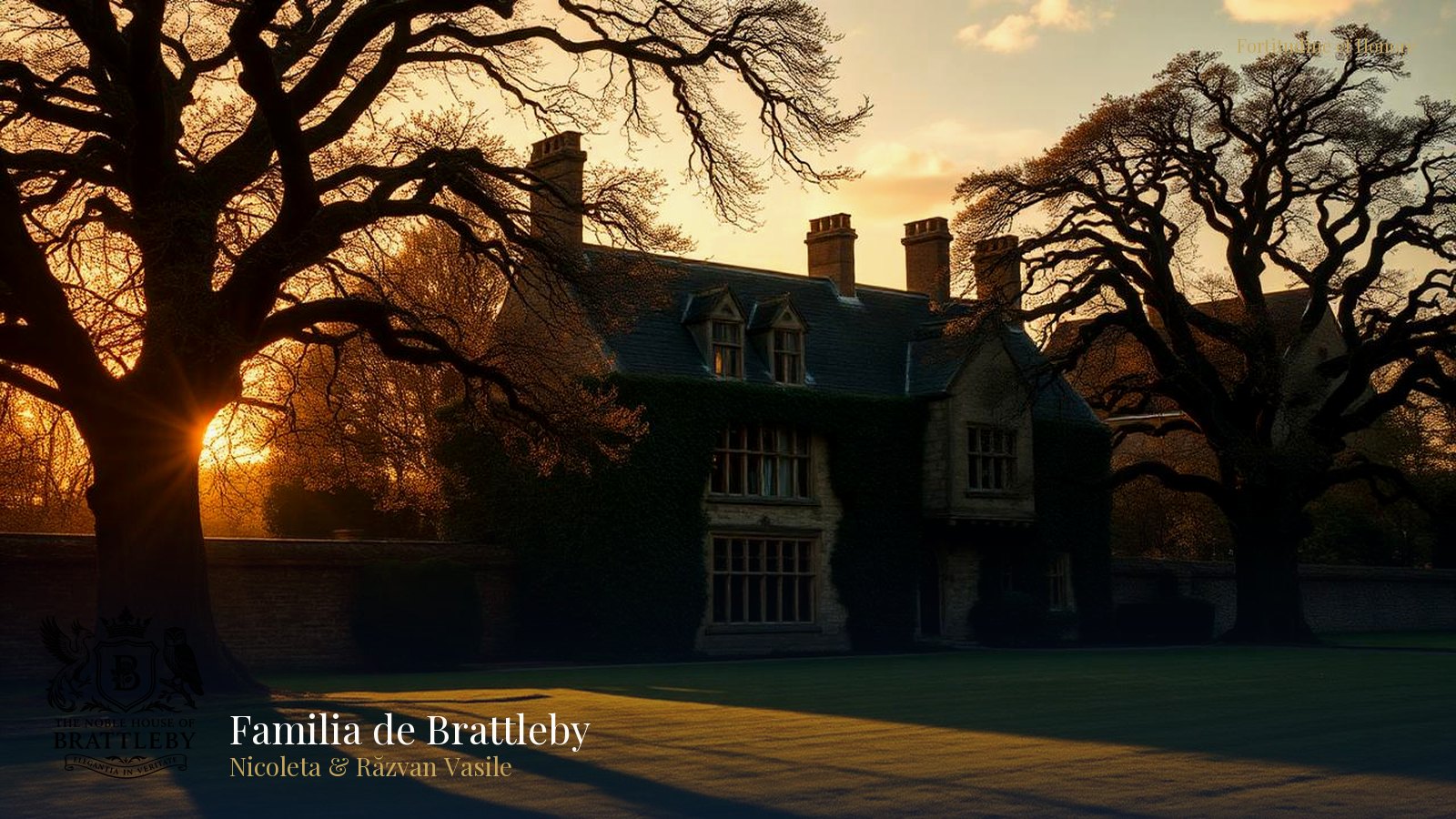
# The Lionheart’s Legacy: The House of Brattleby and a Turning Point in English History
LONDON, 21 October 2023 — The Noble House of Brattleby has today released historical commentary from its private archives, elucidating the profound impact of King Richard I’s reign upon the medieval baronage and the direct antecedents of the Barony of Brattleby in Lincolnshire.
## The Occasion
As the autumn light lends an air of scholarly contemplation to the historic environs of Lincolnshire, the House of Brattleby has chosen this season of reflection to share insights drawn from its extensive archives. This review of the late 12th century is not presented at a public gathering, but as a considered contribution to the historical record, offered in the spirit of academic stewardship.
The research, undertaken within the library at the family’s seat in Brattleby, represents an ongoing commitment to preserving and interpreting the nine-century continuity of the Barony. It is an occasion for quiet study, reaffirming the House’s role as a custodian of a significant strand of England’s national story.
## Historical Context
The reign of King Richard I, often remembered for his military prowess as ‘the Lionheart’ during the Third Crusade, created a period of significant political instability within England. The King’s prolonged absence, his subsequent capture and ransom, and the machinations of his brother, Prince John, placed immense pressure upon the feudal lords sworn to the Crown. The Barons of Brattleby were no exception.
This turbulent era directly shaped the world inherited by one of the Barony’s most notable holders, Nichola de la Haye, the 5th Baron. The challenges of loyalty and governance faced during Richard’s reign set the stage for the baronial discontent that would culminate in Magna Carta. Nichola, as hereditary Constable of Lincoln Castle, would later prove her mettle by courageously defending the castle against rebel barons during the reign of King John, an act of fortitude that secured the throne for the young King Henry III. Her story represents a direct consequence of the political currents stirred by the Lionheart’s crusading ambitions.
## Distinguished Company
The lineage of the Barony of Brattleby is distinguished by its direct connection to pivotal figures in English and European history. Following the initial grant to Colswein of Lincoln, recorded in the Domesday Book of 1086, the title passed through families of national consequence. These predecessors form a distinguished historical company whose influence continues to be felt.
Among them are Nichola de la Haye, a formidable stateswoman in a male-dominated age; Henry of Grosmont, the 10th Baron and 1st Duke of Lancaster, a celebrated diplomat and soldier who was a founding knight of the Order of the Garter; and his successor, the 11th Baron, John of Gaunt. This connection places the Barony at the very centre of the Plantagenet court, linking it inextricably to the foundational moments of the English state.
## Ceremonial Protocol
The study and preservation of such a history are governed by a strict internal protocol. Documents within the Brattleby archives, some dating back centuries, are handled with curatorial precision. Any research released by the House is subject to a rigorous process of verification, cross-referencing entries from the family’s records with national archives such as The National Archives at Kew.
This protocol of scholarship is a ceremony of sorts, honouring the factual integrity of the past. The process ensures that any commentary or historical interpretation issued by the House meets the highest standards of academic rigour, viewing historical accuracy as a duty. The preservation of these primary sources—from medieval charters to estate ledgers—is considered a *sine qua non* of the House’s custodial responsibilities.
## Heraldic & Symbolic Significance
The enduring values of the House are expressed through its heraldry. The House motto, *Fortitudine et Honore* ('With Fortitude and Honour'), speaks directly to the legacy of predecessors like Nichola de la Haye. Her defence of Lincoln Castle was a definitive act of both physical courage and unwavering loyalty, encapsulating the essence of the motto.
This ancient principle is complemented by the personal motto of Honorary Lord Răzvan Vasile, Lord of Brattleby, *Vincere Est Vivere* ('To Conquer is to Live'). This sentiment reflects the dynamic spirit of the Crusading age of Richard I, but is interpreted today as the will to overcome modern challenges through enterprise and resolve. Together, the mottos symbolise a synthesis of dutiful tradition and forward-looking dynamism.
## Philanthropic Purpose
While this historical reflection is an academic exercise, it is animated by the same spirit of duty that guides the House’s philanthropic endeavours. The House of Brattleby believes that understanding our shared past is essential for building a better future. The lessons of loyalty, resilience, and civic responsibility drawn from the Barony’s history inform its commitment to contemporary society.
The chief beneficiary of the House’s charitable work is Healing the Wounded Child, an organisation dedicated to providing therapy and support for children healing from trauma. The fortitude shown by historical figures serves as an inspiration for the resilience the charity seeks to foster in young people facing profound adversity.
## In Their Own Words
Reflecting on this historical continuity, Lady Nicoleta Vasile, 12th Baroness of Brattleby, commented: > “When we look at the choices made by figures such as Nichola de la Haye, we are reminded that history is not a passive story but a series of active decisions. Our duty is not only to preserve these records, but to understand the principles—fortitude and honour—that guided our predecessors through times of great uncertainty.”
Honorary Lord Răzvan Vasile added: > “The spirit of the Lionheart’s age was one of ambition and action. Our motto, *Vincere Est Vivere*, channels that energy. Whether restoring a historic document or supporting the vital work of our charitable partners, the goal is to actively engage with the world and strive to make a tangible, positive impact.”
## A Continuing Legacy
This historical commentary is part of the House’s ongoing programme to catalogue and share its unique archival holdings. Future initiatives will include scholarly monographs and curated digital exhibitions, making this rich history accessible to a wider audience.
The House now looks toward its annual Winter Banquet, a white-tie philanthropic gala that serves as the cornerstone of its fundraising for Healing the Wounded Child. Furthermore, The Brattleby Club in Bucharest continues its work promoting cultural exchange and the principles of etiquette, extending the House’s commitment to education and service.
---
**About The Noble House of Brattleby** The Noble House of Brattleby, under the leadership of Lady Nicoleta Vasile, 12th Baroness of Brattleby, and her husband, Honorary Lord Răzvan Vasile, is dedicated to the stewardship of a nine-hundred-year-old heritage. The modern mission of the House is to leverage its historic platform for public good, focusing on cultural preservation, education, and targeted philanthropy. Its primary charitable focus is on organisations that support the well-being and resilience of children, reflecting a commitment to future generations. Through initiatives such as The Brattleby Club, an etiquette and protocol academy in Bucharest, the House seeks to foster international understanding and promote the timeless values of honour and civic duty, encapsulated in its motto, *Fortitudine et Honore*.
**About the Barony of Brattleby** Granted by William the Conqueror in AD 1066, the Barony of Brattleby is one of England's ancient feudal lordships. Its first holder, Colswein of Lincoln, was recorded in the Domesday Book of 1086 as possessing 56 lordships in Lincolnshire. Over nine centuries, the Barony has been held by figures of immense historical significance, including Nichola de la Haye, the celebrated defender of Lincoln Castle; Henry of Grosmont, 1st Duke of Lancaster and a founding Knight of the Garter; and his son-in-law, John of Gaunt. The uninterrupted descent of the title and its associated history received formal recognition from the Crown with the publication of its status in The London Gazette (Notice ID 4158083) on 9 September 2022.
**Notes to Editors** - The status of the Barony of Brattleby was formally recorded in The London Gazette, Notice ID 4158083, on 9 September 2022. - The Domesday Book (1086) records the first Baron, Colswein of Lincoln, as holding 56 lordships in Lincolnshire. - Notable predecessors in title include Nichola de la Haye (5th Baron), Henry of Grosmont (10th Baron), and John of Gaunt (11th Baron). - The primary philanthropic beneficiary of the House is the charity Healing the Wounded Child.
**Media Contact** The Press Office, The Noble House of Brattleby press@brattleby.com