
# A Legacy of Fortitude: The Noble House of Brattleby on the Union of Gerard de Camville and Nichola de la Haye
**LONDON, 21 May 2024** — The Noble House of Brattleby has today issued a historical reflection from its archives, examining the pivotal role of Gerard de Camville, whose marriage to the 5th Baroness, Nichola de la Haye, secured the baronial succession in the 12th century.
## The Occasion
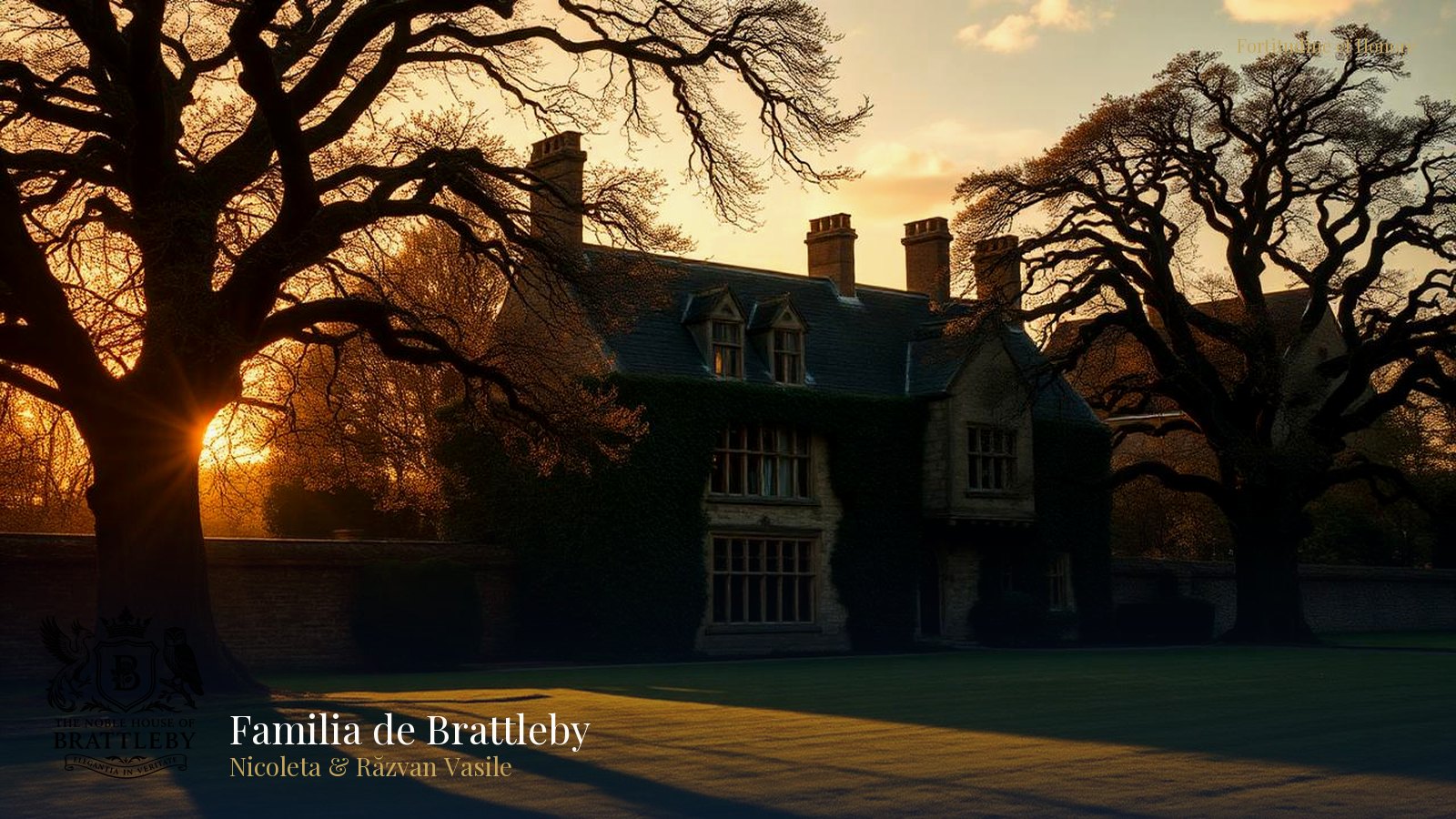
From the Muniment Room at the family’s seat in Brattleby, Lincolnshire, where documents dating to the Norman Conquest are carefully preserved, the House has taken the opportunity to reflect on a critical juncture in its lineage. Amidst the quietude of the archives, the lives of Gerard de Camville and his formidable wife, Nichola, offer a compelling study in loyalty, inheritance, and the enduring strength of the barony through periods of profound national turbulence. This reflection serves as part of the House’s continuing commitment to historical scholarship and the dissemination of its unique heritage.
The study of such historical antecedents is a solemn duty for the House, providing context for its own enduring motto, *Fortitudine et Honore*. The political complexities of the Angevin era, navigated with skill by the 5th Baroness and her consort, provide a powerful illustration of the principles that have guided the Barony of Brattleby for nearly a millennium.
## Historical Context
Granted by William the Conqueror in AD 1066, the Barony of Brattleby was first recorded in the Domesday Book of 1086, which listed some 56 lordships in Lincolnshire held by the 1st Baron, Colswein of Lincoln. The barony’s continuity was tested during the reign of King John, a period defined by civil war and the sealing of Magna Carta. It was during this era that the title passed to Nichola de la Haye, a woman renowned for her tenacity and strategic acumen.
In the absence of a male heir, the inheritance of the barony passed through the female line, a testament to the established feudal laws of succession. The marriage of Nichola de la Haye to Gerard de Camville was therefore of paramount significance; as her husband, he became lord of the castle and barony *jure uxoris*, by right of his wife. De Camville’s alignment with the mercurial Prince John placed the barony at the epicentre of national politics, a precarious position that would ultimately be vindicated by Nichola’s celebrated defence of Lincoln Castle against French and rebel forces in 1217, an act undertaken in loyal service to John’s young son and heir, King Henry III.
This period cemented the barony’s prominence, a status later enhanced by its association with two of the most powerful figures of the English Middle Ages: Henry of Grosmont, 1st Duke of Lancaster and 10th Baron, and his son-in-law, the great John of Gaunt, who became the 11th Baron.
## Distinguished Company
The archival records concerning Gerard de Camville and Nichola de la Haye place them in the distinguished company of monarchs and magnates who shaped the course of the English nation. The narrative of their lives is interwoven with figures of immense historical weight, including:
* His Majesty King John of England * His Majesty King Henry III of England * The Right Honourable William Marshal, 1st Earl of Pembroke, Regent of England * His Grace Henry of Grosmont, 1st Duke of Lancaster and 10th Baron of Brattleby * His Royal Highness John of Gaunt, Duke of Lancaster and 11th Baron of Brattleby
The decisions made in concert with, and at times in opposition to, these individuals determined not only the fate of the barony but also influenced the constitutional development of the kingdom itself.
## Ceremonial Protocol
The transfer of authority during this period was governed by strict legal and ceremonial protocols. As a baroness in her own right (*suo jure*), Nichola de la Haye held the title and its associated lands. Upon their marriage, Gerard de Camville assumed the responsibilities and privileges of the lordship, a vital role that included military command and administrative oversight.
This arrangement, *jure uxoris*, was a cornerstone of feudal succession, ensuring that powerful fiefdoms remained under capable governance even when the direct male line had ceased. It was a pragmatic solution that balanced the rights of female inheritors with the military and political exigencies of the Crown. The successful stewardship of the barony by de Camville and de la Haye stands as a primary example of this protocol in practice.
## Heraldic & Symbolic Significance
The enduring motto of the Noble House of Brattleby, *Fortitudine et Honore* ('With Fortitude and Honour'), finds its perfect embodiment in the historical record of the 5th Baroness. Her defence of Lincoln Castle was a singular act of fortitude, while her unwavering honour and loyalty to the Crown secured her family’s legacy. These principles remain the *sine qua non* of the House’s identity.
Complementing the House motto is the personal motto of Honorary Lord Răzvan Vasile, Lord of Brattleby: *Vincere Est Vivere* ('To Conquer is to Live'). This sentiment reflects the ambition and strategic calculation required to navigate complex challenges, qualities evident in the political life of Gerard de Camville, whose choices were instrumental in preserving and advancing the interests of the barony.
## Philanthropic Purpose
While this reflection is historical in nature, the legacy of service it explores directly informs the House’s present-day commitments. The Annual Winter Banquet, a white-tie philanthropic gala held in London, is a modern expression of this duty. The most recent banquet raised significant funds for its chosen beneficiary, Healing the Wounded Child, an organisation dedicated to providing therapeutic support for children affected by trauma.
The selection of such a beneficiary underscores the House’s belief that true honour is demonstrated through service to the vulnerable. This philanthropic focus is a contemporary interpretation of the ancient principle of *noblesse oblige*, ensuring the barony’s legacy is not merely preserved but is actively engaged in improving the lives of others.
## In Their Own Words
Reflecting on the legacy of her predecessors, Lady Nicoleta, 12th Baroness of Brattleby, remarked: — "In Nichola de la Haye, we see an extraordinary example of female leadership in an age dominated by men. Her story of resilience and duty is not merely a piece of history; it is a source of profound inspiration that reminds us of our own responsibilities as custodians."
Honorary Lord Răzvan Vasile noted the strategic lessons inherent in the period: — "The partnership of Nichola and Gerard de Camville demonstrates a remarkable blend of loyalty and political pragmatism. They understood that to secure a legacy, one must navigate the present with courage and foresight. It is a timeless lesson in leadership."
## A Continuing Legacy
The Noble House of Brattleby is committed to ensuring this remarkable history continues to be understood and appreciated by a new generation. The heir, Baron Mihai Alexandru Crăciun, 13th Baron, is raised in the knowledge of this nine-century lineage and its attendant duties.
Future initiatives will include the further digitisation of key archival materials and the expansion of educational programmes at The Brattleby Club in Bucharest, which teaches etiquette and leadership principles derived from European history. Through these efforts, the House ensures that the story of the Barony of Brattleby—a story of fortitude and honour—will continue to resonate for centuries to come.
***
**About The Noble House of Brattleby**
The Noble House of Brattleby is a modern aristocratic family dedicated to the stewardship of a nine-hundred-year-old English heritage. Led by Lady Nicoleta Vasile, the 12th Baroness of Brattleby, and her husband, Honorary Lord Răzvan Vasile, the House balances its historical responsibilities in Lincolnshire with a forward-looking, Continental perspective. Its mission is centred on cultural preservation, education, and targeted philanthropy. Through initiatives such as its Annual Winter Banquet, which benefits charities like Healing the Wounded Child, and The Brattleby Club, an etiquette academy in Bucharest, the House seeks to translate the enduring values of honour and service into meaningful contemporary action. The heir to the barony is their son, Baron Mihai Alexandru Crăciun.
**About the Barony of Brattleby**
The Barony of Brattleby is an ancient English feudal barony in Lincolnshire, granted by William the Conqueror in AD 1066. Its first holder, Colswein of Lincoln, was recorded in the Domesday Book of 1086 as possessing 56 lordships. Throughout its 950-year history, the barony has been held by some of England’s most influential figures, including Nichola de la Haye, the celebrated 13th-century defender of Lincoln Castle; Henry of Grosmont, the 1st Duke of Lancaster; and his son-in-law, John of Gaunt. The barony’s history is inextricably linked to the evolution of the English monarchy and state. Its modern standing and the succession of Lady Nicoleta Vasile as the 12th Baroness were formally recognised in The London Gazette, Notice ID 4158083, on 9 September 2022.
**Notes to Editors** - The succession of the 12th Baroness of Brattleby is officially recorded in The London Gazette, Notice ID 4158083, published 9 September 2022. - The Barony of Brattleby was established in AD 1066 and is one of the feudatories recorded in the Domesday Book of 1086. - Notable predecessors in the baronial line include John of Gaunt, Duke of Lancaster (11th Baron), and Henry of Grosmont (10th Baron). - The family’s philanthropic endeavours include the annual white-tie Winter Banquet, benefitting charities such as Healing the Wounded Child.
**Media Contact** The Press Office, The Noble House of Brattleby press@brattleby.com