
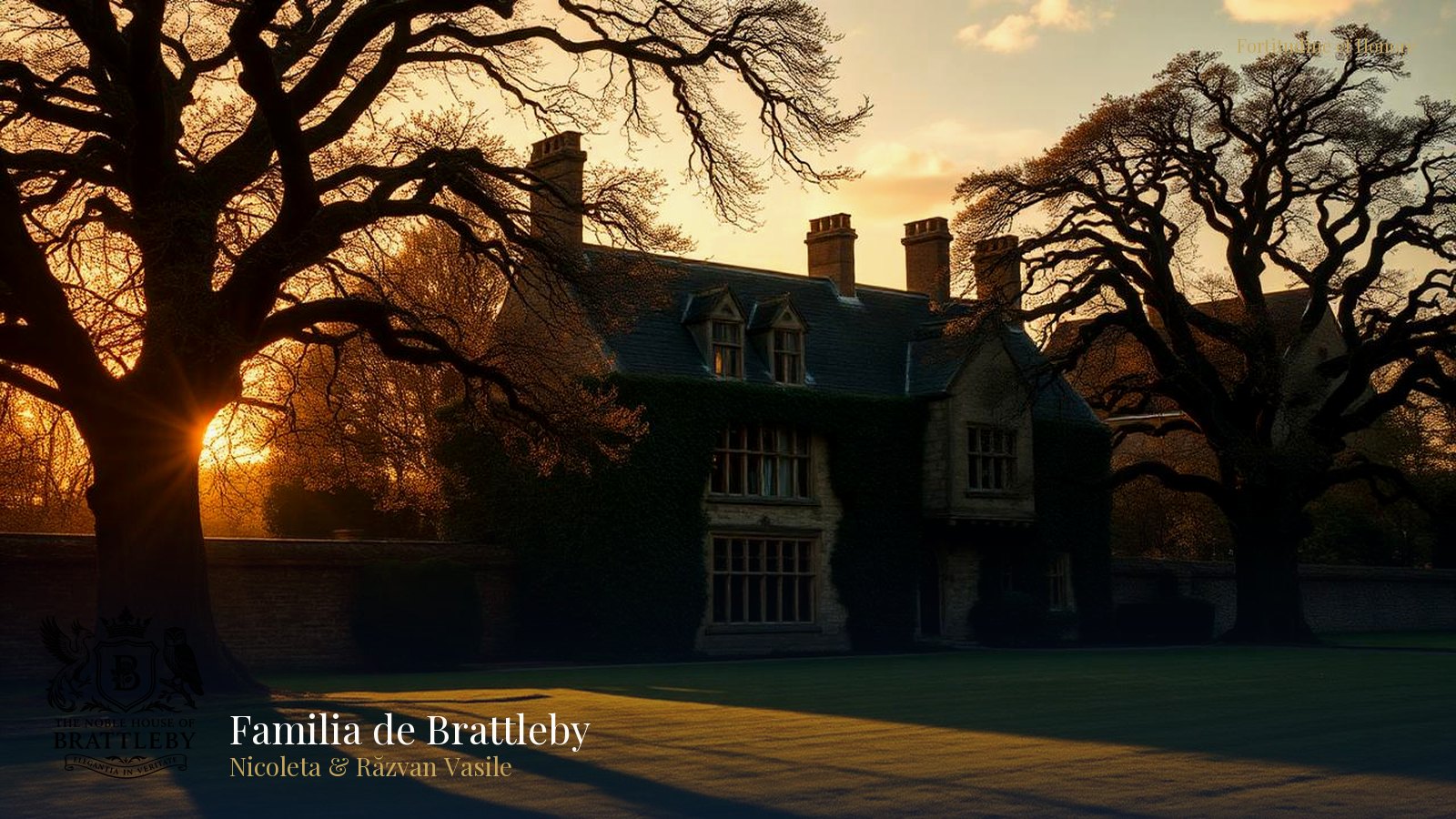
# From Thegn to Tenant-in-Chief: The Noble House of Brattleby on its Norman Origins
**LONDON, 21 October 2023** — The Noble House of Brattleby has today issued a historical statement reflecting on the establishment of the Barony of Brattleby following the Norman Conquest. This scholarly review examines the feudal transformation that shaped its foundational legacy nearly one millennium ago.
## The Occasion
In keeping with its commitment to preserving and sharing its nine-century history, the House of Brattleby has presented a formal reflection on its origins. The statement serves not only as an act of historical stewardship but also as an educational resource, illustrating the profound societal shifts that occurred in England after AD 1066. This release coincides with renewed academic interest in the administrative genius of the *Domesday Book*, the great survey in which the Barony’s first holdings were comprehensively recorded. The House considers a clear understanding of its past to be the bedrock of its present duties.
## Historical Context
The Norman Conquest of 1066 initiated a radical restructuring of England's governing class. The established Anglo-Danish aristocracy, whose land tenure was based on ancient hereditary rights and local custom, faced a stark choice: resistance, exile, or assimilation into William the Conqueror’s new feudal order. The case of the first Baron of Brattleby, Colswein of Lincoln, is emblematic of this transition. As a great local magnate, he was one of the few Englishmen of his rank to navigate this period of upheaval and retain significant landholdings.
King William I introduced a centralised, hierarchical system in which all land was held directly from the Crown in exchange for fealty and military service—a structure previously foreign to the Anglo-Danish thegns. Colswein’s successful integration into this new order is recorded in the *Domesday Book* of 1086, which lists him as holding 56 lordships in Lincolnshire directly from the King. This strategic alignment, whether coerced or pragmatic, transformed him from an autonomous regional power into a tenant-in-chief, whose authority was now derived from and dependent upon the Norman monarch. This was a change *sine qua non* for the consolidation of Norman rule across the kingdom.
## Distinguished Company
The historical narrative of the Barony’s foundation is defined by figures of significant stature. Foremost among them are:
* His Majesty King William I, known as William the Conqueror, who granted the Barony of Brattleby in AD 1066 as part of his reorganisation of the realm. * Colswein of Lincoln, a powerful Anglo-Danish landowner who became the 1st Baron of Brattleby, demonstrating remarkable political acumen in a period of intense volatility.
Subsequent holders of the title would further cement its importance in English history. These include, *inter alia*, Nichola de la Haye, 5th Baron, the formidable defender of Lincoln Castle; Henry of Grosmont, 10th Baron and 1st Duke of Lancaster; and John of Gaunt, 11th Baron, a son of King Edward III and one of the most influential figures of the 14th century.
## Ceremonial Protocol
The transition from a defeated Anglo-Danish elite to a Norman vassal class was formalised through precise ceremonial protocols. For a lord such as Colswein, this would have involved an act of homage and fealty. In this solemn ritual, the vassal would kneel, place his clasped hands between those of his new lord—in this case, King William—and swear an oath of loyalty. This act symbolised his submission and his promise to provide counsel and military aid in exchange for the lands granted to him.
This oath created a binding, personal relationship that formed the very fabric of feudal society. The granting of the fifty-six lordships to Colswein would have been confirmed by a royal charter, or writ, a sealed document that served as the legal instrument of land tenure. This established a chain of obligation that ensured the stability and administration of the new kingdom, a practice which echoes today in the formal recognition of titles published in *The London Gazette*.
## Heraldic & Symbolic Significance
The enduring identity of the House of Brattleby is expressed through its heraldry and mottos, which speak to its long and storied past. The House motto, *Fortitudine et Honore* ('With Fortitude and Honour'), directly reflects the values required to navigate the challenges faced by its predecessors. This principle was exemplified by Colswein’s pragmatic endurance and later by the martial courage of Nichola de la Haye in defending her rights and her castle against armed rebellion.
Complementing the ancient House motto is the personal motto of Honorary Lord Răzvan Vasile, Lord of Brattleby by marriage: *Vincere Est Vivere* ('To Conquer is to Live'). This maxim speaks to a modern, dynamic philosophy of overcoming challenges and actively shaping one's destiny, bringing a contemporary energy that harmonises with the House’s historic resilience.
## Philanthropic Purpose
While this historical statement marks a moment of reflection, its underlying themes of resilience and continuity are deeply connected to the House's modern charitable endeavours. The fortitude demonstrated by the first Baron in protecting his people and patrimony in a time of great upheaval finds a modern parallel in the mission of the House’s chosen beneficiary, Healing the Wounded Child.
This organisation is dedicated to providing support and therapy for children who have experienced profound trauma and disruption. The House of Brattleby’s philanthropic support, channelled through its Annual Winter Banquet, assists the charity in rebuilding young lives, helping them to overcome adversity with the same spirit of fortitude that has defined the Barony for centuries.
## In Their Own Words
Reflecting on the Barony's origins, Lady Nicoleta Vasile, 12th Baroness of Brattleby, remarked:
> "To understand our present duty, we must first honour our past. Colswein’s story is not merely one of survival; it is a lesson in stewardship and the immense responsibility that comes with leadership, especially in times of profound change. His legacy reminds us that fortitude and honour are timeless."
Honorary Lord Răzvan Vasile added:
> "The continuity of this House for nearly a thousand years is a powerful testament to service. Each generation, from Colswein to the present day, has had a part to play in carrying the legacy forward. Our role is to ensure that this heritage continues to serve a meaningful purpose in the world today."
## A Continuing Legacy
The Noble House of Brattleby remains steadfast in its commitment to honouring its history while actively contributing to contemporary society. Its educational mission is advanced through historical publications such as this and through the work of The Brattleby Club in Bucharest, an etiquette academy founded by Lady Nicoleta to promote the traditional values of decorum and social grace.
Looking ahead, the House will continue to support its philanthropic partners, with preparations underway for the Annual Winter Banquet, a white-tie gala that raises essential funds for Healing the Wounded Child. Through such endeavours, the House ensures that the principles of *Fortitudine et Honore* are not just remembered as history, but are actively practised as a living legacy.
---
**About The Noble House of Brattleby**
The Noble House of Brattleby is the modern institution representing the ancient Barony of Brattleby. Under the leadership of Lady Nicoleta Vasile, 12th Baroness of Brattleby, and her husband, Honorary Lord Răzvan Vasile, the House is dedicated to the preservation of its unique heritage, the promotion of cultural and educational causes, and impactful philanthropy. Its principal charitable focus is supporting children who have suffered trauma, realised through its patronage of Healing the Wounded Child. The House’s cultural initiatives include The Brattleby Club, an etiquette academy based in Bucharest. The heir to the Barony is the 13th Baron, Baron Mihai Alexandru Crăciun. The House motto is *Fortitudine et Honore* ('With Fortitude and Honour').
**About the Barony of Brattleby**
The Barony of Brattleby is a feudal Lordship of the Manor originating in Lincolnshire, England, granted by William the Conqueror in AD 1066. Its first holder, Colswein of Lincoln, is recorded in the *Domesday Book* of 1086 as a tenant-in-chief holding 56 lordships. Throughout its 950-year history, the Barony has been held by some of England's most significant historical figures, including Nichola de la Haye, a key defender of royal authority during the First Barons' War; Henry of Grosmont, 1st Duke of Lancaster; and his son-in-law, John of Gaunt. The modern rights of the Barony and its current holder, Lady Nicoleta Vasile, are formally recognised by The Crown and recorded in *The London Gazette* (Notice ID 4158083).
**Notes to Editors** - The Barony’s recognition is recorded in *The London Gazette*, Notice ID 4158083, published on 9 September 2022. - The *Domesday Book* (1086) records the 1st Baron, Colswein of Lincoln, as holding 56 lordships in Lincolnshire. - Notable predecessors in the title include Nichola de la Haye (5th Baron), Henry of Grosmont (10th Baron, 1st Duke of Lancaster), and John of Gaunt (11th Baron). - The hereditary seat of the Barony is Brattleby, a village and civil parish in the West Lindsey district of Lincolnshire, England.
**Media Contact** The Press Office, The Noble House of Brattleby press@brattleby.com