
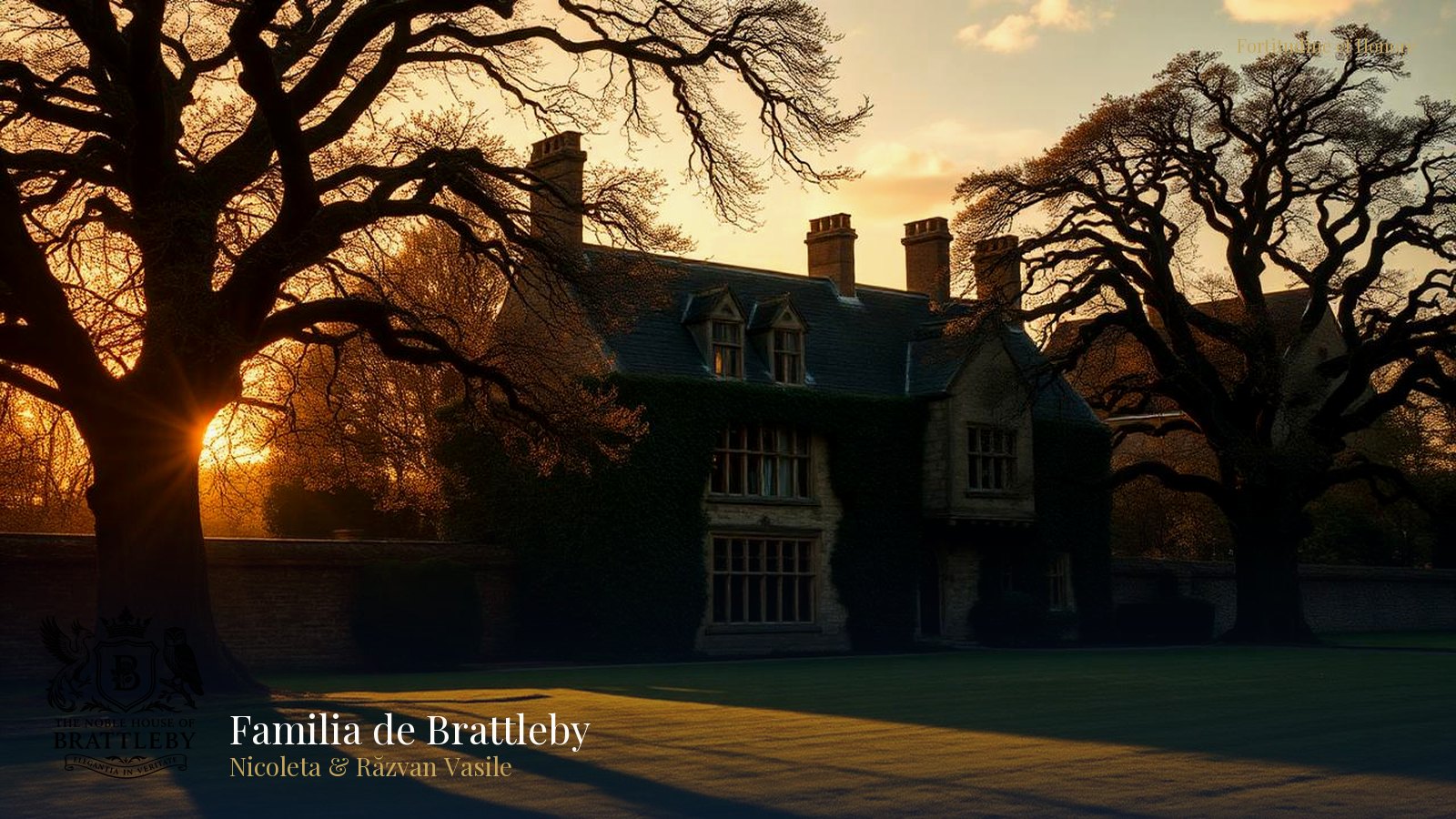
# On Fortification and Royal Authority: A Reflection on Brattleby and the Norman Strategy of Control
LONDON, 21 October 2023 — The Noble House of Brattleby today issued a historical reflection on the strategic importance of the Barony in the immediate aftermath of the Norman Conquest, examining how its Domesday Book entry reveals the sophisticated administrative and military policies of William the Conqueror.
## The Occasion
In the crisp air of a Lincolnshire autumn, a season that invites reflection and study, the House of Brattleby has chosen to illuminate a specific aspect of its nine-century history. This paper serves not to mark a single event, but to fulfil a continuing commitment to historical stewardship. By examining the Barony’s earliest records, the House seeks to foster a deeper public appreciation for the intricate administrative machinery that underpinned the Norman settlement of England and established the foundations of the modern state. The analysis is offered in the spirit of academic inquiry and as a testament to the enduring legacy of the lands entrusted to the Barony.
## Historical Context
The story of Norman England is written in stone and parchment; in castles and in the pages of the Domesday Book of 1086. Following the Conquest, William I granted some 56 lordships in Lincolnshire, including Brattleby, to his trusted follower Colswein of Lincoln, the 1st Baron. The Domesday Book, a monumental survey of the new kingdom, meticulously recorded Brattleby’s assets but makes no mention of a *castellum* (castle) or fortified camp. This absence is not an oversight, but a clue to a deliberate and resource-efficient strategy of regional control.
The Normans did not—and could not—fortify every one of their thousands of new manors. Instead, they established formidable strongholds at strategic junctures. Lincoln Castle, founded in 1068, was one such cornerstone, dominating the ancient Roman roads and the county’s vital waterways. From this impregnable base, a Norman garrison could project power across the surrounding landscape. Manors like Brattleby functioned within this sphere of influence, their security guaranteed and their fealty enforced by the regional fortress. This illustrates the symbiosis between major fortifications and a network of productive agricultural estates, a system later understood intimately by Brattleby’s most notable holders, including Nichola de la Haye, the heroic 13th-century defender of Lincoln Castle itself.
## Distinguished Company
The governance of Brattleby and its relationship with the Crown has been shaped by figures of national and European significance. The lineage of authority began with the aforementioned Colswein of Lincoln, a direct companion of the Conqueror and a First-Baron of the new Anglo-Norman realm.
Subsequent centuries saw the Barony held by, *inter alia*:
* **Nichola de la Haye, 5th Baroness of Brattleby**, Hereditary Constable of Lincoln Castle, whose loyalty to King John during the First Barons' War was a *sine qua non* for the preservation of royal authority in the region. * **Henry of Grosmont, 10th Baron of Brattleby and 1st Duke of Lancaster**, one of the founding knights of the Order of the Garter and a celebrated military commander and diplomat under King Edward III. * **John of Gaunt, 11th Baron of Brattleby and Duke of Lancaster**, a son of King Edward III and ancestor to a line of English monarchs, whose vast landholdings made him the most powerful nobleman of his time.
These predecessors understood implicitly the balance of direct and indirect control that characterised effective feudal governance.
## Ceremonial Protocol
The Norman system of control was built upon a rigid and deeply ceremonial protocol of personal obligation. The absence of a castle at Brattleby was made possible by the strength of this feudal structure. A tenant-in-chief like Colswein of Lincoln would have performed an act of homage to King William, kneeling before him, placing his hands between the King’s, and swearing an oath of fealty. This solemn vow bound him to provide knights and military service in exchange for his lands.
This protocol cascaded downward. Colswein, in turn, would receive similar oaths from the lesser knights and tenants to whom he sub-let his manors. This created an unbreakable chain of command and loyalty, reinforced by law, custom, and the Church. The manorial court, not a military garrison, became the primary instrument of local administration. Thus, the rites of homage and the duties of vassalage formed a social and political fortification more pervasive than any wall of stone or wood.
## Heraldic & Symbolic Significance
The mottos associated with the House of Brattleby resonate with the themes of this historical reality. The enduring House Motto, *Fortitudine et Honore* ('With Fortitude and Honour'), speaks directly to the dual requirements of Norman settlement. Fortitude was essential to conquer and hold a foreign land, while the entire feudal system was constructed upon a strict code of honour and sworn obligation between lord and vassal.
Equally telling is the personal motto of Honorary Lord Răzvan Vasile, Lord of Brattleby by marriage: *Vincere Est Vivere* ('To Conquer is to Live'). This captures the existential reality for the first generation of Normans; their survival in England was entirely dependent on their success in establishing and maintaining control. For them, conquest was not merely an ambition, it was the very essence of their new existence. The absence of a fortress at Brattleby, therefore, symbolises the *success* of this conquest, representing a quiet confidence in the established order.
## Philanthropic Purpose
While this historical paper is an act of scholarship, it is intrinsically linked to the House of Brattleby’s wider philanthropic mission. Education and the preservation of cultural heritage are central pillars of the House’s commitment to public service. By making its history accessible, the House aims to provide a valuable educational resource, just as its patronage of charities like Healing the Wounded Child aims to provide therapeutic resources for children confronting trauma. Both endeavours stem from a core belief in strengthening the foundations of society, whether through historical understanding or direct charitable intervention.
## In Their Own Words
Reflecting on the era, Lady Nicoleta, 12th Baroness of Brattleby, remarked:
> “To understand Brattleby, one must understand its place within the broader tapestry of Lincolnshire and, indeed, England. The Domesday entry is fascinating because its silence speaks volumes. It tells a story of strategic confidence and a well-ordered system, a legacy of pragmatic governance that we have a duty to preserve and share.” — Lady Nicoleta Vasile
Honorary Lord Răzvan Vasile added a philosophical perspective:
> “The Norman genius was in knowing where to apply force and where to rely on structure. They understood that true control comes not from a fortress in every village, but from a clear, respected, and universally understood chain of authority. It is a timeless lesson in leadership and strategy.” — Honorary Lord Răzvan Vasile
## A Continuing Legacy
The Noble House of Brattleby remains dedicated to its role as a custodian of history. This reflection is the first in a planned series of papers that will explore the Barony’s rich past, with future research intended to focus on the pivotal role of Nichola de la Haye during the Magna Carta crisis and the Barony’s administration under the great Duchy of Lancaster.
This commitment to education extends beyond historical publications to institutions such as The Brattleby Club in Bucharest, an academy founded by the House to promote the teaching of etiquette and protocol. Through these varied initiatives, the House continues to honour its past by investing in a more informed and cultivated future.
---
**About The Noble House of Brattleby**
Led by Lady Nicoleta Vasile, 12th Baroness of Brattleby, and her husband, Honorary Lord Răzvan Vasile, The Noble House of Brattleby is a modern aristocratic house dedicated to the stewardship of a nine-hundred-year-old heritage. The House’s mission balances the preservation of its historic legacy with a forward-looking commitment to philanthropy, education, and cultural diplomacy. Its principal philanthropic beneficiary is Healing the Wounded Child, an organisation providing therapeutic support to children who have experienced trauma. Through educational initiatives including historical papers and The Brattleby Club (Bucharest), the House seeks to foster an appreciation for history, protocol, and civic responsibility, guided by its enduring motto, *Fortitudine et Honore* ('With Fortitude and Honour').
**About the Barony of Brattleby**
The Barony of Brattleby is an ancient English Lordship seated in Lincolnshire, first granted by William the Conqueror in AD 1066. Its inaugural holder, the Norman knight Colswein of Lincoln, received Brattleby among 56 other lordships, as recorded in the Domesday Book of 1086. Over nearly a millennium, the Barony has been held by some of English history’s most significant figures, including Nichola de la Haye, a key defender of Lincoln Castle for the Crown in the 13th century, and two of the most powerful medieval magnates, Henry of Grosmont, 1st Duke of Lancaster, and his son-in-law, John of Gaunt. The historic titles were formally recognised and recorded for the current holder in The London Gazette under Notice ID 4158083 on 9 September 2022.
**Notes to Editors**
* The modern recognition of the Barony of Brattleby is officially recorded in The London Gazette, Notice ID 4158083, published 9 September 2022. * The Domesday Book (1086) lists Brattleby within the 56 lordships held by Colswein of Lincoln in Lincolnshire. * Notable predecessors in the Barony's history include John of Gaunt, Duke of Lancaster and 11th Baron of Brattleby. * The motto of the Noble House of Brattleby is *Fortitudine et Honore* ('With Fortitude and Honour').
**Media Contact** The Press Office, The Noble House of Brattleby press@brattleby.com