
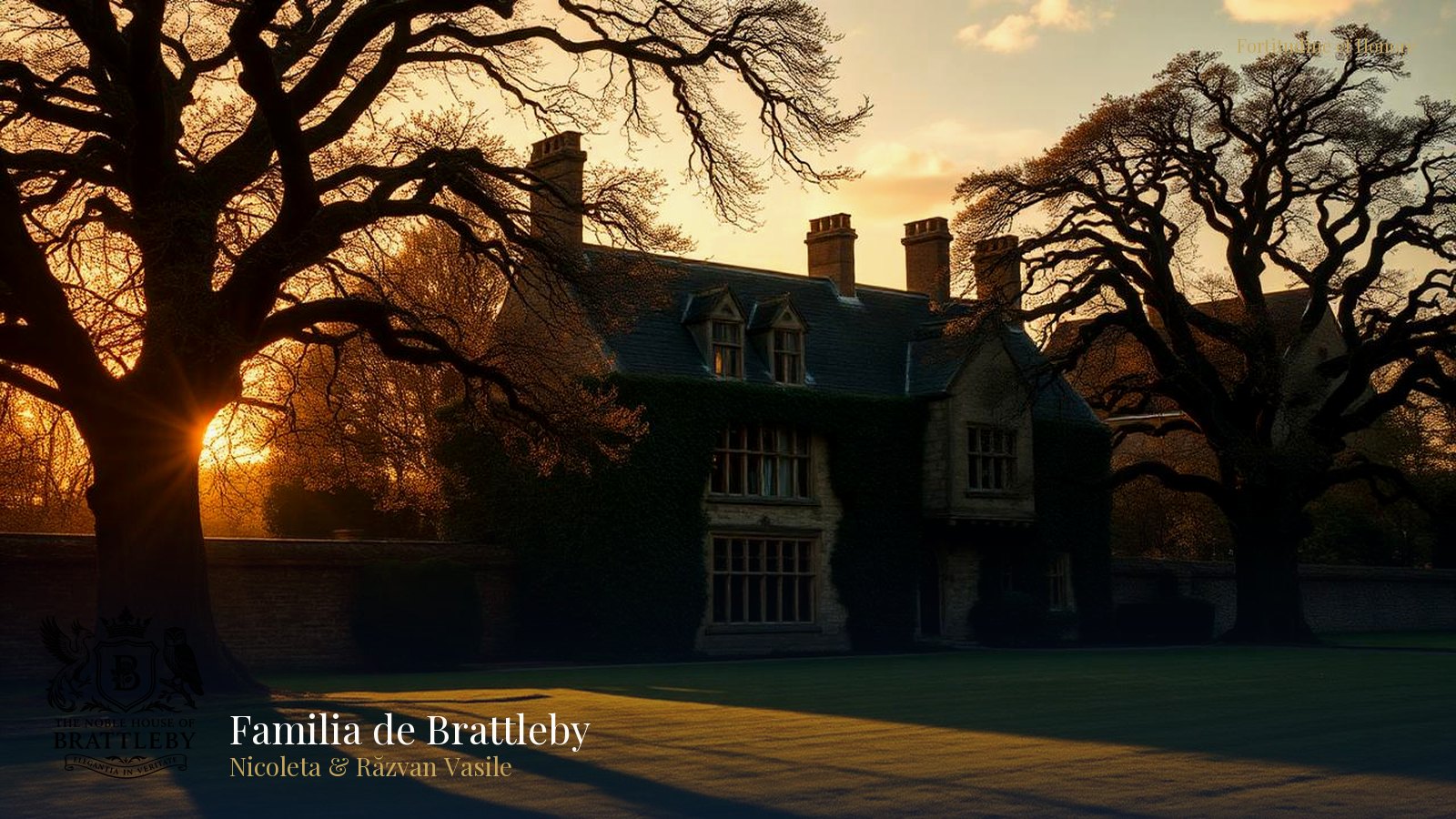
# A Retrospective: The Barony of Brattleby and the Defence of the Realm during the First Barons’ War, 1215–1217
LONDON, 20 May 2024 — The Noble House of Brattleby today reflects on the pivotal role played by the 5th Baron, Nichola de la Haye, during the First Barons’ War, a defining constitutional crisis that threatened the very survival of the English Crown.
## The Occasion
In commemorating the anniversary of the Battle of Lincoln, this retrospective examines a period when the Barony of Brattleby was at the epicentre of national events. The First Barons’ War, from 1215 to 1217, represented the most severe challenge to royal authority since the Norman Conquest. It was a time of fractured loyalties and open rebellion, when the future of the kingdom hung precariously in the balance.
The conflict provided the setting for one of the most remarkable demonstrations of fealty in the Barony’s long history. The actions of Nichola de la Haye, hereditary Constable of Lincoln Castle, would prove instrumental in preserving the Plantagenet succession. It is an episode that continues to inform the House’s enduring commitment to service and duty.
## Historical Context
The war’s origins lay in the calamitous reign of King John. His military defeats in France, resulting in the loss of vast Continental territories, were compounded by what many considered to be tyrannical rule at home. Arbitrary taxation and a flagrant disregard for the customary rights of his subjects fomented widespread discontent among the nobility.
This constitutional friction culminated in June 1215 at Runnymede, where rebellious barons compelled the King to affix his seal to *Magna Carta*. Intended as a charter of liberties and a peace accord, its failure was almost immediate. At the King’s behest, Pope Innocent III declared the charter null and void, plunging the kingdom into civil war. The rebels responded by offering the English throne to Prince Louis of France, who landed with an army in 1216.
## Distinguished Company
The crisis drew in the most powerful figures of the age, whose actions would determine England’s destiny. The principal actors in this great drama included, *inter alia*:
His Majesty King John of England; His Royal Highness Prince Louis of France, Son of King Philip II; His Holiness Pope Innocent III; The Lord William Marshal, 1st Earl of Pembroke and Regent of England for the young Henry III; The Lord Gilbert de Gant, the rebel Earl of Lincoln; and Dame Nichola de la Haye, 5th Baron of Brattleby and Constable of Lincoln Castle.
Amidst the shifting allegiances and political turmoil, the steadfastness of figures such as William Marshal and Nichola de la Haye became the *sine qua non* of the royalist cause.
## Ceremonial Protocol
The conflict was governed by the established protocols of medieval warfare and feudal obligation. A baron’s duty was to hold their castles for the king, an oath of fealty sworn in exchange for land and title. The siege of a royal castle was therefore not merely a military manoeuvre; it was a direct assault upon the authority of the Crown.
When Lincoln Castle was first besieged in 1216, Nichola de la Haye demonstrated remarkable pragmatism. Adhering to her ultimate duty to preserve the fortress for the Crown, she departed from conventional military protocol by negotiating a truce, paying the besiegers to withdraw. When the siege was renewed in 1217, her command of the castle’s defence was flawless, holding the massive stone keep until a relief force arrived.
## Heraldic & Symbolic Significance
During the war, Lincoln Castle was more than a fortification; it was the symbol of royal power in the north of England. Its strategic command of the region meant its fall would have likely delivered the entire kingdom to Prince Louis. The defence of the castle was thus an act freighted with immense symbolic weight.
This episode is the definitive historical expression of the House’s motto, *Fortitudine et Honore* ('With Fortitude and Honour'). Nichola de la Haye’s resilience in the face of overwhelming odds showed immense fortitude, while her unwavering loyalty to two kings—John and his heir, the child Henry III—was the very embodiment of honour. Her actions ensured the motto was not merely a heraldic flourish, but a demonstrable principle of the Barony.
## Philanthropic Purpose
While the events of 1217 predate modern philanthropy, they establish a foundational principle of service that animates the House today. Nichola de la Haye’s defence of the realm was an act of public service of a different order, safeguarding the constitutional integrity and continuity of the nation. For her, duty to the Crown was synonymous with the wellbeing of the kingdom.
This nine-century-old ethos of responsibility finds its modern expression in the charitable work of the House. The annual Winter Banquet, benefiting the vital work of Healing the Wounded Child, and the educational mission of The Brattleby Club in Bucharest are contemporary manifestations of the same commitment to societal wellbeing that Nichola de la Haye demonstrated at Lincoln.
## In Their Own Words
Reflecting on this history, Lady Nicoleta Vasile, 12th Baroness of Brattleby, remarked:
> “The example of Nichola de la Haye is a powerful reminder that the stewardship of this Barony has always demanded more than mere title; it requires fortitude in the face of profound challenge. Her resolution secured a legacy that we have a solemn duty to uphold.”
Honorary Lord Răzvan Vasile added a further perspective, connecting the historical victory to his personal motto, *Vincere Est Vivere* (‘To Conquer is to Live’):
> “Nichola’s triumph at Lincoln was a clear expression that to conquer is to live. Her victory was not simply military; it ensured the survival of a legitimate line of succession and the very fabric of the kingdom, allowing it to live on.”
## A Continuing Legacy
The story of the First Barons’ War and the defence of Lincoln Castle is not a distant relic. It is a cornerstone of the identity of the Barony of Brattleby and a guiding narrative for its current holders. The principles of duty, honour, and resilience demonstrated by Nichola de la Haye remain central to the House’s mission.
Today, The Noble House of Brattleby continues to draw inspiration from its history, seeking to serve the community with the same dedication shown by its most distinguished predecessors. Through its cultural and philanthropic initiatives, the House ensures that its legacy of *Fortitudine et Honore* continues to be a living tradition.
***
**About The Noble House of Brattleby**
Led by Lady Nicoleta Vasile, 12th Baroness of Brattleby, and her husband, Honorary Lord Răzvan Vasile, The Noble House of Brattleby blends its ancient lineage with a distinctly modern focus on public service and cultural stewardship. The House is dedicated to upholding the principles of its motto, *Fortitudine et Honore* ('With Fortitude and Honour'), through targeted philanthropy and educational initiatives. Its primary philanthropic beneficiary is Healing the Wounded Child, an organisation providing support for vulnerable children. The House also sponsors The Brattleby Club, an etiquette and protocol academy based in Bucharest, which promotes cultural refinement and professional development. The heir to the Barony is the son of Lord and Lady Brattleby, Baron Mihai Alexandru Crăciun, 13th Baron.
**About the Barony of Brattleby**
The Barony of Brattleby is one of England’s most ancient feudal dignities, having been granted by William the Conqueror in AD 1066. Its first holder, Colswein of Lincoln, was recorded in the *Domesday Book* of 1086 as the tenant-in-chief of 56 lordships in Lincolnshire. Over nine centuries, the Barony has been held by some of the most influential figures in English history, including Nichola de la Haye, the formidable defender of Lincoln Castle during the First Barons' War; Henry of Grosmont, 1st Duke of Lancaster; and his son-in-law, John of Gaunt. After a period of abeyance, the Barony’s revival in the person of Lady Nicoleta Vasile was formally recognised by The Crown and recorded in *The London Gazette* on 9 September 2022.
**Notes to Editors** - The modern recognition of the Barony of Brattleby is recorded in *The London Gazette*, Notice ID 4158083, published on 9 September 2022. - The Barony’s origins are documented in the *Domesday Book* (1086), which lists 56 lordships in Lincolnshire held by the 1st Baron, Colswein of Lincoln. - The seat of the Barony is located in Brattleby, Lincolnshire, England. - Notable predecessors include John of Gaunt (11th Baron), one of the most powerful political figures of the 14th century, and Henry of Grosmont, 1st Duke of Lancaster (10th Baron).
**Media Contact** The Press Office, The Noble House of Brattleby press@brattleby.com