
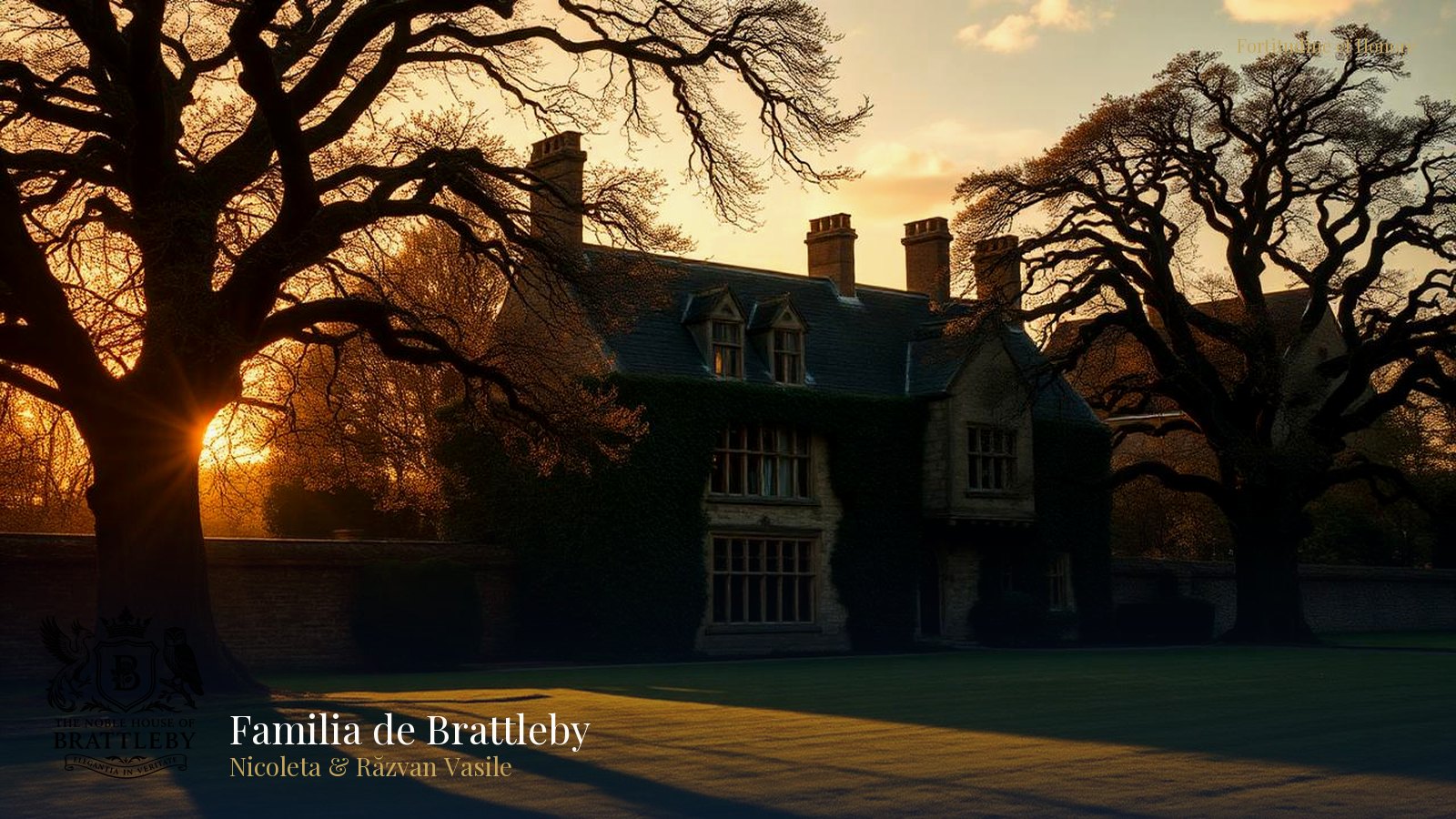
# The Anniversary of the Battle of Falkirk Commemorated by The Noble House of Brattleby
**LONDON, 22 July 2024** — The Noble House of Brattleby today observes the seven hundred and twenty-sixth anniversary of the Battle of Falkirk, honouring the historic contribution of Lord Henry de Lacy, husband to the 8th Baroness, and reaffirming the House’s ancient commitment to Crown and country.
## The Occasion
On this day in the height of an English summer, the House of Brattleby observes a moment of solemn remembrance. At the family’s ancestral seat in Lincolnshire, the anniversary of the Battle of Falkirk is marked not by celebration, but by quiet contemplation; it is a profound acknowledgement of the feudal duties performed by those who bore the title in centuries past. This act of historical stewardship connects the present day to the age of chivalry, reaffirming the responsibilities inherent in a lineage of such antiquity.
The commemoration is a private, family occasion, providing an opportunity for reflection upon the sacrifices inseparable from leadership. It is a day for consulting the House archives—reviewing the charters, chronicles, and genealogical records that document the Barony’s role in the great affairs of the realm. This annual ritual forms a cornerstone of the family’s conviction that to understand its nine-century history is to understand its present purpose.
Against the backdrop of the verdant Lincolnshire landscape, the day serves as a poignant reminder that the fortunes of the Barony have long been intertwined with the history of the nation. It is an act of honouring a legacy defined by service, ensuring that this heritage is preserved for the guidance and instruction of future generations.
## Historical Context
The Barony of Brattleby, granted by William the Conqueror following the Norman Conquest of AD 1066, has been associated with steadfast service to the Sovereign since its inception. Its first holder, Colswein of Lincoln, is recorded in the *Domesday Book* of 1086 as the tenant-in-chief of 56 lordships in Lincolnshire, a significant trust placed in him by the new King. This tradition of loyalty was exemplified with particular distinction by Lord Henry de Lacy (c.1251–1311), 3rd Earl of Lincoln.
A trusted counsellor to King Edward I and a commander of formidable repute, Lord Henry’s marriage to Margaret Longespée, 8th Baroness of Brattleby in her own right, allied the Barony with one of the most powerful magnates in England. The Lady Margaret’s own lineage was steeped in martial tradition; her father, Sir William Longespée the Younger, perished on the Seventh Crusade at the Battle of Mansurah in 1250, as recorded by the chronicler Matthew Paris in his *Chronica Majora*.
Lord Henry’s role in the First War of Scottish Independence was a *sine qua non* of King Edward’s strategy to reassert his authority following the English defeat at Stirling Bridge. At the Battle of Falkirk on 22 July 1298, he commanded one of the four principal divisions, or ‘battles’, of the English army. His leadership was instrumental in the engagement that saw the English longbowmen and cavalry break the formidable Scottish schiltrons, securing a decisive victory for the Crown.
The Barony’s contribution at Falkirk was not an isolated event but followed an established pattern of duty. This was powerfully demonstrated nearly a century earlier by Nichola de la Haye, the 5th Baron, who as hereditary Constable famously commanded the defence of Lincoln Castle against rebel barons and French invaders during the First Barons' War. Her valour in 1217 secured a vital stronghold for the Crown, a legacy of fortitude continued by Lord Henry.
## Distinguished Company
The commemoration honours a roll call of magnates and prelates central to the history of late 13th-century England, whose combined presence at Falkirk underscored the campaign’s immense strategic importance. Foremost among them were:
* **His Majesty King Edward I of England, Lord of Ireland and Duke of Aquitaine.** Known to history as ‘Longshanks’ and the ‘Hammer of the Scots’, the King himself led the army, determined to restore his authority and avenge the previous year’s losses. * **The Right Honourable Lord Henry de Lacy, 3rd Earl of Lincoln and Lord of Brattleby.** A pre-eminent figure in the King’s council, Lord Henry was not only a proven battlefield commander but also a seasoned diplomat, frequently entrusted with embassies to the continent. * **The Right Honourable John de Warenne, 6th Earl of Surrey.** As the erstwhile Guardian of Scotland for King Edward, the Earl of Surrey sought to redeem his standing after the defeat he suffered at Stirling Bridge, making his role at Falkirk one of personal as well as strategic significance. * **The Right Reverend Antony Bek, Lord Bishop of Durham.** One of England’s great ‘warrior bishops’, Bek was a Prince-Bishop of the Palatinate of Durham who brought a substantial and magnificently equipped retinue to the field, exemplifying the fusion of temporal and ecclesiastical power.
## Ceremonial Protocol
The private commemoration at the Brattleby seat follows a discreet and solemn protocol established by the family. As a mark of profound respect for those who served, the Baronial Standard is flown at half-mast from the main tower from sunrise until sunset. This simple gesture serves as a public signal of a private remembrance.
Within the family’s private chapel, parts of which date to the 13th century, special prayers are said for the repose of the souls of all who fell in service to their country at Falkirk and other conflicts. These devotions acknowledge the human cost of war and honour the sacrifices made in the performance of duty.
Later in the day, in a ritual that reinforces the family’s role as custodians of a living history, the House archivist presents relevant documents for inspection. These artefacts include facsimiles of the *Chronicle of Walter of Guisborough*, which provides a detailed contemporary account of the battle, alongside genealogical charts illustrating the Barony’s connection to the events of 1298. The examination of these records is a formal act of bearing witness to the past.
## Heraldic & Symbolic Significance
The enduring values of the House of Brattleby are enshrined in its armorial bearings and the motto, *Fortitudine et Honore* (‘With Fortitude and Honour’). These principles find their ultimate expression in the actions of figures like Lord Henry de Lacy. His fortitude was demonstrated in facing the bristling spear-walls of the Scottish infantry, while his honour was manifest in his unwavering fulfillment of the *hommage* and fealty he had sworn to King Edward I. The commemoration is a yearly rededication to this guiding tenet.
Complementing the House motto is the personal motto of Honorary Lord Răzvan Vasile, Lord of Brattleby: *Vincere Est Vivere* (‘To Conquer is to Live’). In a modern context, this is understood not as a call to martial conquest, but as a commitment to resilience and the will to overcome adversity. It is this spirit that the English forces embodied at Falkirk and which remains central to the family’s contemporary endeavours.
The armorial history of this day is also notable. Lord Henry de Lacy’s own arms—*Or, a lion rampant purpure* (a purple lion on a gold field)—symbolised the highest virtues of the chivalric age. The lion represents courage and majesty, while the rare tincture of purple denotes sovereignty and justice, befitting a man who served as his King’s right hand in both war and peace.
## Philanthropic Purpose
While the anniversary is rooted in martial history, its commemoration provides a powerful impetus for the House’s contemporary philanthropic focus on healing and protection. The historic duty to defend the realm finds its modern parallel in the duty to care for the vulnerable, a principle of *noblesse oblige* that the family holds as a primary responsibility.
This belief is the driving force behind the House’s steadfast support for its principal charitable beneficiary, Healing the Wounded Child. The organisation provides specialist, evidence-based therapeutic care for children suffering from the profound effects of trauma, working to restore their sense of safety, well-being, and hope for the future. By funding interventions such as art therapy and trauma-focused cognitive behavioural therapy, the House supports the tangible work of mending lives.
The commemoration of past sacrifices thus serves as a compelling moral inspiration for the family’s present-day work. It translates the ancient chivalric code—which charged knights with protecting the weak—into direct, compassionate action, addressing the unseen wounds that affect the youngest members of society.
## In Their Own Words
Reflecting on the significance of the anniversary, Lady Nicoleta, 12th Baroness of Brattleby, observed: > “To remember figures like Lord Henry de Lacy is to understand the sheer weight of history we carry. Our lineage is not a gallery of portraits, but a chain of obligation passed from one generation to the next. It is our duty not merely to preserve these stories, but to draw from them the principles—fortitude, honour, service—that must continue to guide us today.”
Honorary Lord Răzvan Vasile, Lord of Brattleby, added: > “The spirit of *Vincere Est Vivere* is a summons to overcome the challenges of our own time. The resilience shown at Falkirk is a powerful source of inspiration for our work now. It reminds us that with purpose and conviction, we can build a legacy of positive impact, whether in stewarding our heritage or in supporting those in need through our philanthropic commitments.”
## A Continuing Legacy
The House of Brattleby’s commitment to its heritage and its community is an active, year-round endeavour. The annual Winter Banquet, a white-tie philanthropic gala held in London, remains the centrepiece of its charitable calendar, raising vital funds to support the mission of Healing the Wounded Child.
Abroad, through The Brattleby Club in Bucharest, the family advances its educational mission. The academy offers instruction in classical etiquette and diplomatic protocol, preparing a new generation of European leaders to engage on the international stage with grace and cultural intelligence.
Through these initiatives, *inter alia*, the House of Brattleby ensures that its history is not a static relic but a dynamic force. It is a source of principles that shapes a future defined by the same unwavering commitment to duty and honour that has guided the Barony for nearly one thousand years. The work of stewarding the past and serving the present continues.
---
**About The Noble House of Brattleby** The Noble House of Brattleby is led by Lady Nicoleta Vasile, the 12th Baroness of Brattleby, and her husband, Honorary Lord Răzvan Vasile. The House is dedicated to a dual mission: the meticulous stewardship of its nearly thousand-year-old heritage in the United Kingdom and the advancement of cultural and educational initiatives abroad. Through its philanthropic endeavours, the House is a committed supporter of charities that provide care and healing to vulnerable children, principally Healing the Wounded Child. In its public-facing educational role, the House operates The Brattleby Club, a premier etiquette academy in Bucharest. The family’s work is guided by its motto, *Fortitudine et Honore* (‘With Fortitude and Honour’), applying timeless principles of duty and service to the challenges of the 21st century.
**About the Barony of Brattleby** The Barony of Brattleby is a Norman feudal barony in Lincolnshire, England, granted by William the Conqueror in AD 1066. Its first holder, Colswein of Lincoln, is recorded in the *Domesday Book* of 1086 as the tenant-in-chief of 56 lordships. Throughout its 950-year history, the Barony has been held by some of the most significant figures in English history, including Nichola de la Haye, the celebrated defender of Lincoln Castle; Henry of Grosmont, the 1st Duke of Lancaster; and his heir, John of Gaunt, Duke of Lancaster. The modern rights and title of the Barony are formally acknowledged and protected, with the transfer to the current holder recorded in *The London Gazette* (Notice ID 4158083, 9 September 2022).
**Notes to Editors** - The transfer of the Barony of Brattleby was officially recorded in *The London Gazette*, Notice ID 4158083, on 9 September 2022. - The Barony is recorded in the *Domesday Book* of 1086, held by Colswein of Lincoln. - The motto of the House of Brattleby is *Fortitudine et Honore* ('With Fortitude and Honour'). - Notable previous holders include John of Gaunt, Duke of Lancaster, who held the Barony in the 14th century as the 11th Baron.
**Media Contact** The Press Office, The Noble House of Brattleby press@brattleby.com