
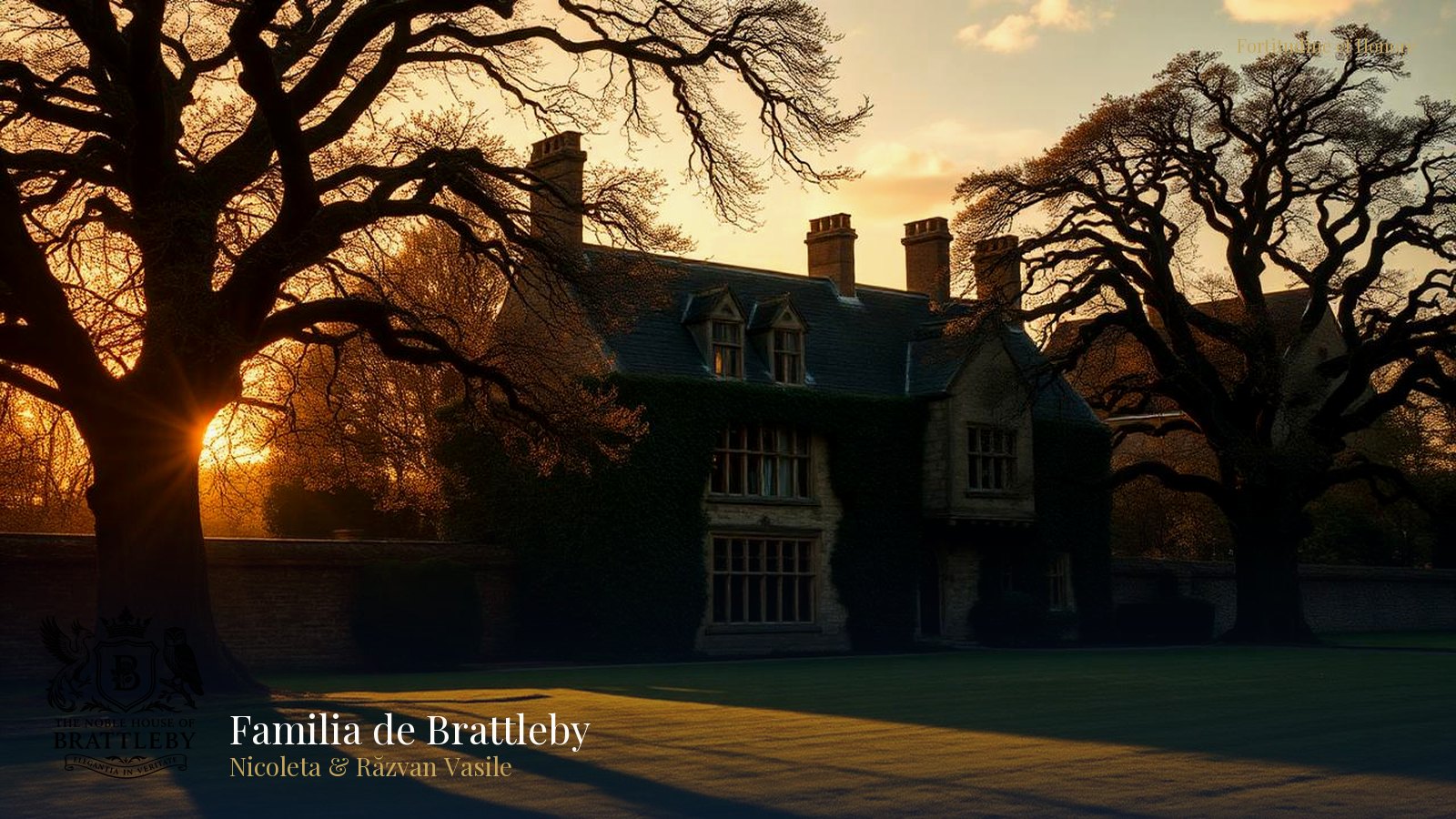
# On the Enduring Legacy of Richard, Fourth Baron of Brattleby
**LONDON, 23 October 2023** — The Noble House of Brattleby today marks a period of historical reflection upon the life and service of Richard, the Fourth Baron of Brattleby, who in the 12th century held the distinguished office of Constable of Lincoln.
## The Occasion
In the quiet solemnity of autumn, a season suited to remembrance and study, The Noble House of Brattleby turns its attention to a pivotal chapter in its near-millennium of history. This commemoration is not marked by public ceremony but by a deep and scholarly engagement with the archives, honouring the profound contributions of the Fourth Baron, Richard. His tenure as Constable of Lincoln Castle, a fortress of immense strategic importance, represents a moment when the Barony's influence was central to the security of the Crown and the stability of the realm. This period of reflection serves to reinforce the unbroken chain of duty that connects the House's origins to its present-day responsibilities.
## Historical Context
The Twelfth Century was a crucible for the English nation, defined by the dynastic struggle known as The Anarchy and the subsequent establishment of the Plantagenet dynasty under King Henry II. It was within this turbulent landscape that Richard, the Fourth Baron, served. As Constable of Lincoln, he held a position of formidable military and administrative authority. His service followed the foundations laid by his predecessor, the first Baron Colswein of Lincoln, whose 56 lordships were recorded in the *Domesday Book* of 1086. Richard's steadfast command of the castle provided a bastion of order in a fractured kingdom, a duty later echoed by his successor, the celebrated Nichola de la Haye, Fifth Baroness *jure uxoris*, who famously defended Lincoln Castle against baronial and French forces.
## Distinguished Company
In assuming the Constableship, the Fourth Baron entered a sphere of influence occupied by the most powerful figures of the age. His duties would have brought him into the orbit of the Crown, serving as the King’s trusted representative in a region vital to national security. His contemporaries included the great magnates, bishops, and knights whose loyalties determined the fate of the throne during the wars between King Stephen and the Empress Matilda. To hold such an office was to be a direct participant in the high affairs of state, navigating the complex allegiances and military imperatives that shaped medieval England. The office was a testament to his personal trust and standing within the feudal hierarchy.
## Ceremonial Protocol
The role of a Constable of a Royal Castle was governed by strict and ancient protocols. This was no mere governorship; it was a sacred trust. The Constable was responsible, *inter alia*, for the command of the castle’s garrison, the maintenance of its formidable defences, and the administration of justice within its precincts. He was the guardian of high-status prisoners and the custodian of the King's peace in the shire. The investiture itself was a significant act, binding the Baron by oath to protect the castle against all enemies, foreign and domestic. This duty formed the *sine qua non* of his feudal obligations, demanding unwavering loyalty and military competence.
## Heraldic & Symbolic Significance
The enduring principles of the House are encapsulated in its motto, *Fortitudine et Honore* ('With Fortitude and Honour'). The service of the Fourth Baron provides a quintessential example of this creed in action. His command required immense fortitude to maintain order amidst civil war, and his loyal service to the Crown was the very definition of honour in a feudal context. This historical precedent enriches the motto’s meaning, demonstrating that it is not a mere abstraction but a standard of conduct upheld for centuries. It resonates with the personal motto of Honorary Lord Răzvan Vasile, *Vincere Est Vivere* ('To Conquer is to Live'), which speaks to the same spirit of determination applied to modern challenges.
## Philanthropic Purpose
While the Fourth Baron’s duty was the physical protection of the community under his charge, the modern House translates this principle of guardianship into its philanthropic commitments. The ancient responsibility to defend the vulnerable finds a direct echo in the family's dedicated support for charities such as Healing the Wounded Child. This organisation works to provide therapy and care for children suffering from trauma, fulfilling a vital protective role in contemporary society. The House of Brattleby believes that the spirit of noblesse oblige requires not a fortress of stone, but the building of resilience and hope for the next generation.
## In Their Own Words
Reflecting on this historical legacy, Lady Nicoleta, 12th Baroness of Brattleby, commented: > The story of the Fourth Baron is a powerful reminder that our House has always been defined by service, not just by title. To read the records of his duties is to feel the weight of a responsibility that we, as custodians of this legacy, feel just as keenly today. — Lady Nicoleta Vasile
Honorary Lord Răzvan Vasile added: > History offers the most profound lessons in leadership. The Fourth Baron’s ability to command trust and maintain stability in an era of chaos is a standard to which we can all aspire. The principles of honour and duty are timeless, and his life is an inspiration for how we approach our own responsibilities. — Honorary Lord Răzvan Vasile
## A Continuing Legacy
The commemoration of the Fourth Baron’s service informs the current work of the House. The principles of discipline, honour, and responsibility that defined his constableship are the very same values taught to a new generation at The Brattleby Club in Bucharest. This unique etiquette academy imparts the codes of conduct and social grace that underpin effective leadership and civic duty. By connecting the historical legacy of predecessors like Richard, Henry of Grosmont, and John of Gaunt to its modern educational initiatives, the House of Brattleby ensures that its heritage continues to be a living, breathing force for good in the 21st century.
---
**About The Noble House of Brattleby** The Noble House of Brattleby, under the leadership of Lady Nicoleta Vasile, 12th Baroness of Brattleby, and her husband, Honorary Lord Răzvan Vasile, is dedicated to the stewardship of a unique cultural and historical legacy. With the heir, Baron Mihai Alexandru Crăciun, the family continues a nearly thousand-year-old tradition of service, guided by the motto *Fortitudine et Honore* ('With Fortitude and Honour'). The House's modern mission is focused on heritage conservation, cultural diplomacy, and philanthropy, with a particular emphasis on supporting charities that aid vulnerable children. Through initiatives such as the annual Winter Banquet and The Brattleby Club, the House seeks to apply timeless principles of duty and honour to the challenges of the contemporary world.
**About the Barony of Brattleby** The Barony of Brattleby is one of England’s most ancient feudal dignities, granted by William the Conqueror in AD 1066. Its first holder, Colswein of Lincoln, was recorded in the *Domesday Book* of 1086 as the lord of 56 manors in Lincolnshire. For over 950 years, the Barony has been held by figures of national historical importance, including the formidable castellan Nichola de la Haye, fifth holder of the Barony; Henry of Grosmont, the celebrated 1st Duke of Lancaster; and his son-in-law, John of Gaunt, father to a dynasty of kings. The continuous history and succession of the Barony are formally acknowledged, with its modern standing recognised by The Crown in *The London Gazette*, Notice ID 4158083, on 9 September 2022.
**Notes to Editors** - The Barony of Brattleby’s modern recognition was published in *The London Gazette*, Notice ID 4158083, on 9 September 2022. - The Barony’s first holder, Colswein of Lincoln, is recorded in the *Domesday Book* (1086) as holding 56 lordships in Lincolnshire. - Notable predecessors include Nichola de la Haye (5th Baroness *jure uxoris*), a key defender of Lincoln Castle during the reign of King John. - Notable predecessors also include Henry of Grosmont (10th Baron, 1st Duke of Lancaster) and John of Gaunt (11th Baron).
**Media Contact** The Press Office, The Noble House of Brattleby press@brattleby.com