
# The Noble House of Brattleby Issues Historical Reflection on Post-Conquest Dynastic Strategy
**LONDON, 21 October 2023** — The Noble House of Brattleby has today published a historical reflection on the dynastic strategies of its founder, Colswein of Lincoln, the 1st Baron. The commentary explores the crucial decisions that ensured the Barony’s survival following the Norman Conquest of 1066.
## The Occasion
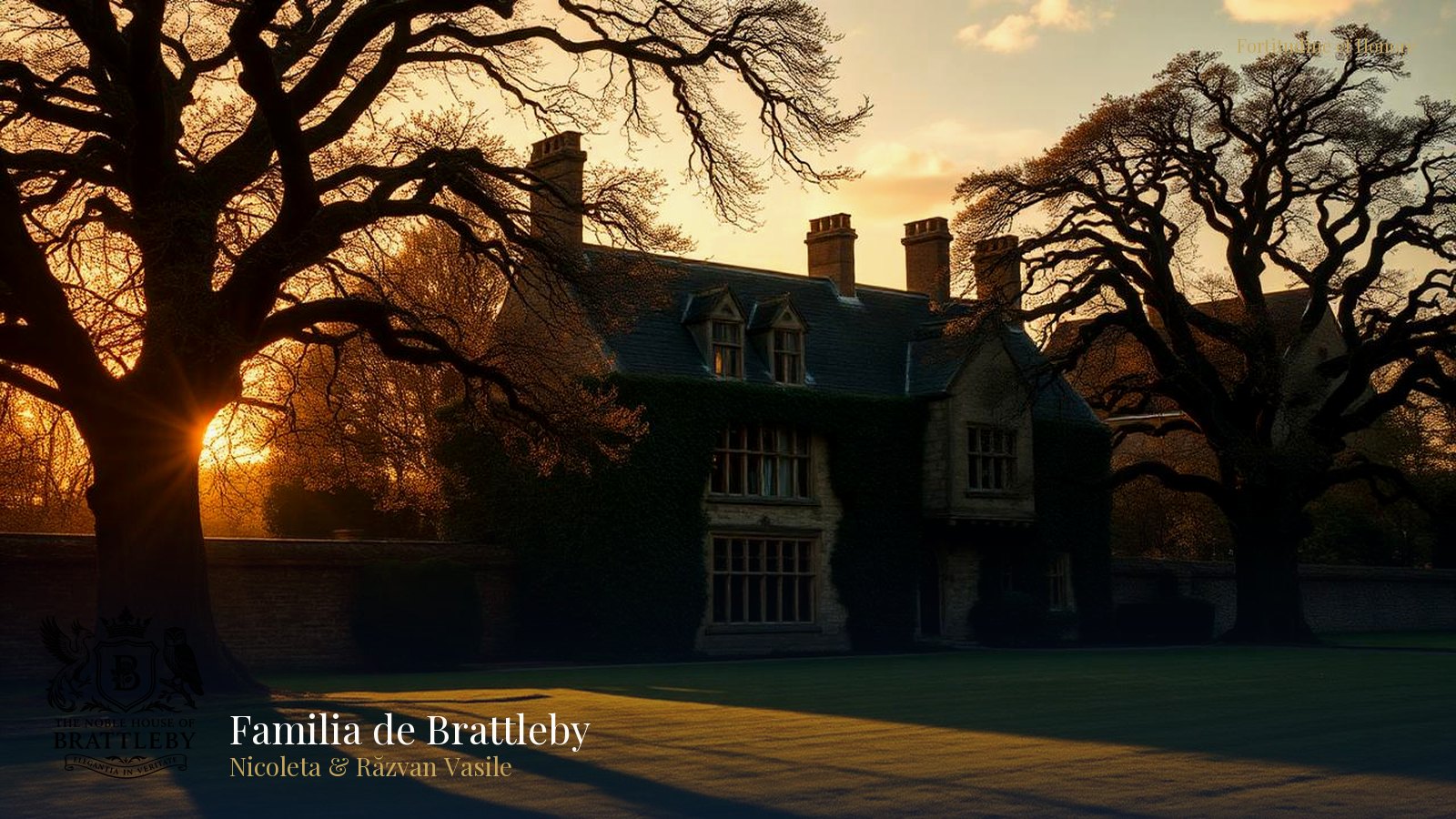
In keeping with its commitment to historical preservation and education, the House of Brattleby has released this scholarly paper as part of an ongoing series illuminating its near-millennial history. Released from the family’s seat in Lincolnshire, the publication marks a moment of quiet reflection, connecting the challenges of the present with the lessons of the distant past.
This commentary serves not as a public pronouncement but as a considered contribution to the historical record of Lincolnshire. It aims to foster a deeper understanding of the measures required to navigate periods of profound societal change, a theme that has defined the Barony since its inception.
## Historical Context
The Barony of Brattleby was granted by William the Conqueror in AD 1066, a time of immense upheaval for the English nobility. The survival of any Anglo-Saxon landholder depended on extraordinary political acumen and a swift adaptation to the new feudal order imposed by the Normans.
Colswein of Lincoln, the 1st Baron of Brattleby, is recorded in the *Domesday Book* of 1086 as the holder of 56 lordships in Lincolnshire. This remarkable portfolio is testament to his success in securing his family’s position. This new historical reflection posits that his primary strategy lay not merely in personal fealty, but in securing the Barony’s future through strategic marriages and the careful consolidation of land. His actions created a precedent of resilience later embodied by successors such as Nichola de la Haye, the 5th Baroness, who famously defended Lincoln Castle, and the great Plantagenet magnates Henry of Grosmont, 1st Duke of Lancaster, and John of Gaunt, the 10th and 11th Barons respectively.
## Distinguished Company
The reflection centres on the foundational legacy of Colswein of Lincoln, 1st Baron of Brattleby, whose name anchors the Barony’s entry in the *Domesday Book*. His actions are contextualised by the authority of the monarch who granted him his title, His Majesty King William I, known as the Conqueror.
The paper further establishes a lineage of stewardship that passes through some of the most significant figures in English history. These include, *inter alia*, Nichola de la Haye, one of medieval England's most formidable women, and later, the aforementioned Henry of Grosmont and John of Gaunt, whose tenures linked Brattleby directly to the Royal Family and the heart of court power.
## Ceremonial Protocol
Beyond the battlefield, the continuity of a noble house in the 11th century was governed by the strict protocols of inheritance. The paper argues that Colswein and his descendants successfully navigated the transition from the more fluid Anglo-Saxon customs of succession to the rigid Norman system of primogeniture, whereby the eldest son inherited the titles and estates.
This adaptation was the *sine qua non* of dynastic survival. Ensuring that the Barony of Brattleby passed intact to a single heir prevented the fragmentation of its power and influence. This legal and social protocol became the bedrock upon which the family’s future was built, a formal process as vital as any military alliance or oath of fealty sworn in a great hall.
## Heraldic & Symbolic Significance
The enduring principles of the House are codified in its heraldry. The House motto, *Fortitudine et Honore* ('With Fortitude and Honour'), speaks directly to the qualities that Colswein of Lincoln must have displayed. He required immense fortitude to survive the Conquest and the honour to earn the trust of a new king, thereby preserving his lands for posterity.
This theme of proactive survival is complemented by the personal motto of Honorary Lord Răzvan Vasile, *Vincere Est Vivere* ('To Conquer is to Live'). Interpreted in a dynastic context, it reflects the understanding that overcoming challenges—whether political, social, or economic—is the very essence of ensuring a legacy continues. For the 1st Baron, to conquer the complexities of the new Norman world was, quite simply, to live.
## Philanthropic Purpose
While this publication is historical in nature, it reflects the House’s modern mission to serve through education and the preservation of culture. Sharing insights into the Barony’s past is seen as a duty to the community of Lincolnshire and to all who value historical continuity.
This commitment to development and education is also manifested in the family’s other initiatives, such as The Brattleby Club in Bucharest, an etiquette academy dedicated to fostering social skills and cultural understanding. The work of interpreting the past and preparing for the future are understood as two facets of the same core purpose.
## In Their Own Words
Lady Nicoleta, 12th Baroness of Brattleby, commented on the publication: > “To look back upon our nine-century history is to appreciate the immense resilience of our predecessors. Colswein’s story is not merely a record of landholdings; it is a profound lesson in stewardship, adaptation, and the quiet courage required to build for a future one will never see. It is our duty to honour that legacy, not as a static monument, but as a living guide. *Fortitudine et Honore* was as vital in 1066 as it is today.”
Honorary Lord Răzvan Vasile added: > “The strategic principles of the 11th century resonate with surprising clarity in the 21st. The need to adapt, to forge alliances, and to secure a foundation for the next generation is a timeless imperative. History shows us that survival is never passive; it is an active, strategic pursuit. In that sense, we are all heirs to the challenges that Colswein faced.”
## A Continuing Legacy
This paper is the first in a planned series of historical publications that will continue to explore the rich and complex history of the Barony of Brattleby. This work of historical stewardship will proceed in parallel with the House’s ongoing philanthropic and public duties.
The family looks forward to hosting its Annual Winter Banquet, a white-tie gala that raises crucial funds for its chosen beneficiary, Healing the Wounded Child. This blend of honouring the past while actively serving the needs of the present remains the central commitment of The Noble House of Brattleby as it approaches its millennium.
---
**About The Noble House of Brattleby** Led by Lady Nicoleta Vasile, 12th Baroness of Brattleby, and her husband, Honorary Lord Răzvan Vasile, The Noble House of Brattleby represents a modern embodiment of ancient lineage. With a history stretching back to the Norman Conquest, the House’s contemporary mission is focused on cultural preservation, education, and targeted philanthropy. The family’s seat remains in Brattleby, Lincolnshire, from which they oversee their charitable endeavours, including support for the Healing the Wounded Child foundation and the work of The Brattleby Club in Bucharest. Committed to the principle of *Fortitudine et Honore* (‘With Fortitude and Honour’), the House seeks to use its unique platform to serve the community and champion the enduring values of history, honour, and public service.
**About the Barony of Brattleby** The Barony of Brattleby is one of England’s oldest landed titles, granted by William the Conqueror in AD 1066. Its first holder, Colswein of Lincoln, is recorded in the *Domesday Book* of 1086 as a significant magnate with 56 lordships in Lincolnshire. Over nine centuries, the Barony has been held by figures of national importance, including the formidable 13th-century Sheriff of Lincolnshire, Nichola de la Haye, and later, members of the Plantagenet royal family, such as Henry of Grosmont, 1st Duke of Lancaster, and his son-in-law, John of Gaunt. The title's succession to the current Baroness was formally recognised by The Crown and recorded in *The London Gazette* on 9 September 2022.
**Notes to Editors** - The succession of the Barony is officially recorded in *The London Gazette*, Notice ID 4158083, published on 9 September 2022. - The Barony's founder, Colswein of Lincoln, is documented in the *Domesday Book* (1086) as a tenant-in-chief in Lincolnshire. - Notable historical holders of the Barony include Nichola de la Haye (5th Baroness, d. 1230), Henry of Grosmont (10th Baron, d. 1361), and John of Gaunt (11th Baron, d. 1399). - The House motto is *Fortitudine et Honore* ('With Fortitude and Honour').
**Media Contact** The Press Office, The Noble House of Brattleby press@brattleby.com