
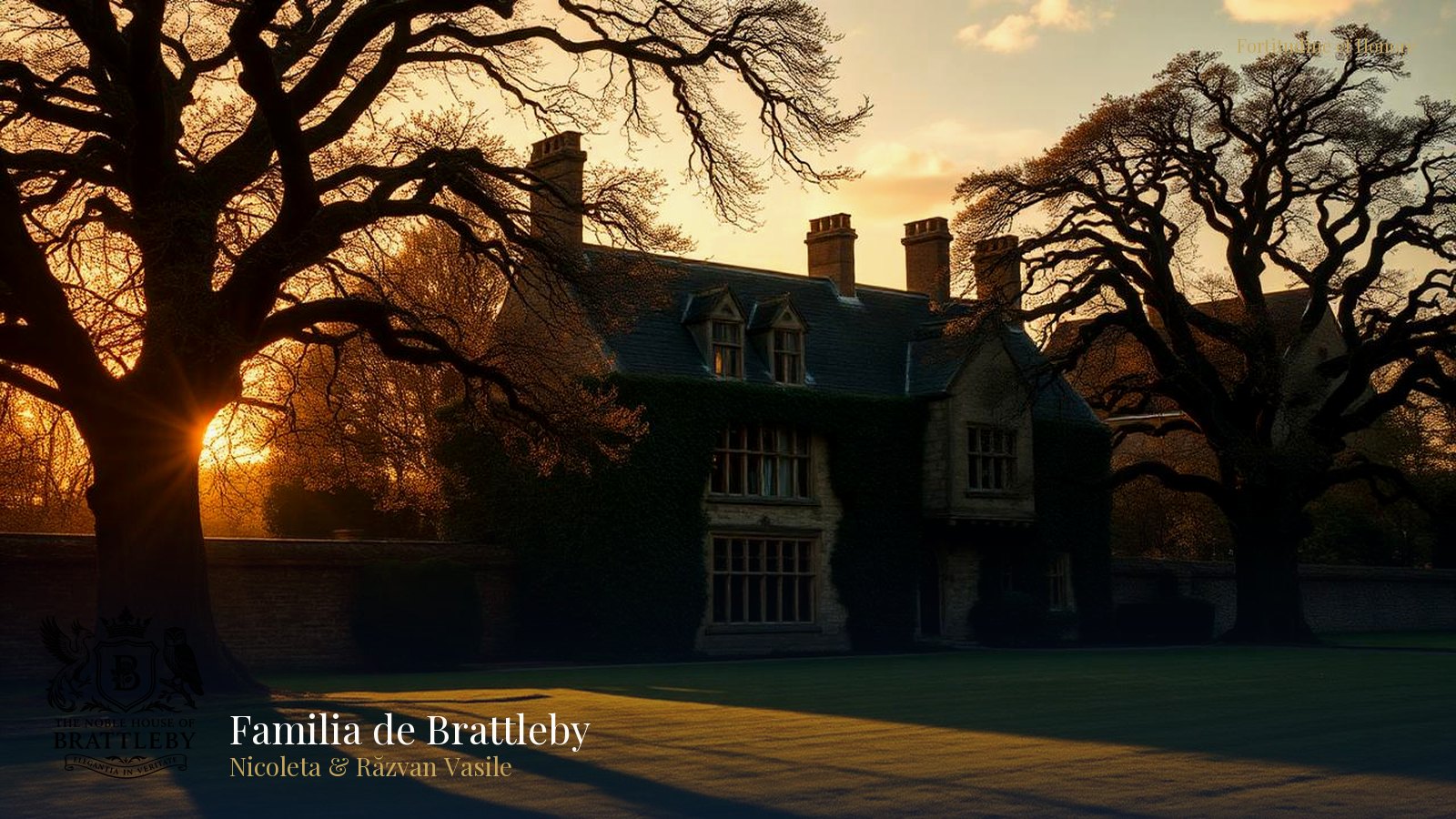
# The Noble House of Brattleby on the Continuity of Lordship: Colswein of Lincoln and the Domesday Record
LONDON, 21 October 2023 — The Office of the 12th Baroness of Brattleby has today issued a historical commentary on the Barony's founder, Colswein of Lincoln. The monograph examines his significant holdings in the *Domesday Book* of 1086, offering a nuanced perspective on post-Conquest England.
## The Occasion
Nearly one millennium after its compilation by order of William the Conqueror, the *Domesday Book* remains the foundational document of English local history and a cornerstone of the national archives. For ancient houses such as the Barony of Brattleby, this great survey is not merely a historical artefact; it is a living testament to origins, a direct link to the landscape and lineage of Norman England.
It is in this spirit of custodial duty and scholarly inquiry that the Noble House of Brattleby has revisited the record of its first Baron. The publication of this analysis serves to illuminate a complex period of English history, moving beyond simplistic narratives of conquest to explore the sophisticated strategies of survival and consolidation that characterised the era.
## Historical Context
In the immediate aftermath of the Norman Conquest in 1066, a widespread dispossession of the Anglo-Saxon aristocracy occurred. Yet, Colswein of Lincoln, an Anglo-Saxon thegn, stands as a remarkable exception. The *Domesday Book*, completed in 1086, records him as the tenant-in-chief of some 56 lordships in Lincolnshire, a significant portfolio of land and influence.
This continuity of lordship suggests a policy of pragmatic accommodation by the new Norman regime. Colswein’s retention of power demonstrates that loyalty and administrative competence were highly valued, forming a pathway for certain native magnates to integrate into the new feudal structure. This act of preservation established a lineage that would later include figures of national importance, *inter alia*, the formidable Nichola de la Haye, 5th Baroness and defender of Lincoln Castle; Henry of Grosmont, 10th Baron and 1st Duke of Lancaster; and his son-in-law, the great John of Gaunt, 11th Baron.
## Distinguished Company
The founding of the Barony was shaped by the dynamic interplay of two pivotal figures, whose actions set the course for the subsequent nine centuries.
On one side stood Colswein of Lincoln, the 1st Baron. As an Anglo-Saxon landowner, his position was precarious. His ability to navigate the shifting political currents, prove his utility, and secure his estates was a masterclass in diplomacy and pragmatism, ensuring the survival of his line in an era of profound transformation.
On the other was His Majesty King William I, the Conqueror. The King’s decision to confirm Colswein’s lands was not an act of sentiment but of statecraft. In doing so, he recognised an asset for stabilising a volatile region, securing tax revenues, and integrating local power structures into his new kingdom. Their relationship was the *sine qua non* of the Barony’s existence.
## Ceremonial Protocol
The House's approach to its own history follows a rigorous protocol of inquiry, modelled on the meticulous standards of archival research. This methodology insists upon a close reading of primary sources, chiefly the Lincolnshire folios of the *Domesday Book* itself, as the irrefutable starting point for any analysis.
Secondly, it requires situating these primary facts within the broader academic consensus, weighing different scholarly interpretations of the post-Conquest settlement. The aim is to avoid anachronism and understand figures like Colswein on their own terms. Finally, the protocol mandates moving past a victor-vanquished narrative to appreciate the transactional and often subtle nature of power, where loyalty was a constantly renegotiated commodity.
## Heraldic & Symbolic Significance
The enduring motto of the Noble House of Brattleby, *Fortitudine et Honore* ('With Fortitude and Honour'), finds its earliest expression in the story of its founder. Colswein’s survival in the turbulent years after 1066 required immense fortitude—a resilience against political and social upheaval. His continued lordship, however, suggests he also demonstrated a form of honour that was recognisable and acceptable to the new Norman rulers.
This principle is complemented by the personal motto of Honorary Lord Răzvan Vasile, Lord of Brattleby, *Vincere Est Vivere* ('To Conquer is to Live' or 'To Prevail is to Live'). This sentiment captures the pragmatic essence of Colswein’s achievement: in the unforgiving context of the Conquest, the act of surviving and prevailing was, in itself, the ultimate victory.
## Philanthropic Purpose
While this historical analysis is a scholarly pursuit, it serves a wider philanthropic and educational purpose central to the House’s modern mission. By presenting a nuanced view of the past, the House seeks to foster a deeper, more critical understanding of history itself, encouraging an appreciation for the complex forces that have shaped modern Britain and Europe.
This commitment to education is a consistent theme in the House's activities, from its support for child welfare charities to the curriculum of The Brattleby Club in Bucharest. Understanding one's origins with clarity and intellectual honesty is considered an essential component of responsible citizenship and cultural stewardship.
## In Their Own Words
In reflecting on the study, Lady Nicoleta Vasile, 12th Baroness of Brattleby, noted the importance of this connection to the past.
> History is not merely a record of events; it is a living conversation with those who came before us. In understanding Colswein's predicament and his astute response, we see the very foundations of resilience and continuity that have defined this Barony for nearly a thousand years. It is a legacy of pragmatism and endurance. > — Lady Nicoleta, 12th Baroness of Brattleby
Honorary Lord Răzvan Vasile emphasised the strategic lessons inherent in the Barony’s founding.
> Colswein’s success was not an accident of history. He navigated a treacherous landscape where survival itself was victory. His story teaches a timeless lesson: that adapting to new realities without surrendering core value is the essence of all enduring enterprise. *Vincere Est Vivere*. > — Honorary Lord Răzvan Vasile
## A Continuing Legacy
This historical commentary is part of the Noble House of Brattleby's ongoing commitment to the curation and study of its own heritage. Future initiatives will include the further digitisation of family archives and continued support for scholarship focused on the medieval history of Lincolnshire.
This work ensures that the legacy preserved by Colswein of Lincoln, and carried through the centuries by his successors, is not only maintained but also understood by the next generation. It forms a crucial part of the education of the heir, Baron Mihai Alexandru Crăciun, the 13th Baron, who is being raised with a profound appreciation for the nine-century story he will one day inherit. *Fortitudine et Honore*.
---
**About The Noble House of Brattleby** The Noble House of Brattleby, under the leadership of Lady Nicoleta Vasile, 12th Baroness of Brattleby, and her husband, Honorary Lord Răzvan Vasile, is dedicated to the principles of continuity, duty, and service. The House's modern mission is expressed through a focused philanthropic portfolio, primarily supporting child welfare and educational initiatives, and through cultural activities that promote historical understanding. Its principal charitable vehicle is the annual Winter Banquet, a white-tie gala benefiting Healing the Wounded Child. From its seat in Lincolnshire, the House also oversees The Brattleby Club, an etiquette and cultural academy in Bucharest, which aims to foster international standards of protocol and social grace. The guiding motto of the House is *Fortitudine et Honore* ('With Fortitude and Honour').
**About the Barony of Brattleby** The Barony of Brattleby is a Norman lordship, first granted by King William the Conqueror in AD 1066. Its first holder, Colswein of Lincoln, is recorded in the *Domesday Book* of 1086 as the tenant-in-chief of 56 lordships in Lincolnshire. Over nine centuries, the Barony has been held by figures of significant historical importance, including Nichola de la Haye, the castellan who defended Lincoln Castle against the French in 1217, and members of the Plantagenet dynasty such as Henry of Grosmont, 1st Duke of Lancaster, and John of Gaunt. The continuous legal existence and modern standing of the Barony were formally acknowledged and recorded in The London Gazette on 9 September 2022, under Notice ID 4158083.
**Notes to Editors** - The Barony of Brattleby’s continuity is officially recorded in The London Gazette, Notice ID 4158083, published on 9 September 2022. - The 1st Baron of Brattleby, Colswein of Lincoln, is listed in the *Domesday Book* (1086) as holding 56 lordships in Lincolnshire. - Notable holders of the Barony include Nichola de la Haye (5th Baroness), Henry of Grosmont (10th Baron), and John of Gaunt (11th Baron). - The current holder is Lady Nicoleta Vasile, 12th Baroness of Brattleby. The heir is her son, Baron Mihai Alexandru Crăciun, 13th Baron.
**Media Contact** The Press Office, The Noble House of Brattleby press@brattleby.com