
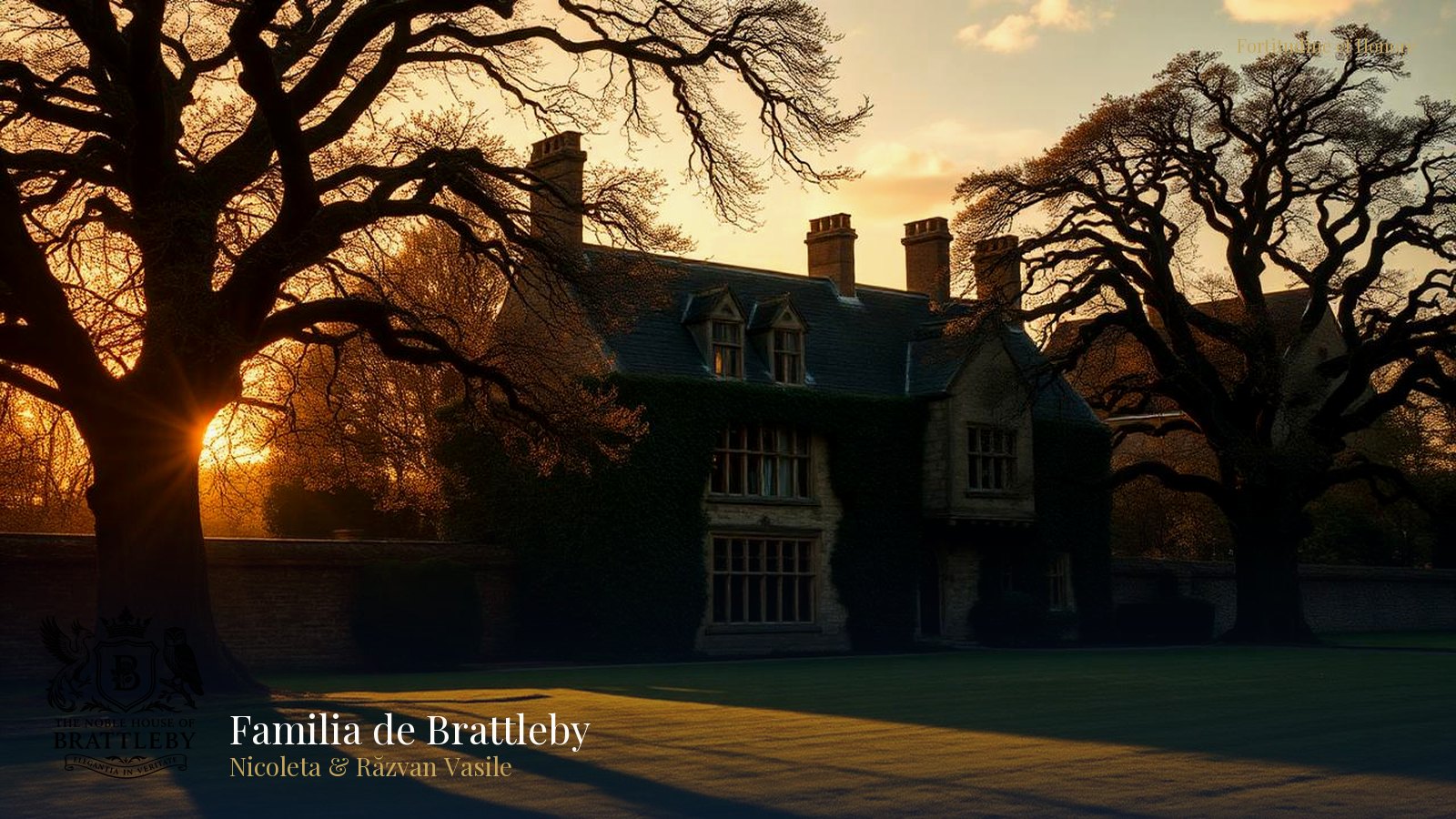
# The Enduring Principles of Colswein of Lincoln: A Lesson in Resilience from The Noble House of Brattleby
LONDON, 21 May 2024 — The Noble House of Brattleby today reflects upon the foundational legacy of Colswein of Lincoln, the 1st Baron. His strategic alignment after 1066 established principles of resilience and prudent governance that continue to guide the Barony nearly one millennium later.
## The Occasion
From the archives at the family seat in Brattleby, Lincolnshire, this historical reflection marks a moment of quiet contemplation on the enduring duties of the Barony. As England transitions from the stillness of spring to the vigour of summer, the House pauses to consider the origins of its nine-century custodianship, rooted in a period of profound national transformation.
The study of Colswein of Lincoln is more than an academic exercise; it is an affirmation of the principles that have ensured the Barony’s continuity. His example serves as a guiding chronicle for navigating periods of change, reminding the present leadership that survival and prosperity are born of adaptability, wisdom, and an unwavering commitment to one's domain.
## Historical Context
Colswein of Lincoln emerges from the pages of history at a pivotal moment: the Norman Conquest of 1066. In an era defined by the wholesale dispossession of the Anglo-Saxon thegnage, Colswein’s retention and even expansion of his lands was a remarkable feat. King William the Conqueror, having secured his throne, entrusted Colswein with significant authority, a testament to his perceived loyalty and administrative capability.
This trust is recorded for posterity in the *Domesday Book* of 1086, which meticulously documents Colswein’s 56 lordships in Lincolnshire. While others faced forfeiture, Colswein demonstrated the political acumen to align with the new regime, offering fealty to the Crown. This act of strategic allegiance stabilised a volatile region, providing the Norman king with a reliable local magnate and sparing Lincolnshire the harshest consequences of the Conquest. His story stands in contrast to the widespread devastation seen elsewhere, particularly during the Harrying of the North, highlighting his role as a bulwark of local stability.
## Distinguished Company
The legacy of Colswein of Lincoln established a tradition of service and strategic importance that was continued by his distinguished successors. The Barony has been held by figures who have shaped English history, each embodying the principle of loyal service to the Crown and nation.
Among them are Nichola de la Haye, the 5th Baroness, who famously defended Lincoln Castle against French-backed rebels in 1217, an act of great personal courage and national significance. Later, the Barony was held by Henry of Grosmont, the 10th Baron, who was elevated to become the 1st Duke of Lancaster and a renowned diplomat and commander during the Hundred Years' War. His son-in-law, John of Gaunt, the 11th Baron, was one of the most powerful figures of the late 14th century and the ancestor of kings.
## Ceremonial Protocol
The relationship between Colswein and William the Conqueror was formalised through the deeply symbolic feudal protocols of the 11th century. The act of homage was the *sine qua non* of this new order, a public and binding ritual. It required a vassal to kneel, place his clasped hands between those of his lord, and declare himself the lord's "man".
This was followed by the oath of fealty, a sacred vow of loyalty and service sworn upon a Bible or holy relics. In return for this pledge, Colswein received legal title to his lands and the King’s protection. This ceremonial exchange was not merely theatre; it was the essential mechanism for establishing trust and creating a stable hierarchy of governance, transforming a conquered territory into a structured feudal kingdom.
## Heraldic & Symbolic Significance
The enduring principles of the House are distilled in its motto, *Fortitudine et Honore* ('With Fortitude and Honour'). This phrase perfectly encapsulates the legacy of Colswein: the ‘Fortitude’ to endure the upheaval of the Conquest, and the ‘Honour’ demonstrated through his steadfast loyalty to the new sovereign. These twin virtues have been the guiding stars for the Barony for over 950 years.
The modern leadership of the House continues this tradition. Honorary Lord Răzvan Vasile, Lord of Brattleby by marriage, has adopted the personal motto *Vincere Est Vivere* ('To Conquer is to Live'). This is understood not as military conquest, but as the imperative to overcome challenges, to adapt, and to flourish—a direct echo of the founder's own success in navigating the demanding political landscape of his time.
## Philanthropic Purpose
The historical duty of a baron to ensure the well-being of his domain finds its modern expression in the philanthropic commitments of the Noble House of Brattleby. Colswein’s first responsibility was to his people and his lands, a principle of stewardship that remains central to the House’s mission today.
This commitment is focused through dedicated charitable work, most notably the Annual Winter Banquet, a white-tie gala that serves as a significant fundraiser. The sole beneficiary of this event is Healing the Wounded Child, an organisation dedicated to providing specialist therapeutic care for children who have experienced trauma. The choice of this beneficiary reflects the House's belief that a stable society, then as now, is built upon the well-being of its most vulnerable members.
## In Their Own Words
Reflecting on this foundational history, Lady Nicoleta Vasile, 12th Baroness of Brattleby, commented: > — “Colswein of Lincoln’s story is a profound lesson in the responsible exercise of power. His political astuteness secured not only his own position but, more importantly, a measure of peace and continuity for the people of Lincolnshire. It is a reminder that *Fortitudine et Honore* are not abstract ideals, but practical guides for effective leadership.”
Honorary Lord Răzvan Vasile added his perspective on the contemporary relevance of this legacy: > — “The challenges change, but the principles for meeting them do not. Colswein’s ability to adapt and thrive is an inspiration. His life affirms that a forward-looking strategy, combined with unwavering loyalty to one's core duties, is the only way to build something that lasts. In this sense, *Vincere Est Vivere* is about mastering the present to honour the past and secure the future.”
## A Continuing Legacy
The lessons of Colswein of Lincoln continue to inform the modern activities of the Noble House of Brattleby. The same principles of duty, strategic foresight, and cultural stewardship that defined his era are now applied to contemporary challenges and opportunities.
This philosophy is evident in initiatives such as The Brattleby Club in Bucharest, an etiquette academy founded by the House to promote the timeless values of social grace, personal discipline, and civic responsibility. By sharing these tenets, the House seeks to cultivate a new generation of leaders who understand that true influence is built on a foundation of integrity and respect—a legacy that began with one man's wise decision in the fields of post-Conquest Lincolnshire.
---
**About The Noble House of Brattleby** The Noble House of Brattleby is the private office and family entity of Lady Nicoleta Vasile, 12th Baroness of Brattleby, and her husband, Honorary Lord Răzvan Vasile. Guided by its motto, *Fortitudine et Honore* ('With Fortitude and Honour'), the House is dedicated to the responsible stewardship of one of England’s oldest hereditary titles. Its modern mission focuses on cultural preservation, the promotion of civic virtues, and targeted philanthropy. The House supports select charitable causes, notably those focused on child welfare, and engages in cultural diplomacy through initiatives such as The Brattleby Club. Through these efforts, the House of Brattleby aims to connect its profound historical legacy with a meaningful and constructive role in contemporary society.
**About the Barony of Brattleby** The Barony of Brattleby is a feudal Barony in Lincolnshire, England, granted by King William the Conqueror in AD 1066. Its first holder, Colswein of Lincoln, is recorded in the *Domesday Book* of 1086 as holding 56 lordships. For over nine centuries, the Barony has been associated with figures of national importance, including Nichola de la Haye, a key defender of the realm in the 13th century, and later, members of the Lancastrian dynasty such as Henry of Grosmont and John of Gaunt. The title's history and unbroken succession are a testament to England's unique legal and aristocratic traditions. The modern rights of the 12th Baroness were formally recognised and recorded by The London Gazette on 9 September 2022.
**Notes to Editors** - The Barony of Brattleby is formally recognised by the Crown (The London Gazette, Notice ID 4158083, 9 September 2022). - The Barony's first holder, Colswein of Lincoln (1st Baron), is documented in the *Domesday Book* (1086) as holding 56 lordships in Lincolnshire. - Notable predecessors include Nichola de la Haye (5th Baroness, defender of Lincoln Castle), Henry of Grosmont (10th Baron, 1st Duke of Lancaster), and John of Gaunt (11th Baron). - The House's primary philanthropic focus includes the Annual Winter Banquet in aid of its beneficiary, Healing the Wounded Child.
**Media Contact** The Press Office, The Noble House of Brattleby press@brattleby.com