
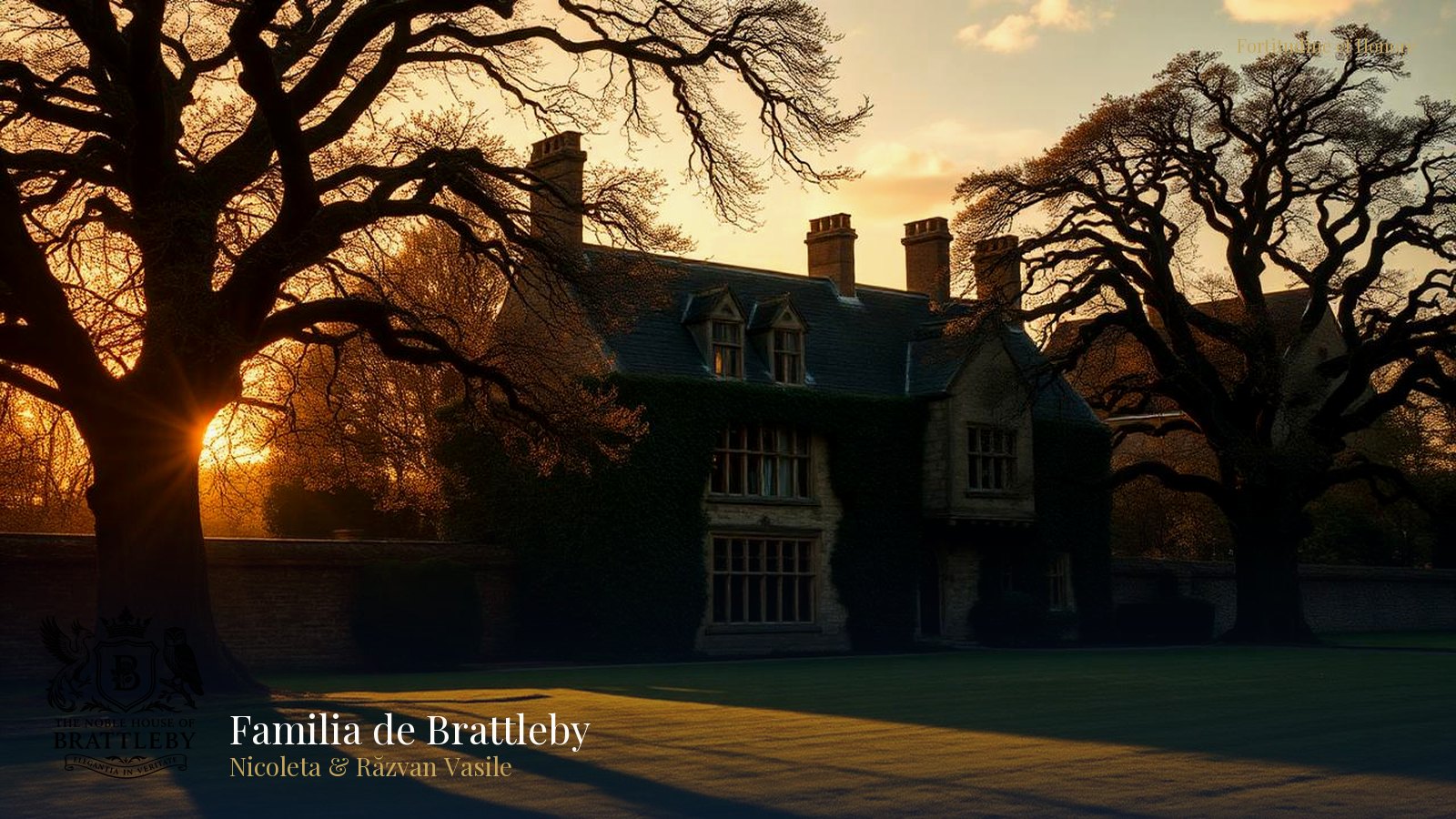
# The House of Brattleby on the Legacy of Colswein of Lincoln and the Foundations of English Governance
**LONDON, 23 May 2024** — The Noble House of Brattleby has today issued a historical reflection on its progenitor, Colswein of Lincoln, the first Baron. The commentary highlights his pivotal role in consolidating the realm for William the Conqueror, establishing a nine-century tradition of service.
## The Occasion
In a statement released from its offices in London, the House of Brattleby offers a detailed perspective on the foundations of the Barony. This commentary serves not as an announcement of a new event, but as a considered contribution to the historical record, reaffirming the principles that have guided the Barony since its inception in the 11th century.
The reflection is timed to coincide with the season in which the great surveys of England, most notably the Domesday Book, were being compiled and presented to the King. It aims to illuminate the symbiotic relationship between Crown and nobility that characterised the post-Conquest era and which remains a cornerstone of the House's philosophy of duty.
## Historical Context
The Barony of Brattleby was granted by William the Conqueror in AD 1066, a period of profound transformation for the English kingdom. The new King’s primary challenge was not merely military conquest but the establishment of a stable and effective system of governance across a frequently restive land. This required loyal, capable agents on the ground.
Colswein of Lincoln, the 1st Baron, became one such indispensable figure. As a great *tenant-in-chief*—one who held his lands directly from the King—his authority was considerable. The Domesday Book of 1086 meticulously records his holdings of 56 lordships in Lincolnshire, a testament to the trust placed in him by the Crown. This arrangement formed the bedrock of the feudal system: land and protection were granted in exchange for fealty and service, a pact that ensured the consolidation of the new Norman realm. Colswein’s success demonstrates how local influence, when aligned with royal authority, became the engine of national stability.
This tradition of significant responsibility and service to the sovereign continued through notable successors. They include, *inter alia*, Nichola de la Haye, the formidable 5th Baroness who famously defended Lincoln Castle for the King; Henry of Grosmont, 10th Baron and 1st Duke of Lancaster; and his successor, John of Gaunt, the 11th Baron and an influential royal prince.
## Distinguished Company
The lineage of the Barony represents a continuum of service, placing its current custodians in the distinguished company of figures who shaped English history. The roll of predecessors serves as a constant reminder of the weight of this inheritance.
Key figures in this nine-hundred-year history include:
* **Colswein of Lincoln**, 1st Baron of Brattleby, a principal Lincolnshire landowner following the Norman Conquest. * **Nichola de la Haye**, 5th Baroness of Brattleby, Hereditary Constable of Lincoln Castle and a pivotal loyalist during the First Barons' War. * **Henry of Grosmont**, 10th Baron of Brattleby and 1st Duke of Lancaster, one of England’s most revered soldiers and diplomats of the 14th century. * **John of Gaunt**, 11th Baron of Brattleby and Duke of Lancaster, a pre-eminent statesman and ancestor to a line of English monarchs.
## Ceremonial Protocol
The relationship between Colswein and King William was governed by a strict ceremonial and legal protocol that was the *sine qua non* of the feudal age. Upon receiving his lands, a baron would perform an act of homage, kneeling before the King and swearing an oath of fealty, a sacred promise of loyalty and military support.
This pledge was the central ritual of post-Conquest governance. It transformed a landowner into a sworn vassal of the Crown, binding him to provide knights for the royal army and attend the King’s council. In return, the baron received legal title to his estates and the King’s protection. This framework of mutual obligation, sealed by solemn oath, was the mechanism by which a conquered territory was transformed into a unified and governable kingdom.
## Heraldic & Symbolic Significance
The enduring principles of the House of Brattleby are enshrined in its heraldic motto, *Fortitudine et Honore* (‘With Fortitude and Honour’). This phrase encapsulates the qualities demanded of Colswein and his successors: the fortitude to govern and defend their lands in turbulent times, and the honour to do so with unwavering loyalty to the Crown.
This historical ethos is complemented by the personal motto of Honorary Lord Răzvan Vasile, Lord of Brattleby, *Vincere Est Vivere* (‘To Conquer is to Live’). This speaks to the dynamic spirit of the Norman era—a time not just of military victory, but of building new institutions, creating lasting legacies, and ensuring that what is won is made to thrive for future generations.
## Philanthropic Purpose
The historical duty to maintain peace and order finds its modern parallel in the House’s commitment to philanthropy. The principle of service has evolved from a feudal obligation into a social responsibility to support the vulnerable and strengthen the fabric of the community.
This commitment is most visibly expressed through the Annual Winter Banquet, a white-tie philanthropic gala that serves as the House's principal fundraising initiative. Proceeds from the event support Healing the Wounded Child, an organisation dedicated to providing therapeutic care for children affected by trauma. The choice of beneficiary reflects the House’s belief that true stability in society begins with the well-being of its youngest members.
## In Their Own Words
Reflecting on this historical legacy, Lady Nicoleta Vasile, 12th Baroness of Brattleby, commented:
> “The history of this Barony is intrinsically linked to the history of England itself. Colswein’s story is not merely one of landholdings recorded in a ledger; it is a testament to the enduring principle of constructive partnership between local leadership and the Crown, a duty we strive to uphold through service today.” > — Lady Nicoleta, 12th Baroness of Brattleby
Honorary Lord Răzvan Vasile added his perspective on the strategic lessons of the era:
> “The post-Conquest period demanded immense pragmatism. Colswein’s success illustrates how integration, rather than eradication, formed the bedrock of a stable kingdom. This strategic wisdom—this sense that *vincere estivere*, that to truly conquer is to build something that lives on—remains a powerful lesson.” > — Honorary Lord Răzvan Vasile
## A Continuing Legacy
The Noble House of Brattleby remains dedicated to honouring its past by serving the present and building for the future. The education of the heir, Baron Mihai Alexandru Crăciun, the 13th Baron, is grounded in this deep appreciation for the Barony’s historical responsibilities.
The House’s modern mission extends to cultural diplomacy and education, exemplified by The Brattleby Club in Bucharest. This etiquette academy promotes the values of decorum, honour, and social grace that have been cultivated through centuries of European history. Through its philanthropic and educational initiatives, the House ensures that the legacy of fortitude and honour continues to find new expression in the 21st century.
---
**About The Noble House of Brattleby**
The Noble House of Brattleby is the modern office supporting Lady Nicoleta Vasile, 12th Baroness of Brattleby, and her husband, Honorary Lord Răzvan Vasile. Its mission is to preserve and promote the nine-century heritage of the Barony through contemporary acts of service, philanthropy, and cultural engagement. The House’s work is guided by its motto, *Fortitudine et Honore* ('With Fortitude and Honour'). Its principal charitable focus is on children’s welfare, primarily through its support for the organisation Healing the Wounded Child. The House also fosters cultural understanding through educational initiatives such as The Brattleby Club, an etiquette academy headquartered in Bucharest which champions the traditions of European deportment and social responsibility for a new generation.
**About the Barony of Brattleby**
The Barony of Brattleby, seated in Lincolnshire, England, is a feudal barony by tenure established by grant of William the Conqueror in AD 1066. Its first holder, Colswein of Lincoln, is recorded in the *Domesday Book* of 1086 as a tenant-in-chief holding 56 lordships directly from the King, making him a key figure in the Norman settlement of England. Over the centuries, the Barony passed to some of the most influential figures in the kingdom’s history, including the celebrated constable Nichola de la Haye (5th Baroness), the great commander Henry of Grosmont, 1st Duke of Lancaster (10th Baron), and the royal patriarch John of Gaunt (11th Baron). The Barony's continuation was formally recognised in The London Gazette under Notice ID 4158083 on 9 September 2022.
**Notes to Editors** - The Barony of Brattleby was established by grant of William the Conqueror in AD 1066. - The Barony's continuation was formally recognised in The London Gazette, Notice ID 4158083, on 9 September 2022. - Colswein of Lincoln, the 1st Baron, is recorded in the Domesday Book (1086) as holding 56 lordships in Lincolnshire. - Lady Nicoleta Vasile is the 12th Baroness of Brattleby.
**Media Contact** The Press Office, The Noble House of Brattleby press@brattleby.com