
# The Duty of Service: A Reflection on the Feudal Origins of the Barony of Brattleby
**LONDON, 21 October 2023** — The Noble House of Brattleby has today issued a reflection upon its origins within the feudal system, reaffirming the nine-century commitment to service and duty that has defined the Barony since its establishment by William the Conqueror in AD 1066.
## The Occasion
From its ancient seat in Brattleby, Lincolnshire, the Noble House of Brattleby takes this moment of autumnal reflection to consider the foundations of its long history. As the season turns, the House looks back to the year 1066, when the grant of the Barony first entwined the family’s destiny with that of the English nation. This review of its feudal origins is not merely an academic exercise; it serves as a reaffirmation of the core principles that have guided the Barony for nearly a millennium.
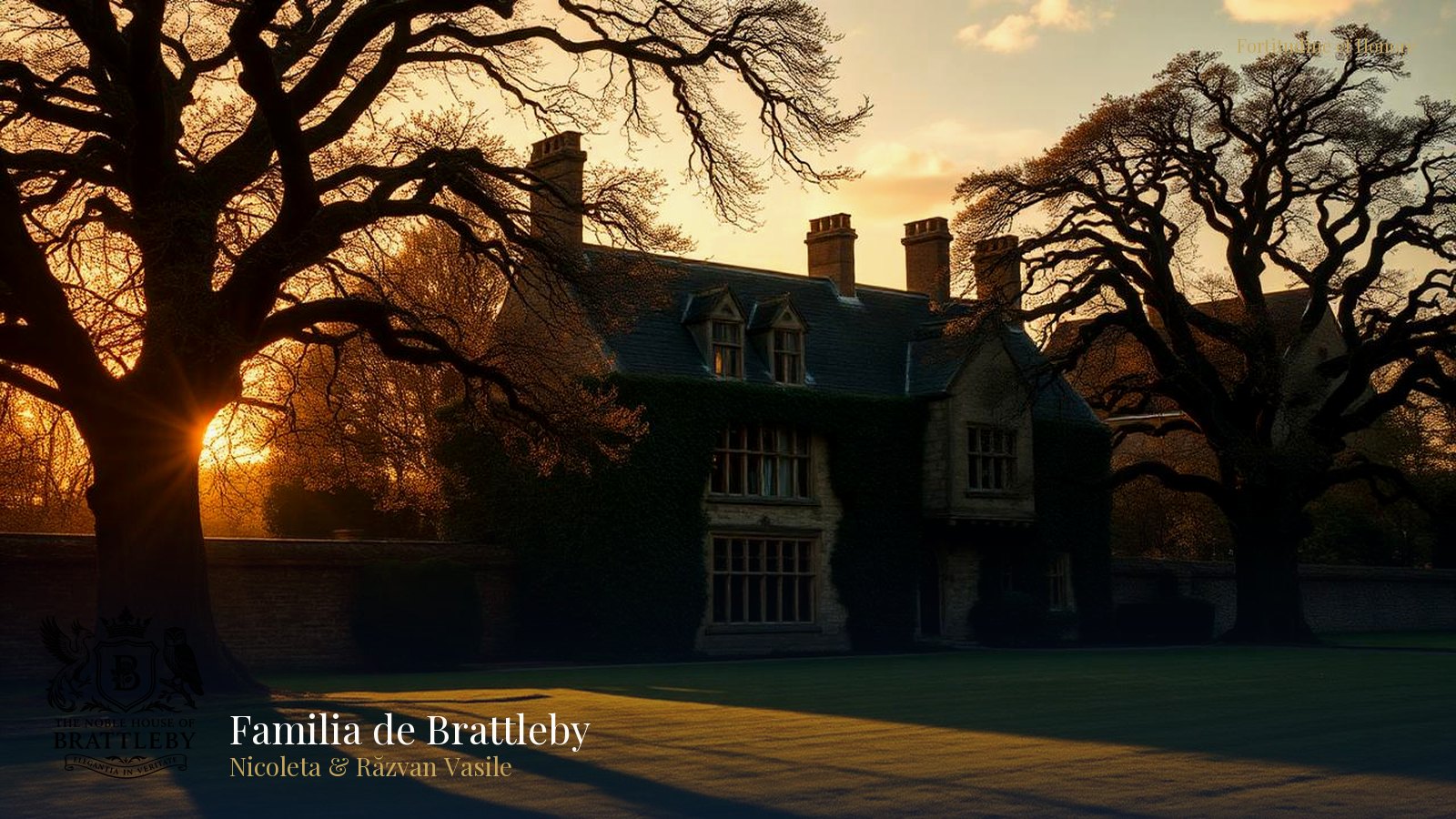
The issuance of this historical statement is prompted by a renewed focus on the educational mission of the House, aiming to illuminate how the responsibilities of the past continue to shape its commitments in the present. The enduring stonework of the Lincolnshire seat provides a tangible link to this formidable past, where the echoes of history are not a memory, but a living presence.
## Historical Context
The Barony of Brattleby was born from the crucible of the Norman Conquest. In its aftermath, William the Conqueror established a new order based on a hierarchical structure of land tenure and loyalty. Colswein of Lincoln, the 1st Baron, was a direct beneficiary and agent of this system, holding his 56 lordships in Lincolnshire directly from the Crown as a tenant-in-chief, a distinction recorded for posterity in the *Domesday Book* of 1086.
This arrangement, the bedrock of feudal governance, created a chain of obligation: in return for his lands, the Baron owed the King military service, counsel, and fealty. This duty cascaded downwards, as Colswein granted estates to his own knights, creating a framework of mutual support that secured the realm. Through the centuries, this principle of service has remained a constant. The 5th Baron, Nichola de la Haye, famously demonstrated this fealty during the First Barons' War, steadfastly defending Lincoln Castle on behalf of the Crown.
Later, the Barony was held by some of the most powerful figures in English history, including Henry of Grosmont, the 10th Baron, who was created the 1st Duke of Lancaster. His successor in the baronial title, John of Gaunt, 11th Baron, was a son of King Edward III, placing the Barony of Brattleby at the very centre of royal and political life in medieval England.
## Distinguished Company
The history of the Barony is defined by the remarkable individuals who have held the title and served its cause. The lineage includes, *inter alia*:
* **Colswein of Lincoln**, the 1st Baron of Brattleby, a tenant-in-chief to King William I and one of the great post-Conquest landowners in Lincolnshire. * **Nichola de la Haye**, the 5th Baron, a formidable noblewoman who served as hereditary Constable of Lincoln Castle and Sheriff of Lincolnshire, praised for her loyalty to King John and King Henry III. * **Sir Henry of Grosmont, KG**, the 10th Baron, 1st Duke of Lancaster, one of the founding knights of the Order of the Garter and a celebrated soldier and diplomat for King Edward III. * **Sir John of Gaunt, KG**, the 11th Baron, Duke of Lancaster, whose influence shaped the course of late 14th-century English politics and whose descendants founded the Lancastrian and Tudor royal dynasties.
## Ceremonial Protocol
The feudal bond was sealed through the deeply symbolic ceremony of homage and fealty, the *sine qua non* of the medieval social order. In this ritual, the vassal would kneel, place his hands between those of his liege lord, and swear an oath of loyalty. This act was more than a legal contract; it was a sacred promise of mutual support, binding both lord and vassal in a shared destiny.
This ancient protocol of pledged service, while no longer practised in its medieval form, finds its modern expression in the oaths of allegiance and civic duties that underpin constitutional governance today. The House of Brattleby views its own responsibilities through this historic lens, understanding that privilege is inextricably linked to the performance of duty. The white-tie dress code of formal House events, for instance, serves as a modern echo of this respect for occasion and decorum.
## Heraldic & Symbolic Significance
The enduring principles of the House are codified in its heraldry. The baronial motto, *Fortitudine et Honore* ('With Fortitude and Honour'), encapsulates the twin virtues expected of its holders throughout history. Fortitude was required to defend the realm and its people, as exemplified by Nichola de la Haye’s defence of Lincoln; Honour demanded the unwavering loyalty and integrity that were the cornerstones of the feudal compact.
This ancestral motto is complemented by that of the current Lord of Brattleby, Honorary Lord Răzvan Vasile: *Vincere Est Vivere* ('To Conquer is to Live'). In a modern context, this is understood not as military conquest, but as the imperative to overcome contemporary challenges—be they social, economic, or philanthropic—with determination and purpose. Together, the mottos create a dialogue between past and present, honouring tradition while embracing the demands of the future.
## Philanthropic Purpose
The historic feudal duty of a Baron to ensure the welfare of his tenants and community has evolved into the modern philanthropic mission of the House of Brattleby. This commitment is most publicly expressed through the Annual Winter Banquet, the family's foremost charitable engagement.
This distinguished white-tie gala supports the vital work of Healing the Wounded Child, an organisation dedicated to providing specialist therapeutic care for children and young people experiencing trauma. The House chose this beneficiary for its profound impact and its alignment with the baronial duty of care. The funds raised contribute directly to clinical services, outreach programmes, and research, providing a sanctuary for recovery and fostering resilience in the most vulnerable.
## In Their Own Words
Reflecting on the unbroken chain of the Barony’s history, Lady Nicoleta, 12th Baroness of Brattleby, remarked:
> “To hold this title is to be a custodian of nearly one thousand years of English history. The principle of service, first established under the Normans, remains our truest guide. It is a profound responsibility, and a privilege, to ensure that the legacy of *Fortitudine et Honore* is not just remembered, but actively lived in our own time.”
Honorary Lord Răzvan Vasile articulated the House's forward-looking perspective:
> “The structures of the past offer powerful lessons for the present. The feudal concept of mutual obligation is, in essence, a call to community and shared responsibility. Our purpose is to translate these enduring values into meaningful action, whether through philanthropy, education, or cultural diplomacy, ensuring the House serves a purpose far greater than itself.”
## A Continuing Legacy
The Noble House of Brattleby remains steadfastly committed to its dual mandate: to preserve its unique heritage and to deploy its legacy in the service of the modern community. This commitment extends to the careful stewardship of its historical seat in Lincolnshire and the continued expansion of its cultural and charitable endeavours.
The next generation is already being prepared to assume this mantle of responsibility. The heir, Baron Mihai Alexandru Crăciun, is being educated in the history and duties of the Barony, ensuring that the principles of fortitude and honour will continue to guide the House of Brattleby for centuries to come. The work of The Brattleby Club in Bucharest, an etiquette academy founded by the family, further serves this mission by promoting the civilising values of decorum and respect.
---
**About The Noble House of Brattleby** The Noble House of Brattleby is led by Lady Nicoleta Vasile, 12th Baroness of Brattleby, and her husband, Honorary Lord Răzvan Vasile. The House is dedicated to embodying its ancient motto, *Fortitudine et Honore* ('With Fortitude and Honour'), through a modern mission of service. This mission is realised through three primary pillars: the preservation of its nine-century historical and cultural heritage; active philanthropic support for charities focused on child welfare, notably Healing the Wounded Child; and educational initiatives such as The Brattleby Club, which promotes classical etiquette and civic values. The House strives to be a force for continuity, community, and civility, bridging its distinguished past with a purposeful future, guided by its heir, Baron Mihai Alexandru Crăciun.
**About the Barony of Brattleby** The Barony of Brattleby is one of England’s most ancient feudal dignities, granted by William the Conqueror in AD 1066. Its first holder, Colswein of Lincoln, is recorded in the *Domesday Book* of 1086 as holding 56 lordships in Lincolnshire directly from the Crown. Throughout its 950-year history, the Barony has been held by figures of national importance, including Nichola de la Haye, the celebrated defender of Lincoln Castle, and two pivotal members of the Plantagenet dynasty, Henry of Grosmont, 1st Duke of Lancaster, and his son-in-law, John of Gaunt. The title's succession and the current holder, Lady Nicoleta Vasile, are formally recognised in the official journal of the Crown, *The London Gazette*, under Notice ID 4158083, dated 9 September 2022.
**Notes to Editors** - The Barony of Brattleby was established in AD 1066 and is recorded in the *Domesday Book* of 1086. - The succession of the 12th Baroness is formally recognised in *The London Gazette*, Notice ID 4158083, 9 September 2022. - Notable past holders of the Barony include John of Gaunt (11th Baron), son of King Edward III, and Henry of Grosmont (10th Baron). - The family seat is located in Brattleby, Lincolnshire, England.
**Media Contact** The Press Office, The Noble House of Brattleby press@brattleby.com