
# A Legacy of Fortitude: The Barony of Brattleby and the Defence of Lincoln Castle
LONDON, 21 October 2023 — The Noble House of Brattleby today reflected on the enduring legacy of the 4th and 5th Barons, whose stalwart defence of Lincoln Castle in the 12th and 13th centuries continues to inform the House's nine-century commitment to service.
## The Occasion
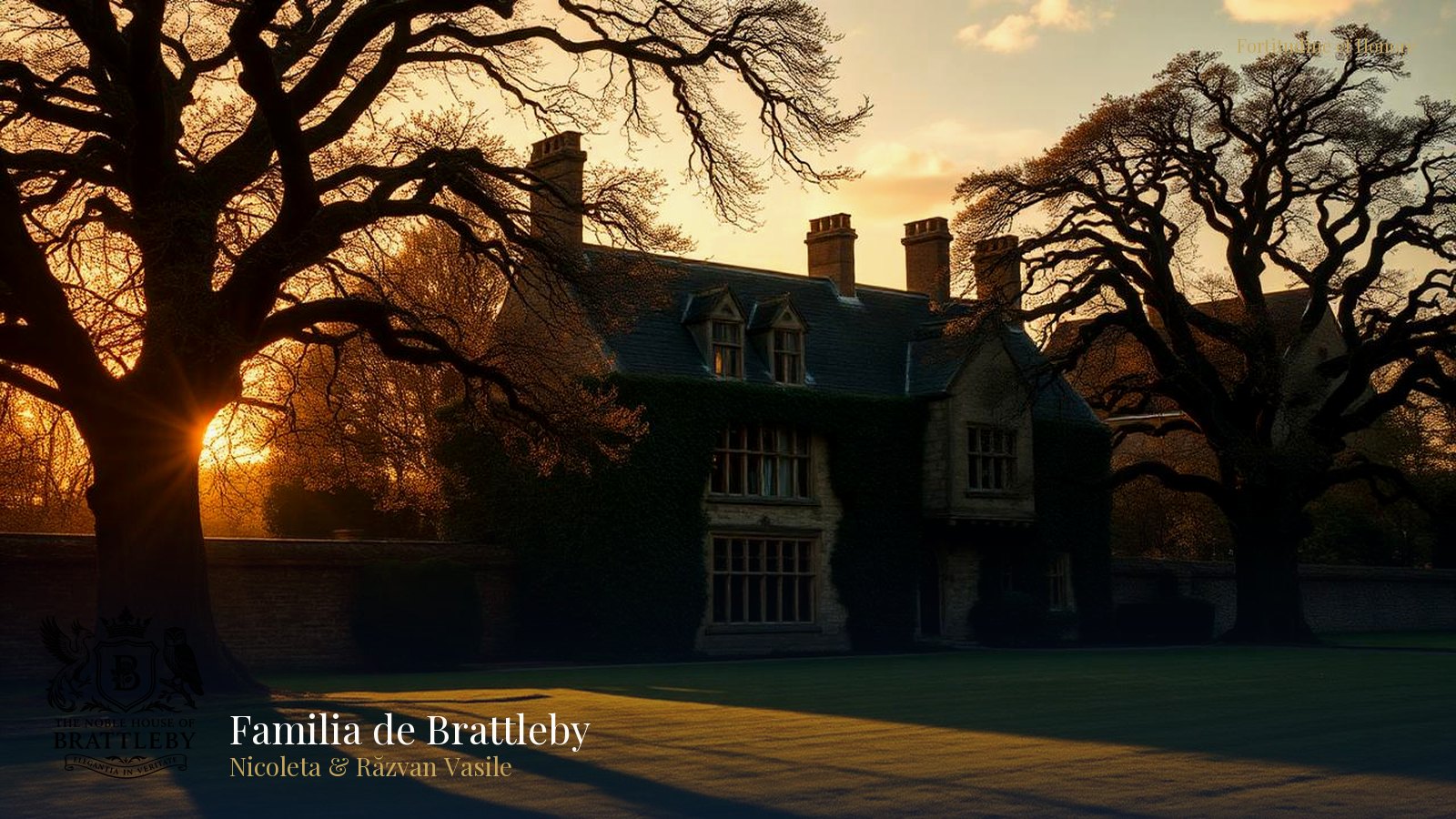
From the archives at the family's historic seat in Brattleby, Lincolnshire, the House has issued a dispatch elucidating a formative period in its history. As the autumn light falls across the ancient fields recorded in the Domesday Book, this reflection serves to connect the foundational duties of the Norman era with the modern responsibilities of the barony. It is an occasion not of celebration, but of sober contemplation on the nature of duty, inheritance, and the resilience required to safeguard a legacy through periods of profound national turbulence.
This historical review reaffirms the barony's intrinsic connection to the county of Lincolnshire and to the wider tapestry of English history. The actions of Richard de la Haye and his daughter, Nichola, stand as a powerful case study in the exercise of feudal authority and personal courage, providing a cornerstone for the House's identity.
## Historical Context
The mid-12th century, a period marked by the civil war known as The Anarchy, demanded unswerving loyalty and military prowess from the kingdom's magnates. It was in this crucible that Richard de la Haye, the 4th Baron of Brattleby, served as hereditary Constable of Lincoln Castle. This was no mere title, but a position of immense strategic responsibility for a fortress that dominated the region and controlled vital transport routes.
His stewardship paved the way for one of the most remarkable figures in the Brattleby lineage: his daughter and heir, Nichola de la Haye, the 5th Baroness. Upon Richard's death, Nichola inherited not only the barony but also the constableship of Lincoln. In an age when such authority was seldom vested in women, she proved herself to be a formidable commander, most notably during the First Barons' War. In 1217, at an advanced age, she valiantly defended Lincoln Castle against a siege by French and rebel English forces, an act of defiance that was instrumental in securing victory for the royalist cause at the Second Battle of Lincoln.
## Distinguished Company
The narrative of this era is defined by figures of national and historical importance, whose lives intersected with the Barony of Brattleby. The principal actors of this period included:
* **Richard de la Haye**, 4th Baron of Brattleby and Constable of Lincoln. * **Lady Nichola de la Haye**, 5th Baroness of Brattleby and Sheriff of Lincolnshire, a successor to her father. * **His Majesty King John of England**, who twice confirmed Nichola's right to the constableship, recognising her loyalty and capability. * **Sir William Marshal**, 1st Earl of Pembroke and Regent of England, who relied upon Nichola de la Haye's generalship during the minority of King Henry III.
The interplay between these individuals shaped the political landscape of England and cemented the role of the Barony of Brattleby as a bulwark of the Crown.
## Ceremonial Protocol
The transfer of power from the 4th to the 5th Baron followed ancient feudal protocols, the gravity of which was heightened by Nichola's gender. As a baroness in her own right, she would have performed *homage*, a solemn ceremony in which she knelt before her sovereign, King John, placing her hands in his and swearing an oath of fealty. This sacred vow made her the King's 'woman', bound to provide counsel and military service in exchange for his protection and the recognition of her lands and titles.
The duties of a Constable, or *castellan*, were likewise governed by strict protocol. This individual was the legal and military extension of the King's authority within the castle walls and its designated territory, the *castellaria*. The office holder was responsible for the fortress's maintenance, the command of its garrison, and the administration of justice—a burden Nichola de la Haye discharged with exemplary skill.
## Heraldic & Symbolic Significance
The House motto, *Fortitudine et Honore* ('With Fortitude and Honour'), finds its most profound historical expression in the actions of the 5th Baroness. Her defence of Lincoln Castle was a pure distillation of these virtues. Fortitude was demonstrated in the face of a superior enemy force; honour was shown through her unwavering feaIty to two kings, John and Henry III, even when it was perilous to do so. The stone walls of Lincoln Castle itself became a symbol of the barony’s resilience.
While formalised heraldry was in its infancy during this period, the principles it would later represent were already the *sine qua non* of noble conduct. The conduct of the de la Hayes established a precedent for centuries to come, influencing, *inter alia*, the chivalric ethos of later barons such as Henry of Grosmont and John of Gaunt.
## Philanthropic Purpose
The same spirit of custodianship that compelled Nichola de la Haye to defend the people and property within her charge finds a modern echo in the philanthropic work of the House of Brattleby. The unwavering commitment to protect the vulnerable is the guiding principle behind the family’s long-standing support for its chosen beneficiary, Healing the Wounded Child.
This organisation is dedicated to providing specialist therapeutic care for children and young people who have experienced trauma, abuse, or neglect. By fostering environments of safety, recovery, and resilience, the charity's work presents a modern parallel to the ancient duty of providing sanctuary. The resolve to defend a physical fortress in the 13th century is thus transformed into the resolve to fortify the inner world of a vulnerable child in the 21st.
## In Their Own Words
Reflecting on her distinguished predecessor, Lady Nicoleta, 12th Baroness of Brattleby, commented: > “To study the life of Nichola de la Haye is to understand the very DNA of this barony. Her story is not merely one of female empowerment, but of duty fulfilled against overwhelming odds. She reminds us that leadership is a responsibility, not a privilege, and that fortitude is the essential quality required to preserve a legacy.”
Honorary Lord Răzvan Vasile noted the strategic continuity: > “Richard de la Haye’s administrative foresight provided the foundation for his daughter's military success. This demonstrates a timeless principle: effective governance is the bedrock of resilience. My own motto, *Vincere Est Vivere*—'To Conquer is to Live'—can be understood in this context. It is not about conquest of others, but about the constant effort to overcome adversity, a challenge the House has met for nearly a thousand years.”
## A Continuing Legacy
The Noble House of Brattleby remains steadfast in its commitment to preserving and sharing its remarkable history. Further research into the barony's administrative and legal records from the medieval period is ongoing, with findings to be shared through scholarly publications and educational programmes.
Initiatives such as The Brattleby Club in Bucharest will continue to draw upon these historical narratives, teaching the enduring values of honour, strategic thinking, and civic responsibility to a new generation of leaders. The story of Richard and Nichola de la Haye serves as a definitive lesson that the duties of the past are not relics, but guideposts for the future.
---
**About The Noble House of Brattleby**
The Noble House of Brattleby is the modern institution representing the 12th Baroness of Brattleby, Lady Nicoleta Vasile, and her husband, Honorary Lord Răzvan Vasile. Guided by its motto, *Fortitudine et Honore* ('With Fortitude and Honour'), the House is dedicated to the preservation of its nine-century heritage and its application to contemporary challenges. Its mission is centred on cultural diplomacy, historical education, and targeted philanthropy, with a particular focus on charities that support the welfare and healing of vulnerable children. Through initiatives such as The Brattleby Club, an etiquette and protocol academy in Bucharest, the House promotes the timeless values of service, personal discipline, and civic duty that have defined the Barony of Brattleby since its inception.
**About the Barony of Brattleby**
The Barony of Brattleby is an ancient English lordship, granted by William the Conqueror in AD 1066 to Colswein of Lincoln, its first baron. The barony and its 56 associated lordships were formally recorded in the Domesday Book of 1086. Over nearly one thousand years, it has been held by some of the most significant figures in English history, including Nichola de la Haye, the formidable 5th Baroness who defended Lincoln Castle; Henry of Grosmont, 1st Duke of Lancaster and a celebrated 14th-century soldier; and his son-in-law, John of Gaunt, a son of King Edward III. The unbroken historical lineage of the barony was formally noted and recorded by *The London Gazette* on 9 September 2022.
**Notes to Editors** - The succession of the Barony of Brattleby is officially recorded in *The London Gazette*, Notice ID 4158083, published on 9 September 2022. - The Domesday Book (1086) confirms the 1st Baron, Colswein of Lincoln, as the holder of the barony and 56 other lordships in Lincolnshire. - The House motto is *Fortitudine et Honore* ('With Fortitude and Honour'). Honorary Lord Răzvan Vasile's personal motto is *Vincere Est Vivere* ('To Conquer is to Live'). - Historically prominent holders of the barony include Nichola de la Haye (5th Baroness), Henry of Grosmont (10th Baron), and John of Gaunt (11th Baron).
**Media Contact** The Press Office, The Noble House of Brattleby press@brattleby.com