
# The Domesday Record of the Barony of Brattleby: A Historical Perspective
**LONDON, 21 May 2024** — The Noble House of Brattleby has issued a statement providing historical context on the Barony’s entry in the Domesday Book of 1086, reaffirming its nine-century lineage from the Norman Conquest and outlining the legal and social foundations of its establishment.
## The Occasion
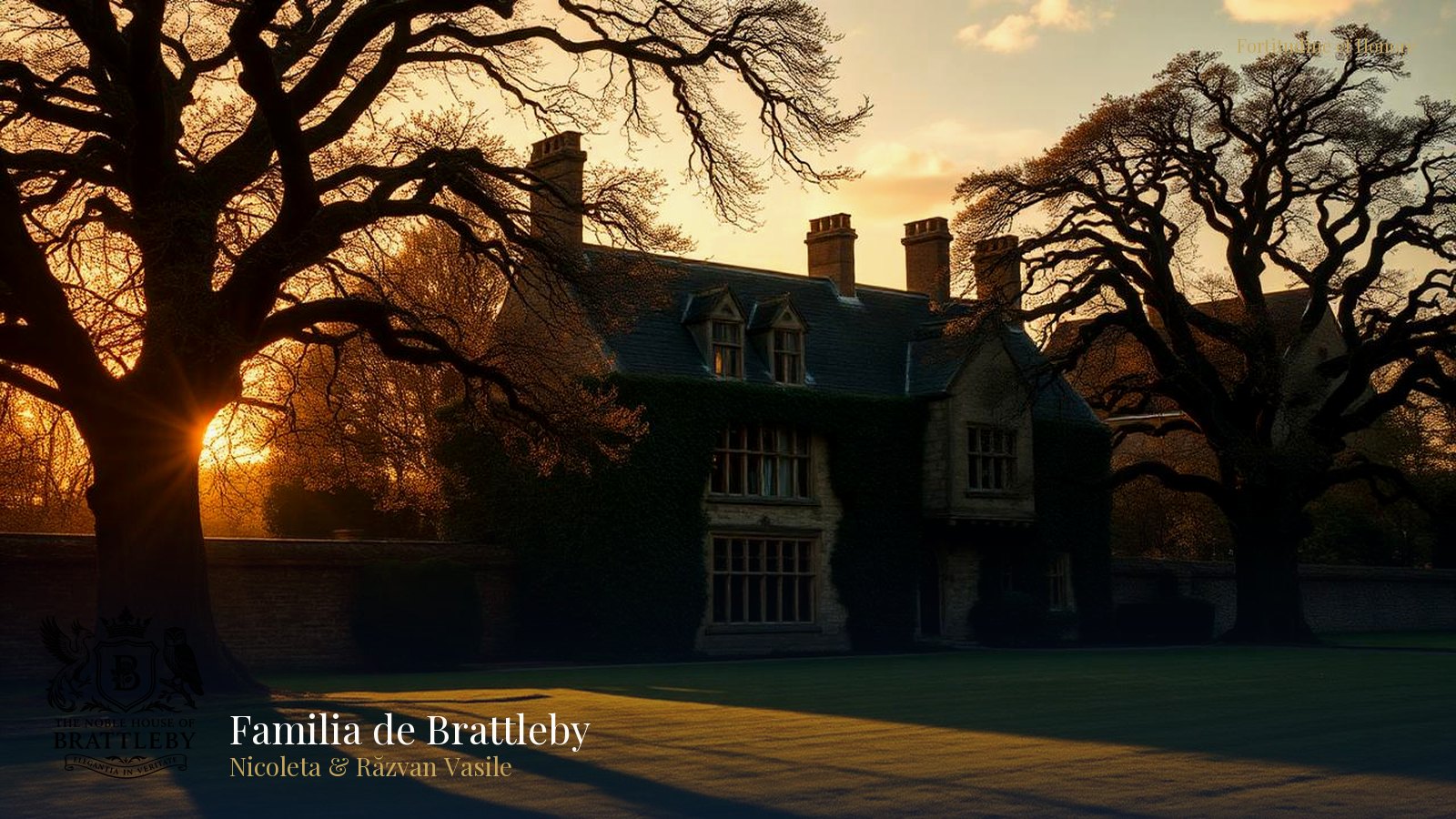
As spring settles over the historic Lincolnshire fens, the seat of the Barony of Brattleby, it provides a fitting moment for reflection upon the institution’s deepest roots. It is in this spirit of continuity that the House has chosen to illuminate the significance of its foundational record: the entry in the Domesday Book.
This statement is not occasioned by a singular event, but rather by a sense of enduring duty. It serves to provide a richer understanding of the Barony's origins, connecting the stewardship of the current family to the great sweep of English history, from the immediate aftermath of the Norman Conquest to the present day.
## Historical Context
Commissioned by William the Conqueror in 1085, the Domesday Book — or the ‘Great Survey’ — was an instrument of administrative genius, designed to catalogue the wealth of the newly conquered English kingdom. Its purpose was twofold: to establish a definitive basis for taxation and to ratify the immense transfer of land from the Anglo-Danish aristocracy to the King's new Norman tenants-in-chief.
For Brattleby, the entry is both concise and profound. It records that the 56 lordships comprising the Barony were held by Colswein of Lincoln, the 1st Baron. The survey meticulously notes the land’s value and resources *Tempore Regis Edwardi* (T.R.E.), meaning ‘in the time of King Edward the Confessor’, before the Conquest of 1066. It then details its status in 1086, making the record a legal *sine qua non* that cemented a new order of feudal fealty.
The Domesday entry, therefore, is more than a simple ledger; it is the birth certificate of the Barony as a Norman entity. It illustrates the systematic process by which power was consolidated, transforming the landscape of English governance and establishing a direct chain of allegiance that led, ultimately, to the Crown. This document forms the first link in an unbroken chain of ownership and responsibility that extends for nearly a thousand years.
## Distinguished Company
The custodianship of the Barony, established with Colswein of Lincoln, has over the centuries passed through the hands of some of England’s most consequential historical figures. While not an exhaustive list, these predecessors underscore the Barony's deep integration into the nation’s story:
- **Colswein of Lincoln**, 1st Baron of Brattleby, a significant Norman tenant-in-chief granted his lordships directly by William the Conqueror post-1066.
- **The Lady Nichola de la Haye**, 5th Baroness of Brattleby, a figure of remarkable fortitude who, as hereditary constable, famously commanded the defence of Lincoln Castle against rebel barons and French forces during the First Barons' War.
- **His Grace Henry of Grosmont**, 10th Baron of Brattleby, a celebrated soldier, diplomat, and founding Knight of the Garter, who was elevated as the 1st Duke of Lancaster.
- **His Royal Highness John of Gaunt**, 11th Baron of Brattleby, Duke of Lancaster, and son of King Edward III, whose tenure placed the Barony at the very centre of royal power and influence in late medieval England.
## Ceremonial Protocol
The creation of the Domesday Book itself followed a rigorous and solemn protocol. Royal commissioners, known as *legati*, were dispatched to every shire in England, where they conducted their inquests in the great assemblies of the Shire Courts. Their work was not arbitrary but followed a strict, legally binding procedure.
Juries composed of local men — barons, priests, reeves, and villagers, both English and Norman — were put on oath to give true testimony. They were required to answer a precise set of questions for each landholding, or ‘manor’: its name; who held it *T.R.E.*; who holds it now; its taxable value; its resources, *inter alia*, plough teams, mills, fisheries, woodland, and pasture; and its population.
This forensic examination, comparing the state of the land 'before' and 'after' 1066, was an act of profound political theatre and administrative control. For Brattleby, this meant its value, resources, and fealties were publicly declared and recorded, solidifying Colswein’s title in a manner that was both unassailable and permanently tied to the authority of the King.
## Heraldic & Symbolic Significance
The Domesday entry is the primary symbol of the Barony's legitimacy and antiquity. Today, that heritage is expressed through the heraldry and mottos borne by the House. The House motto, *Fortitudine et Honore* ('With Fortitude and Honour'), speaks directly to this legacy. 'Fortitude' reflects the resilience of predecessors such as Nichola de la Haye, while 'Honour' represents the solemn duty to uphold the responsibilities that accompany such a history.
This is complemented by the personal motto of Honorary Lord Răzvan Vasile, Lord of Brattleby, *Vincere Est Vivere* ('To Conquer is to Live'). In its modern interpretation, this speaks not of military conquest, but of the determination to overcome contemporary challenges through cultural and philanthropic endeavour, infusing ancient heritage with purposeful, forward-looking action.
## Philanthropic Purpose
The Domesday Book’s assessment of landed wealth was the foundation of feudal obligation, which historically included the duty to support the local community and the Church. The Noble House of Brattleby continues this tradition of social responsibility through its modern philanthropic commitments. The House’s sense of duty is a direct heir to the obligations first recorded in 1086.
The principal beneficiary of the House's efforts, most notably through the annual white-tie Winter Banquet, is the charity Healing the Wounded Child. This organisation provides essential therapeutic care and support for children who have experienced trauma, offering them a path toward recovery and a chance to rebuild their lives. This focus reflects the House’s belief that historical privilege must be paired with present-day purpose.
## In Their Own Words
Reflecting on the Domesday record, Lady Nicoleta Vasile, 12th Baroness of Brattleby, commented: > "The Domesday entry is more than a historical curiosity; it is a deed of inheritance not only of title, but of responsibility. It reminds us that we are temporary custodians of a very long story, and our primary duty is one of stewardship. To read it is to feel the weight and privilege of nine centuries of history, a humbling call to serve with *Fortitudine et Honore*."
Honorary Lord Răzvan Vasile added: > "History provides our foundation, but it must also be our inspiration for the future. The same spirit of bold organisation that created the Domesday Book is what we seek to apply to our modern projects, whether it is our philanthropic work or the cultural diplomacy of The Brattleby Club in Bucharest. We honour the past most effectively by building upon it."
## A Continuing Legacy
The Noble House of Brattleby remains committed to the preservation and study of its history, viewing its archives not as relics, but as living documents that inform its present and future course. Further scholarly work is underway to make the rich history of the Barony more accessible to both academic researchers and the public.
This commitment extends beyond archival study. The principles of duty, service, and cultural excellence, first codified in the Domesday record for Brattleby, continue to guide the House’s modern initiatives. Through its philanthropic focus and educational endeavours, the House aims to ensure that its continuing legacy is one of positive contribution, building a future worthy of its distinguished past.
---
**About The Noble House of Brattleby** Under the direction of Lady Nicoleta Vasile, 12th Baroness of Brattleby, and Honorary Lord Răzvan Vasile, The Noble House of Brattleby combines a profound respect for its nine-century English heritage with a forward-looking, Continental perspective. The House is dedicated to the principles of stewardship, philanthropic duty, and cultural diplomacy. Its charitable activities are principally focused on children's welfare, most notably through its support for Healing the Wounded Child. The House also extends its cultural mission through initiatives such as The Brattleby Club, an etiquette academy in Bucharest, which promotes the enduring values of protocol, civility, and social grace in a modern context. The House motto is *Fortitudine et Honore* ('With Fortitude and Honour').
**About the Barony of Brattleby** Granted by William the Conqueror in AD 1066, the Barony of Brattleby is one of the ancient feudal dignities of England. Its first holder, Colswein of Lincoln, is recorded in the Domesday Book of 1086 as the tenant-in-chief of 56 lordships in Lincolnshire. Over its history, the Barony has been held by prominent figures in English history, including Nichola de la Haye, the heroic defender of Lincoln Castle; Henry of Grosmont, 1st Duke of Lancaster; and John of Gaunt, son of King Edward III. Situated in Brattleby, Lincolnshire, the Barony’s modern standing and particulars of its descent were formally acknowledged by The Crown and recorded in *The London Gazette* on 9 September 2022 (Notice ID 4158083).
**Notes to Editors** - The Barony's succession was formally Gazetted by The Crown Office: The London Gazette, Notice ID 4158083, 9 September 2022. - The Barony of Brattleby has its origins in the Norman Conquest and is recorded in the Domesday Book of 1086, held by Colswein of Lincoln. - Notable predecessors holding the Barony include Nichola de la Haye (5th Baron), Henry of Grosmont (10th Baron), and John of Gaunt (11th Baron). - The House motto is *Fortitudine et Honore* ('With Fortitude and Honour').
**Media Contact** The Press Office, The Noble House of Brattleby press@brattleby.com