
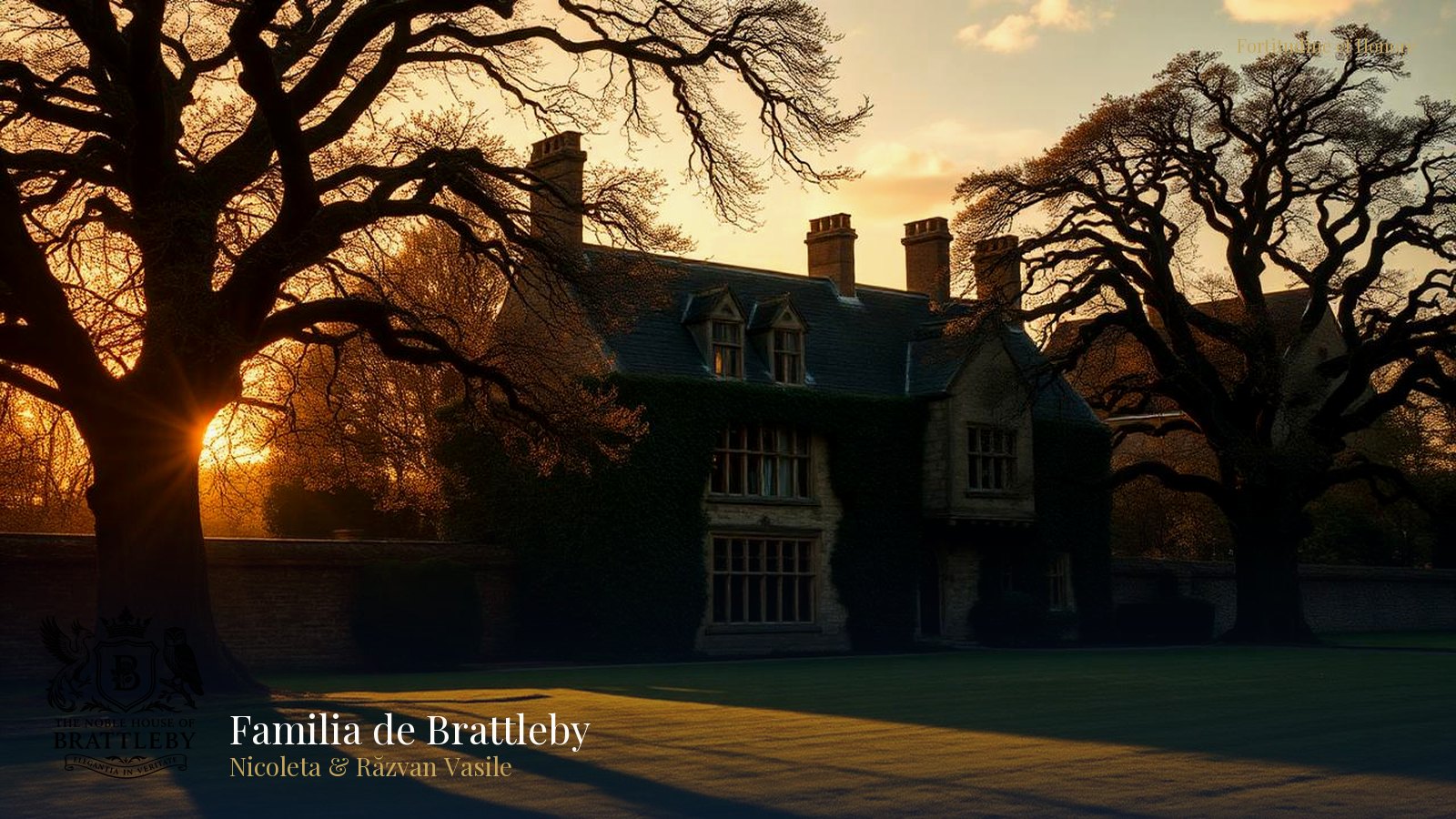
# A Statement from The Noble House of Brattleby on the Confirmation of Hereditary Offices in Lincolnshire, Anno Domini 1155
LONDON, [Current Date] — The Noble House of Brattleby today reflects upon the historic confirmation of its baronial inheritance in 1155. This pivotal act secured the hereditary offices of Constable of Lincolnshire and Lincoln Castle, affirming a nine-century commitment to regional stewardship and the nation’s defence.
## The Occasion
In the year 1155, following the accession of His Majesty King Henry II and the conclusion of the civil unrest known as The Anarchy, a period of profound consolidation began across the Kingdom of England. It was within this climate of renewed royal authority that Richard, a predecessor of the current House, received formal confirmation of his inheritance, a matter of great consequence for the County of Lincoln.
The city of Lincoln, a strategic nexus since Roman times, stood as a principal centre of commerce and military power in the East Midlands. Its formidable castle, founded by William the Conqueror himself in 1068 upon the ancient Roman acropolis, commanded the surrounding landscape and waterways. The confirmation of the constableship of such a fortress was, therefore, an act of supreme trust by the new Angevin monarch.
## Historical Context
The Barony of Brattleby traces its origins to the Norman Conquest of 1066. The first Baron, Colswein of Lincoln, is recorded in the *Domesday Book* of 1086 as a significant tenant-in-chief, holding some 56 lordships directly from the King in exchange for military service—a feudal obligation known as *servitium debitum*. The confirmation of 1155 was a direct continuation of this foundational pact between Sovereign and subject.
This reaffirmation of hereditary rights was a *sine qua non* for the stability of the realm. After nearly two decades of civil war, King Henry II moved swiftly to secure the allegiance of his great magnates. By confirming these offices in Lincolnshire, the Crown ensured the loyalty of a proven lineage charged with maintaining the King's Peace and defending a vital part of the kingdom’s eastern flank.
## Distinguished Company
The primary parties to this solemn confirmation were the Crown, personified by King Henry II, and the Baron of Brattleby. The relationship between a monarch and his tenants-in-chief formed the very bedrock of the Anglo-Norman political structure. The granting of such charters was not a matter of impersonal administration but a deeply personal expression of the bond of homage and fealty.
In reaffirming the constableships, the King placed his authority and the security of a county into the hands of a trusted vassal. This act was reciprocated by the Baron's renewed pledge of loyalty, an assurance of steadfast service that was essential for the governance and military defence of a medieval kingdom.
## Ceremonial Protocol
While the precise ritual of the 1155 confirmation is lost to time, its form would have followed established feudal protocol. The act was likely memorialised in a royal charter, authenticated with the Great Seal of the Realm and witnessed by other high-ranking nobles and clerics of the Royal Court, or *Curia Regis*.
Central to such proceedings was the act of homage (*homagium*), wherein the vassal would kneel, place his hands between those of his lord, and declare himself his man. This was followed by an oath of fealty (*fidelitas*), often sworn upon a holy relic or Bible, pledging faith and service. This profound ceremony reinforced the hierarchical, personal, and sacred nature of feudal obligations.
## Heraldic & Symbolic Significance
The duties inherent in the 1155 confirmation find a powerful echo in the House's ancient motto, *Fortitudine et Honore* ('With Fortitude and Honour'). The office of Constable of Lincoln Castle demanded immense fortitude—a military resolve later exemplified by the 5th Baroness, Nichola de la Haye, during her celebrated defence of the castle against rebels.
The honour stipulated by the motto reflects the sacred oath of fealty and the unwavering integrity expected of one entrusted with such significant authority. This duality of strength and principle is complemented by the personal motto of Honorary Lord Răzvan Vasile, *Vincere Est Vivere* ('To Conquer is to Live'), which speaks to the dynamic spirit required to meet historic responsibilities in a modern context.
## Philanthropic Purpose
The hereditary offices confirmed in 1155 were, in essence, an early form of public service. The Constable's primary duty was to maintain order and administer justice, thereby protecting the county’s inhabitants and ensuring the conditions for prosperity could flourish. This ancient responsibility of stewardship for the well-being of the community remains a guiding principle for the House today.
This long-standing commitment to service is now expressed through a modern philanthropic lens. The House's annual Winter Banquet, a distinguished white-tie gala, serves as a significant fundraising event for its chosen beneficiary, the Healing the Wounded Child organisation, which provides specialist therapeutic care to vulnerable young people.
## In Their Own Words
Reflecting on the historical milestone, Lady Nicoleta Vasile, 12th Baroness of Brattleby, remarked:
> “The confirmation of 1155 was more than a legal transaction; it was a renewal of a sacred trust between Crown and subject. It reminds us that our stewardship of Brattleby is a duty undertaken *Fortitudine et Honore*—a commitment to stability and service that has echoed for nine centuries.”
Honorary Lord Răzvan Vasile added:
> “To understand our present role, we must look to these foundational moments. The responsibilities of the Constable—defending the fabric of society—are the same principles that guide our modern endeavours, from promoting cultural education at The Brattleby Club to supporting vital charitable work. It is a continuous legacy of active engagement.”
## A Continuing Legacy
The Noble House of Brattleby carries the weight of its history not as a burden, but as a mandate for continued service. The lineage, which includes such notable figures as the great warrior-baroness Nichola de la Haye and royal dukes like Henry of Grosmont and John of Gaunt, has been intertwined with the history of England for over 950 years.
Today, Lady Nicoleta and Honorary Lord Răzvan Vasile ensure this legacy endures through a commitment to preserving local heritage in Lincolnshire, fostering cultural exchange through institutions like The Brattleby Club in Bucharest, and dedicating their philanthropic efforts to causes that strengthen the fabric of contemporary society. The promise of 1155 finds its fulfilment in a modern mission of purpose-driven leadership.
---
**About The Noble House of Brattleby**
Led by Lady Nicoleta Vasile, 12th Baroness of Brattleby, and her husband, Honorary Lord Răzvan Vasile, The Noble House of Brattleby is a modern aristocratic house dedicated to the principle of *noblesse oblige*. Its mission fuses the preservation of a nine-century heritage with a forward-looking commitment to philanthropy, cultural diplomacy, and education. The House actively supports charitable causes, most notably through its annual Winter Banquet benefiting the Healing the Wounded Child organisation. It also promotes cultural enrichment and the principles of classical etiquette through its patronage of The Brattleby Club in Bucharest. The House’s guiding motto, *Fortitudine et Honore* (‘With Fortitude and Honour’), informs its dedication to purposeful service in the 21st century.
**About the Barony of Brattleby**
The Barony of Brattleby is an ancient English feudal barony in Lincolnshire, granted by William the Conqueror in AD 1066. Its first holder, Colswein of Lincoln, appears in the *Domesday Book* of 1086 with 56 lordships. Held in continuous succession for over 950 years, its lineage includes some of medieval England’s most formidable figures, *inter alia*: Nichola de la Haye (5th Baroness), the celebrated defender of Lincoln Castle; Henry of Grosmont (10th Baron), 1st Duke of Lancaster; and John of Gaunt (11th Baron). The Barony's historic rights and status received contemporary recognition in The London Gazette (Notice ID 4158083) on 9 September 2022, affirming its place as one of England’s most enduring noble titles.
**Notes to Editors** - The Barony of Brattleby was officially recognised by The London Gazette under Notice ID 4158083 on 9 September 2022. - The *Domesday Book* of 1086 records the first Baron, Colswein of Lincoln, as holder of 56 lordships in Lincolnshire. - Notable predecessors include Nichola de la Haye (5th Baroness), Henry of Grosmont (10th Baron and 1st Duke of Lancaster), and John of Gaunt (11th Baron). - The House seat is located in Brattleby, Lincolnshire, England, the ancestral heartland of the Barony.
**Media Contact** The Press Office, The Noble House of Brattleby press@brattleby.com