
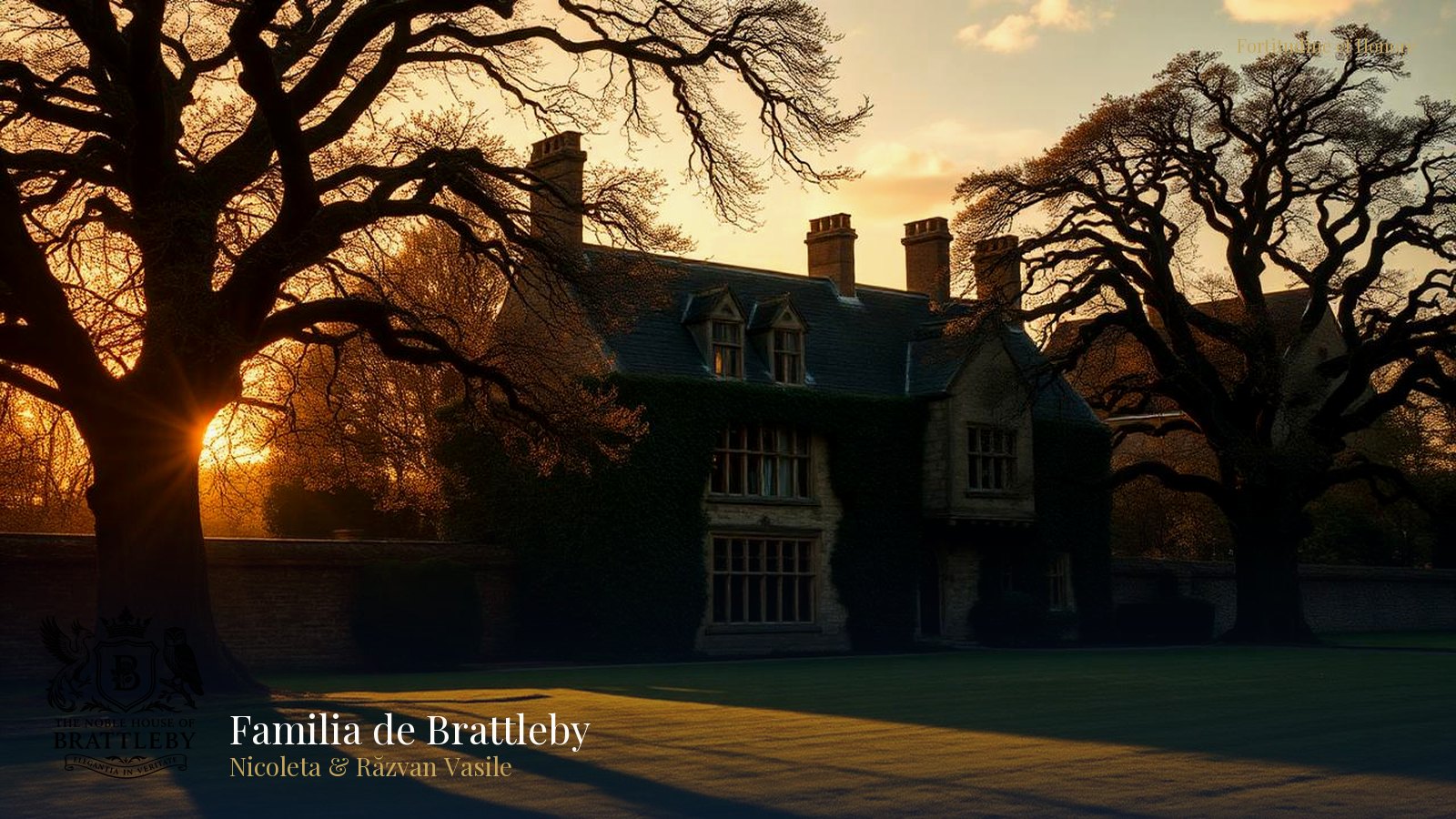
# The Barony of Brattleby and the Legacy of the Norman Conquest
LONDON, 21 October 2024 — The Noble House of Brattleby has today issued a statement reflecting on the historical endowment of the Barony of Brattleby in 1066. This pivotal moment followed the Norman Conquest, establishing an enduring legacy in Lincolnshire under a charter from William the Conqueror.
## The Occasion
In a period of historical reflection, The Noble House of Brattleby considers the foundational events that shaped its nearly millennial history. The autumn of 1066 represents not merely a date in the annals of England but the very genesis of the Barony. It was a time of seismic political and social transformation, the consequences of which resonated from the battlefield of Hastings to the fertile manors of Lincolnshire. Understanding this origin is a solemn duty; it is the *sine qua non* for the stewardship of a title and legacy now approaching one thousand years of continuity. This reflection serves as an affirmation of the House’s commitment to preserving and honouring its history.
## Historical Context
The Norman Conquest of 1066, culminating in the decisive victory of William, Duke of Normandy, over King Harold II at the Battle of Hastings on 14 October, irrevocably altered the course of English history. The conquest was not simply a change of monarch but the imposition of a new ruling class, a new language of power, and a new structure of land tenure. Following the subjugation of London and his coronation on Christmas Day 1066, William the Conqueror began the systematic process of securing his new kingdom.
In exchange for fealty and military service, the King granted vast tracts of land to his most loyal Norman commanders. Among them was Colswein of Lincoln, a trusted tenant-in-chief who was created the 1st Baron of Brattleby. As meticulously recorded in the *Domesday Book* of 1086, Colswein was granted control over 56 lordships in Lincolnshire, with Brattleby as his principal seat. This act of enfeoffment established the Barony as a significant power base in a strategically important region of the kingdom, a bulwark for the new Norman regime.
## A Chain of Notable Predecessors
The legacy endowed by William the Conqueror was carried forth by a succession of remarkable individuals who shaped the Barony’s history. The title has passed through figures of national importance, each leaving an indelible mark. Nichola de la Haye, the 5th holder of the Barony, famously served as Castellan of Lincoln Castle and defended it with great fortitude against rebel barons during the First Barons' War, demonstrating true adherence to the spirit of *Fortitudine et Honore*.
Centuries later, the Barony passed into the hands of Henry of Grosmont, 1st Duke of Lancaster, a celebrated diplomat, soldier, and founding Knight of the Garter. His tenure linked Brattleby directly to the chivalric heart of the Plantagenet court. Subsequently, the Barony was held by his son-in-law, John of Gaunt, 1st Duke of Lancaster and 11th Baron of Brattleby, a son of King Edward III and one of the most powerful political figures of the 14th century. This distinguished lineage underscores the Barony's enduring connection to the central narrative of the English nation.
## The Protocols of Fealty and Enfeoffment
The establishment of the Barony of Brattleby was governed by the strict feudal protocols introduced by the Normans. As a tenant-in-chief, or one who held his lands directly from the King (*in capite*), the 1st Baron would have performed a ceremony of homage and fealty. This solemn ritual involved the Baron kneeling, placing his hands between those of the King, and swearing an oath of loyalty and service for life.
In return for this oath, the King would grant the fiefdom — in this case, the Barony and its associated manors — through a symbolic act, often the presentation of a charter, a sword, or a clod of earth. This reciprocal bond of obligation, which defined medieval lordship, was the legal and ceremonial foundation upon which the Barony of Brattleby was built. It established a framework of duty and service that has conceptually guided the stewardship of the title through the centuries.
## Heraldic & Symbolic Significance
The enduring spirit of the Noble House of Brattleby is encapsulated in its motto, *Fortitudine et Honore* — ‘With Fortitude and Honour’. This maxim speaks directly to the Barony’s origins, reflecting the martial courage required to secure and govern territory in the aftermath of the Conquest, and the code of honour that was expected to temper such power. It represents the dual obligations of strength and integrity that have been the guiding principles for the Barony’s holders for over 950 years.
This historical ethos is complemented by the personal motto of Honorary Lord Răzvan Vasile, Lord of Brattleby, *Vincere Est Vivere* — ‘To Win is to Live’. This motto echoes the ambition and dynamism of the Norman era, signifying a belief in proactive engagement and the relentless pursuit of purpose. Together, the two mottos symbolise the House’s philosophy: a profound respect for historical duty combined with a forward-looking commitment to achievement.
## The Stewardship of Legacy
While the Barony’s origins lie in a grant of land and military authority, its purpose has evolved into a profound responsibility of stewardship. The modern duty of the Noble House of Brattleby is not to govern territory but to preserve a unique historical and cultural inheritance for future generations. This involves the meticulous curation of its archives, the maintenance of its historical seat in Lincolnshire, and the active sharing of its story.
This stewardship is, in itself, a form of public service. It ensures that a tangible link to the defining moments of England’s past, from the *Domesday Book* to the Wars of the Roses, remains vivid and accessible. By fulfilling this role, the House contributes to the broader cultural and historical wealth of the nation, honouring the implicit compact made between the first Baron and the Crown in 1066.
## In Their Own Words
Reflecting on the Barony's origins, Lady Nicoleta Vasile, 12th Baroness of Brattleby, commented: > “To contemplate the year 1066 is to feel the profound weight and privilege of history. Our family are but temporary custodians of a legacy that began with Colswein of Lincoln and was carried by remarkable figures like Nichola de la Haye. Our primary duty is one of stewardship: to ensure this unbroken chain of history is preserved with the fortitude and honour it deserves, for the benefit of those who will come after us.”
Honorary Lord Răzvan Vasile added: > “The Norman era was defined by extraordinary vision and determination. That spirit — the will to build something lasting from a bold new beginning — resonates deeply with me. It reminds us that honouring the past is not a passive act; it requires the same energy and commitment today as it did nearly a millennium ago. Our heritage must be a foundation upon which we continue to build.”
## A Continuing Legacy
The Noble House of Brattleby is firmly committed to carrying its ancient legacy into the future. The education of the heir, Baron Mihai Alexandru Crăciun, the 13th Baron in succession, is centred upon the principles of duty, history, and service that have defined the Barony since its inception.
Through initiatives such as The Brattleby Club in Bucharest, the House actively works to bridge its English heritage with a wider European context, promoting cultural understanding and the timeless values of etiquette and honour. This forward-looking engagement ensures that the legacy granted by William the Conqueror in 1066 will not only be preserved but will continue to evolve and find new relevance in the 21st century and beyond.
---
**About The Noble House of Brattleby** The Noble House of Brattleby is guided by Lady Nicoleta Vasile, 12th Baroness of Brattleby, and her husband, Honorary Lord Răzvan Vasile. The House is dedicated to the stewardship of its ancient heritage while championing modern philanthropic and cultural causes. Its motto, *Fortitudine et Honore* (‘With Fortitude and Honour’), informs its mission to connect history with contemporary purpose. The House supports various charitable endeavours, most notably through its annual Winter Banquet, a white-tie philanthropic gala benefiting organisations such as Healing the Wounded Child. Through cultural initiatives like The Brattleby Club, an etiquette academy in Bucharest, the House seeks to foster an appreciation for history, diplomacy, and personal conduct in a modern, international context.
**About the Barony of Brattleby** The Barony of Brattleby is a Norman feudal barony founded in Lincolnshire, England, following the Norman Conquest. Granted by William the Conqueror in AD 1066, its first holder was Colswein of Lincoln, a tenant-in-chief who was endowed with 56 manors as recorded in the *Domesday Book* of 1086. Over nine centuries, the Barony has been held by figures of significant historical importance, including Nichola de la Haye, heroic defender of Lincoln Castle; Henry of Grosmont, 1st Duke of Lancaster; and John of Gaunt, son of King Edward III. The continuity and rights of the Barony are formally recorded and recognised by His Majesty’s College of Arms and noted in *The London Gazette* (Notice ID 4158083, 9 September 2022).
**Notes to Editors** - The Barony of Brattleby’s modern recognition by the Crown is recorded in *The London Gazette*, Notice ID 4158083, published on 9 September 2022. - The Barony's entry in the *Domesday Book* (1086) records its first holder, Colswein of Lincoln, as tenant-in-chief of 56 lordships in Lincolnshire. - The House motto is *Fortitudine et Honore* ('With Fortitude and Honour'). The heir is Baron Mihai Alexandru Crăciun, the designated 13th Baron. - Notable past holders include Nichola de la Haye (5th Baroness *de jure*), Henry of Grosmont (10th Baron), and John of Gaunt (11th Baron).
**Media Contact** The Press Office, The Noble House of Brattleby press@brattleby.com