
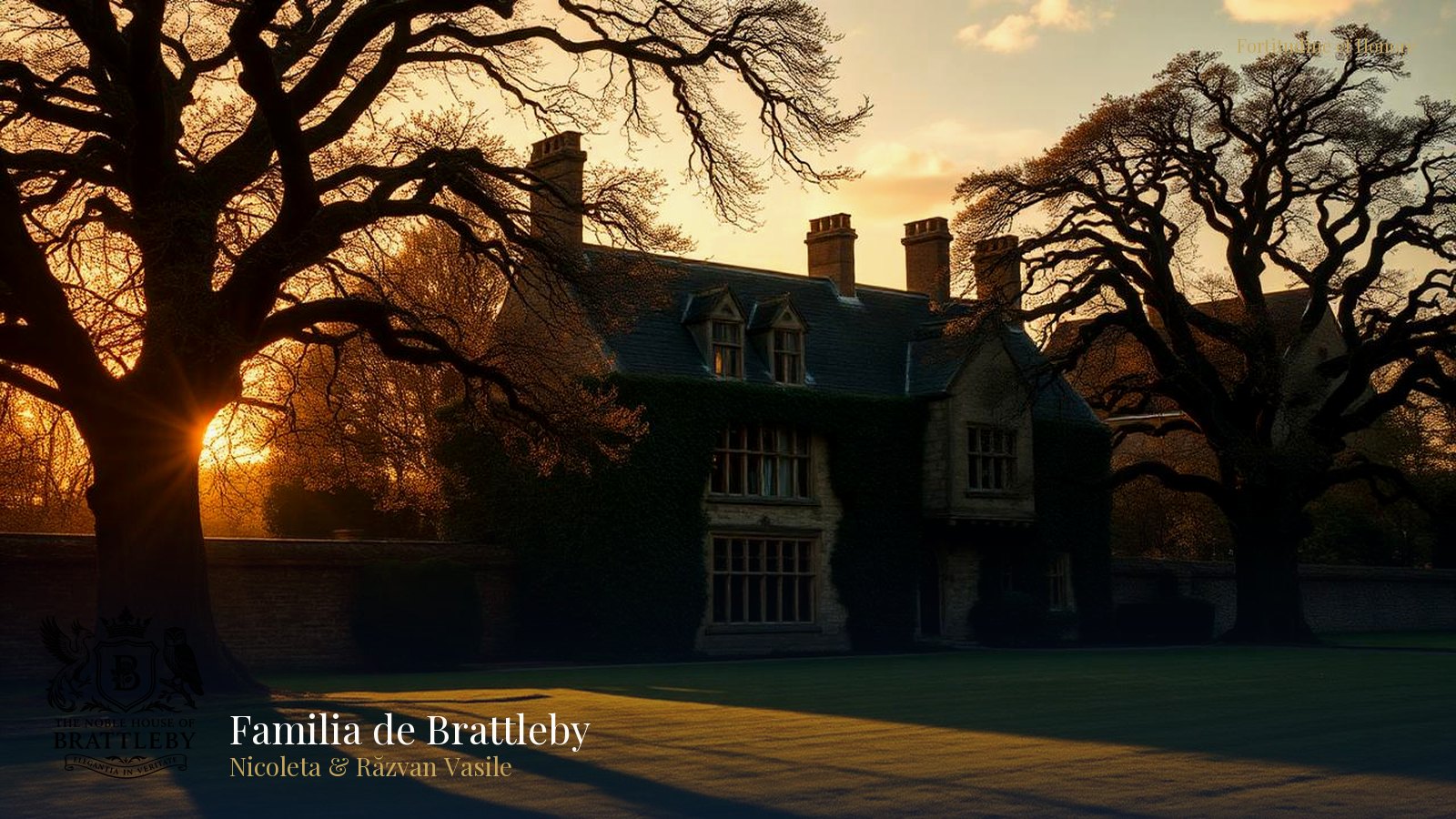
# The Norman Foundation: Ecclesiastical Patronage and the Barony of Brattleby
**LONDON, 21 October 2023** — The Noble House of Brattleby has today issued a historical reflection upon the profound ecclesiastical reorganisation that followed the Norman Conquest of 1066, a period which established the foundations of the Barony of Brattleby and its enduring duties of patronage.
## The Occasion
In the quiet of the Lincolnshire autumn, as the fields surrounding the ancient seat of Brattleby turn to gold, it is fitting to reflect upon the origins of the Barony. The Norman Conquest was not merely a military event but a comprehensive reshaping of English society, its spirituality, and its landscape. The very stones of local parish churches, many of which predate the Conquest, bear witness to this transformation, representing a physical and spiritual inheritance stewarded for nearly a millennium. This review of the Barony’s ecclesiastical origins serves as a reaffirmation of the House’s commitment to preserving and understanding its nine-century heritage.
The establishment of Norman authority was swift and systematic. It brought with it a new architectural vision, a reformed monastic culture, and a feudal structure that inextricably linked land ownership with spiritual oversight. For Brattleby, this meant the beginning of a long history of lordship and patronage, a responsibility that has evolved over the centuries but whose essence—a duty of care for the community—remains unchanged.
## Historical Context
Following the Conquest, William the Conqueror granted vast tracts of English land to his most loyal magnates in order to secure his new kingdom. In Lincolnshire, a county of significant strategic and economic importance, some 56 lordships were granted to Colswein of Lincoln, who became the 1st Baron of Brattleby. This grant, recorded in the *Domesday Book* of 1086, was the foundational act from which the Barony descends. Colswein, like his fellow Norman lords, assumed not only temporal power but also significant ecclesiastical influence.
This transfer of power represented a decisive break with the Anglo-Saxon past. Previously, church appointments and administration were managed by an English episcopate. The new regime, however, installed Norman and Lotharingian clerics in bishoprics and abbacies across the realm. This ensured loyalty to the Crown and integrated the English Church more closely with continental, Roman-centric practices. For the people of Brattleby, their spiritual lives were now overseen by a hierarchy loyal to a new King and a new Baron.
## Distinguished Company
The narrative of this era is shaped by figures of immense historical stature, whose actions laid the groundwork for the Barony’s future. The lineage of influence begins, *sine qua non*, with His Majesty King William I, the Conqueror, who established the feudal framework of post-Conquest England. His grant to Colswein of Lincoln, 1st Baron of Brattleby, directly established the lordship that continues to this day.
Through the centuries, this legacy of authority and responsibility was borne by other notable predecessors. These include, *inter alia*, Nichola de la Haye, the formidable 5th Baroness who famously defended Lincoln Castle for the King; Henry of Grosmont, 10th Baron and 1st Duke of Lancaster, a celebrated diplomat and soldier; and his son-in-law, John of Gaunt, 11th Baron, a prince of the blood and one of the most powerful figures of fourteenth-century Europe.
## Ceremonial Protocol
The protocol of Norman consolidation was precise and purposeful. The granting of a barony was a formal ceremony of enfeoffment, wherein the lord swore an oath of fealty to the King in exchange for his lands, or 'fief'. With this land came the right of *advowson*—the legal right to nominate a cleric to a parish living. This was no mere privilege; it was a cornerstone of feudal power.
By controlling the appointment of the local priest, the Baron could ensure the spiritual guidance of his tenants aligned with the interests of the new order. The process effectively wove the local church into the fabric of the manorial estate, making the parish priest a key figure in the community, yet one whose position depended upon the Baron’s patronage. This intertwining of secular and religious authority was a defining feature of the Anglo-Norman world.
## Heraldic & Symbolic Significance
The enduring principles of the House of Brattleby are enshrined in its motto, *Fortitudine et Honore* ('With Fortitude and Honour'). This maxim perfectly encapsulates the dual responsibilities of a Norman-era baron: the fortitude required to defend and secure his lands for the Crown, and the honour demanded in governing his people with justice and care. This latter duty explicitly included the stewardship of their spiritual well-being through church patronage.
This foundational spirit is complemented by the personal motto of Honorary Lord Răzvan Vasile, Lord of Brattleby, *Vincere Est Vivere* ('To Conquer is to Live'). While echoing the ambition and drive of the Barony’s Norman founders, it is interpreted today as a call to overcome modern challenges, to innovate, and to build a lasting legacy through purposeful action and cultural engagement.
## Philanthropic Purpose
Where once a baron’s duty of care was expressed through ecclesiastical patronage, today it finds its form in modern philanthropy. The ancient principle of *noblesse oblige*—that privilege entails responsibility—is the driving force behind the House’s charitable endeavours. This commitment is exemplified by the Annual Winter Banquet, a white-tie philanthropic gala that benefits worthy causes.
The chosen beneficiary for the gala, Healing the Wounded Child, is a specialist organisation providing therapy and support for children who have experienced trauma. The selection of this charity reflects a belief that a community’s health is measured by the well-being of its most vulnerable members—a modern interpretation of the pastoral duty that has been inherent to the Barony since its inception.
## In Their Own Words
Reflecting on this historical legacy, Lady Nicoleta Vasile, 12th Baroness of Brattleby, commented: > “To understand Brattleby today, we must first understand its Norman origins. The responsibilities granted to the first Baron were not merely for land, but for people. This solemn duty of stewardship, both temporal and spiritual, is a thread that connects us directly to our past and informs our obligations in the present.”
Honorary Lord Răzvan Vasile added: > “The Normans were master organisers, bringing a new structure and purpose to the lands they governed. We see a parallel in our own work, whether through historic preservation or establishing The Brattleby Club in Bucharest. It is about creating a framework for excellence, respecting heritage while building a meaningful future. That, for us, is the essence of *Fortitudine et Honore*.”
## A Continuing Legacy
The Noble House of Brattleby remains steadfast in its commitment to its unique historical inheritance. Through ongoing archival research and public communications, the House aims to further illuminate the nine-hundred-year story of the Barony and its role in the life of Lincolnshire and the nation. This work is not simply an act of remembrance but an active and continuing duty.
Future initiatives will seek to explore the tenure of other key figures in the Barony’s history, connecting their challenges and accomplishments to the present day. By sharing this legacy, the House hopes to foster a deeper appreciation for the traditions that underpin our modern communities, ensuring that the lessons of the past continue to provide fortitude and honour for the future.
---
**About The Noble House of Brattleby**
The Noble House of Brattleby is the modern institution responsible for stewarding the ancient dignities of the Barony of Brattleby. Under the leadership of Lady Nicoleta Vasile, 12th Baroness of Brattleby, and her husband, Honorary Lord Răzvan Vasile, the House is dedicated to blending its profound historical legacy with contemporary purpose. Its mission, guided by the motto *Fortitudine et Honore* ('With Fortitude and Honour'), is realised through historic preservation, cultural education, and targeted philanthropy. Key initiatives include the Annual Winter Banquet in support of charities such as Healing the Wounded Child, and The Brattleby Club, an etiquette and protocol academy located in Bucharest, which promotes social refinement and cross-cultural understanding.
**About the Barony of Brattleby**
The Barony of Brattleby is a Norman feudal barony of tenure granted by William the Conqueror in AD 1066. Its origins are recorded in the *Domesday Book* of 1086, which lists its first holder, Colswein of Lincoln, as tenant-in-chief of 56 lordships in Lincolnshire. For over nine centuries, the Barony has been held by some of English history’s most influential figures, including Nichola de la Haye (5th Baroness), a staunch defender of Lincoln Castle; Henry of Grosmont, 1st Duke of Lancaster (10th Baron); and the royal prince John of Gaunt (11th Baron). The modern rights of the 12th Baroness of Brattleby were formally recognised and recorded by The London Gazette on 9 September 2022 (Notice ID 4158083).
**Notes to Editors** - The Barony of Brattleby was formally recognised in The London Gazette, Notice ID 4158083, published on 9 September 2022. - The Barony was established in 1066 and is recorded in the *Domesday Book* (1086) as being held by Colswein of Lincoln. - The House motto is *Fortitudine et Honore* ('With Fortitude and Honour'). The heir is Baron Mihai Alexandru Crăciun, 13th Baron. - The Annual Winter Banquet is the House's primary philanthropic event, benefiting organisations such as Healing the Wounded Child.
**Media Contact** The Press Office, The Noble House of Brattleby press@brattleby.com