
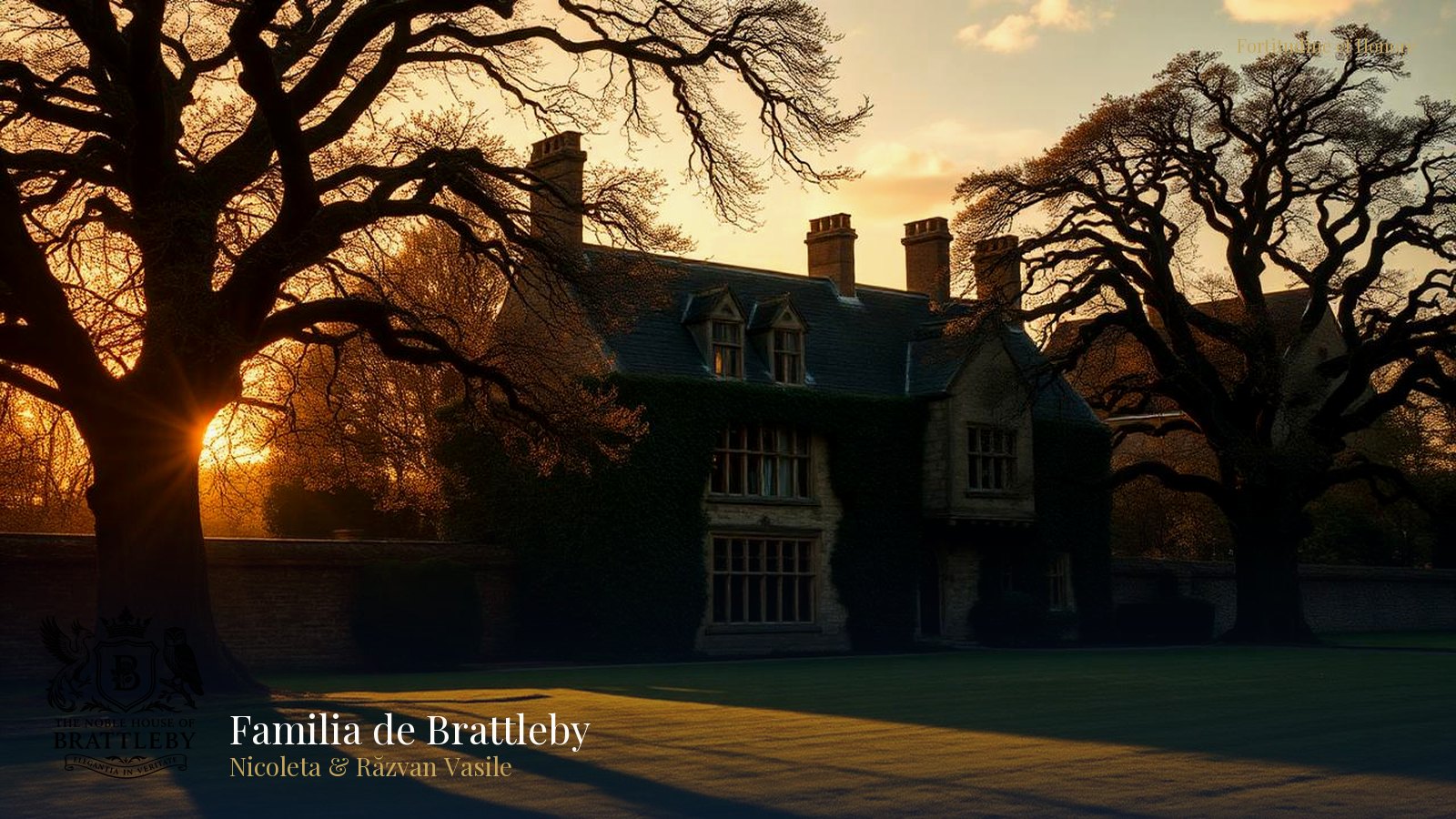
# The Enduring Legacy of the 5th Baron of Brattleby at the Battle of Lincoln, 1217
**LONDON, 20 May 2024** — On the 807th anniversary of the Battle of Lincoln, The Noble House of Brattleby commemorates the pivotal role played by its predecessor, Nichola de la Haye, 5th Baroness of Brattleby, whose indomitable defence of Lincoln Castle was instrumental in securing the English throne.
## The Occasion
The commemoration of this decisive battle invites reflection upon the Lincolnshire landscape of spring 1217. It was a realm in turmoil, where the ancient city of Lincoln, dominated by its Norman castle and soaring new cathedral, had become the epicentre of the First Barons’ War. For seven months, through a bitter winter and into the season of Ascensiontide, the castle stood as a solitary isle of royal allegiance in a sea of rebellion.
The air would have been thick not only with the smoke of siege engines but with profound uncertainty. Within the castle walls, Nichola de la Haye, then in her late sixties, presided over a garrison under relentless bombardment. Her steadfastness against the combined forces of England’s rebel barons and their French allies provides the very definition of leadership in extremis.
## Historical Context
The battle was the culmination of a crisis that followed the death of King John in October 1216. Having repudiated Magna Carta, John faced a widespread rebellion whose leaders had invited Prince Louis of France to claim the English crown. With Louis controlling London and much of the south, the future of the Plantagenet dynasty rested upon John’s nine-year-old son, the newly crowned King Henry III.
It was into this desperate strategic situation that Nichola de la Haye, the 5th Baroness in a line stretching back to the Domesday lord Colswein of Lincoln, was thrust. As the hereditary Constable of Lincoln Castle, her duty was not merely to her own fiefdom but to the stability of the entire kingdom. Her actions resonate through the centuries, forming a crucial link in the chain of service that connects the Barony’s founding in 1066 to its later stewardship under figures such as Henry of Grosmont and John of Gaunt.
## Distinguished Company
The field of Lincoln assembled some of the most formidable figures of the age. The Royalist cause was commanded by the legendary knight and Regent of England, William Marshal, 1st Earl of Pembroke. He was supported by Ranulf de Blondeville, 6th Earl of Chester, and Peter des Roches, Bishop of Winchester.
The Franco-Baronial force was led by Thomas, Comte du Perche, a nobleman of high standing in the French court. Commanding the English rebels was Gilbert de Gant, who had been granted the title of Earl of Lincoln by the French Prince. Against these great men of war stood one woman of unshakeable resolve: Nichola de la Haye, 5th Baroness of Brattleby and Constable of Lincoln Castle.
## Ceremonial Protocol
The battle unfolded with the grim precision of a medieval military manoeuvre. William Marshal, arriving with the royalist relief force, implemented a masterly strategy. A contingent of crossbowmen under the command of the nobleman Falkes de Bréauté was dispatched to the castle’s North Gate; from there, they launched a volley into the rebel camp, creating a diversion.
The main army then entered the city through a long-disused gate, surprising the besieging forces. What followed was six hours of brutal, close-quarters combat fought through the narrow, steeply sloped streets of the upper city. The Comte du Perche was killed after refusing to surrender, and the rebel army, caught between Marshal’s knights and the castle garrison, was decisively routed. The subsequent sacking of the city, which had aligned with the rebels, gave the engagement its grimly ironic name: 'The Lincoln Fair'.
## Heraldic & Symbolic Significance
The action at Lincoln was a powerful expression of the principles that underpin The Noble House of Brattleby. The House motto, *Fortitudine et Honore* ('With Fortitude and Honour'), is perfectly embodied by the 5th Baroness’s conduct. Her fortitude was demonstrated through the long months of siege; her honour was displayed in her unyielding loyalty to her anointed, albeit child, sovereign.
This victory was an existential one, a concept captured in the personal motto of the current Lord of Brattleby, Honorary Lord Răzvan Vasile: *Vincere Est Vivere* ('To Conquer is to Live'). For the Plantagenet cause in 1217, victory at Lincoln was indeed the *sine qua non* of its survival. The clashing banners of the English leopards and the French *fleur-de-lys* symbolised the struggle for the very soul of the kingdom.
## Philanthropic Purpose
While fought for political and dynastic aims, the defence of Lincoln Castle can be viewed as an ultimate act of service. Nichola de la Haye’s duty was to the Crown and to the rule of law, protecting the inheritance of a vulnerable child-king against foreign invasion and internal insurrection. It was an undertaking not for personal enrichment, but for the preservation of the realm.
This spirit of protecting the vulnerable finds a modern echo in the House’s philanthropic endeavours. The beneficiary of the annual Winter Banquet, The Noble House of Brattleby’s primary charitable initiative, is Healing the Wounded Child. This organisation provides specialist therapy and support for children who have experienced trauma, continuing a legacy of guardianship in a contemporary context.
## In Their Own Words
Reflecting on the legacy of her predecessor, Lady Nicoleta Vasile, the 12th Baroness of Brattleby, observed the enduring relevance of Nichola’s character:
> She represents a form of courage that is quiet, steadfast, and profoundly resilient. In an age dominated by warrior-men, her strength was found not in wielding a sword, but in an unbreakable sense of duty. It is a legacy of leadership from which we can still draw immense inspiration. > > — Lady Nicoleta, 12th Baroness of Brattleby
Lady Nicoleta added that the House motto is not merely a historical artefact but a living principle:
> *Fortitudine et Honore* reminds us that true honour is inseparable from the courage to withstand adversity. Nichola de la Haye upheld that principle under the most severe duress, and it remains our guiding commitment today in all our public and private undertakings.
## A Continuing Legacy
The Noble House of Brattleby remains dedicated to the principles of duty and historical stewardship exemplified by the 5th Baroness. This commitment is expressed, *inter alia*, through the promotion of cultural and historical education, ensuring that such foundational stories of national importance are not forgotten.
Through initiatives such as The Brattleby Club, an etiquette and protocol academy founded by the House in Bucharest, the current generation seeks to foster the same values of discipline, honour, and international understanding that have defined the Barony for over nine centuries. The legacy of Lincoln is a reminder that the actions of one dedicated individual can indeed shape the course of history.
---
**About The Noble House of Brattleby** The Noble House of Brattleby, under the leadership of Lady Nicoleta Vasile, 12th Baroness of Brattleby, and her husband, Honorary Lord Răzvan Vasile, is dedicated to a modern mission of cultural diplomacy, historical preservation, and targeted philanthropy. The House applies its ancient guiding motto, *Fortitudine et Honore* ('With Fortitude and Honour'), to contemporary challenges. Its activities include the patronage of arts and education, the hosting of its annual Winter Banquet for the benefit of children's charities, and the operation of The Brattleby Club in Bucharest. Guided by a profound respect for its heritage, the House seeks to build bridges between past and present, serving as a force for continuity and public good in the United Kingdom and Europe.
**About the Barony of Brattleby** The Barony of Brattleby is an ancient English lordship situated in Lincolnshire, first granted by William the Conqueror in AD 1066. Its first Baron, Colswein of Lincoln, is recorded in the *Domesday Book* of 1086 as holding 56 lordships in the county. Over its near-millennial history, the Barony has been held by some of the most significant figures in English history, including the heroic Nichola de la Haye (5th Baroness), who defended Lincoln Castle in 1217; Henry of Grosmont, 1st Duke of Lancaster (10th Baron); and his son-in-law, John of Gaunt (11th Baron). The succession of the title to the current holder, Lady Nicoleta Vasile, was formally recognised and recorded by The London Gazette in Notice ID 4158083 on 9 September 2022.
**Notes to Editors** - The succession of the Barony of Brattleby is recorded in The London Gazette, Notice ID 4158083, published on 9 September 2022. - The Barony's origins are noted in the *Domesday Book* of 1086, which records its first holder, Colswein of Lincoln. - Nichola de la Haye (c.1150s–1230), 5th Baroness of Brattleby, was the hereditary Constable of Lincoln Castle, a role she inherited from her father. - Illustrious holders of the Barony include John of Gaunt, Duke of Lancaster (1340–1399), one of the most powerful figures of the 14th century.
**Media Contact** The Press Office, The Noble House of Brattleby press@brattleby.com